Aircraft & UAVs

Wild Hornets STING interceptor drone

Also known as
  • STING
  • Sting drone
  • Ukrainian FPV Interceptor STING

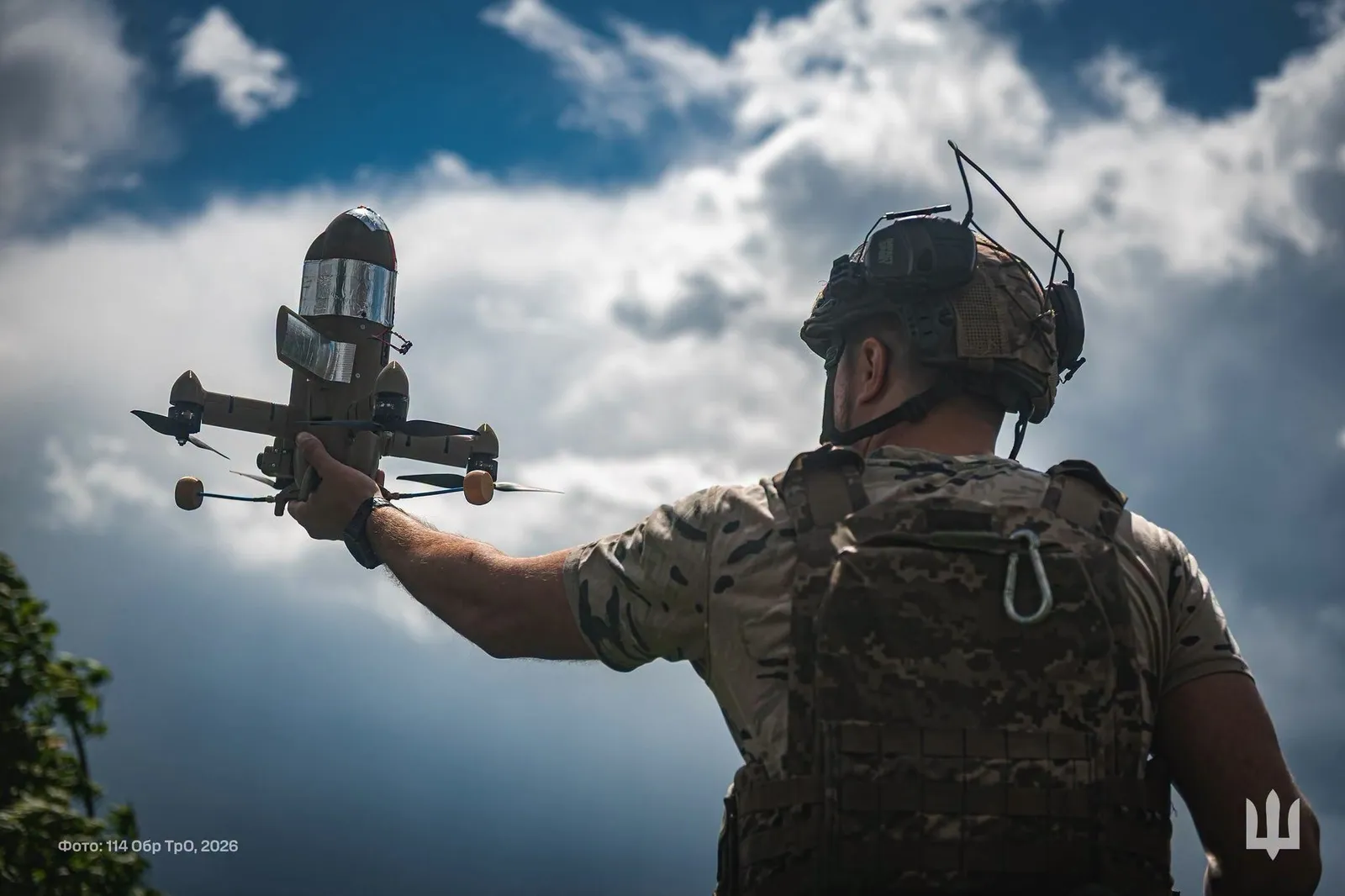
The Wild Hornets STING is a Ukrainian FPV interceptor drone built to attack Shahed-type one-way attack UAVs, Gerbera loitering munitions, Lancet drones, and other small aerial targets. Wild Hornets lists it with a 280 km/h maximum speed, a 7,000 m maximum altitude, ELRS radio control, analog or digital video links, and a 500 g payload; 2025-2026 reporting documents Ukrainian units using STING against Russian one-way attack drones in the 2014 Russia-Ukraine War.

Role in Conflicts

Ukrainian Wild Hornets STING drones have been fielded against Russian Shahed-type and Gerbera one-way attack UAVs; reporting has documented released intercept footage, remote-control engagements by the Bulava unit from about 500 km away, Wild Hornets' claim that STING downed more than 3,000 enemy drones in May 2026, and manufacturer-reported video confirmation of about 50 jet-powered Shahed downings.

Role details
Interceptor Context

STING is a named Ukrainian interceptor in the broader wartime shift from general-purpose FPV drones toward purpose-built counter-UAV aircraft. The public data separates three useful reader-facing layers: its FPV control method, its high-speed pursuit role, and its Shahed-specific battlefield target set.

LayerDocumented detailSource-backed takeaway
Flight profileWild Hornets lists 280 km/h maximum speed, 30 m/s climb rate, and a 7,000 m maximum altitude.The design is optimized for short, fast pursuit rather than long-endurance reconnaissance.
Control linkThe official specification lists ELRS radio control and analog or digital video transmission with daytime and thermal camera options; Defender Media reported HORNET VISION Ctrl remote operation for existing STING interceptors.Operators fly the interceptor as an FPV system, with camera fit varying by mission, lighting, and control architecture.
Target setWild Hornets and Ukrainian reporting describe STING as a counter-Shahed interceptor, with released footage and later reports of engagements against Shahed-136, Long-range one-way attack UAV, Aircraft & UAVsShahed-136-type, Shahed-131, Long-range one-way attack UAV, Aircraft & UAVsShahed-131-type, Gerbera, Multi-role decoy, reconnaissance, and one-way attack UAV, Aircraft & UAVsGerbera, jet-powered Shahed variants, and related one-way attack drones.The sourced conflict role is counter-UAV air defense inside the 2014 Russia-Ukraine War.
Profile / Specs

Profile

Origin
Ukraine
Built by
Wild Hornets
Type
FPV interceptor drone
Service note
2024-present
Designer
Wild Hornets
Designed
2024
Unit cost
Business Insider reported one STING costs less than $2,000.
Produced
2024-present
Number built
Not publicly disclosed; Censor.NET reported Wild Hornets donated 1,000 STING interceptors to Ukrainian Defense Forces units in May 2026.

Specifications

Cruise speed
140-170 km/h
Maximum speed
280 km/h
Operating altitude
0-5,000 m operational flight altitude; 7,000 m maximum altitude
Climb rate
30 m/s
Maximum range
37 km, dependent on battery, weather, payload, and operator flight style
Tactical radius
18.5 km with return, dependent on battery, weather, payload, and operator flight style
Endurance
6 minutes at maximum speed; up to 15 minutes at cruise
Payload
500 g payload capacity
Maximum takeoff weight
About 4 kg with payload
Control and video
ELRS radio control with analog or digital video transmission; daytime and thermal camera options
Variants

Public reporting distinguishes the standard STING now in Ukrainian service from a faster Sting 2.0 upgrade under combat testing for jet-powered Shahed threats.

VariantConfigurationDesignation notes
Sting 2.0Faster interceptor upgrade

Defender Media reported that Wild Hornets began work on Sting 2.0 in early 2026, that it was in combat testing by July 2026, and that the upgrade is intended to counter faster jet-powered Shaheds with higher speed and automatic target detection.

Sources: Defender Media Sting 2.0 report, Defender Media jet-powered Shahed interceptor report

Timeline

Wild Hornets STING interceptor drone Key Events

  1. Wild Hornets discloses STING

    Kyiv Post reported Wild Hornets' disclosure of the STING FPV interceptor as a Ukrainian drone designed specifically to attack larger Shahed-type one-way attack UAVs.

    Sources: Kyiv Post Wild Hornets STING report

  2. Wild Hornets releases Shahed intercept footage

    UNITED24 Media reported that Wild Hornets released video of a STING drone engaging a Shahed-type UAV at altitude.

    Sources: UNITED24 Media STING Shahed intercept report

  3. Wild Hornets publishes detailed STING specifications

    Wild Hornets published a STING product page with technical data, mission description, performance figures, and control-link details.

    Sources: Wild Hornets STING interceptor

  4. General Staff imagery enters Commons

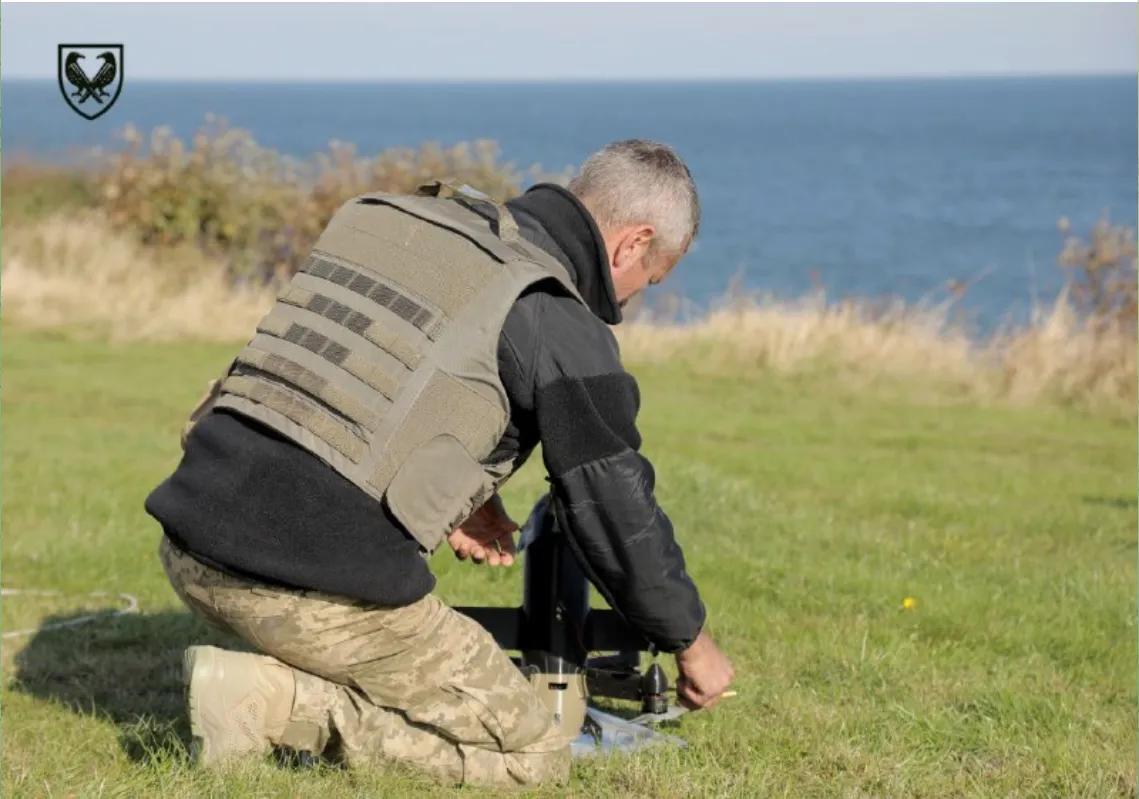
    Wikimedia Commons hosts CC BY 4.0 STING imagery attributed to the Ukrainian General Staff and sourced from official Ukrainian military channels.

    Sources: Commons STING prepared for launch image, Commons STING launch image

  5. Wild Hornets publishes STING demonstration video

    Wild Hornets' official STING page embedded a YouTube demonstration video showing the interceptor concept and Shahed-specific mission framing.

    Sources: Wild Hornets STING interceptor

  6. Hornet Vision Ctrl remote operation reported

    Defender Media reported that STING interceptors had been equipped with the HORNET VISION Ctrl remote-control system, with testing underway in several Ukrainian air-defense units and serial production planned.

    Sources: Defender Media Hornet Vision Ctrl report

  7. Remote-control intercept reported

    Ukrainska Pravda reported that Bulava unit pilots controlled STING interceptors from about 500 km away and destroyed two Russian Shahed-type UAVs through the Hornet Vision remote system.

    Sources: Ukrainska Pravda 500 km STING intercept report

  8. 1,000 STING interceptors donated

    Censor.NET reported that Wild Hornets donated 1,000 STING interceptors to Ukrainian Defense Forces combat units and that the drones had helped shoot down nearly 70 of 80 Shaheds near Kyiv during the 24 May Russian attack.

    Sources: Censor.NET STING interceptor donation report

  9. May 2026 intercept total reported

    Ukrainska Pravda and Mezha reported Wild Hornets' claim that STING interceptors shot down more than 3,000 Russian Shahed and Gerbera drones during May 2026.

    Sources: Ukrainska Pravda STING May 2026 intercept total, Mezha STING May 2026 intercept total

  10. Design tradeoffs described

    Business Insider reported Wild Hornets' account that STING design shifted toward altitude, range, payload, and operator usability instead of maximum speed alone.

    Sources: Business Insider STING design report

  11. Sting 2.0 upgrade enters public reporting

    Defender Media reported that Wild Hornets was combat-testing Sting 2.0, a faster upgrade planned with automatic target detection for countering jet-powered Shahed variants.

    Sources: Defender Media jet-powered Shahed interceptor report, Defender Media Sting 2.0 report

Operational Scaling

Late-2025 and 2026 reporting moved STING from a disclosed interceptor concept into a documented Ukrainian counter-UAV layer. The strongest public claims are still attributed to Wild Hornets or Ukrainian media reporting, so the entry treats them as reported operational context rather than independently audited totals.

AreaReported detailWhy it matters
Remote controlCensor.NET reported more than 100 Hornet Vision Ctrl systems on combat duty after a 160-system Air Force handover; Ukrainska Pravda earlier reported Bulava pilots remotely controlled STING interceptors from about 500 km away during two Shahed intercepts.This separates interceptor launch location from pilot location and shows how control infrastructure became part of the weapon's battlefield use.
Fielding scaleCensor.NET reported a Wild Hornets donation of 1,000 STING interceptors to Ukrainian Defense Forces combat units and more than 100 Ukrainian units using Wild Hornets drones.The reporting frames STING as a mass short-range air-defense consumable rather than a small number of boutique aircraft.
Upgrade pathDefender Media reported Sting 2.0 combat testing, a higher-speed design for jet-powered Shaheds with automatic target detection planned and later terminal guidance under development.The operational problem is shifting from piston-engine Shahed pursuit toward faster jet-powered targets while preserving operator control and range.
Media

Wild Hornets STING interceptor drone Images

Related Weapon Systems
Queen Hornets, 17-inch multirole FPV drone, Aircraft & UAVsAircraft & UAVsQueen Hornets17-inch multirole FPV droneQueen Hornets is a Ukrainian heavy FPV drone platform from Wild Hornets, built around a 17-inch frame for payload delivery, bombing, one-way attack, logistics, relay, mine-laying, and drone-carrier work. Ukraine's Ministry of Defense codified the system in 2026 after combat units had received thousands of drones, and field reports describe Ukrainian units adapting the platform with grenade launchers, fiber-optic control, thermal cameras, and other mission kits.
SkyFall P1-SUN, Counter-UAS interceptor drone, Air DefenseAir DefenseSkyFall P1-SUNCounter-UAS interceptor droneSkyFall P1-SUN is a Ukrainian counter-UAS interceptor drone built for low-cost defense against Shahed-type one-way attack UAVs and similar aerial targets. SkyFall designed the compact FPV aircraft around a modular, partly 3D-printed airframe, small explosive payload, high-speed pursuit, and mass production, while the P1-SUN Long upgrade adds AI-assisted terminal detection for Ukraine's fast-growing interceptor layer in the 2014 Russia-Ukraine War.
FPV drones, First-person-view small UAV / one-way attack drone, Aircraft & UAVsAircraft & UAVsFPV dronesFirst-person-view small UAV / one-way attack droneFPV drones are small first-person-view UAVs adapted from racing-drone and commercial quadcopter technology into tactical reconnaissance and one-way attack systems. Russia and Ukraine turned them into mass battlefield consumables, while later reporting from Lebanon, Mali, Myanmar, Syria, Sudan, and Mexico shows the same control-link, payload, and low-cost adaptation pattern spreading to state forces, insurgents, and organized armed groups.
Gerbera, Multi-role decoy, reconnaissance, and one-way attack UAV, Aircraft & UAVsAircraft & UAVsGerberaMulti-role decoy, reconnaissance, and one-way attack UAVGerbera is a Russian Shahed-shaped UAV used in Ukraine as a low-cost false target, reconnaissance platform, signal relay, and light one-way attack drone. Ukrainian intelligence links the design to Chinese Skywalker Technology-derived airframes and Alabuga-area assembly, while recovered examples show plywood-and-foam construction, imported electronics, Chinese model-aircraft engines, and variants ranging from unarmed decoys to warhead-carrying and FPV-carrier configurations.

Sources