Aircraft & UAVs

Queen Hornets

Also known as
  • Queen Hornet
  • Hornet Queen
  • Queen of Hornets
  • Queen of the Hornets
  • Koroleva Shershniv

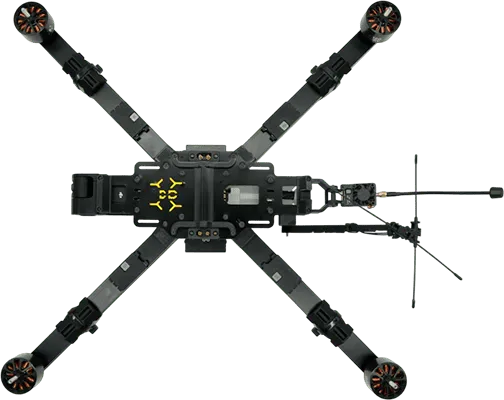
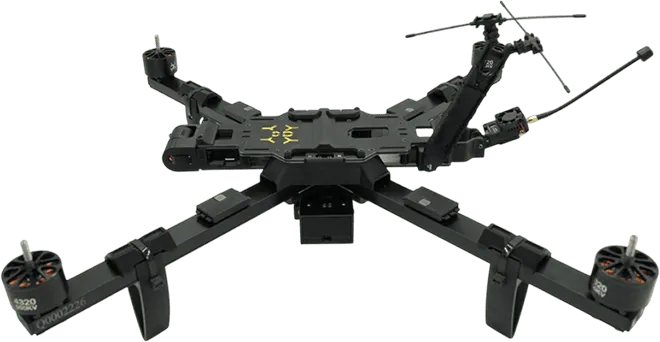
Queen Hornets is a Ukrainian heavy FPV drone platform from Wild Hornets, built around a 17-inch frame for payload delivery, bombing, one-way attack, logistics, relay, mine-laying, and drone-carrier work. Ukraine's Ministry of Defense codified the system in 2026 after combat units had received thousands of drones, and field reports describe Ukrainian units adapting the platform with grenade launchers, fiber-optic control, thermal cameras, and other mission kits.

Role in Conflicts

Ukrainian reporting documents Queen Hornet use by Ukraine's Defense Forces, including 117th Heavy Mechanized Brigade bomber/dropper use on the Pokrovsk direction, a Bulava unit combat strike with a grenade-launcher Queen Hornet, and KHORT Battalion trials with an RPG-75 and suspected fiber-optic control. Censor.NET also reported about 10,000 delivered to combat units and cited use during Kursk, Sumy, and Pokrovsk fighting.

Role details
Profile / Specs

Profile

Origin
Ukraine
Built by
Wild Hornets
Type
17-inch multirole FPV drone
Service note
2024-present
Designer
Wild Hornets
Designed
2024
Produced
2024-present
Number built
Censor.NET reported in July 2026 that combat units had received about 10,000 Queen Hornet drones.

Specifications

Frame
17-inch aluminum FPV drone frame on the official Wild Hornets product page; some field-test reporting describes modified 15-inch configurations
Optimal payload
6 kg
Maximum payload
9 kg on the official product page; secondary field-test reports describe up to 9.5 kg over shorter ranges
Flight time
Up to 25 minutes, depending on battery, weather, payload, and operator control style
Operational range
Up to 15 km round trip with payload; up to 20 km maximum one-way range
Speed
70-80 km/h cruise; 160 km/h maximum
Altitude
50-300 m operating flight altitude and up to 2,000 m maximum altitude on the official product page; Censor.NET reported codification data with a higher maximum altitude figure
Control and video
ELRS or TBS control; analog or digital video transmission with DJI O3/O4, Walksnail Avatar GT, Hornet Vision, or thermal camera options
Motors and ESC
4320 350KV brushless motors with 80A electronic speed controllers
Video transmitter
1.2-2.5 W VTX, depending on configuration
Thermal camera options
Caddx IRC-640CA or Caddx IRC-384CA thermal-camera configurations
Power
Two 6s4p batteries and payload release system
Mission kits
Reported adaptations include Bulspike-AP and RPG-75 grenade-launcher fits, relay use, drone-carrier use, remote minelaying, and dragon-drone incendiary employment
Configuration And Mission Context

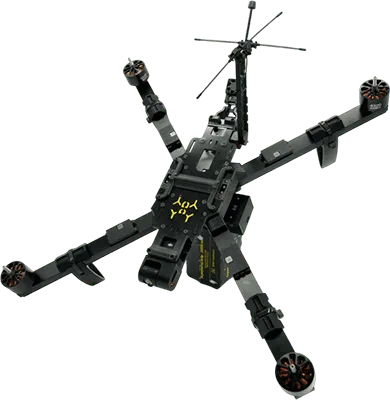
Queen Hornet occupies the space between small FPV strike drones and heavier multirotor bombers: Wild Hornets lists a 17-inch frame, 6 kg optimal payload, 9 kg maximum payload, and digital-video options, while conflict reporting shows units using the same platform family for reusable attack, relay, transport, mine-laying, and drone-carrier missions.

Codification

Ukraine codified Queen Hornet as both an unmanned-aircraft system and a separate product, allowing Defense Forces units to order it through official channels.

Field adaptations

Reports describe grenade-launcher fits using Bulspike-AP and RPG-75 launchers, dragon-drone employment, remote minelaying, and relay or drone-carrier use.

Industrial context

Wild Hornets and specialist reporting describe a high local-component share, Ukrainian-developed electronics, donor-funded production, and about 10,000 drones delivered to combat units by mid-2026.

Timeline

Queen Hornets Key Events

  1. Hornet Queen revealed

    Defense Express reported Wild Hornets' reveal of the Hornet Queen as a heavy FPV drone developed after a request for an affordable bomber platform, with payload, logistics, mine-laying, relay, and mothership roles.

    Sources: Defense Express Hornet Queen report

  2. Grenade-launcher field trials reported

    United24 reported September 2024 tests of a Queen Hornet carrying the Bulspike-AP anti-personnel grenade launcher, with developers describing target engagement beyond 5 km and payload carriage options for heavier or lighter loads.

    Sources: United24 Queen Hornet grenade-launcher report

  3. First reported grenade-launcher combat strike

    Mezha reported the first combat use of a Queen Hornet fitted with a grenade launcher, citing a Bulava unit strike against enemy infantry.

    Sources: Mezha Queen Hornet grenade-launcher combat report

  4. RPG-75 and suspected fiber-optic trial reported

    United24 reported KHORT Battalion combat trials of a Queen Hornet carrying a Czech RPG-75 launcher and apparently using a fiber-optic tether to improve control in electronic-warfare conditions.

    Sources: United24 Queen Hornet RPG-75 report

  5. Pokrovsk bomber use reported

    Suspilne Donbas reported that FPV crews from Ukraine's 117th Separate Heavy Mechanized Brigade used Queen Hornets as heavy bombers/droppers on the Pokrovsk direction against Russian infantry assaults.

    Sources: Suspilne Queen Hornet Pokrovsk report

  6. Ukraine codifies Queen Hornet

    Censor.NET reported that Ukraine's Ministry of Defense codified the 17-inch Queen Hornet multipurpose FPV drone under NATO standards as both a UAS and a separate product.

    Sources: Censor.NET Queen Hornet codification report

Media
Related Weapon Systems
Wild Hornets STING interceptor drone, FPV interceptor drone, Aircraft & UAVsAircraft & UAVsWild Hornets STING interceptor droneFPV interceptor droneThe Wild Hornets STING is a Ukrainian FPV interceptor drone built to attack Shahed-type one-way attack UAVs, Gerbera loitering munitions, Lancet drones, and other small aerial targets. Wild Hornets lists it with a 280 km/h maximum speed, a 7,000 m maximum altitude, ELRS radio control, analog or digital video links, and a 500 g payload; 2025-2026 reporting documents Ukrainian units using STING against Russian one-way attack drones in the 2014 Russia-Ukraine War.
Molniya, One-way attack UAV, Aircraft & UAVsAircraft & UAVsMolniyaOne-way attack UAVMolniya is a Russian low-cost fixed-wing FPV UAV family used in the 2014 Russia-Ukraine War for one-way attacks, reconnaissance, targeting support, and experimental carrier roles. Ukrainian intelligence, UNITED24, and Business Insider reporting describe a modular aircraft-type design built from inexpensive materials, with Molniya-2 emerging as the enlarged twin-engine baseline for later Lightning 2 export branding, Molniya-2R reconnaissance, fiber-optic, machine-vision, Lightning 13 / Molniya-13, and Lightning P / Molniya-P adaptations attributed in 2026 reporting to Atlant Aero.
FPV drones, First-person-view small UAV / one-way attack drone, Aircraft & UAVsAircraft & UAVsFPV dronesFirst-person-view small UAV / one-way attack droneFPV drones are small first-person-view UAVs adapted from racing-drone and commercial quadcopter technology into tactical reconnaissance and one-way attack systems. Russia and Ukraine turned them into mass battlefield consumables, while later reporting from Lebanon, Mali, Myanmar, Syria, Sudan, and Mexico shows the same control-link, payload, and low-cost adaptation pattern spreading to state forces, insurgents, and organized armed groups.

Sources