Ukrainian Tu-143 activity is documented from Donbas-era wartime imagery through 2022 loss reports, including a June 2022 Kursk Oblast shootdown attributed to a Ukrainian Air Force Tu-143; sources describe the role boundary as reconnaissance, air-defense decoy work, or possible converted strike use rather than a confirmed single mission type.
Role detailsTupolev Tu-143 Reys
- Tu-143
- Tupolev Tu-143
- Tu-143 Reis
- Tu-143 Reys
- VR-3 Reis
- VR-3 Reys
- M-143
- VR-3VM
- Tu-243 Reis-D
- VR-3D Reis-D
- DR-3
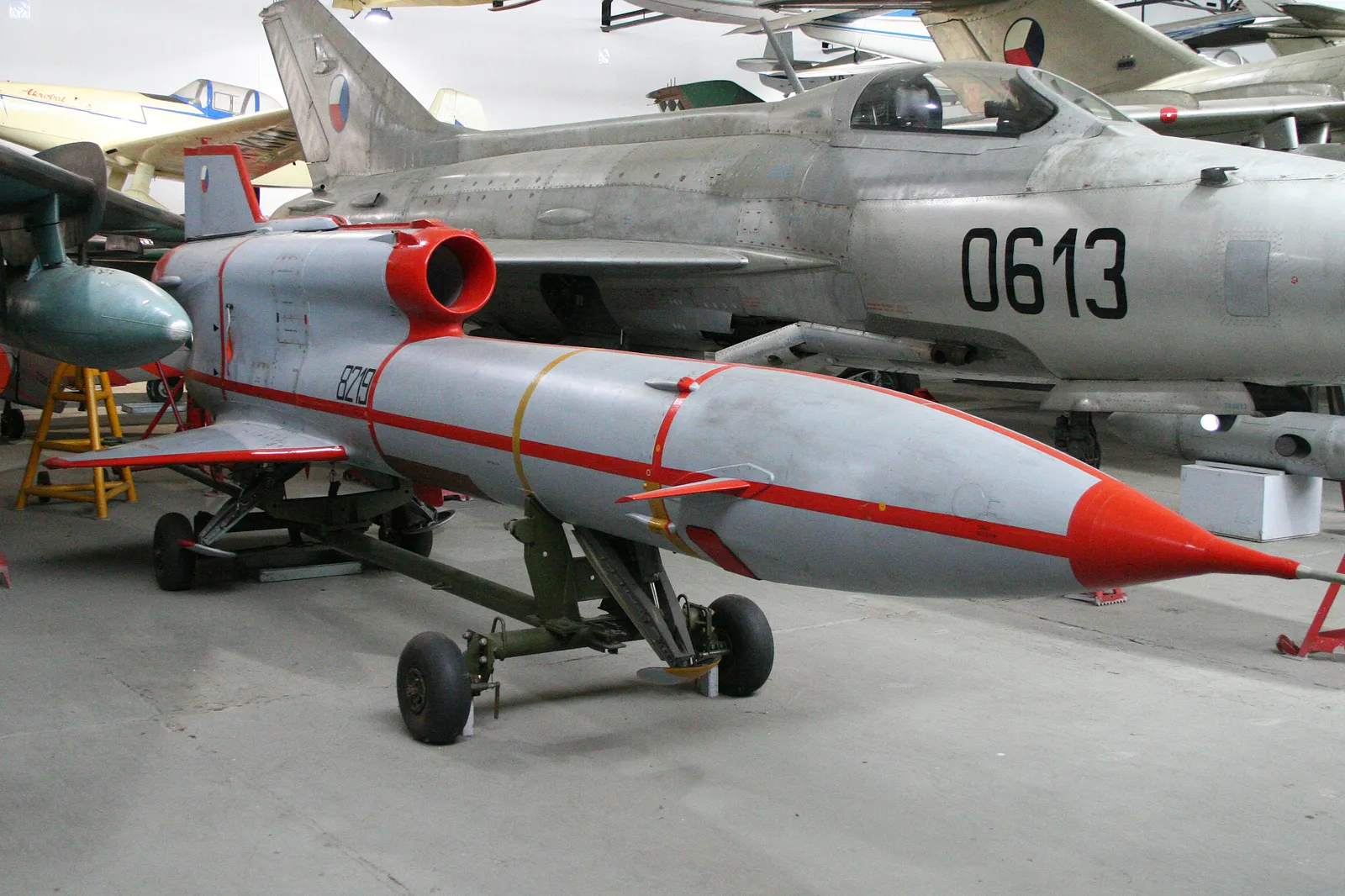
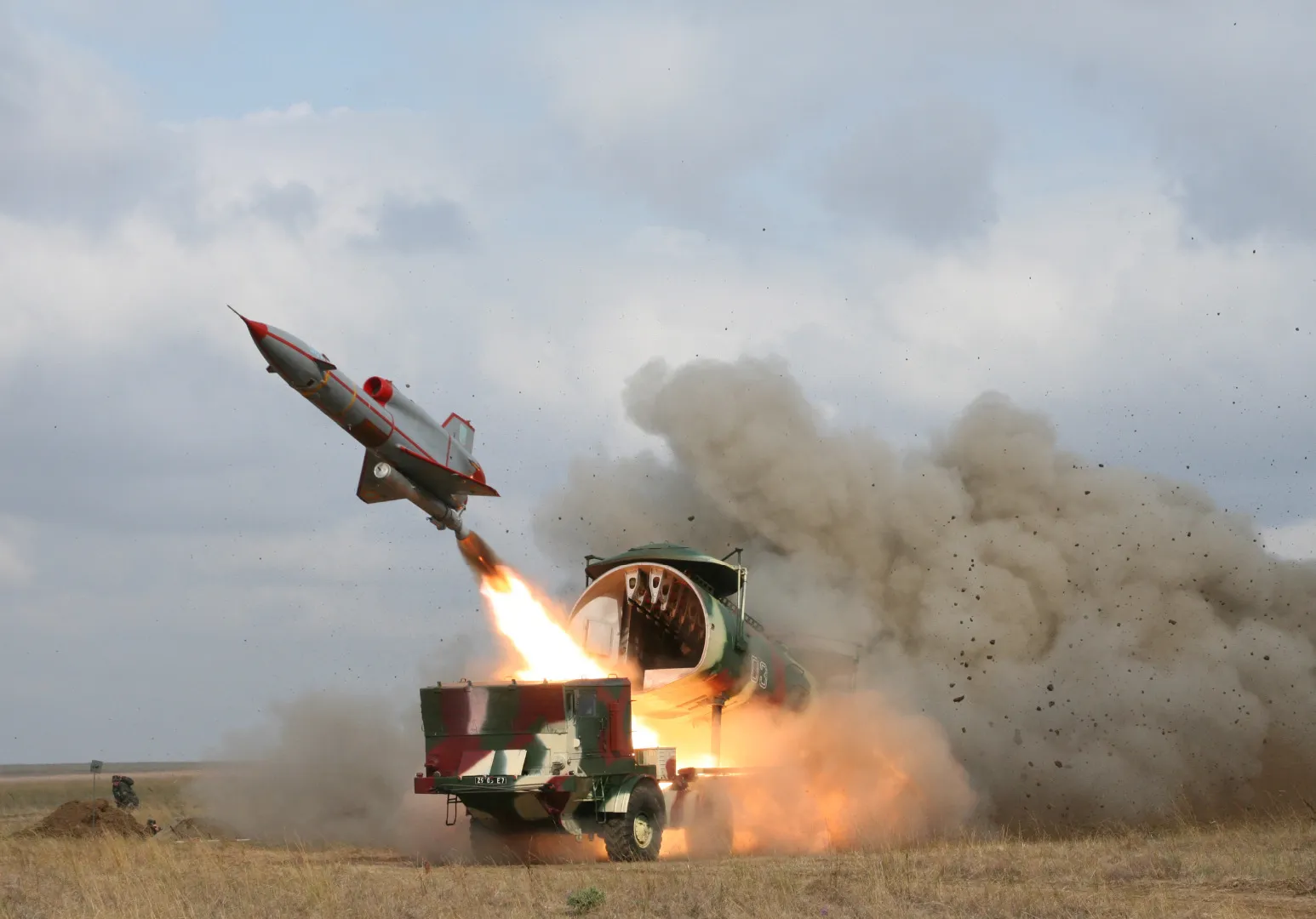
The Tupolev Tu-143 Reys is the air vehicle of the Soviet VR-3 Reis tactical reconnaissance complex, a jet-powered reusable UAV developed by Tupolev for low-altitude front-line reconnaissance. Produced in large numbers during 1973-1989, it used truck launch, booster assistance, parachute recovery, and interchangeable reconnaissance payloads; wartime reporting has documented Ukrainian Tu-143 examples in the Russia-Ukraine war and a Hezbollah DR-3 cruise-missile adaptation tied to the same airframe family.
Role in Conflicts
Israeli and defense-reporting accounts said Hezbollah prepared a DR-3 cruise missile in southern Lebanon in 2024; TWZ identified the DR-3 as another name for a converted Tu-143 Reys, while noting no confirmed wreckage from a successful Hezbollah launch.
Profile / Specs
Profile
- Origin
- Soviet Union
- Built by
- Tupolev
- Type
- Reusable tactical reconnaissance UAV
- Service note
- Cold War tactical reconnaissance UAV documented in Ukrainian wartime use after 2014
- Designer
- Tupolev Design Bureau
- Designed
- Late 1960s; first flight in 1970
- Produced
- 1973-1989
- Number built
- About 950
- Developed from
- Tupolev Tu-141
- Developed into
- Tupolev Tu-243 Reis-D
Specifications
- Crew
- Uncrewed
- Role
- Tactical reconnaissance UAV; later wartime use reported as reconnaissance, decoy, or adapted one-way strike platform
- Length
- 8.06 m
- Wingspan
- 2.24 m
- Height
- 1.545 m
- Wing area
- 2.90 sq m
- Launch weight
- 1,230 kg air vehicle; about 1,410 kg with booster
- Engine
- One TR3-117 turbojet; SPRD-251 solid-fuel launch booster
- Maximum speed
- About 950 km/h
- Cruising speed
- About 875-950 km/h
- Range
- About 170-200 km practical range; tactical reconnaissance depth often described around 60-80 km
- Reconnaissance altitude
- Low-altitude missions commonly described around 100-1,000 m; minimum flight height reported as low as 10 m
- Endurance
- About 13 minutes
- Launch and recovery
- Truck launch with booster assistance; parachute recovery for reuse
- Payloads
- PA-1 panoramic film camera, I-429B Chibis-B television reconnaissance equipment, or Sigma-R radiation reconnaissance equipment reported
Variants
The Tu-143 page covers the VR-3 Reis air vehicle and reconnaissance complex together; adjacent Tupolev unmanned systems are included only where they clarify the same design lineage.
| Variant | Configuration | Designation notes |
|---|---|---|
![]() | Larger VR-2 predecessor and adjacent family member | GlobalSecurity describes the Tu-141/VR-2 and Tu-143/VR-3 as related Tupolev reconnaissance complexes with similar layout and technical solutions, separated mainly by mission range. Sources: Tu-141 Strizh Tu-143 Reis |
| M-143 / VR-3VM | Target-drone derivative | Airwar and RedStar identify M-143/VR-3VM as a Tu-143-based unmanned target variant introduced or put into service in 1985. Sources: Tupolev Tu-143 Reis Airwar, VR-3 Reis Tu-143 Reis RedStar |
| Tu-243 / VR-3D Reis-D | Improved follow-on reconnaissance UAV | References describe the Tu-243 Reis-D as the improved Tu-143 follow-on with updated reconnaissance equipment and greater range. Sources: Tu-141 Strizh Tu-143 Reis, VR-3 Reis Tu-143 Reis RedStar |
Related Reconnaissance UAVs
The Tu-143 sat inside Tupolev's family of high-speed Soviet reconnaissance UAV complexes rather than standing alone. GlobalSecurity groups the operational-tactical Tu-141 Strizh, the tactical Tu-143/VR-3 Reys, and the later Tu-243 Reis-D as related designs, with the Tu-143 filling the shorter-radius tactical reconnaissance role.
Tu-141 Strizh was the larger operational-tactical member of the same Soviet reconnaissance-drone lineage.
Source label: Tu-141 Strizh Tu-143 Reis.
Tu-243/VR-3D Reis-D updated the Tu-143 concept with newer reconnaissance equipment and greater stated range.
Source labels: Tu-141 Strizh Tu-143 Reis; VR-3 Reis Tu-143 Reis RedStar.
Timeline
Tupolev Tu-143 Reys Key Events
First successful flight
Airwar dates the first successful Tu-143 UAV flight to December 1970.
Sources: Tupolev Tu-143 Reis Airwar
State trials began
Joint state trials began in 1972 and concluded successfully in 1976, after which the Reis complex was accepted for Soviet Army service.
Sources: Tupolev Tu-143 Reis Airwar
Pilot production started
Airwar reports a ten-aircraft pilot batch at the Kumertau plant in 1973 before full-scale production, while RedStar lists mass production from 1973 to 1989.
Sources: Tupolev Tu-143 Reis Airwar, VR-3 Reis Tu-143 Reis RedStar
Reis accepted into service
The VR-3 Reis reconnaissance complex completed state testing and was accepted for Soviet Army service in 1976.
Sources: Tupolev Tu-143 Reis Airwar, VR-3 Reis Tu-143 Reis RedStar
Target variant fielded
The M-143/VR-3VM unmanned target variant derived from the Tu-143 family is reported as entering service in 1985.
Sources: Tupolev Tu-143 Reis Airwar, VR-3 Reis Tu-143 Reis RedStar
Tu-143 production ended
Tu-143 production ended in 1989 after roughly 950 reconnaissance UAVs had been built.
Sources: Tupolev Tu-143 Reis Airwar, Tu-141 Strizh Tu-143 Reis
Ukrainian Tu-143 downed near Kursk
Aviation Safety Network records a Ukrainian Air Force Tu-143 from the 383rd Unmanned Aircraft Regiment as destroyed in combat near Kursk Oblast.
Sources: ASN Tu-143 Kursk 2022 Occurrence, Tu-143 Drone Downed Near Ukraine
Hezbollah DR-3 launch-site report
Israeli and defense-reporting accounts described a Hezbollah DR-3 cruise-missile launch site in southern Lebanon; TWZ identified DR-3 as a converted Tu-143 Reys name.
Sources: Hezbollah Tu-143 DR-3 Conversion, Ynet Hezbollah DR-3 Launch Site
Media
Tupolev Tu-143 Reys Images
Related Weapon Systems