Armored Vehicles

Puma 6x6

Also known as
  • Iveco Puma 6x6
  • VBL Puma 6x6
  • Puma VBL 6x6
  • Puma APC
  • Italian Puma 6x6
  • Puma (Italian armoured fighting vehicle)

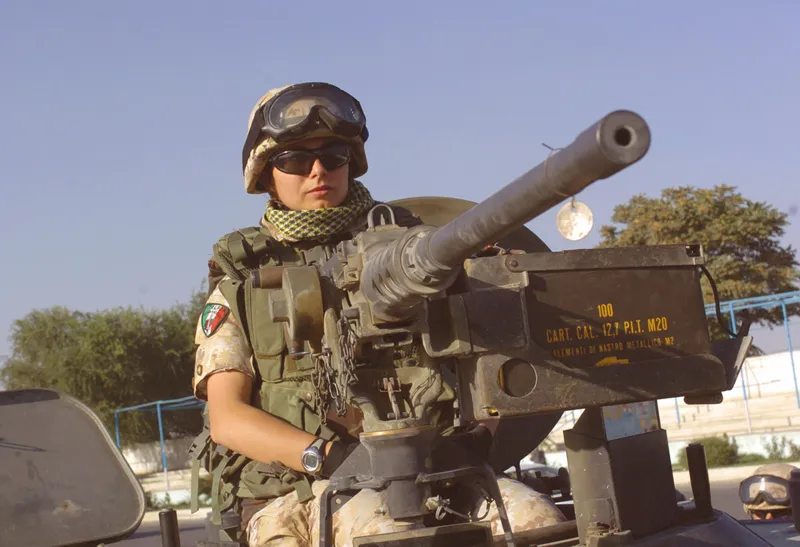
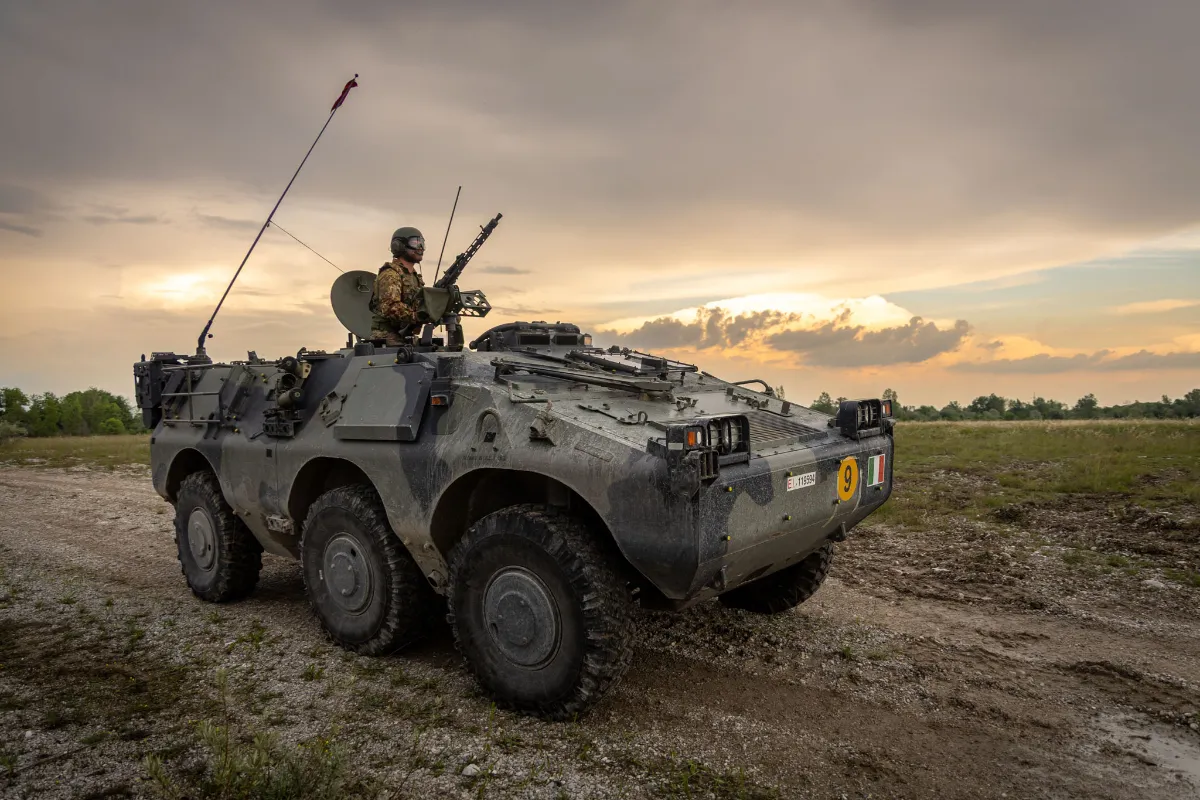
The Puma 6x6 is the larger six-wheel member of Italy's Puma light armored vehicle family, built by the Iveco-Fiat and OTO Melara industrial team as a compact troop carrier and reconnaissance-support vehicle alongside heavier Centauro units. Public Ukraine reporting documents Puma APCs in Ukrainian hands through battlefield imagery and subsequent sightings, but Italy has not publicly confirmed a transfer package or vehicle count.

Role in Conflicts

Profile / Specs

Profile

Origin
Italy; Italian Army stocks documented in Ukrainian service
Built by
IVECOOTO Melara
Built in
Italy
Type
6x6 wheeled armored personnel carrier
Service note
Italian Army production and service from the early 2000s; Ukrainian wartime sightings from 2024-2025
Designer
Iveco-Fiat and OTO Melara consortium
Designed
Prototype work from 1988-1990
Produced
Early 2000s Italian Army production; first production vehicles delivered in 2003
Number built
Open sources report roughly 580-610 Puma-family vehicles, split between 6x6 and 4x4 configurations
Developed from
Italian light armored vehicle work following the Iveco 6634 AVL and Centauro support requirement

Specifications

Crew and passengers
Two-person crew plus four to six dismounts depending on source and configuration counting
Armament
Typically 7.62 mm or 12.7 mm machine gun; remote weapon station and specialist missile or mortar configurations were proposed or trialed
Combat weight
About 8.2 t for the 6x6 variant in Ukraine-focused reporting; other specialist references place combat-loaded weight around 7.5-8.2 t
Engine
Iveco four-cylinder turbocharged diesel, commonly reported around 160 hp; Army Recognition lists a later technical value of 180 hp
Transmission and drive
Automatic transmission with six-wheel-drive automotive layout and shared 4x4/6x6 family components
Maximum road speed
About 100-110 km/h depending on source
Operational range
Approximately 700-800 km depending on source
Protection
Welded steel hull for small-arms fire and shell splinters; specialist sources describe STANAG Level 2-class ballistic protection for the 6x6
Dimensions
Compact light armored vehicle class; public references vary, with common figures around 5.1 m length, 2.1 m width, and 1.7 m height for the family
Vehicle Role

The Puma 6x6 is best read as light protected mobility rather than an infantry fighting vehicle. Its value is compact road and cross-country movement with small-arms protection, modest troop capacity, and machine-gun self-defense.

Family position

The 6x6 is the larger Puma troop-carrier branch; the 4x4 branch is shorter and carries fewer dismounts.

Sources: Defense Express Puma Ukraine; Army Recognition Puma 6x6.

Ukraine evidence

Public sources support Ukrainian use from imagery and sightings, but not an official Italian transfer count.

Sources: Defense Express Puma Ukraine; UNITED24 Puma Ukraine.

Protection class

Sources describe welded-steel small-arms and splinter protection, with mine and add-on-armor details varying across references.

Sources: Army Recognition Puma 6x6; Army Technology Puma.
Variants

The Puma family was produced in 6x6 and 4x4 layouts with shared automotive components and several proposed or trial mission variants.

VariantConfigurationDesignation notes
Puma 6x6 APCTroop-carrier configuration

The six-wheel configuration is the larger troop-carrier member of the family, described by Defense Express as carrying a two-person crew plus four infantry and by Army Recognition as the light-infantry/paratroop/amphibious-regiment carrier variant.

Sources: Defense Express Puma Ukraine, Army Recognition Puma 6x6

Puma 4x4Shorter reconnaissance and patrol variant

Ukraine reporting distinguishes the smaller 4x4 configuration from the 6x6, with lower dismount capacity and the same light armored family identity.

Sources: Defense Express Puma Ukraine, UNITED24 Puma Ukraine

Specialist Puma variantsCommand, ambulance, mortar, anti-tank, and air-defense proposals

Army Recognition describes command post, ambulance, 81 mm mortar carrier, MILAN/TOW anti-tank, Mistral surface-to-air, remote-turret, and add-on-armor configurations as planned, prototype, or mission-specific Puma 6x6 variants.

Sources: Army Recognition Puma 6x6

Timeline

Puma 6x6 Key Events

  1. Puma prototype work begins

    Army Recognition places the first Puma prototype in 1988, followed by additional prototypes in 1989-1990 that shaped the definitive light armored vehicle configuration.

    Sources: Army Recognition Puma 6x6

  2. Italian Army production order

    Specialist references describe a late-1990s Italian Army order for hundreds of Puma vehicles in both 6x6 and 4x4 configurations.

    Sources: Army Technology Puma, Army Recognition Puma 6x6

  3. Production vehicles delivered

    Army Recognition reports production beginning at Iveco's Bolzano facility in 2002 with first production vehicles delivered in 2003.

    Sources: Army Recognition Puma 6x6

  4. Puma appears in Ukraine-war imagery

    Defense Express and UNITED24 describe public awareness of Puma APCs in Ukraine beginning with imagery of a destroyed vehicle near Bilohorivka, Luhansk Oblast, in April 2024.

    Sources: Defense Express Puma Ukraine, UNITED24 Puma Ukraine

  5. Ukraine-operation reporting expands

    Defense Express and UNITED24 reported further sightings of Ukrainian-operated Puma APCs in both 6x6 and 4x4 configurations while noting that Italy had not publicly announced a matching transfer package.

    Sources: Defense Express Puma Ukraine, UNITED24 Puma Ukraine

Media
Related Weapon Systems
Centauro B1, 8x8 wheeled tank destroyer, Armored VehiclesArmored VehiclesCentauro B18x8 wheeled tank destroyerThe Centauro B1 is an Italian 8x8 wheeled tank destroyer built for cavalry reconnaissance, rapid road movement, and direct-fire support rather than main-battle-tank protection. Developed by the IVECO-Fiat and OTO Melara consortium, it combines an OTO Melara 105 mm/52 rifled gun, a four-person crew, long road range, and a comparatively light wheeled chassis; documented conflict use includes Italian UNOSOM II fighting in Somalia, coalition employment in Iraq, and Ukrainian service where crews have added anti-drone protection and used the gun from closed firing positions.
Patria 6x6, 6x6 wheeled armored personnel carrier and combat-support vehicle, Armored VehiclesArmored VehiclesPatria 6x66x6 wheeled armored personnel carrier and combat-support vehiclePatria 6x6 is a Finnish six-wheel armored personnel carrier and combat-support platform selected for the multinational Common Armoured Vehicle System programme. The vehicle combines protected troop transport, modular mission kits, optional amphibious capability, and configurations for command, medical evacuation, heavy APC, remote-weapon-station, and 120 mm NEMO mortar roles. By 2026 CAVS had seven NATO participants and nearly 2,000 ordered vehicles including options, while Latvia-produced Patria 6x6 APCs had been transferred to Ukrainian service during the full-scale phase of the 2014 Russia-Ukraine War.
VCC-2 Camilino, Tracked armored personnel carrier, Armored VehiclesArmored VehiclesVCC-2 CamilinoTracked armored personnel carrierThe VCC-2 Camilino is an Italian M113A1-derived tracked armored personnel carrier with added side armor, an open protected machine-gun position, and troop-carrier seating retained closer to the baseline M113 than the more heavily reshaped VCC-1. Ukraine-focused reporting documented VCC-2 vehicles in Ukrainian National Police service in 2024 and described Italy's 2025 plan to send additional retired vehicles to Ukraine, making the type part of Ukraine's broader M113-family armored mobility fleet.
Pinzgauer 6x6, 6x6 high-mobility military utility vehicle, Support EquipmentSupport EquipmentPinzgauer 6x66x6 high-mobility military utility vehicleThe Pinzgauer 6x6 is the six-wheel branch of the Austrian Steyr-Puch high-mobility all-terrain utility-vehicle family, later continued through diesel 718 and British-supported Vector protected-patrol forms. Its conflict record in Ukraine is best treated as light protected mobility and support equipment: donor and private channels delivered Pinzgauer and Vector vehicles for Ukrainian units, while open-source loss trackers later documented Ukrainian Pinzgauer Vector 718 losses.

Sources