Armored Vehicles

Puma 4x4

Also known as
  • Iveco Puma 4x4
  • VBL Puma 4x4
  • Puma VBL 4x4
  • Italian Puma 4x4
  • Puma 4x4 APC
  • Puma 4x4 AFV

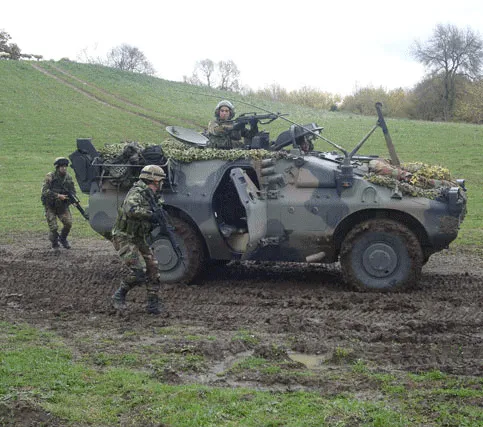
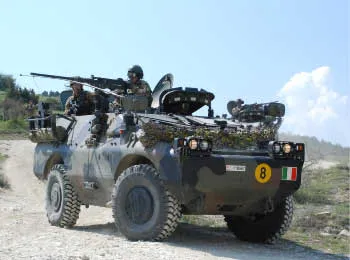
The Puma 4x4 is the shorter four-wheel branch of Italy's Puma light armored vehicle family, developed by the Iveco-Fiat and OTO Melara team for reconnaissance, patrol, and protected troop movement alongside Centauro-equipped units. Public reporting on the 2014 Russia-Ukraine War identifies Ukrainian operation of Italian Puma APCs in both 4x4 and 6x6 configurations, while leaving the transfer quantity and route publicly unresolved.

Role in Conflicts

Profile / Specs

Profile

Origin
Italy; Italian Army stocks documented in Ukrainian service
Built by
IVECOOTO Melara
Built in
Italy
Type
4x4 light armored reconnaissance vehicle
Service note
Italian Army service from the early 2000s; Ukrainian wartime sightings reported from 2024-2025
Designer
Iveco-Fiat and OTO Melara consortium
Designed
Prototype work from the late 1980s; Puma test vehicles completed by 1990
Produced
Early 2000s Italian Army production; first production vehicles delivered in 2003
Number built
Open sources commonly report roughly 580-610 Puma-family vehicles, including about 330 Puma 4x4 vehicles in Italian procurement counts

Specifications

Crew and passengers
Two-person crew plus two to four dismounts depending on source counting; Defense Express describes the 4x4 troop compartment as two soldiers
Armament
7.62 mm or 12.7 mm machine gun; remote weapon station and missile-family fits are described in specialist Puma references but not confirmed for Ukrainian 4x4 vehicles
Combat weight
About 7 t for the 4x4 variant in Ukraine-focused and reference reporting
Engine
Iveco four-cylinder turbocharged diesel, commonly reported around 160-180 hp depending on reference
Drive and transmission
4x4 wheeled layout with automatic transmission in the Puma family
Maximum road speed
About 110 km/h in common open references
Operational range
Approximately 700 km in common open references
Protection
Welded steel hull for small-arms and splinter protection; not a heavy armored fighting vehicle
Dimensions
Common family figures place the 4x4 at about 4.76 m length, 2.09 m width, and 1.67 m height
4x4 Role

The 4x4 Puma is best read as a compact reconnaissance and protected-mobility vehicle, not a heavy infantry fighting vehicle. Its Ukraine documentation supports presence and use by Ukrainian forces, while public sources do not establish a delivered quantity or a complete configuration list.

Family Position

The 4x4 branch is shorter and carries fewer dismounts than the 6x6 Puma, trading capacity for a compact reconnaissance and patrol profile.

Sources: Defense Express Puma Ukraine; Army Recognition Puma 6x6.

Ukraine Evidence

Public reporting identifies Ukrainian operation of Puma APCs in 4x4 and 6x6 configurations, but Italy has not publicly detailed the transfer route or count.

Sources: Defense Express Puma Ukraine; UNITED24 Puma Ukraine.

Protection Class

Official and specialist sources describe welded-steel small-arms protection; the 4x4 record does not imply heavy armor or IFV-level survivability.

Sources: Italian Defense Puma Technical Sale Notice; Army Technology Puma.
Variants

The Puma family splits into the shorter 4x4 reconnaissance/patrol vehicle and the longer 6x6 troop-carrier vehicle, with shared family components and overlapping armament options.

VariantConfigurationDesignation notes
Puma 6x6, 6x6 wheeled armored personnel carrier, Armored VehiclesPuma 6x6Longer troop-carrier family member

The 6x6 branch is the larger Puma carrier with higher dismount capacity; Ukraine reporting discusses both configurations together but distinguishes the 4x4 as the shorter, lower-capacity vehicle.

Sources: Defense Express Puma Ukraine, Army Recognition Puma 6x6

Puma 4x4 Hitrole fitRemote weapon station upgrade fit

Specialist references describe 12.7 mm Hitrole remote weapon station integration within the Puma family, though public Ukraine reports do not identify whether Ukrainian 4x4 vehicles carry that fit.

Sources: Army Technology Puma, Army Recognition Puma 6x6

Specialist Puma family conceptsCommand, ambulance, anti-tank, air-defense, and mortar roles

Army Recognition and Army Technology describe mission variants or proposed fits across the Puma family; the 4x4 record uses those as family context rather than confirmed Ukrainian configurations.

Sources: Army Recognition Puma 6x6, Army Technology Puma

Same Family Vehicles

The 4x4 and 6x6 Pumas are separate wheelbase branches of the same Italian light armored vehicle family rather than unrelated vehicles.

Compatible itemItem typeCompatibility evidence
Puma 6x6, 6x6 wheeled armored personnel carrier, Armored VehiclesPuma 6x66x6 light armored personnel carrier

Defense Express and UNITED24 discuss Ukrainian Puma APC sightings in both configurations, while Army Recognition describes the 6x6 as the larger troop-carrier member of the family.

Sources: Defense Express Puma Ukraine, UNITED24 Puma Ukraine, Army Recognition Puma 6x6

Timeline

Puma 4x4 Key Events

  1. Puma prototype work reaches test vehicles

    Army Recognition places early Puma prototype work in 1988, with additional test vehicles completed by 1990 before the family moved toward Italian Army production.

    Sources: Army Recognition Puma 6x6

  2. Italian Army production order

    Specialist references describe a late-1990s Italian Army order for hundreds of Puma vehicles in both 4x4 and 6x6 configurations.

    Sources: Army Technology Puma, Army Recognition Puma 6x6

  3. Production vehicles enter delivery

    Army Recognition reports production beginning at Iveco's Bolzano plant in 2002 and first production vehicles delivered in 2003.

    Sources: Army Recognition Puma 6x6

  4. Puma family appears in Ukraine-war imagery

    Defense Express and UNITED24 describe public awareness of Puma APCs in Ukraine beginning with imagery of a destroyed vehicle near Bilohorivka, followed by later sightings of Italian Puma vehicles in Ukrainian service.

    Sources: Defense Express Puma Ukraine, UNITED24 Puma Ukraine

  5. 4x4 and 6x6 configurations reported in Ukrainian use

    Defense Express and UNITED24 reported Ukrainian operation of Italian Puma APCs in both 4x4 and 6x6 configurations, while noting that Italy had not publicly announced the matching transfer details.

    Sources: Defense Express Puma Ukraine, UNITED24 Puma Ukraine

Media
Related Weapon Systems
Centauro B1, 8x8 wheeled tank destroyer, Armored VehiclesArmored VehiclesCentauro B18x8 wheeled tank destroyerThe Centauro B1 is an Italian 8x8 wheeled tank destroyer built for cavalry reconnaissance, rapid road movement, and direct-fire support rather than main-battle-tank protection. Developed by the IVECO-Fiat and OTO Melara consortium, it combines an OTO Melara 105 mm/52 rifled gun, a four-person crew, long road range, and a comparatively light wheeled chassis; documented conflict use includes Italian UNOSOM II fighting in Somalia, coalition employment in Iraq, and Ukrainian service where crews have added anti-drone protection and used the gun from closed firing positions.
Iveco LMV, 4x4 protected light multirole vehicle, Armored VehiclesArmored VehiclesIveco LMV4x4 protected light multirole vehicleThe Iveco LMV is an Italian 4x4 protected multirole vehicle built around patrol, liaison, command, and troop-mobility tasks where mine and small-arms protection matter more than heavy-vehicle firepower. The family is known as VTLM Lince in Italian service, Panther in British service, and Rys in Russian service; in the 2014 Russia-Ukraine War it appears both as donor-supplied vehicles for Ukraine and as Russian LMV Rys vehicles documented among battlefield losses.
Dozor-B, 4x4 light armored personnel carrier, Armored VehiclesArmored VehiclesDozor-B4x4 light armored personnel carrierThe Dozor-B is a Ukrainian 4x4 light armored personnel carrier developed by Kharkiv Morozov Machine Building Design Bureau for protected patrol, reconnaissance, command, medical, and troop-transport roles. Its public record now divides between a small Ukrainian Dozor-B run and the Polish-built Oncilla derivative family, including Ukrainian wartime Oncilla deliveries, battlefield use, specialist Oncilla variants, and the Oncilla-Shturm configuration approved by Ukraine's Ministry of Defence in 2024.

Sources