Support Equipment

Pathfinder DVL

Also known as
  • Teledyne Pathfinder DVL
  • Pathfinder Doppler Velocity Log
  • Pathfinder 600 DVL
  • Pathfinder 300 DVL
  • Pathfinder 300 kHz DVL

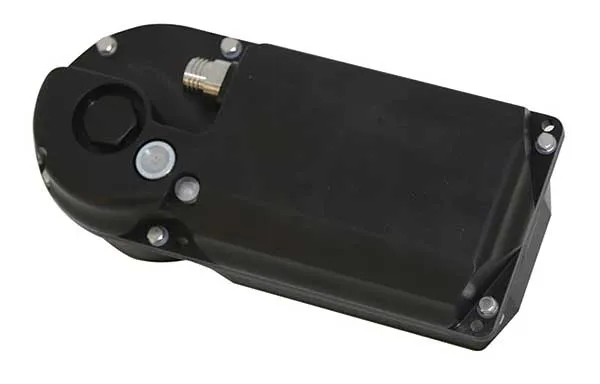
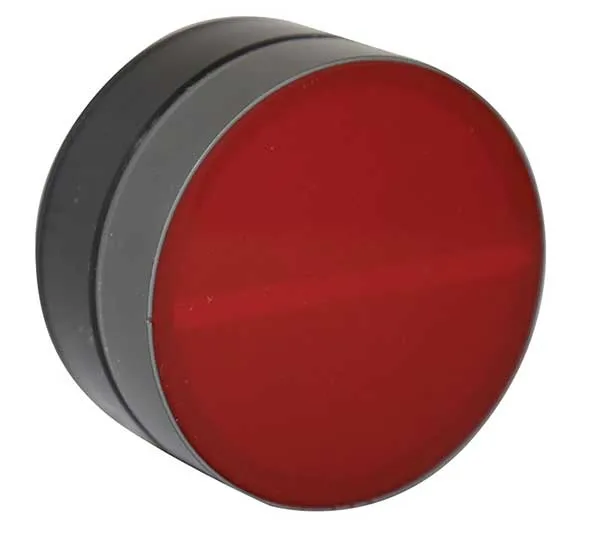
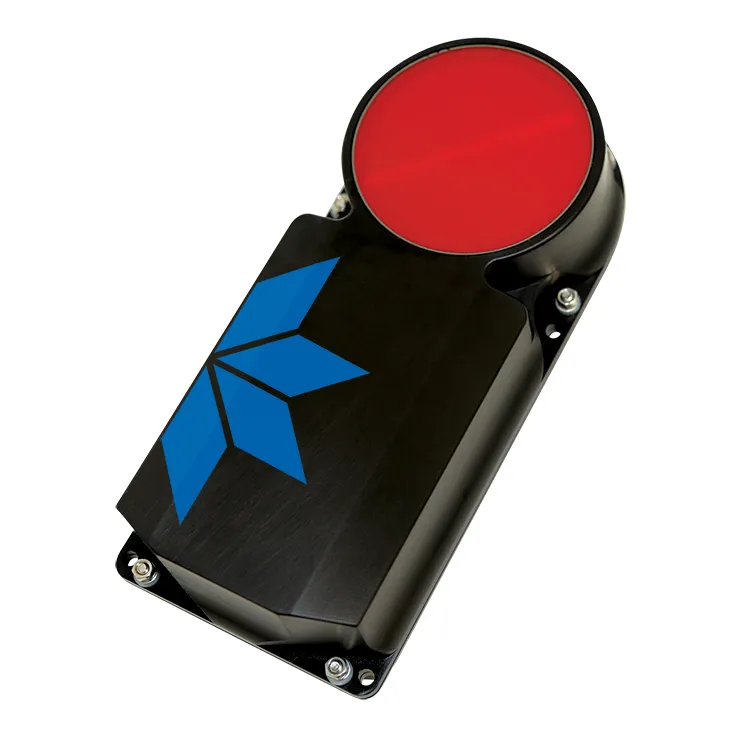
Pathfinder DVL is a compact Teledyne RD Instruments phased-array Doppler velocity log for underwater vehicle navigation, position control, and current-profile options. Official Teledyne material describes 600 kHz and OEM-only 300 kHz configurations, bottom and water tracking for ROVs and AUVs, optional XRT extended bottom tracking, health monitoring, INS-ready outputs, and optional ADCP-style current profiling.

Profile / Specs

Profile

Origin
United States
Type
Phased-array Doppler velocity log
Service note
2010s-present marine navigation sensor
Designer
Teledyne RD Instruments
Unit cost
Not publicly documented

Specifications

Instrument class
Phased-array Doppler velocity log
Frequency options
600 kHz and OEM-only 300 kHz configuration
Bottom tracking
Up to 89 m for 600 kHz, with optional 150 m; up to 275 m for 300 kHz, with optional 500 m in ideal conditions
Minimum bottom-track altitude
0.15 m for 600 kHz; 0.3 m for 300 kHz
Water profiling
Up to 47 m for 600 kHz and 150 m for 300 kHz
Velocity range
Bottom tracking listed to +/-1.6 m/s below 0.35 m altitude and +/-9 m/s above 0.35 m altitude; water profiling listed to +/-15 m/s
Maximum ping rate
12 Hz for 600 kHz and 7 Hz for 300 kHz
Beam geometry
Four-beam phased-array transducer, nominal 30 degree beam angle
Operating depth
Self-contained 600 kHz options to 300 m or 500 m; OEM options listed to 300 m, 1,000 m, and 6,000 m
Input power
10.7-36 VDC for 600 kHz and 12-36 VDC for 300 kHz
Communications
Ethernet and RS232, with optional factory-installed RS422
Navigation outputs
Bottom track, water track, INS-ready standard deviation/time-validity outputs, and optional ADCP current profiling
Navigation Modes And Options

Pathfinder is a navigation sensor rather than a weapon effect. Its public documentation is most useful for understanding how underwater vehicles maintain velocity and position estimates when operating close to the seabed or through the water column.

Bottom track

The DVL measures vehicle motion relative to the bottom when the seabed is within range, with optional XRT extending published bottom-track range.

Source: Pathfinder DVL datasheet.

Water track

When bottom lock is unavailable, water-track output can provide velocity through a configured water-mass layer.

Source: Pathfinder DVL guide.

Current profiling

Optional current-profiling firmware lets the unit report water-column current velocities in depth cells, overlapping the ADCP role in compact vehicle installations.

Sources: Pathfinder DVL datasheet; Pathfinder DVL guide.

Navigation-system fit

Teledyne documentation describes INS-ready outputs and integration guidance for serial or Ethernet control, transducer alignment, and ship-axis coordinate setup.

Sources: Pathfinder DVL datasheet; Pathfinder OEM integration guide.

Documented Platform Integrations

Public sources document Pathfinder DVL integration on unmanned underwater and naval support systems rather than confirmed combat employment. Riptide selected the 600 kHz Pathfinder DVL to provide precision navigation for its Micro UUV under a U.S. Navy order. Teledyne Marine separately documents Gavia AUV configurations using PHINS inertial navigation aided by Pathfinder DVL, including Polish mine-countermeasure Gavia systems associated with Kormoran and Kormoran II class vessels. A UAE Navy delivery also listed a SeaBotix vLBV300 ROV equipped with a Teledyne RD Instruments Pathfinder DVL and SmartFlight autonomous ROV navigation package.

Sources: Military Embedded Systems Riptide order; Gavia DVL-aided INS C3 module; Teledyne Poland Gavia AUV order; Ocean News UAE unmanned systems delivery.

Timeline

Pathfinder DVL Key Events

  1. 600 kHz Pathfinder launch covered publicly

    Ocean News & Technology reported Teledyne's ultra-compact 600 kHz Pathfinder DVL launch for subsea and surface vehicles, including AUV, ROV, and USV applications.

    Sources: Ocean News Pathfinder launch report

  2. Riptide Micro UUV order reported

    Military Embedded Systems reported that Riptide selected Teledyne RD Instruments' 600 kHz Pathfinder DVL to provide precision navigation for a Micro UUV under a U.S. Navy order.

    Sources: Military Embedded Systems Riptide order

  3. Datasheet revision covers 600 kHz and 300 kHz configurations

    Teledyne's February 2022 Pathfinder datasheet documented 600 kHz and OEM-only 300 kHz specifications, bottom and water tracking, optional XRT, health monitoring, and optional ADCP current profiling.

    Sources: Pathfinder DVL datasheet

  4. 300 kHz Pathfinder webinar

    Teledyne promoted a webinar introducing the 300 kHz Pathfinder DVL and related navigation product-line updates.

    Sources: Teledyne 300 kHz Pathfinder webinar

  5. OEM integration guide revision

    Teledyne's January 2025 OEM integration guide documented current power, serial/Ethernet, and transducer-alignment guidance for Pathfinder OEM installations.

    Sources: Pathfinder OEM integration guide

Media
Related Weapon Systems
Acoustic Doppler Current Profiler (ADCP), Current profiling instrument, Support EquipmentSupport EquipmentAcoustic Doppler Current Profiler (ADCP)Current profiling instrumentAcoustic Doppler Current Profiler (ADCP) is a hydroacoustic current-measurement instrument that uses Doppler-shifted sound returns to profile water-current speed and direction through the water column. Teledyne RD Instruments, Nortek, NOAA, NASA, and USGS sources document ADCPs as shipboard, moored, seafloor, buoy, vehicle-mounted, and river-discharge instruments, with the cataloged Haixun 08 fit showing how this commercial sensor class appears in a hydrographic survey-vessel suite.
Nortek Signature VM Coastal, Vessel-mounted acoustic Doppler current profiler package, Support EquipmentSupport EquipmentNortek Signature VM CoastalVessel-mounted acoustic Doppler current profiler packageNortek Signature VM Coastal is a Norwegian vessel-mounted acoustic Doppler current profiler package for vessel-of-opportunity surveys in rivers, deltas, coastal waters, ports, harbors, discharge sections, and mixing studies. Nortek frames the package around Signature 1000, 500, or 250 kHz ADCP instruments, a fairing bracket, GNSS satellite compass, compact processing unit, and acquisition/review software, with the lower-frequency 250 kHz lane extending the coastal family toward 200 m profiling contexts.
HUGIN autonomous underwater vehicle, Autonomous underwater vehicle, Support EquipmentSupport EquipmentHUGIN autonomous underwater vehicleAutonomous underwater vehicleHUGIN is a Norwegian autonomous underwater-vehicle family developed by FFI and Kongsberg Maritime for subsea survey, hydrography, offshore inspection, salvage search, and naval missions such as mine countermeasures and seabed warfare support. The family spans configurable HUGIN vehicles, HUGIN Superior, and long-range HUGIN Endurance designs that combine synthetic-aperture sonar, multibeam mapping, inertial navigation, launch-and-recovery equipment, and autonomous mission execution rather than a weapon payload.
Manned Combat Submersible, Dry special-operations submersible, Naval SystemsNaval SystemsManned Combat SubmersibleDry special-operations submersibleThe Lockheed Martin Manned Combat Submersible is the public product-line name associated with USSOCOM's Dry Combat Submersible Block 1, a dry, battery-powered swimmer-delivery vehicle derived from the S351 Nemesis family. Open sources document contract award, testing, IOC, FOC, and follow-on Block 2 planning rather than confirmed use in a named armed conflict, so this entry is maintained as a relationship-only system profile.
AN/TPQ-37 Firefinder radar, Long-range counter-battery radar, Electronic WarfareElectronic WarfareAN/TPQ-37 Firefinder radarLong-range counter-battery radarThe AN/TPQ-37 Firefinder is a U.S. long-range weapon-locating radar built to detect artillery and rocket launches, compute firing points, and pass coordinates for counter-battery fire. Developed from the Army's Firefinder program and produced by Hughes Aircraft before later Raytheon/ThalesRaytheonSystems sustainment and upgrade work, the Q-37 complemented the shorter-range AN/TPQ-36, shaped Coalition counterbattery tactics in Desert Storm, and later appeared in Ukraine's partner-supplied artillery reconnaissance network.

Sources