Support Equipment

MTU-20

Also known as
  • MTU 20
  • MTU-20 AVLB
  • MTU-20 armored bridge layer
  • MTU-20 armoured bridgelayer
  • Object 602
  • Ob'yekt 602
  • Tankoviy Mostoukladchik MTU-20
  • Tankoviy Mostoukladchik
  • T-55 MTU-20

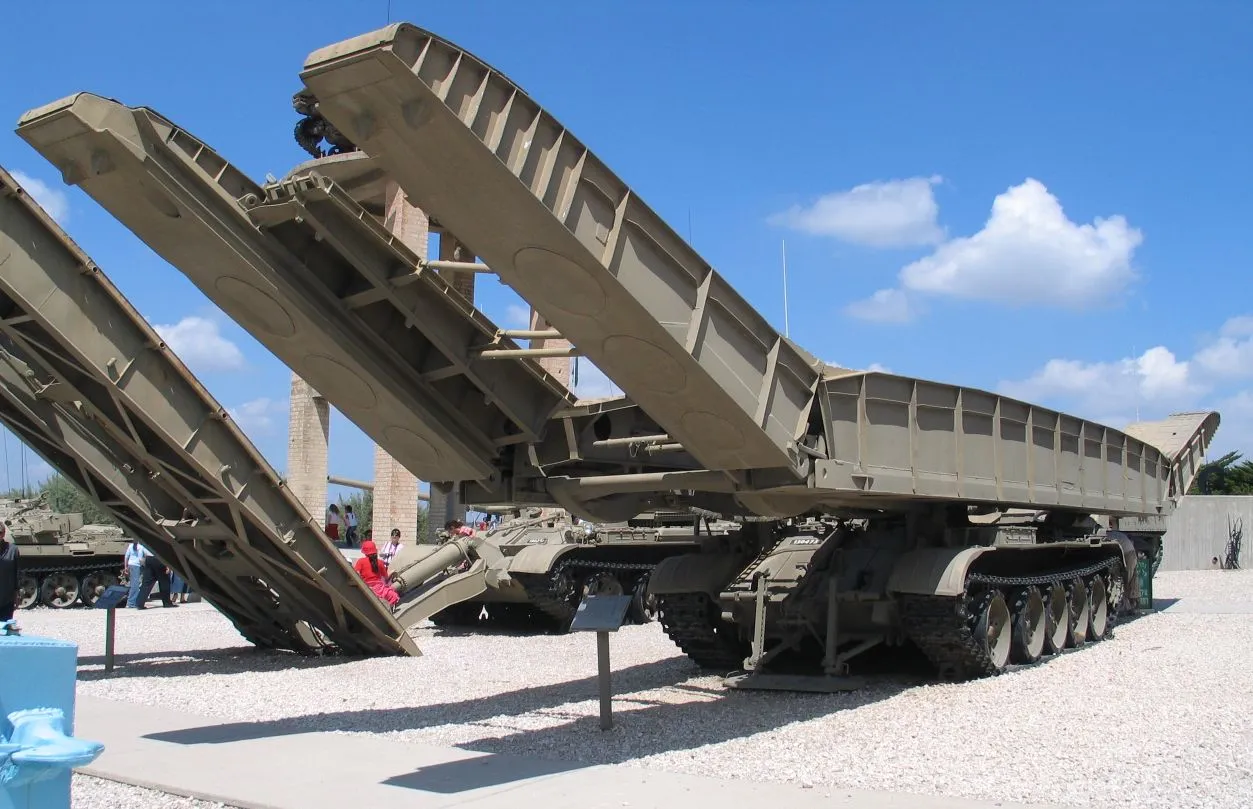
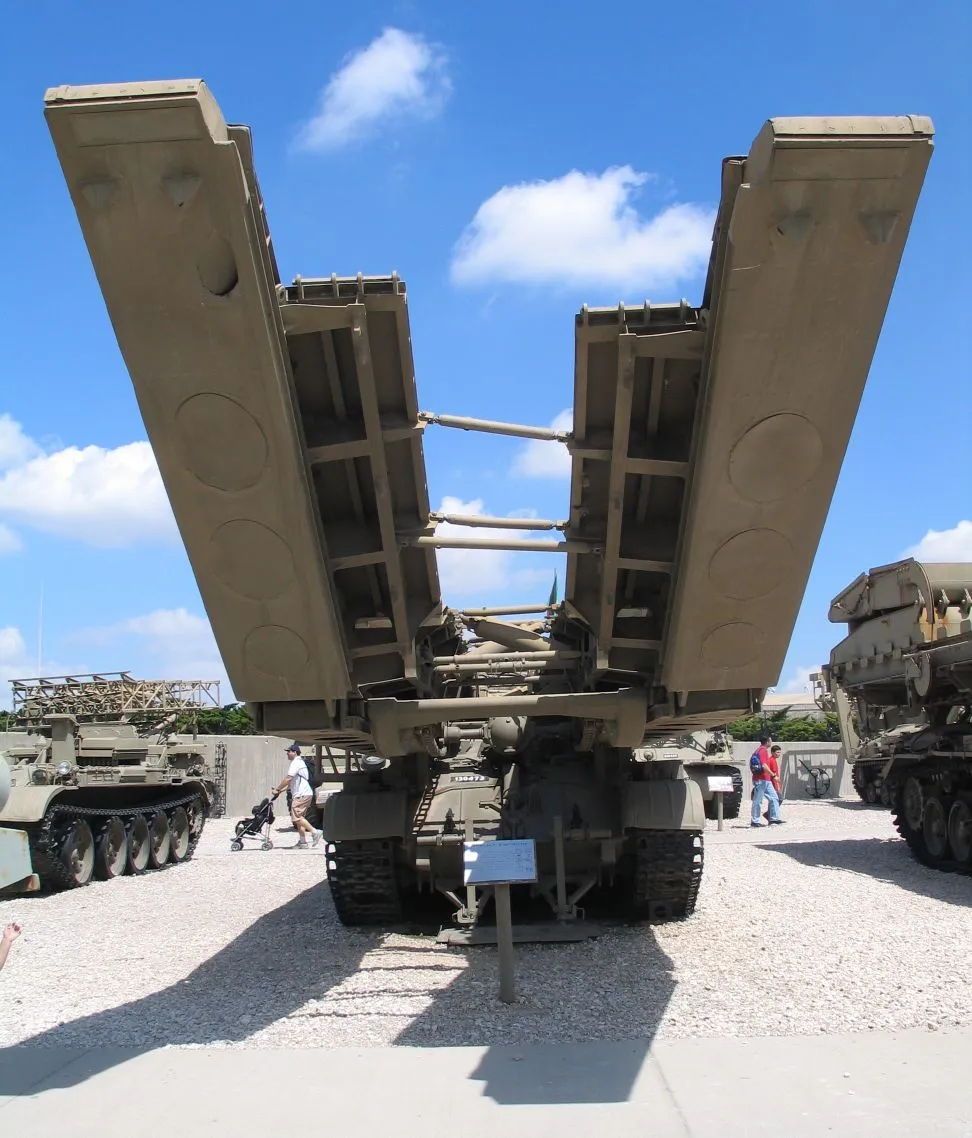
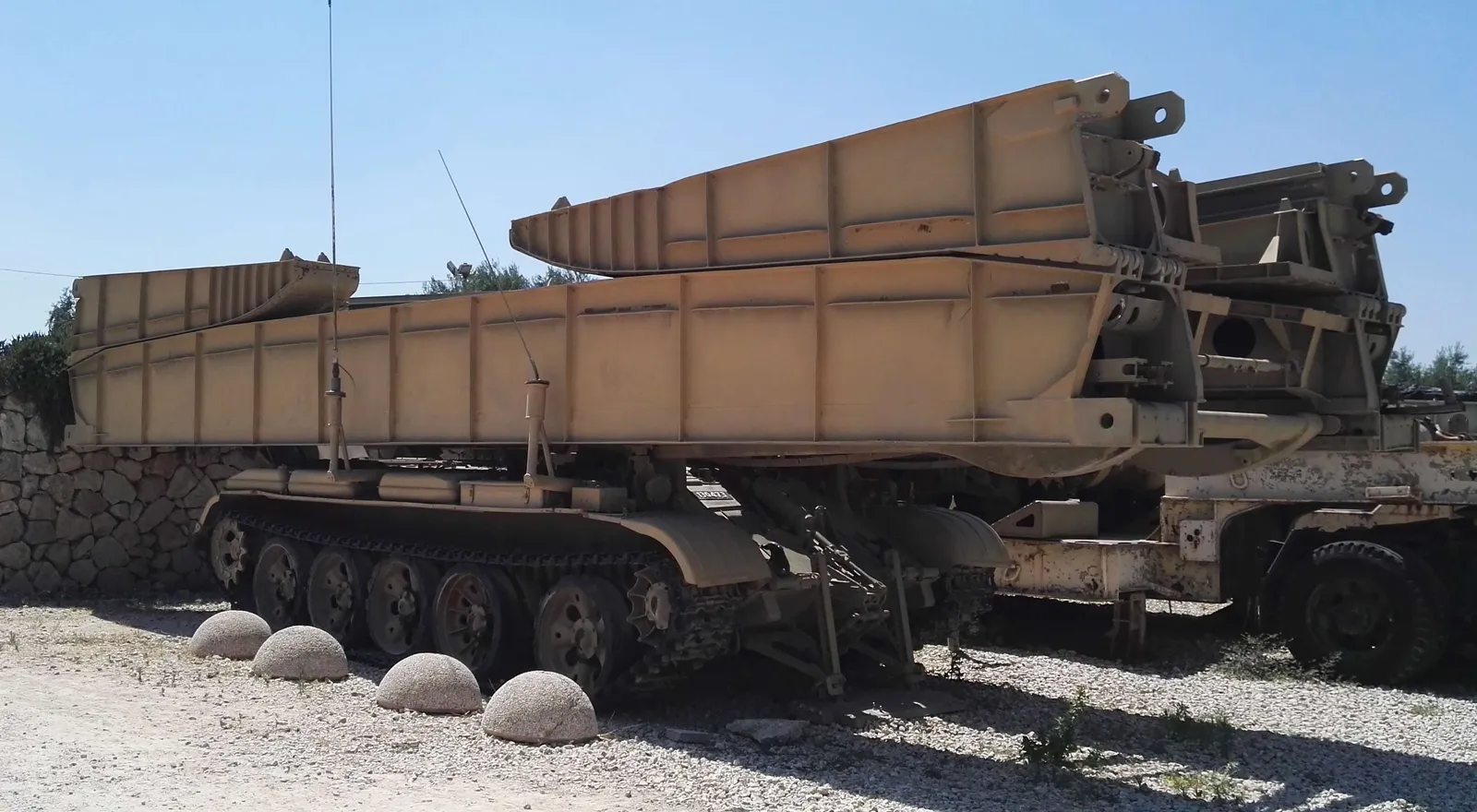
The MTU-20 is a Soviet armored vehicle-launched bridge built on the T-54/T-55 tank chassis. It carries a twin-treadway metal span that can be launched from under armor to move tanks and other heavy vehicles over ditches, rivers, and other tactical obstacles. Recent open-source reporting documents Russian MTU-20 use near the Donetsk and Pokrovsk axes in Ukraine, where Ukrainian drone units targeted bridge-layer vehicles supporting attempted armored movement.

Role in Conflicts

Side
Russia

Russian MTU-20 bridge-layer vehicles are documented in Russian equipment losses and 2025 Donetsk/Pokrovsk-area reporting, including vehicles struck by Ukrainian drone units while supporting or attempting tactical crossings for Russian armored movement.

Role details
Profile / Specs

Profile

Origin
Soviet Union
Type
Armored vehicle-launched bridge / tank bridgelayer
Service note
Cold War Soviet engineering vehicle with documented Russian battlefield use in the 2022 full-scale phase of the 2014 Russia-Ukraine War
Designer
Omsktransmash
Designed
1950s-1960s
Produced
Cold War Soviet production period; exact MTU-20 production total not consistently published
Number built
Not consistently published
Developed from
T-54/T-55 tank chassis

Specifications

Crew
2
Platform
Modified T-54/T-55 tank chassis
Combat weight
About 37 metric tons
Bridge type
Twin-treadway metal assault bridge
Bridge length
20 m class span
Obstacle span
Reported for obstacles up to about 18 m
Load capacity
About 50 tonnes
Launch method
Forward cantilever launch from under armor
Vehicle length with bridge
About 11.6-11.64 m in travelling configuration
Chassis And Bridge Launch Method

The MTU-20 carries its bridge above a modified T-54/T-55 chassis and launches the span forward using a low-profile cantilever method. Reference descriptions distinguish it from simpler bridge carriers because the treadway bridge is moved out over a launching girder, lowered onto the far bank, and then set down on the near bank while the crew remains under armor.

Tactical role

Rapid armored crossings for tanks and mechanized vehicles at ditches, canals, ravines, narrow rivers, or broken crossing points.

Bridge class

Open sources commonly describe a 20 m class twin-treadway span with roughly 50 tonne load capacity.

Chassis logic

The T-54/T-55 hull gave Soviet engineer units a protected tracked platform that could move with tank formations rather than waiting for truck-carried bridging assets.

Bridge-Layer Family Links

The MTU-20 sits in a Soviet tank-chassis bridge-layer line: open references describe it as a T-54/T-55-based system, while ODIN describes the later MTU-72 as a T-72-based bridge layer that replaced or supplemented MTU-20 and MT-55 equipment.

Catalog recordConnectionDetail
T-54/T-55, Main battle tank / medium tank family, TanksT-54/T-55Base chassis familyODIN and specialist reference descriptions identify the MTU-20 as an armored bridge-layer vehicle built on the T-54/T-55 tank chassis.
T-72, Main battle tank, TanksT-72Later family branchODIN describes the MTU-72 as a later T-72-based armored bridge-layer system in the same replacement or supplement path as MTU-20.

Sources: MTU-20 Russian Armored Vehicle-Launched Bridge; Russian MTU T-54/55 AVLB; MTU-72 Russian Armored Vehicle Launched Bridge.

Variants

The MTU-20 belongs to the Soviet MTU bridge-layer line, following shorter-span T-54/T-55-based bridge layers and preceding later T-72-based MTU-72 equipment.

VariantConfigurationDesignation notes
MTU-12Earlier T-54/T-55-based bridge layer

Reference descriptions identify the MTU-12 as an earlier bridge-layer tank with a shorter 12 m single-span bridge and a 50 tonne class capacity.

Sources: Russian MTU T-54/55 AVLB

MTU-72Later T-72-based bridge layer

ODIN describes the MTU-72 as a later Russian armored bridge-layer system that replaced or supplemented MTU-20 and MT-55 bridge layers.

Sources: MTU-72 Russian Armored Vehicle Launched Bridge

Timeline

MTU-20 Key Events

  1. Earlier MTU-12 bridge layer enters service

    Reference descriptions place the earlier MTU-12 bridge-layer tank in service in 1955, establishing the Soviet MTU bridge-layer line before the longer-span MTU-20.

    Sources: Russian MTU T-54/55 AVLB

  2. MTU-20 follows with a longer span

    ODIN and specialist reference descriptions identify the MTU-20 as a T-54/T-55-based replacement system with a longer bridge than the MTU-1/MTU-12 generation.

    Sources: MTU-20 Russian Armored Vehicle-Launched Bridge, Russian MTU T-54/55 AVLB

  3. Russian MTU-20 struck near Pokrovsk

    UNITED24 Media reported a Ukrainian FPV-drone strike on a Russian MTU-20 near the Pokrovsk area while Russian forces were attempting a tactical crossing.

    Sources: UNITED24 Russian Armored Bridge Layer Strike

  4. MTU-20 reported destroyed on Donetsk axis

    Defense Express reported that Ukraine's 427th Separate Regiment of Unmanned Systems struck an MTU-20 bridge-layer vehicle among Russian armored assets on the Donetsk axis.
    Sources: Defense Express MTU-20 Donetsk Axis

Media
Related Weapon Systems
MT-LB with 14.5 mm BPU-1 turret, Improvised tracked armored fire-support vehicle, Armored VehiclesArmored VehiclesMT-LB with 14.5 mm BPU-1 turretImprovised tracked armored fire-support vehicleThe MT-LB with 14.5 mm BPU-1 turret is an improvised armored fighting vehicle that places a conical BPU-1 machine-gun turret, normally associated with BRDM-2 and BTR-family vehicles, onto the Soviet MT-LB tracked carrier. Open-source loss records document both Russian and Ukrainian examples in the 2014 Russia-Ukraine War, making the vehicle a narrow but useful example of how both sides converted available armored chassis into heavier direct-fire platforms.
MT-LBu, Amphibious tracked armored carrier and specialist chassis, Armored VehiclesArmored VehiclesMT-LBuAmphibious tracked armored carrier and specialist chassisThe MT-LBu is a Soviet amphibious tracked armored carrier and specialist chassis derived from the MT-LB family. Its higher hull, longer seven-road-wheel chassis, and 300 hp YaMZ diesel engine gave armies more internal volume and payload margin for command posts, artillery fire-control vehicles, radar carriers, electronic-warfare systems, and later battlefield conversions in conflicts such as the 2014 Russia-Ukraine War.
T-54/T-55, Main battle tank / medium tank family, TanksTanksT-54/T-55Main battle tank / medium tank familyThe T-54/T-55 is a Soviet tank family built around a low-profile tracked hull, four-person crew, and 100 mm D-10-series gun. It became one of the most widely produced tank families of the Cold War, with Soviet and licensed production spreading across Warsaw Pact and partner states. Direct conflict sourcing traces the family from North Vietnamese T-54 use in the 1975 fall of Saigon and Iraqi T-55s in the Gulf War to recent secondary fire-support, capture, and loss contexts in Ukraine, Yemen, Libya, Syria, Nagorno-Karabakh, Nigeria, and Sudan.
T-55-ZU-23, Improvised self-propelled anti-aircraft gun, Air DefenseAir DefenseT-55-ZU-23Improvised self-propelled anti-aircraft gunThe T-55-ZU-23 is an improvised Ukrainian short-range air-defense vehicle that combines a T-55-series tank chassis with a ZU-23-family twin 23 mm anti-aircraft gun installation. Public sourcing is narrow but specific: OSCE monitors observed the same T-55/ZU-23 configuration in the Donetsk security zone in January 2017, and MilitaryLand identifies T-55-ZU-23 in the equipment inventory of Ukraine's 54th Mechanized Brigade. The record is best read as a field or depot conversion that trades the T-55's original tank role for mobile high-volume 23 mm fire against low-altitude threats and exposed ground targets.
MT-LB with 25 mm 2M-3 naval gun, Improvised tracked self-propelled anti-aircraft gun, Air DefenseAir DefenseMT-LB with 25 mm 2M-3 naval gunImprovised tracked self-propelled anti-aircraft gunThe MT-LB with 25 mm 2M-3 naval gun is a Russian improvised weapons carrier that combines the Soviet MT-LB tracked armored tractor with a twin 25 mm 2M-3 or 2M-3M naval anti-aircraft mount. Open-source reporting and Russian loss documentation tie the conversion to the full-scale 2014 Russia-Ukraine War, where it appears as a short-range air-defense and direct-fire adaptation rather than a standardized factory combat vehicle.

Sources