Munitions

L15 High Explosive

Also known as
  • L15 HE
  • L15 155 mm HE
  • NATO L15
  • L15 unassisted projectile
  • L15A1
  • L15A2

L15 High Explosive is a British 155 mm unguided high-explosive artillery shell in BAE Systems' ammunition line. BAE lists a 43.5 kg, 874 mm L15 projectile with a high-tensile steel thin-wall body, RDX/TNT explosive filling, a STANAG 2916 fuze interface, and blast-fragmentation effect; FAS identifies AS-90 as firing the NATO L15 unassisted projectile to 24.7 km.

Profile / Specs

Profile

Origin
United Kingdom
Built by
BAE Systems
Type
155 mm high-explosive artillery shell
Service note
Contemporary

Specifications

Caliber
155 mm
Munition class
Unguided high-explosive artillery shell
Projectile weight
43.5 kg
Overall length
874 mm
Explosive content
11.3 kg net explosive content with RDX/TNT filling
Body
High-tensile steel body with a thin wall optimized for fragmentation and blast effect
Fuze interface
STANAG 2916 fuze cavities for user-selected fuzes
Fuze examples
Proximity, impact, and multi-role fuzes; BAE identifies L166 as the current UK 155 mm HE in-service standard
Maximum range
24.7 km from JBMoU L/39 guns; BAE lists a 32.0 km L/52 compatible variant under UK MOD validation
Compatibility
Designed for use with a range of 155 mm guns; AS-90 is publicly documented firing NATO L15
Variants

BAE presents L15 High Explosive as part of a 155 mm shell line that includes extended-range, inert training, and newer insensitive-munition projectiles; public compatibility records also use L15A1 and L15A2 designations.

VariantConfigurationDesignation notes
L15A1 / L15A2AS-90 shell designations

GlobalSecurity identifies L15A1/A2 shells in AS-90 range-development context.

Sources: AS90 - 155mm Howitzer

XL12E1 HE ERExtended-range high-explosive projectile

BAE describes XL12E1 HE ER as adapted from the proven L15 body, adding a boat-tail and base-bleed configuration with insensitive-munition filling.

Sources: 155mm Artillery Ammunition

L17 InertBallistically matched inert projectile

BAE describes L17 Inert as having the same external shape as L15 High Explosive so it is ballistically matched.

Sources: 155mm Artillery Ammunition

Documented Artillery Compatibility

BAE describes L15 High Explosive as a 155 mm shell for a range of 155 mm guns; the structured links here are limited to cataloged systems named in public sources.

Compatible itemItem typeCompatibility evidence
AS-90, 155 mm tracked self-propelled howitzer, ArtilleryAS-90155 mm self-propelled howitzer

FAS identifies AS-90 as firing the NATO L15 unassisted projectile, and BAE lists L15 as a 155 mm shell designed for use with a range of 155 mm guns.

Sources: 155mm Artillery Ammunition, AS 90 155mm - Self Propelled Howitzer

FH70 155 mm howitzer, 155 mm towed howitzer, ArtilleryFH70 155 mm howitzer155 mm towed howitzer

GlobalSecurity says the trinational FH70 memorandum of understanding covered development, evaluation, and production of the howitzer and ammunition comprising the L15 HE shell, charges, and primers.

Sources: FH-70 - 155mm Howitzer

M109, 155 mm tracked self-propelled howitzer family, ArtilleryM109155 mm tracked self-propelled howitzer family

The same FH70 ammunition account says stocks of the same 155 mm ammunition were also bought for use with the M109 gun.

Sources: FH-70 - 155mm Howitzer

Projectile And Family Context

BAE's 155 mm shell literature presents L15 as the baseline high-explosive projectile in a small family of related 155 mm shell designs.

DesignationRoleDocumented relationship
L15 HEUnguided high-explosive shell43.5 kg projectile with an 874 mm overall length, RDX/TNT filling, and blast-fragmentation effect.
XL12E1 HE ERExtended-range high-explosive shellAdapted from the proven L15 body, with boat-tail/base-bleed configuration and insensitive-munition filling.
L17 InertBallistically matched training projectileUses the same external shape as L15 High Explosive for inert training and ballistic matching.

Sources: 155mm Artillery Ammunition; FH-70 - 155mm Howitzer.

Timeline

L15 High Explosive Key Events

  1. FH70 ammunition agreement

    The British-German-Italian FH70 memorandum of understanding covered the 155 mm howitzer and associated ammunition, including the L15 HE shell, charges, and primers.

    Sources: FH-70 - 155mm Howitzer

  2. FH70 ammunition deliveries begin

    GlobalSecurity reports that FH70 ammunition deliveries began in 1978 and that stocks of the same 155 mm ammunition were also bought for M109 guns.

    Sources: FH-70 - 155mm Howitzer

Media
Related Weapon Systems
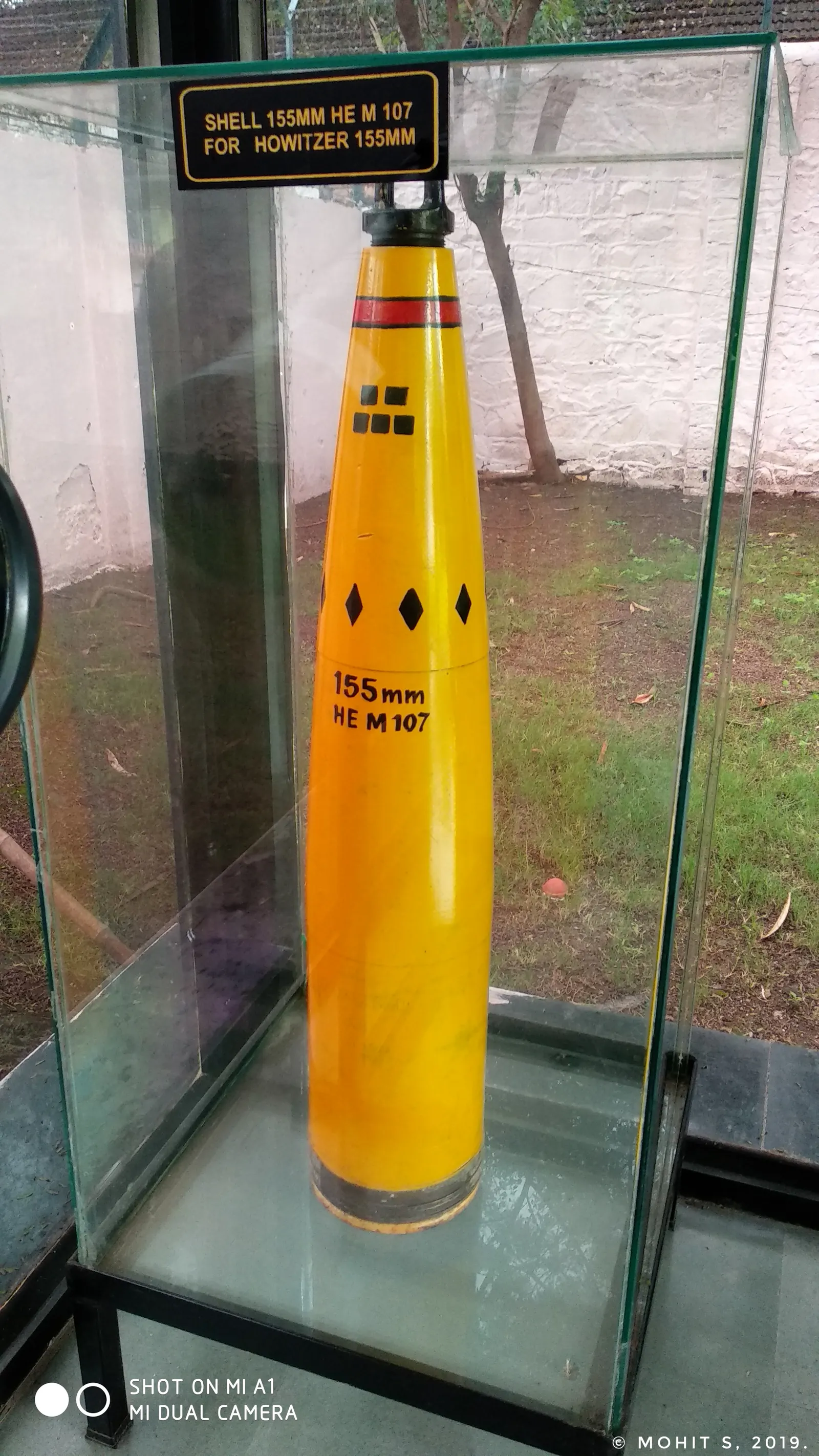
M107 155 mm high-explosive projectile, 155 mm high-explosive projectile, ArtilleryArtilleryM107 155 mm high-explosive projectile155 mm high-explosive projectileThe M107 is a conventional 155 mm high-explosive projectile with a forged-steel body, TNT or Composition B fill, and deep- or normal-cavity variants for different fuze fits. U.S. Army ammunition records list it as an operations-and-sustainment item, Modern War Institute reporting places the M107 family in Ukraine's 155 mm ammunition mix, and U.S. emergency-sale notices document M107 deliveries to Israel during the 2023 Israel-Hamas War.
OFd MKM-DV, 155 mm high-explosive extended-range artillery projectile with base bleed, MunitionsMunitionsOFd MKM-DV155 mm high-explosive extended-range artillery projectile with base bleedThe OFd MKM-DV is a Slovak 155 mm high-explosive extended-range artillery projectile with a base-bleed gas generator. MSM Group lists the modernized round with a 43.55 kg fuzed projectile mass, a 10 kg explosive filling, and 40 km class range from a 52-caliber gun. Public sources support this page as a relationship-only ammunition record through product data, transfer records, and howitzer compatibility context, not through direct conflict-use evidence for the exact projectile.
M106 203 mm high-explosive fragmentation projectile, 203 mm high-explosive fragmentation projectile, MunitionsMunitionsM106 203 mm high-explosive fragmentation projectile203 mm high-explosive fragmentation projectileThe M106 is a U.S. 8-inch, or roughly 203 mm, high-explosive fragmentation projectile built for American heavy artillery such as the M110. Open munition references describe a nose-fuzed, boat-tailed steel shell with TNT or Composition B filling, while Ukrainian and defense-reporting sources document M106 projectiles being adapted to Ukrainian 2S7 Pion guns during the 2014 Russia-Ukraine War as Soviet-pattern 203 mm stocks became scarce.
155 mm NATO ammunition, 155 mm NATO-standard artillery ammunition family for 39-, 45-, and 52-caliber howitzers, MunitionsMunitions155 mm NATO ammunition155 mm NATO-standard artillery ammunition family for 39-, 45-, and 52-caliber howitzers155 mm NATO ammunition is a family of separately loaded artillery projectiles, fuzes, primers, and propelling charges built around NATO and JBMoU interoperability standards rather than a single shell. Official records document 155 mm artillery rounds in Ukraine's wartime ammunition supply and in coalition M777A2 fire missions against ISIS, while manufacturer lines show high-explosive, extended-range, training, modular-charge, and specialty projectile examples.

Sources