Naval Systems

Kamorta-class corvette

Also known as
  • Project 28 corvette
  • Project-28 corvette
  • P28 corvette
  • Kamorta class
  • INS Kamorta
  • INS Kamorta (P28)
  • Kamorta P28
  • INS Kadmatt
  • INS Kadmatt (P29)
  • Kadmatt P29
  • INS Kiltan
  • INS Kiltan (P30)
  • Kiltan P30
  • INS Kavaratti
  • INS Kavaratti (P31)
  • Kavaratti P31

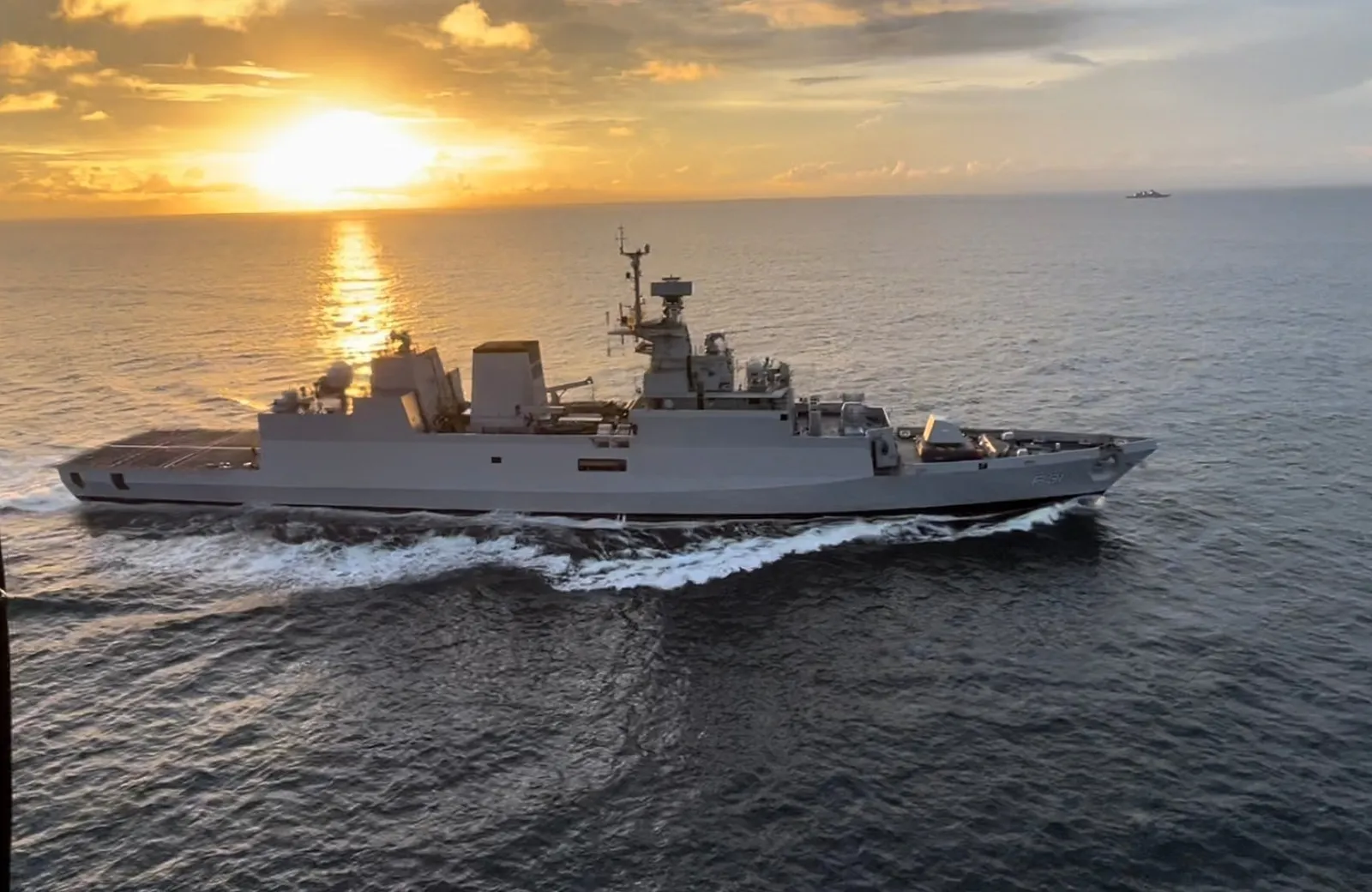
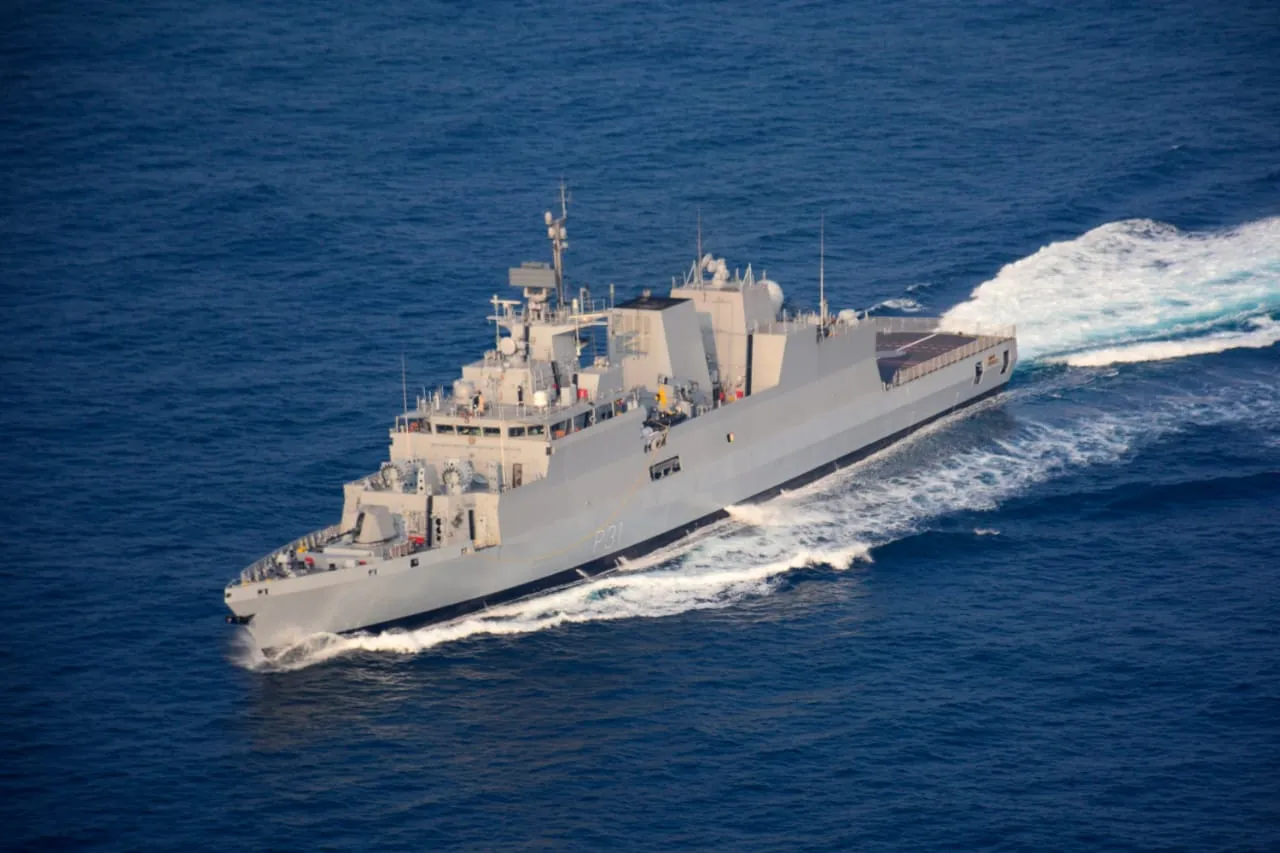
The Kamorta-class corvette is India's four-ship Project 28 anti-submarine warfare stealth corvette class, designed by the Indian Navy's Directorate of Naval Design and built by Garden Reach Shipbuilders and Engineers Ltd in Kolkata. Official sources describe the class as a diesel-powered Eastern Fleet ASW platform with indigenous combat systems, rocket and torpedo armament, helicopter facilities, low-signature hull and exhaust features, and carbon-composite superstructures on INS Kiltan and INS Kavaratti.

Profile / Specs

Profile

Origin
India
Type
Project 28 anti-submarine warfare stealth corvette
Service note
Commissioned in Indian Navy service from 2014 to 2020 across four ships.
Designer
Indian Navy Directorate of Naval Design
Produced
Project 28 ships commissioned between 2014 and 2020; INS Kavaratti commissioned on 22 October 2020 as the last of four.
Number built
Four ships

Specifications

Class role
Anti-submarine warfare stealth corvette
Ships completed
Four: INS Kamorta, INS Kadmatt, INS Kiltan, and INS Kavaratti
Length
About 109-110 m across official hull-specific releases
Beam
About 13.7-14.1 m across official hull-specific releases
Displacement
About 3,250-3,500 tonnes depending on hull and official source
Propulsion
Combination of diesel and diesel arrangement with four diesel engines reported for later hulls
Speed
25 knots class top speed in PIB/GRSE/Saab releases; PIB Kadmatt release describes more than 25 knots
Endurance
GRSE reports more than 3,400 nautical miles at 18 knots for INS Kavaratti
Main gun
76 mm main gun / medium gun fit
Close-in armament
Two AK-630M 30 mm close-in weapon systems reported by Naval News
Anti-submarine rockets
Two RBU-6000 anti-submarine rocket launchers reported by Naval News and Bharat-Rakshak
Torpedo tubes
533 mm torpedo launcher fit, with indigenous torpedo tube launchers named in PIB Kavaratti material
Radar
Revathi indigenous surveillance radar named for INS Kamorta
Sonar
HUMSA-NG Mk 2 hull-mounted active/passive sonar family is documented by BEL for Indian naval ships
Aviation
Capable of carrying an anti-submarine warfare helicopter
Notable construction feature
Carbon-fiber composite superstructures on INS Kavaratti and INS Kiltan
Construction And Signature Features

Official releases emphasize domestic design and low-signature construction more than combat employment. INS Kamorta material describes an X-form hull, inclined sides, infrared-signature suppression for engine and generator exhausts, raft-mounted diesel machinery, and low underwater radiated noise. GRSE and PIB identify carbon-fiber composite superstructures on the later Kiltan and Kavaratti hulls, with DMR 249A steel used in Project 28 construction.

Variants

The class members are individual Project 28 corvettes rather than weapon variants; they are listed here to keep ship identities and commissioning dates visible without creating separate unsourced weapon pages.

VariantConfigurationDesignation notes
INS Kamorta (P28)Lead Project 28 ASW stealth corvette

Commissioned on 23 August 2014 as the first of four Project 28 ASW stealth corvettes.

Sources: PIB Kamorta commissioning

INS Kadmatt (P29)Second Project 28 ASW corvette

Commissioned on 7 January 2016; PIB described the ship as the second Project 28 ASW corvette designed by DND and built by GRSE.

Sources: PIB Kadmatt commissioning

INS Kiltan (P30)Third Project 28 ASW stealth corvette

Commissioned on 16 October 2017; PIB described the ship as the third of four Kamorta-class Project 28 ASW stealth corvettes.

Sources: PIB Kiltan commissioning

INS Kavaratti (P31)Fourth and final Project 28 ASW stealth corvette

Commissioned on 22 October 2020 as the last of four Project 28 Kamorta-class corvettes.

Sources: PIB Kavaratti commissioning, GRSE Kavaratti commissioning

Carried Weapons And Aircraft

Published sources identify the class with a layered ASW and self-defense fit; links are limited to existing catalog records with directly supported relationships.

Carried itemItem typeCarriage evidence
OTO 76/62 Super Rapid naval gun, 76 mm rapid-fire naval gun mount, Naval SystemsOTO 76/62 Super Rapid naval gun76 mm naval gun mount

Naval News identifies the Kamorta-class armament fit with a 76 mm main gun, while Bharat-Rakshak describes the Project 28 gun as a license-built Oto Melara 76 mm Super Rapid mount.

Sources: Naval News final Kamorta-class corvette, Bharat-Rakshak Project 28 class

RBU-6000 Smerch-2 anti-submarine rocket launcher, Shipboard anti-submarine rocket launcher, Naval SystemsRBU-6000 Smerch-2 anti-submarine rocket launcherAnti-submarine rocket launcher

Naval News lists two RBU-6000 anti-submarine rocket launchers on the Kamorta class, and Bharat-Rakshak describes the Project 28 rocket launchers as L&T-built RBU-6000 derivatives.

Sources: Naval News final Kamorta-class corvette, Bharat-Rakshak Project 28 class

Ka-27, Shipborne anti-submarine and search-and-rescue helicopter, Aircraft & UAVsKa-27Shipborne ASW helicopter family

PIB documents the class's integral ASW-helicopter capacity, and GlobalSecurity describes the Project 28 helicopter space as suitable for Ka-28PL or Naval HAL Dhruv; the linked Ka-27 record covers Ka-28 by alias.

Sources: PIB Kamorta commissioning, GlobalSecurity Project 28 design

Weapons, Sensors, And Aviation Fit

The Project 28 fit combines shipboard weapons, ASW sensors, and aviation facilities rather than a single offensive system. Official releases name anti-submarine rockets and torpedoes, close-in and medium gun systems, Revathi surveillance radar, indigenous combat-management and torpedo-tube launcher elements, and helicopter facilities.

Close-in defense

Naval News reports two AK-630M 30 mm close-in weapon systems in the Kamorta-class fit.

No separate public AK-630 catalog record was found during this pass.

Torpedo battery

Naval News lists four 533 mm torpedo launchers, while PIB describes indigenous torpedo tube launchers in INS Kavaratti's system fit.

Varunastra was not linked because no existing public catalog record matched it.

Radar and sonar

PIB names Revathi surveillance radar on INS Kamorta, and BEL describes HUMSA-NG Mk 2 as a fourth-generation hull-mounted active/passive sonar for Indian naval ships.

Sensor details are retained here instead of creating thin component pages.

Flight deck

PIB documents integral ASW-helicopter capability and highlights a foldable hangar door plus rail-less helicopter traversing system on INS Kamorta.

GlobalSecurity identifies Ka-28PL and Naval HAL Dhruv as referenced helicopter options for the design.

Timeline

Kamorta-class corvette Key Events

  1. INS Kamorta commissioned

    PIB reported INS Kamorta entering service as the first Project 28 ASW stealth corvette, designed by the Directorate of Naval Design and built by GRSE.

    Sources: PIB Kamorta commissioning

  2. INS Kadmatt commissioned

    PIB reported INS Kadmatt entering service as the second Project 28 ASW corvette, with DND design, GRSE construction, four diesel engines, and more than 25-knot speed.

    Sources: PIB Kadmatt commissioning

  3. INS Kiltan commissioned

    PIB reported INS Kiltan entering Indian Navy service as the third Kamorta-class Project 28 ASW stealth corvette.

    Sources: PIB Kiltan commissioning

  4. INS Kavaratti commissioned

    PIB and GRSE reported that INS Kavaratti, the last of four Project 28 Kamorta-class ASW stealth corvettes, was commissioned into the Indian Navy at Visakhapatnam.

    Sources: PIB Kavaratti commissioning, GRSE Kavaratti commissioning

Media
Related Weapon Systems
Project 1331M / Parchim-class anti-submarine corvette, Anti-submarine corvette, Naval SystemsNaval SystemsProject 1331M / Parchim-class anti-submarine corvetteAnti-submarine corvetteProject 1331M / Parchim-class anti-submarine corvette is an East German-developed coastal ASW corvette family built by Peene-Werft and later operated by Soviet, Russian, and Indonesian navies. The class carried 57 mm and 30 mm gun mounts, RBU-6000 rocket launchers, torpedo tubes, and sonar for shallow-water anti-submarine patrols, and an Indonesian Parchim-class ship was documented in the 2019 North Natuna Sea collision incident with Vietnamese fisheries-enforcement vessels.
Baynunah class, Multi-mission corvette, Naval SystemsNaval SystemsBaynunah classMulti-mission corvetteThe Baynunah class is a six-ship United Arab Emirates Navy corvette program that paired Constructions Mecaniques de Normandie design work with Abu Dhabi Ship Building construction and transfer-of-technology activity. The compact 71-metre ships combine patrol, surveillance, interdiction, helicopter operations, anti-surface missiles, and point air defense, and open reporting places Baynunah-class corvettes in Saudi-led coalition naval operations off Yemen.
Project 20380 / Steregushchiy-class corvette, Missile corvette, Naval SystemsNaval SystemsProject 20380 / Steregushchiy-class corvetteMissile corvetteProject 20380, known to NATO as the Steregushchiy class, is a Russian Navy guided-missile corvette family designed by Almaz and built by Severnaya Verf and Amur Shipyard for coastal escort, anti-surface, anti-submarine, and amphibious-support missions. The baseline ships combine Uran anti-ship missiles, Redut or Kortik air defense depending on hull, Paket-NK torpedo launchers, and a Ka-27 helicopter facility in a reduced-radar-signature corvette that remained in active Russian service during the 2014 Russia-Ukraine War.
Sa'ar 6-class corvette, Missile corvette, Naval SystemsNaval SystemsSa'ar 6-class corvetteMissile corvetteThe Sa'ar 6-class corvette is an Israeli Navy missile corvette built in Germany and fitted in Israel with MF-STAR radar, Barak-family air defense, C-Dome, anti-ship missiles, and other combat systems. INS Atzmaut, rendered in English IDF and IAI releases as INS Independence, is one of four class ships; across the Gaza war, Red Sea crisis, and 2025 Israel-Iran Conflict, the class has served as a compact missile-ship layer for maritime strike support, air defense, and protection of Israel's maritime approaches.

Sources