- Side
- Syria

Syria fielded FROG-7 missiles in the October 1973 war; Wisconsin Project's missile chronology says Syria launched them at Israeli airbases during the conflict.
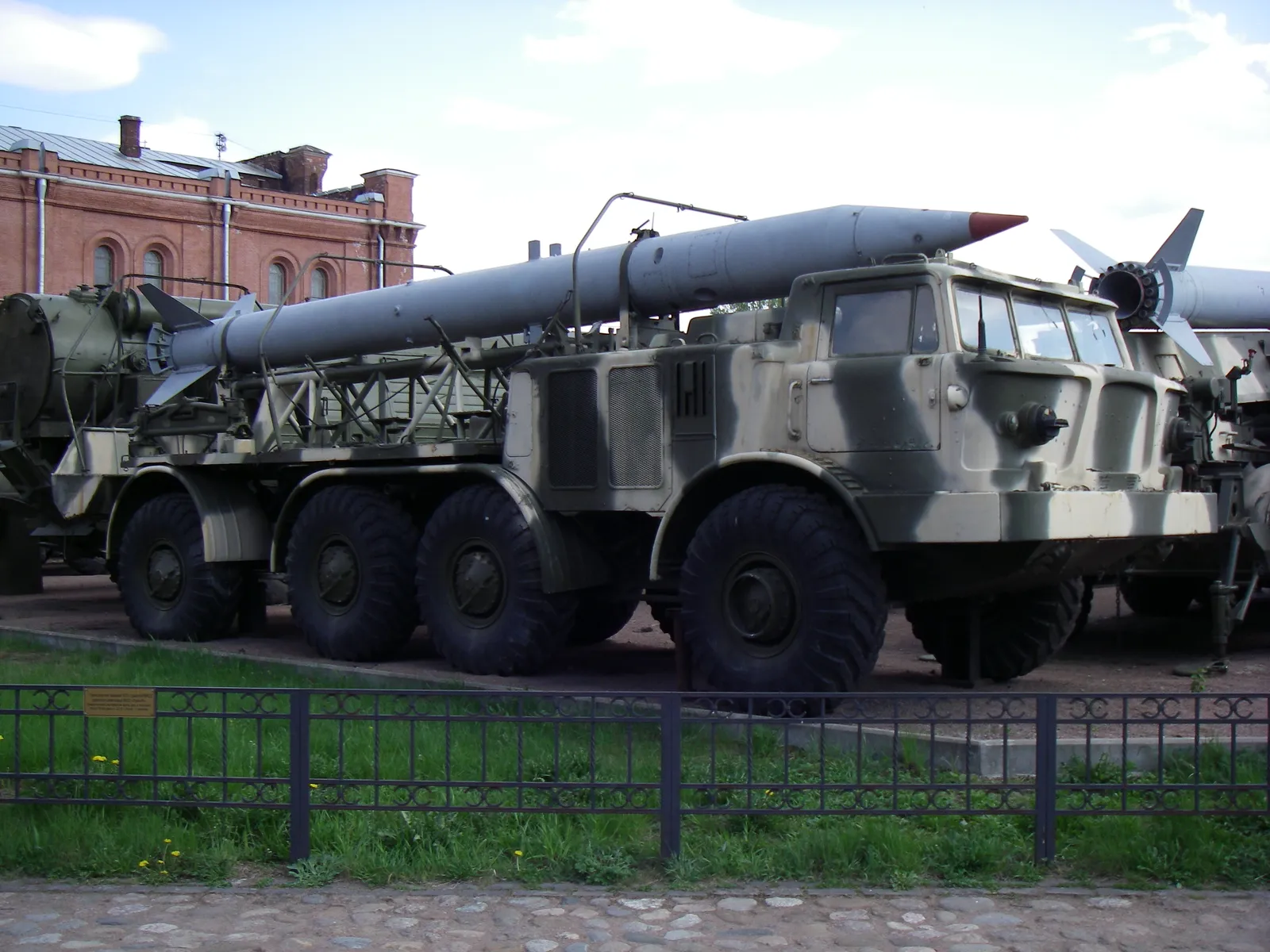
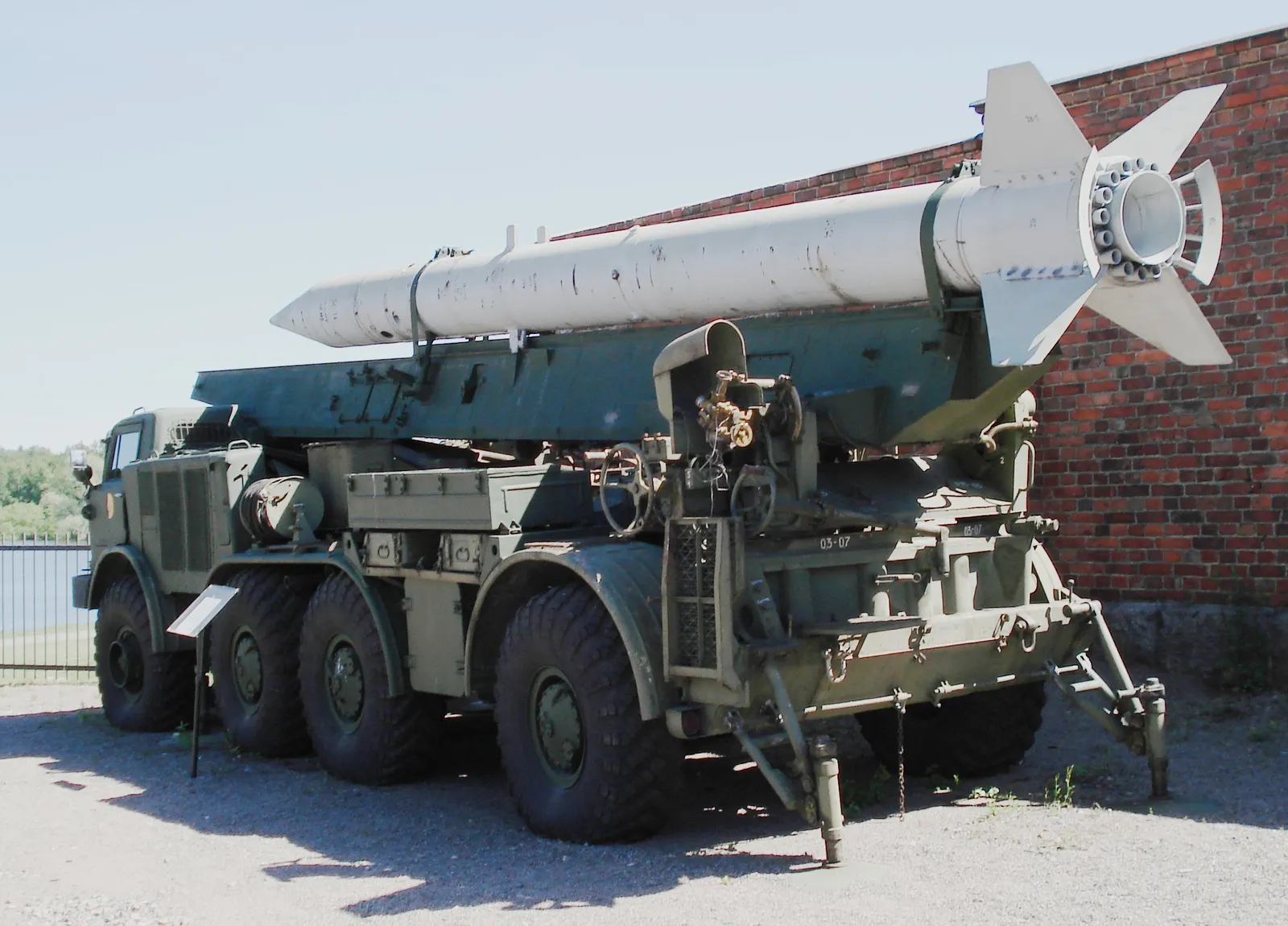
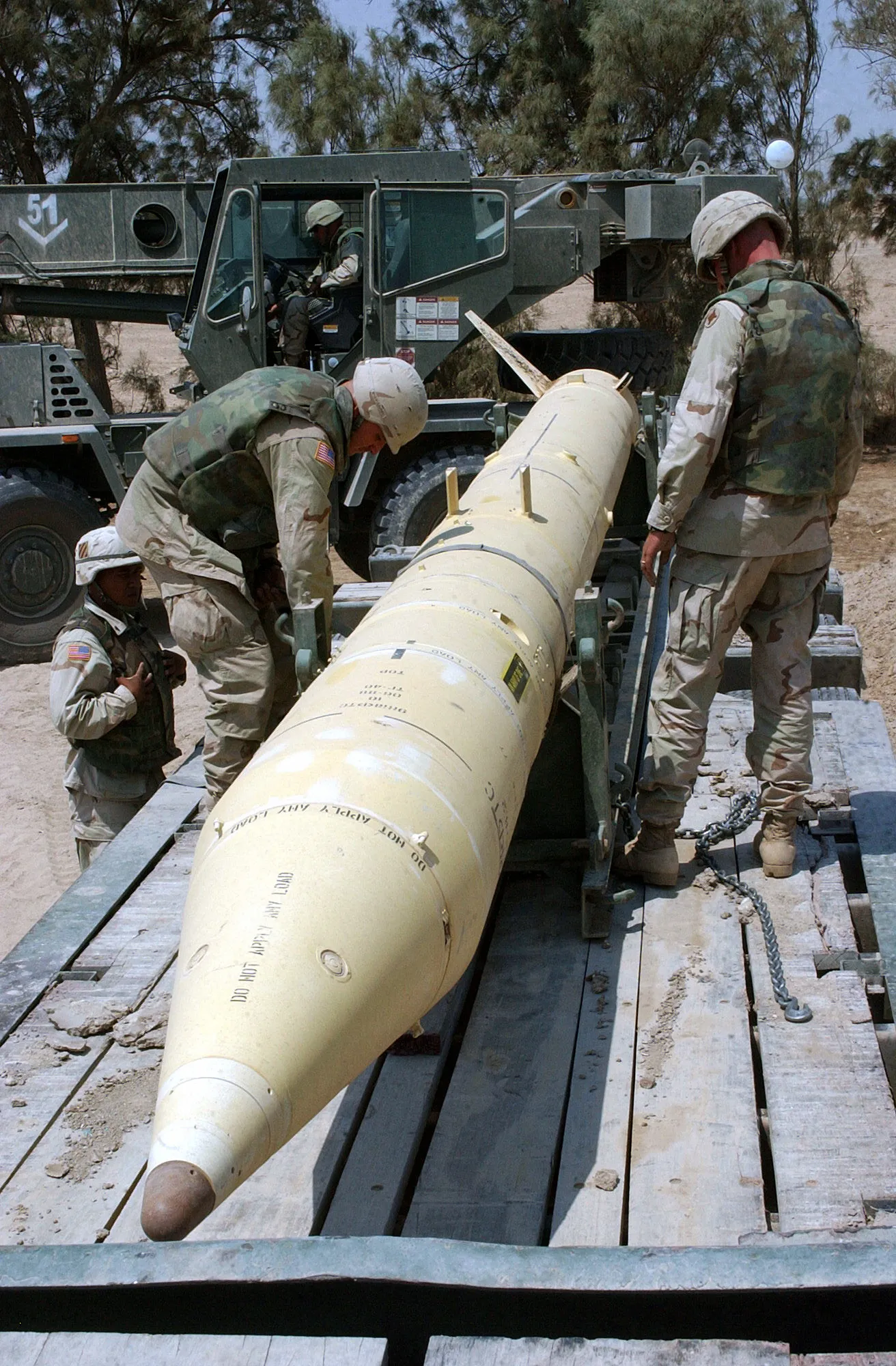
The 9M21 is the Soviet unguided, spin-stabilized artillery rocket fired by the 9K52 Luna-M/FROG-7 system. It paired a single-stage solid motor with interchangeable warhead sections, giving Luna-M batteries conventional high-explosive, cluster, chemical, nuclear, and leaflet-dispensing options. Direct conflict sources trace FROG-7 or 9M21 use by Syria, Iraq, and Houthi-aligned forces.
Syria fielded FROG-7 missiles in the October 1973 war; Wisconsin Project's missile chronology says Syria launched them at Israeli airbases during the conflict.
Iraq began the war with FROG missiles and fired FROG-7 surface-to-surface rockets in the first weeks of the conflict, including attacks aimed at Iranian Army staging areas near Dezful and Ahwaz.
Iraq used Soviet-made FROG/FROG-7 rockets during the Gulf War; Human Rights Watch records two FROGs fired on February 21, 1991, one landing near Senegalese troops.
Role detailsHuman Rights Watch tied Syrian government ballistic-missile attacks to a Belioun strike identified from remnants as a Luna-M/FROG-7, and Brown Moses documented 9M21 and 9D19 markings from the debris.
Role detailsThe Washington Institute reports that Houthi-aligned forces fired at least 18 FROG-7 artillery rockets, called Zelzal by the Houthis, at targets in Yemen and Saudi border provinces.
Role detailsThe 9M21 is best read as a munition family within the Luna-M complex: the same launcher relationship covered conventional, submunition, nuclear, chemical, leaflet, and training rockets. That makes the warhead section the main public distinction between 9M21 variants rather than the launch platform.
WeaponSystems.net identifies the 9P113 launch vehicle as carrying one 9M21-series rocket on a single rail, while the 9T29 transporter carried reload rockets but did not launch them.
The rocket used an unguided ballistic flight path with spin stabilization, leaving accuracy much lower than later guided tactical missiles.
Open references treat 9M21 as a rocket family for Luna-M rather than a single fixed warhead. Western reporting separates FROG-7A and FROG-7B forms, while Soviet-style suffixes identify payload or warhead fits.
| Variant | Configuration | Designation notes |
|---|---|---|
| FROG-7A | Early Western-reported FROG-7 form | The Gurevich-hosted FAS-derived reference says FROG-7A was introduced in 1965 as a replacement for earlier FROG variants. |
| FROG-7B | Longer-warhead Western-reported form | The same reference identifies FROG-7B as a 1968 improvement with a longer warhead section. |
| 9M21F | Unitary HE-fragmentation rocket | WeaponSystems.net describes 9M21F as the conventional HE-fragmentation rocket, with R-65 as its export designation. Sources: 9M21 rocket |
| 9M21F2 | Airburst HE-fragmentation rocket | WeaponSystems.net separates 9M21F2 as an airburst HE-fragmentation version using a radar proximity fuze. Sources: 9M21 rocket |
| 9M21K | Submunition rocket | WeaponSystems.net lists 9M21K as an airburst submunition version with R-70 as the export designation. Sources: 9M21 rocket |
| 9M21B / 9M21B1 | Nuclear-warhead rockets | WeaponSystems.net distinguishes the 9M21B and 9M21B1 nuclear variants by their 9N32 and 9N32M warhead fits. Sources: 9M21 rocket |
| 9M21G | Chemical-warhead rocket | WeaponSystems.net identifies 9M21G as the chemical-warhead version with a VX aerosol payload. Sources: 9M21 rocket |
| 9M21D | Leaflet-dispensing rocket | WeaponSystems.net lists 9M21D with a 9N18A container warhead for leaflet dispersal. Sources: 9M21 rocket |
The 9M21 was created for the wheeled Luna-M complex and fired from its single-rail launcher.
| Launcher | Launcher type | Launch evidence |
|---|---|---|
 | Single-rail launcher | Missilery.info says the upgraded Luna-M complex was created for the 9M21 missile, and WeaponSystems.net identifies the Luna-M launch vehicle as carrying a single 9M21 rocket on its launch rail. |
Missilery.info places the first launch of the 9M21 missile in 1961 during Luna-M development.
Missilery.info identifies 1964 as the year mass production and service entry began for the Luna-M complex and 9M21 missile.
WeaponSystems.net lists the 9M21K airburst submunition rocket as introduced in 1969.
Wisconsin Project's Syria missile chronology says Syria launched FROG-7 missiles at Israeli airbases during the October 1973 war.
CSIS records Iraq firing FROG-7 rockets in the first weeks of the Iran-Iraq War, including attacks near Dezful and Ahwaz.
Brown Moses identified 9M21 and 9D19 markings on debris photographed after a reported Belioun/Jabal Zawiyeh strike.