Armas de infantería

Fusil de asalto Type 56-1

Also known as
  • Chinese Type 56-1
  • NORINCO Type 56-1
  • Type 56-1 rifle
  • Type 56-1 AK

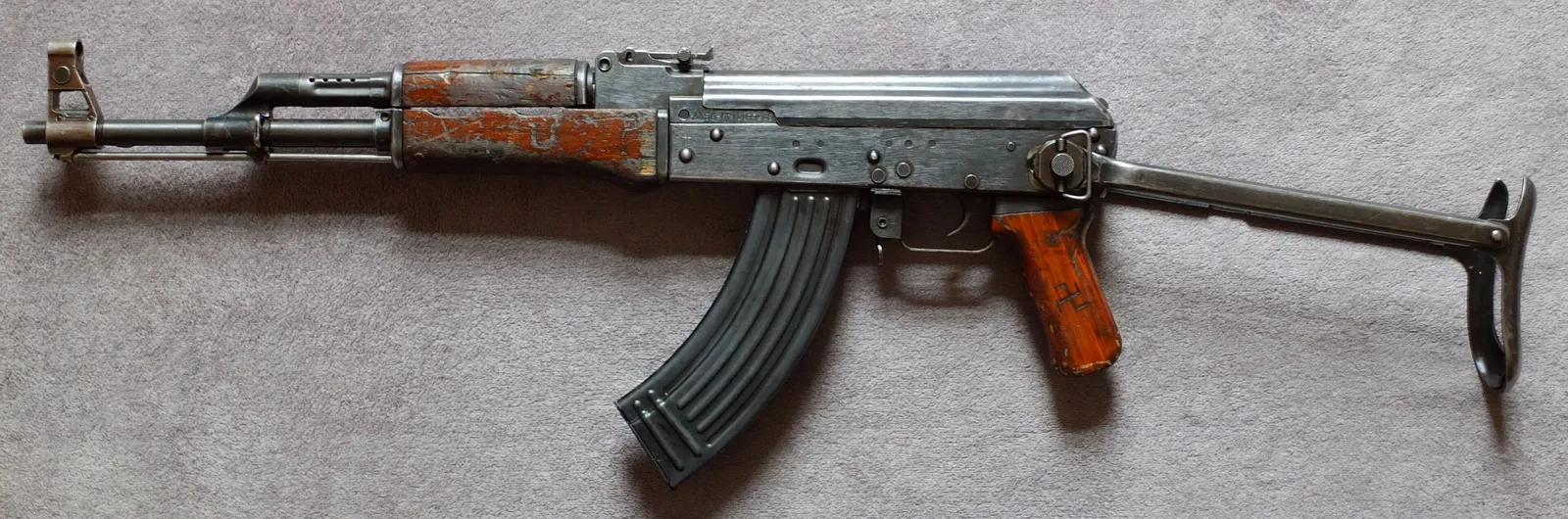
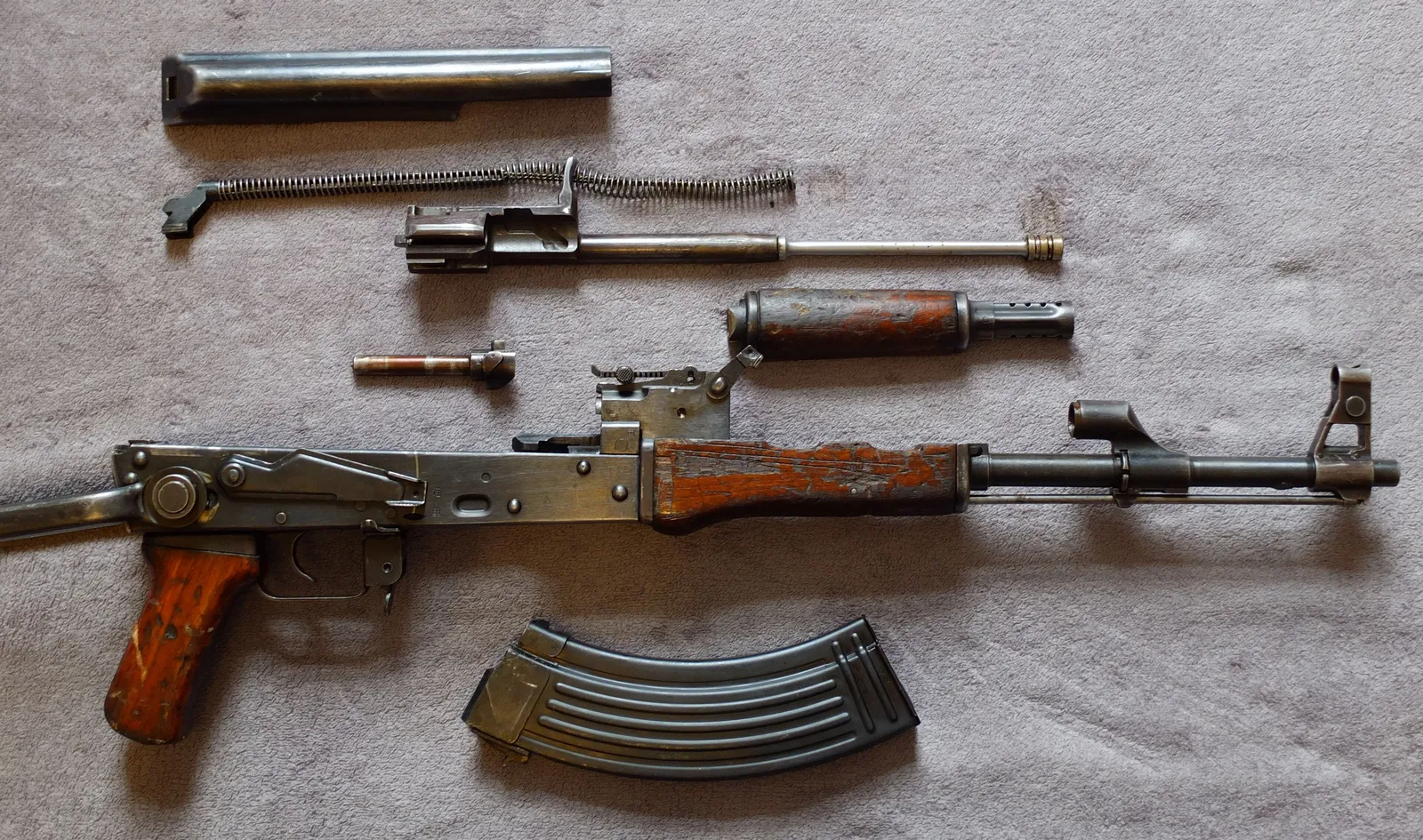
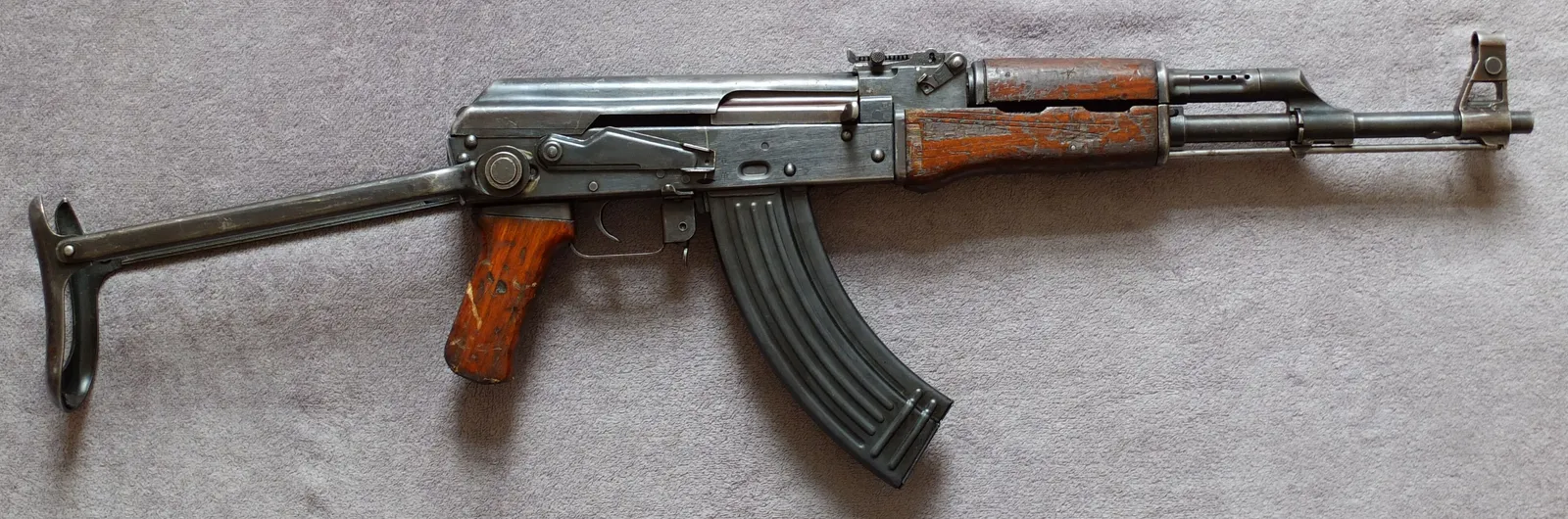
El Type 56-1 es el integrante con culata plegable inferior de la familia china de fusiles Type 56 basada en el patrón Kalashnikov, recamarado para munición 7.62x39mm y construido para transporte compacto por infantería y fuerzas irregulares. Modern Firearms y registros museísticos lo identifican como un fusil chino de la familia Type 56 fabricado por fábricas estatales de armas y NORINCO, mientras que informes de campo e interdicción vinculan fusiles Type 56-1 con incautaciones a Boko Haram en Níger y con canales de suministro respaldados por Irán para fuerzas alineadas con los hutíes en Yemen.

Role in Conflicts

Role in conflict
Fusil de armas ligeras insurgente

Fuerzas nigerinas documentaron fusiles de asalto chinos Type 56 y Type 56-1 entre armas incautadas a miembros de Boko Haram en la región de Diffa entre 2015 y 2016, lo que respalda la posesión insurgente y el uso como armas ligeras durante el conflicto.

Profile / Specs

Profile

Origin
China
Type
Fusil de asalto de 7.62x39mm con culata plegable inferior
Service note
Diseño de la Guerra Fría que sigue circulando en conflictos recientes
Designer
Linaje chino de diseño Kalashnikov
Designed
La familia Type 56 fue adoptada en 1956; la variante Type 56-1 con culata plegable inferior siguió dentro de la familia Type 56
Produced
1956-presente para la producción de la familia Type 56 y variantes de exportación
Number built
Millones en toda la familia Type 56; los totales específicos del Type 56-1 no se publican de forma consistente

Specifications

Calibre
7.62x39mm
Funcionamiento
Operado por gases, cerrojo rotativo, fuego selectivo
Longitud total
874 mm
Longitud plegado
Aproximadamente 630 mm en el ejemplar Type 56-1 de Imperial War Museums
Longitud del cañón
414 mm
Peso
Aproximadamente 3,8 kg
Cargador
Cargador de caja desmontable de 30 cartuchos
Cadencia de fuego
Aproximadamente 650 disparos por minuto
Culata
Culata metálica plegable inferior en la variante Type 56-1
Variants
  • Type 56
  • Type 56-1
  • Type 56-2
  • Type 56C
Munición disparada

El Type 56-1 está documentado como un fusil de la familia Type 56 basado en el patrón Kalashnikov y recamarado para munición 7.62x39mm.

AmmunitionAmmunition typeFiring evidence
7.62x39mm cartridge, Intermediate rifle cartridge, Munitions7.62x39mm cartridgeCartucho intermedio de fusil

Modern Firearms enumera la familia Type 56 como recamarada para munición soviética 7.62x39, y Small Arms Survey identifica el Type 56-1 como un derivado cercano del AKM en 7.62 x 39 mm M1943.

Sources: Type 56, Kalashnikov AKM (& close derivatives)

Timeline

Fusil de asalto Type 56-1 Key Events

  1. Adopción de la familia Type 56

    China adoptó la familia de fusiles Type 56 basada en el patrón Kalashnikov en 1956 junto con la carabina Type 56 SKS, ambos recamarados para munición soviética 7.62x39mm.

    Sources: Type 56

  2. Comienza el reemplazo en primera línea del PLA

    El PLA adoptó el Type 81 a comienzos de la década de 1980, sustituyendo gradualmente los fusiles Type 56 en el servicio de primera línea mientras continuaba la producción de exportación del Type 56.

    Sources: Type 56

  3. Incautaciones a Boko Haram en Níger

    Small Arms Survey documentó fusiles de asalto chinos Type 56 y Type 56-1 entre armas incautadas a miembros de Boko Haram en la región de Diffa, Níger.

    Sources: At the Crossroads of Sahelian Conflicts

  4. Documentación de un almacén en Saná

    GI-TOC documentó fusiles Type 56-1 en un almacén de Saná y vinculó sus marcajes con rastros de tráfico en Yemen y Somalia.

    Sources: Iranian weapons supplied to the Houthis may end up in Somalia

  5. Interdicción en el mar Arábigo septentrional

    Fuerzas estadounidenses incautaron alrededor de 1.400 fusiles de asalto y 226.600 cartuchos de un pesquero apátrida en una ruta evaluada como históricamente usada para traficar armas hacia los hutíes en Yemen; GI-TOC evaluó los fusiles como aparentemente Type 56-1.

    Sources: U.S. Navy Seizes 1,400 Assault Rifles During Illicit Weapons Interdiction, Maritime interdiction of over a thousand assault rifles en route to Yemen

Media
Related Weapon Systems
Type 56 assault rifle, 7.62x39mm Kalashnikov-pattern assault rifle, Infantry WeaponsInfantry WeaponsType 56 assault rifle7.62x39mm Kalashnikov-pattern assault rifleThe Type 56 is China's 7.62x39mm Kalashnikov-pattern assault rifle family, adopted in 1956, built in very large numbers, and exported widely through state, surplus, and illicit channels. Its early rifles followed the Soviet AK-47 with milled receivers, later production used AKM-style stamped receivers under the same designation, and many examples are recognizable by a permanently attached folding spike bayonet. In the 2009 Boko Haram Insurgency, Small Arms Survey and Stimson reporting link Chinese Type 56 rifles to weapons seized from Boko Haram members and to materiel captured during the 2016 Bosso camp attack in Niger.
AKM, 7.62x39mm assault rifle, Infantry WeaponsInfantry WeaponsAKM7.62x39mm assault rifleThe AKM is the stamped-receiver modernization of the Soviet Kalashnikov assault rifle, chambered for 7.62x39mm and built around a long-stroke gas piston and rotating bolt. Adopted in 1959, it reduced production burden compared with earlier milled-receiver AK rifles and became a widely licensed baseline for later 7.62mm Kalashnikov-pattern weapons. CAR and ARES field documentation continues to place AKM and AKM-pattern rifles in modern conflict stocks, from Islamic State recoveries in Iraq and Syria to Taliban captures in Afghanistan.
AK-47/AKM rifle family, Selective-fire assault rifle family, Infantry WeaponsInfantry WeaponsAK-47/AKM rifle familySelective-fire assault rifle familyAK-47/AKM-family rifles are Kalashnikov-pattern small arms derived from the Soviet AK-47 and 1959 AKM modernization, usually chambered in 7.62 x 39 mm. In the post-2015 catalog they appear with FARC dissidents in Colombia, gangs in Haiti, PKK fighters, GNA scouts in Libya, insurgents in Mali, Islamic State forces in Iraq and Syria, militants in Sinai, RSF units in Sudan, Hamas fighters in Gaza, Taliban fighters in Afghanistan, Boko Haram-linked militants in the Lake Chad basin, and Houthi-linked supply chains in Yemen.
AKMS, Folding-stock 7.62x39mm assault rifle, Infantry WeaponsInfantry WeaponsAKMSFolding-stock 7.62x39mm assault rifleThe AKMS is the under-folding-stock member of the Soviet AKM assault-rifle family, retaining the stamped receiver, long-stroke gas system, select-fire controls, and 7.62x39mm chambering while shortening the rifle for airborne troops, vehicle crews, and compact carry. Conflict Armament Research and ARES documentation places AKMS-family rifles in Islamic State stocks around Kobane and in a 2022 Ukrainian police seizure from an alleged Russian saboteur, showing how older Kalashnikov-pattern rifles remain visible in modern war.
Type 63 107 mm multiple rocket launcher, Towed 107 mm multiple rocket launcher, ArtilleryArtilleryType 63 107 mm multiple rocket launcherTowed 107 mm multiple rocket launcherThe Type 63 is a Chinese 12-tube 107 mm multiple rocket launcher designed for simple short-range area fire from a light split-trail carriage, truck mount, or derivative launcher. Developed by State Factory 847 and introduced with the PLA in 1963, the system became widely exported and copied; source-backed conflict records now show Taliban Type 63-family launcher use in Afghanistan, Boko Haram capture of a launcher in Niger, Russian Type-63 systems in Ukraine, and Houthi-aligned stocks in Yemen.

Sources