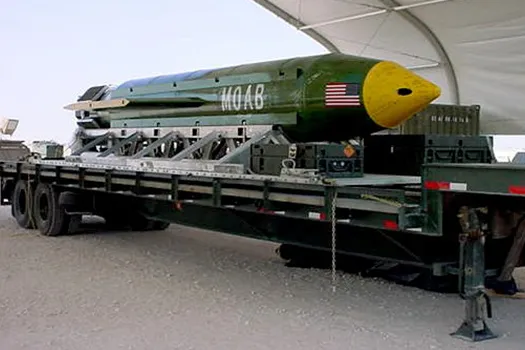


U.S. Forces Afghanistan usó una GBU-43/B MOAB el 13 de abril de 2017 contra un complejo de cuevas y túneles de ISIS-K en el distrito de Achin, provincia de Nangarhar, para reducir búnkeres, túneles y obstáculos improvisados durante operaciones de despeje afganas y estadounidenses.
Role detailsMuniciones
GBU-43/B MOAB
Also known as
- GBU-43/B
- MOAB
- Massive Ordnance Air Blast
- Mother of All Bombs
- GBU-43/B Massive Ordnance Air Blast
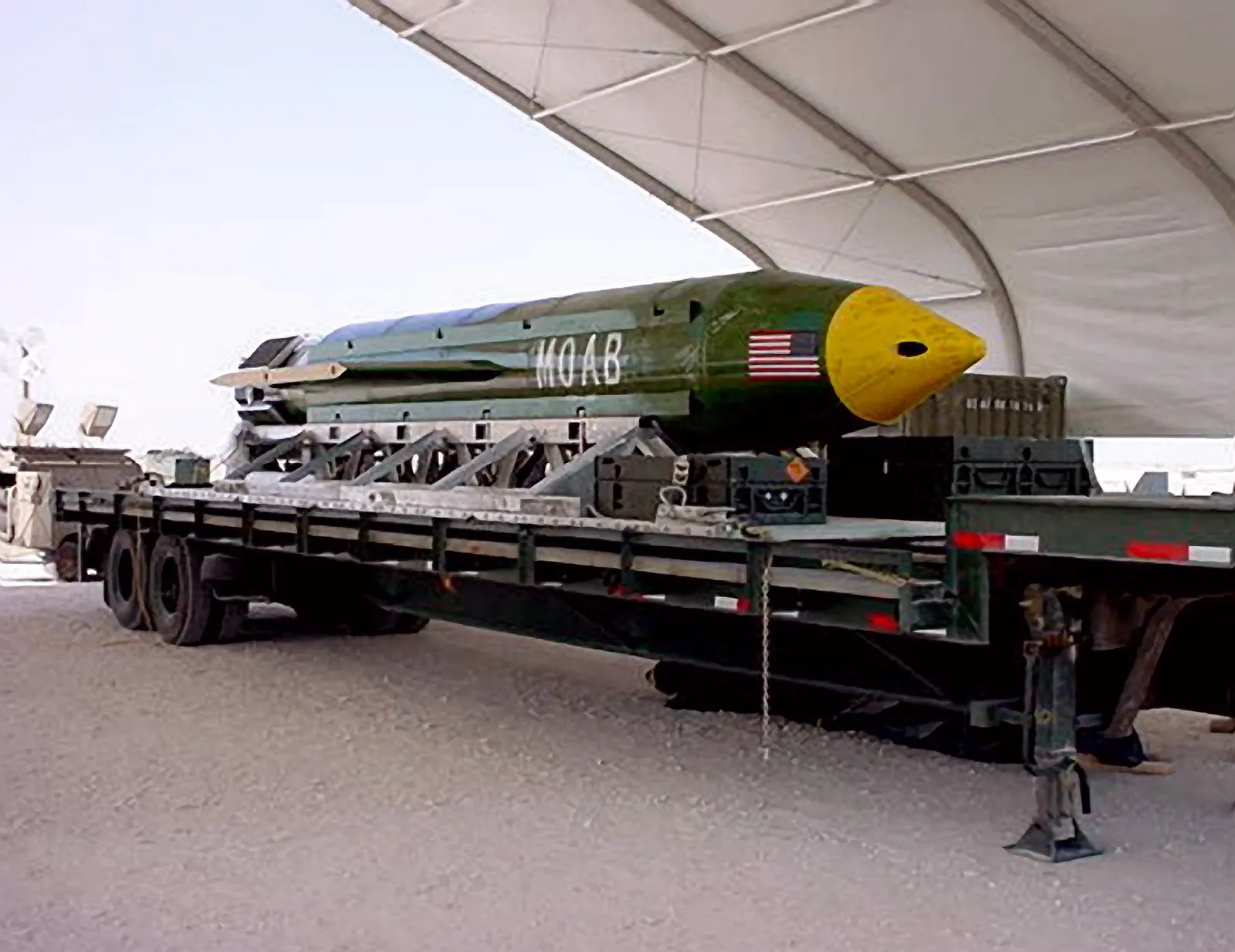
La GBU-43/B Massive Ordnance Air Blast, ampliamente conocida como MOAB o "Mother of All Bombs", es una bomba convencional estadounidense muy grande guiada por GPS/INS, desarrollada rápidamente por el Air Force Research Laboratory con apoyo de Dynetics. Usa un cuerpo de alto explosivo BLU-120/B, control de cola y aletas de rejilla, y despliegue desde la rampa de aeronaves de carga en lugar de transporte por cazas. Su único uso en combate documentado fue el ataque estadounidense del 13 de abril de 2017 contra un complejo de túneles de ISIS-K en Afganistán, donde los mandos seleccionaron su efecto de onda expansiva para reducir obstáculos frente a fuerzas afganas y estadounidenses de despeje.
Role in Conflicts
Profile / Specs
Profile
- Origin
- Estados Unidos
- Built in
- United States
- Type
- Bomba de explosión aérea de munición masiva guiada por GPS/INS
- Service note
- Desarrollada en 2002-2003; entregada al teatro operacional en 2003; usada por primera vez en combate en Afganistán en 2017
- Designer
- Air Force Research Laboratory Munitions Directorate
- Designed
- 2002-2003
- Produced
- 2003
Specifications
- Peso
- Aproximadamente 21.000-21.600 lb
- Cuerpo de bomba
- Cuerpo de alto explosivo BLU-120/B con aproximadamente 18.700 lb de carga explosiva H6
- Kit de guiado
- Guiado KMU-593/B GPS/INS con alas fijas, control de cola y aletas de rejilla
- Dimensiones
- Aproximadamente 30 ft de largo y 40,5 in / 3,3 ft de diámetro
- Carcasa y efecto
- Carcasa delgada de aluminio pensada para detonación de superficie y gran efecto de onda expansiva, no para penetración
- Método de lanzamiento
- Transportada en una cuna o plataforma y extraída de aeronaves de carga C-130/MC-130 mediante paracaídas de extracción antes de separarse
- Plataforma de lanzamiento
- Diseñada para despliegue por rampa desde aeronaves MC-130/C-130
Design And Delivery Logic
The MOAB was designed as a very large blast weapon that could be launched from cargo aircraft rather than from a bomber weapons bay. Air Force and DVIDS sources describe a thin aluminum casing, GPS guidance, stabilizing fins, inertial gyro control, and a cradle/platform extraction sequence that separates the bomb from a C-130-family aircraft after a drogue parachute pulls the platform from the ramp.
Guidance package
The munition combines GPS/INS guidance with fins and gyro-controlled pitch and roll, giving the large bomb a guided release profile instead of the unguided BLU-82 approach it was intended to supersede.
Blast body
The BLU-120/B body carries about 18,700 pounds of H6 explosive in a thin casing intended to produce a large surface blast rather than deep penetration.
Cargo-aircraft release
The bomb rides on an airdrop platform inside the aircraft, is extracted by a drogue parachute, then separates so its fins can stabilize the weapon toward the target.
Lógica de diseño y lanzamiento
La MOAB fue diseñada como un arma de onda expansiva de gran tamaño que pudiera lanzarse desde aeronaves de carga en lugar de desde la bodega de armas de un bombardero. Fuentes de la Fuerza Aérea y DVIDS describen una carcasa delgada de aluminio, guiado GPS, aletas estabilizadoras, control giroscópico inercial y una secuencia de extracción con cuna/plataforma que separa la bomba de una aeronave de la familia C-130 después de que un paracaídas de extracción tira de la plataforma desde la rampa.
Paquete de guiado
La munición combina guiado GPS/INS con aletas y control giroscópico de cabeceo y alabeo, lo que da a la gran bomba un perfil de lanzamiento guiado en lugar del enfoque no guiado del BLU-82 al que estaba destinada a sustituir.
Cuerpo de explosión
El cuerpo BLU-120/B lleva aproximadamente 18.700 libras de explosivo H6 en una carcasa delgada destinada a producir una gran onda expansiva de superficie, no penetración profunda.
Lanzamiento desde aeronave de carga
La bomba viaja sobre una plataforma de lanzamiento aéreo dentro de la aeronave, es extraída por un paracaídas de extracción y luego se separa para que sus aletas puedan estabilizar el arma hacia el blanco.
Aeronave de lanzamiento
El historial documentado de despliegue por rampa de la MOAB la vincula con el MC-130J Commando II.
| Launcher | Launcher type | Launch evidence |
|---|---|---|
 | Aeronave de transporte de operaciones especiales | La cobertura de DVIDS identifica al MC-130J Commando II como la primera aeronave que lanzó la GBU-43/B MOAB, y el manual de entrenamiento del MC-130J incluye procedimientos de lanzamiento aéreo de la GBU-43. Sources: Behind the Boom, AFMAN 11-2MC-130J, Vol 1 |
Aeronave portadora
La MOAB fue cargada en un C-130 Hercules durante su secuencia documentada de lanzamiento de prueba.
| Carrier | Carrier type | Carriage evidence |
|---|---|---|
 | Aeronave de transporte | Informes de la Fuerza Aérea indican que la MOAB fue cargada en un C-130 Hercules y lanzada desde la aeronave durante la secuencia de prueba. Sources: What to Know About the GBU-43/B, ‘Mother of all Bombs’, Bombs away |
Timeline
GBU-43/B MOAB Key Events
Comienza el proyecto tecnológico del AFRL
Imágenes de defensa publicadas para la prueba de 2003 describieron el esfuerzo MOAB como un proyecto tecnológico del AFRL que comenzó en el año fiscal 2002 y estaba previsto para completarse en 2003.
Sources: MOAB prepared for Eglin test
Solicitud de prototipo rápido
Informes de la Fuerza Aérea señalan que la solicitud llegó en torno al Thanksgiving de 2002 y que el AFRL Munitions Directorate avanzó rápidamente desde el concepto hasta un prototipo de munición operacional de tamaño completo.
Sources: Five years later, it's still known as 'Mother of all bombs'
Primera prueba real en Eglin
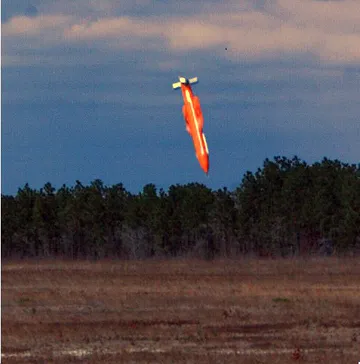
La Fuerza Aérea probó la MOAB en Eglin Air Force Base el 11 de marzo de 2003, lanzando la munición guiada de precisión de 21.500 libras desde un C-130 Hercules.
Sources: Bombs away
Entregada al teatro operacional
Un reportaje de la Fuerza Aérea de 2008 dijo que la primera MOAB fue entregada al teatro operacional para la guerra contra el terrorismo el 1 de abril de 2003, aunque no se usó en combate en ese momento.
Sources: Five years later, it's still known as 'Mother of all bombs'
Primer uso en combate en Afganistán
U.S. Forces Afghanistan usó una GBU-43/B MOAB contra un complejo de cuevas y túneles de ISIS-K en el distrito de Achin, provincia de Nangarhar.
Sources: U.S. Bombs, Destroys Khorasan Group Stronghold in Afghanistan, Aerial Footage of MOAB Bomb Striking Cave, Tunnel System
Media
Related Weapon Systems


Sources
Air & Space Forces Magazine GBU-43 MOABPublisher: Air & Space Forces Magazine | Note: Supports GBU-43/B specifications, AFRL and Dynetics contractor background, GPS/INS guidance, BLU-120/B warhead, dimensions, MC-130H integration, active GBU-43/B designation, and first operational use context. | Accessed: 2026-07-04Five years later, it's still known as 'Mother of all bombs'Publisher: U.S. Air Force | Note: Supports Air Force development background, GPS-guided munition description, AFRL Munitions Directorate role, rapid prototype timeline, BLU-82 replacement intent, delivery to the operational theater, and public-domain Air Force imagery. | Accessed: 2026-07-04What to Know About the GBU-43/B, ‘Mother of all Bombs’Publisher: DVIDS | Note: Supports MOAB specifications, H6 explosive fill, thin aluminum casing, stabilizing fins, GPS guidance, and the C-130 cradle/platform extraction sequence. | Accessed: 2026-07-04Bombs awayPublisher: U.S. Air Force | Note: Supports the March 11, 2003 Eglin test, the MOAB being dropped from a C-130 Hercules during the test, and the 21,500-pound precision-guided munition description. | Accessed: 2026-07-04U.S. Bombs, Destroys Khorasan Group Stronghold in AfghanistanPublisher: U.S. Department of Defense | Note: Supports 2001 War in Afghanistan direct use: U.S. Forces Afghanistan used a GBU-43/B MOAB against an ISIS-K tunnel complex in Achin district, Nangarhar Province on April 13, 2017, to reduce obstacles facing Afghan and U.S. clearing forces. | Accessed: 2026-07-04Aerial Footage of MOAB Bomb Striking Cave, Tunnel SystemPublisher: DVIDS | Note: Supports 2001 War in Afghanistan direct use: a GBU-43/B MOAB struck ISIS-K cave and tunnel systems in Achin district, Nangarhar Province, with public-domain DoD video context. | Accessed: 2026-07-04Mother of all BombsPublisher: U.S. Department of Defense | Note: Supports image provenance for the primary GBU-43/B MOAB photograph, credited as a courtesy photo with Defense Department VIRIN 170414-D-XT155-002. | Accessed: 2026-07-04Behind the BoomPublisher: Defense Visual Information Distribution Service | Note: Supports MC-130J launch context because the article identifies the MC-130J Commando II as the first aircraft to ever drop the GBU-43/B MOAB. | Accessed: 2026-07-04AFMAN 11-2MC-130J, Vol 1Publisher: U.S. Air Force | Note: Supports MC-130J GBU-43 airdrop procedures and training context. | Accessed: 2026-07-04MOAB prepared for Eglin testPublisher: U.S. Department of Defense | Note: Supports March 11, 2003 Eglin preparation imagery, the 21,500-pound precision-guided munition description, C-130 test plan, and AFRL technology-project timing. | Accessed: 2026-07-04Air Force Armament Museum GBU-43/B MOABPublisher: Air Force Armament Museum Foundation | Note: Supports BLU-120/B, H6 explosive fill, KMU-593/B GPS/INS guidance, fixed wings and grid fins, dimensions, MC-130/C-130 launch platform, and major test and combat-use timeline points. | Accessed: 2026-07-04GlobalSecurity MOABPublisher: GlobalSecurity.org | Note: Supports specialist secondary context for the surface-burst blast design, H6 composition, and C-130 extraction and separation sequence. | Accessed: 2026-07-04MOAB Southwest Asia photoPublisher: U.S. Air Force | Note: Supports image provenance for gallery image 031108-F-1111S-101.JPG, showing a GBU-43/B MOAB at an air base in Southwest Asia. | Accessed: 2026-07-04MOAB prototype impact photoPublisher: U.S. Air Force | Note: Supports image provenance for gallery image 031108-F-1111S-102.JPG, showing the GBU-43/B MOAB prototype moments before impact during the March 11, 2003 test. | Accessed: 2026-07-04