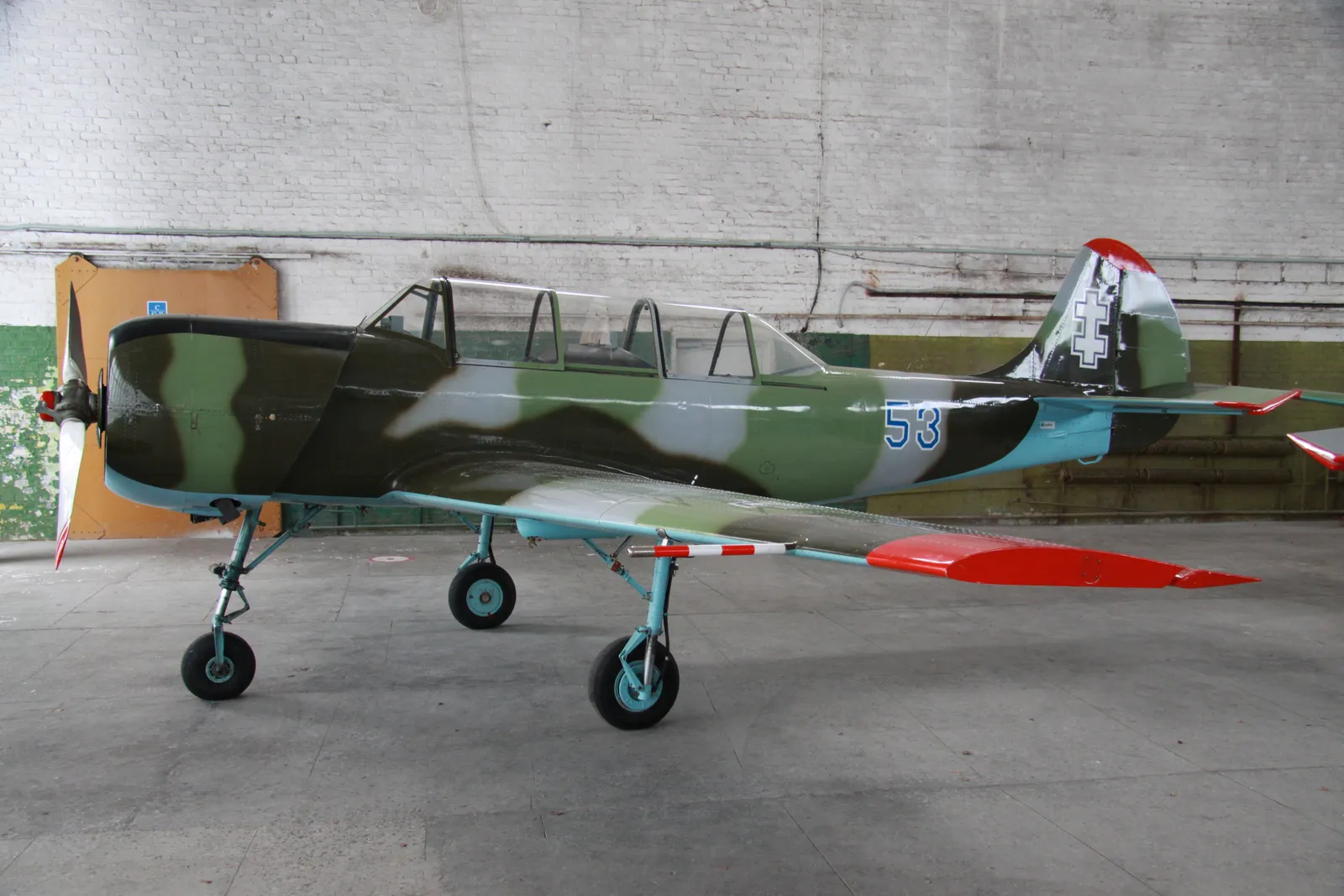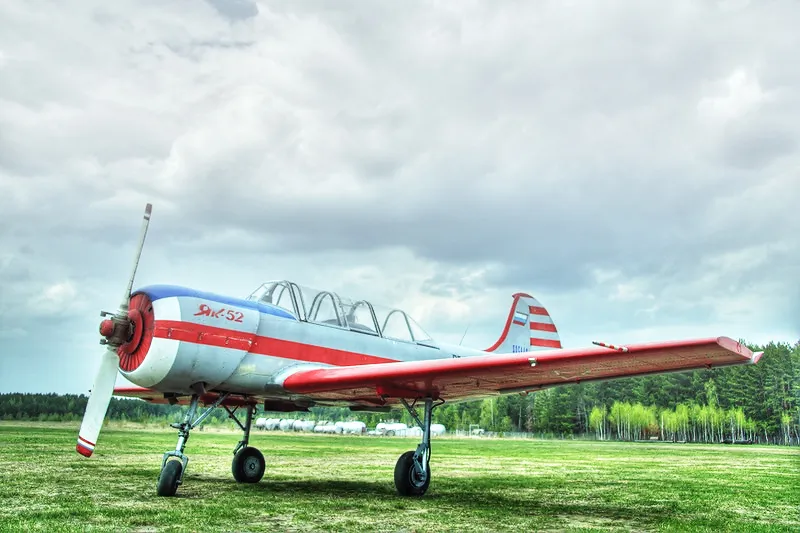
- Side
- Ukraine

Ukrainian Yak-52 crews used the two-seat trainer in southern Ukraine as a visual drone-intercept platform, closing on Russian reconnaissance UAVs and engaging them with handheld small arms from the rear cockpit.
Role detailsThe Yak-52 is a Soviet-designed, Romanian-produced two-seat primary trainer that became a low-cost counter-UAV aircraft in Ukraine. Originally built for basic and aerobatic flight training, the radial-engine trainer has been used by Ukrainian crews during the 2014 Russia-Ukraine War to close with Russian reconnaissance drones and engage them visually with handheld weapons from the rear cockpit.
Ukrainian Yak-52 crews used the two-seat trainer in southern Ukraine as a visual drone-intercept platform, closing on Russian reconnaissance UAVs and engaging them with handheld small arms from the rear cockpit.
Role detailsThe Ukraine-war Yak-52 role is an improvised air-defense task rather than a factory weapon fit. Public reporting describes a pilot using ground radio direction and visual maneuvering to position the aircraft near a Russian drone while the rear-seat crew member fires a handheld weapon from the open cockpit.
No radar or dedicated onboard targeting sensor is described in the reporting; the crew relies on ground direction, eyesight, and close-range positioning.
Source: TWZ Ukrainian Yak-52 Crews.
Reported engagements use rifles or shotguns from the rear cockpit, typically after the Yak-52 closes to tens of meters behind or alongside a drone.
Sources: TWZ Ukrainian Yak-52 Crews; Army Recognition Orlan-10 Yak-52.
Public photos and reporting tie the aircraft mainly to Russian reconnaissance UAVs such as Orlan-10/30 and ZALA 421-16E types, with later reporting describing broader drone-hunting sorties.
Sources: TWZ Yak-52 Kill Marks; TWZ Ukrainian Yak-52 Crews.
Yak-52 designations include the standard Soviet-designed trainer, Romanian Iak-52 production, westernized Aerostar export versions, and limited armed or modernized derivatives.
| Variant | Configuration | Designation notes |
|---|---|---|
| Yak-52 / Iak-52 | Standard two-seat primary trainer | The aircraft is a Yakovlev-designed trainer produced in Romania by the Bacau/Aerostar line and widely used for basic and aerobatic flying. Sources: AOPA Yak 52, Vasteras Flygmuseum Yak-52 |
| Yak-52B | Light-attack test derivative | TWZ describes the Yak-52B as a Soviet-era counterinsurgency/light-attack derivative tested with strengthened wings, an optical sight, UPK-23 gun pods, and UB-32 rocket pods, but not produced in quantity. Sources: TWZ Russian Yak-52 Drone Hunter |
| Yak-52M | Modernized trainer | Museum and open aviation references identify Yak-52M as a later modernization with a different engine and updated trainer configuration. Sources: Vasteras Flygmuseum Yak-52, Wikipedia Yakovlev Yak-52 |
| Iak-52W / Iak-52TW | Westernized Aerostar export variants | Open aviation references describe westernized Aerostar versions with western instruments and, for TW configurations, tailwheel and increased-fuel changes. Sources: Wikipedia Yakovlev Yak-52 |
Open aviation references identify 1976 as the Yak-52's first-flight year, placing the aircraft in the late-Cold-War Soviet trainer lineage.
Sources: Wikipedia Yakovlev Yak-52, Military Factory Yak-52
AOPA and later aviation references place manufacturing at the Bacau/Aerostar production line in Romania rather than as a normal Soviet domestic production aircraft.
Sources: AOPA Yak 52, SafeSmart Aviation Yak-52
TWZ and Army Recognition reported footage and Ukrainian media claims of a Yak-52 intercepting a Russian Orlan-series reconnaissance drone in the Odesa region.
Sources: TWZ Ukraine WWI-Style Air Combat, Army Recognition Orlan-10 Yak-52
TWZ reported photographs of a Ukrainian Yak-52 with markings corresponding to Russian ZALA 421-16E and Orlan-10/30-series drones, indicating repeated counter-UAV sorties.
Sources: TWZ Yak-52 Kill Marks
TWZ described a two-person Ukrainian Yak-52 procedure in which ground radio direction brings the aircraft near the drone and the rear-seat gunner engages at close range with handheld weapons.
Sources: TWZ Ukrainian Yak-52 Crews