Air Defense

Starstreak

Also known as
  • STARStreak
  • Starstreak HVM
  • High Velocity Missile
  • HVM
  • Starstreak High Velocity Missile
  • HVM Lightweight Multiple Launcher
  • LML Starstreak

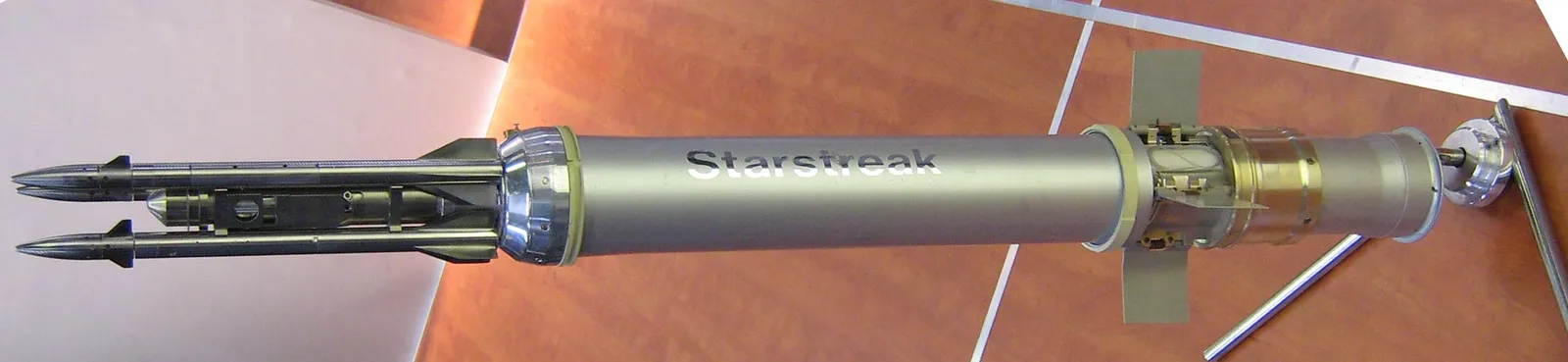
Starstreak is a British laser beam-riding short-range air-defense missile built by Thales Air Defence and fielded in shoulder-fired, lightweight multiple-launcher, and Stormer HVM configurations. The missile uses three dart-like projectiles and travels at more than three times the speed of sound, giving close air-defense teams a fast optically guided weapon against helicopters, low-flying aircraft, and some unmanned aircraft. The United Kingdom supplied Starstreak missiles and Stormer vehicles with Starstreak launchers to Ukraine during the 2014 Russia-Ukraine War, where Ukrainian forces used them as part of layered short-range air defense.

Role in Conflicts

The UK moved from considering Starstreak donations in March 2022 to supplying the Starstreak air-defense system and additional Starstreak missiles; later UK statements described Stormer vehicles fitted with Starstreak launchers and hundreds of anti-air missiles in Ukrainian service, while reporting in April 2022 attributed Ukrainian helicopter engagement footage to Starstreak.

Role details
Profile / Specs

Profile

Origin
United Kingdom
Type
Short-range surface-to-air missile / MANPADS
Service note
British service from 1997; supplied to Ukraine from 2022
Designer
Shorts Missile Systems / Thales Air Defence
Designed
Development and production contract placed in November 1986 after the Shorts Missile Systems design won the UK HVM competition
Produced
November 1986-present

Specifications

Role
Very short-range / short-range air defense against low-flying aircraft, helicopters, and UAVs
Launcher configurations
Shoulder-launched single missile, HVM Lightweight Multiple Launcher, and Stormer self-propelled HVM
Guidance
Semi-automatic line-of-sight laser beam riding
Missile range
1,500-5,500 m in British Army equipment data
Speed
More than Mach 3
Flight time
8 seconds in British Army equipment data
Warhead concept
Three dart-like projectiles released after boost
Light launcher load
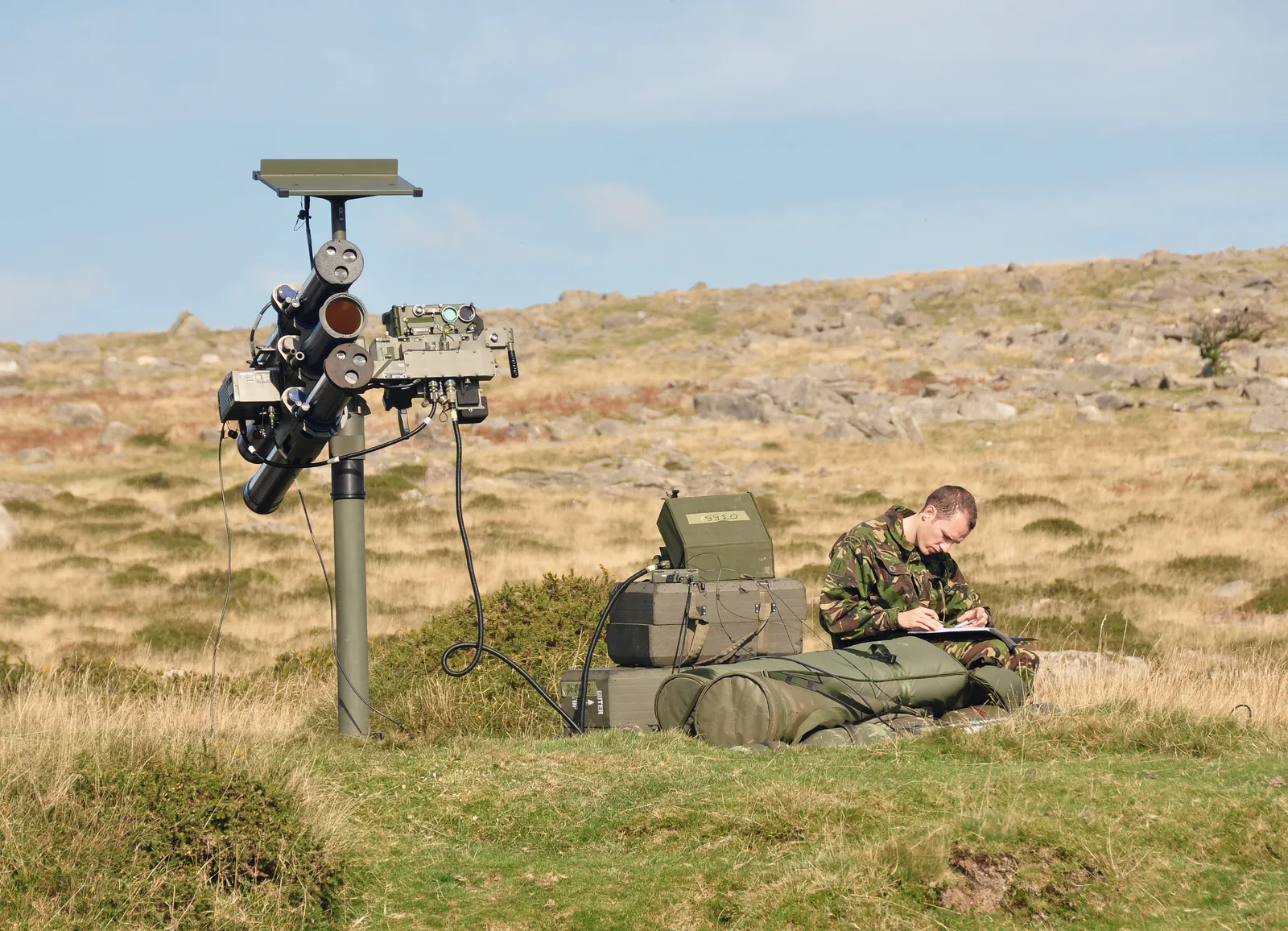
Three ready canister missiles on the Lightweight Multiple Launcher
Shoulder launcher readiness
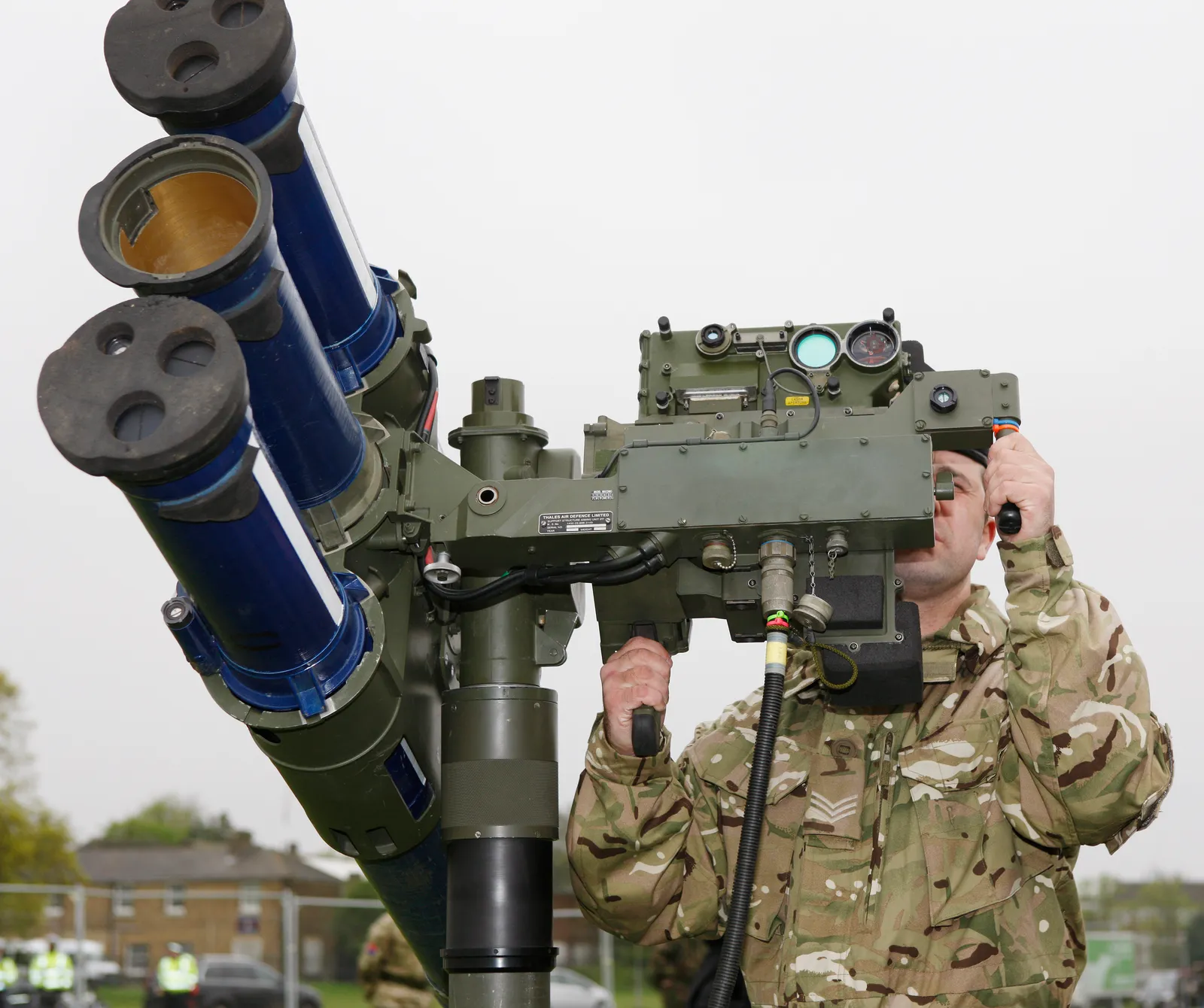
Single missile canister clipped to an aiming unit and ready within seconds
Stormer launcher load
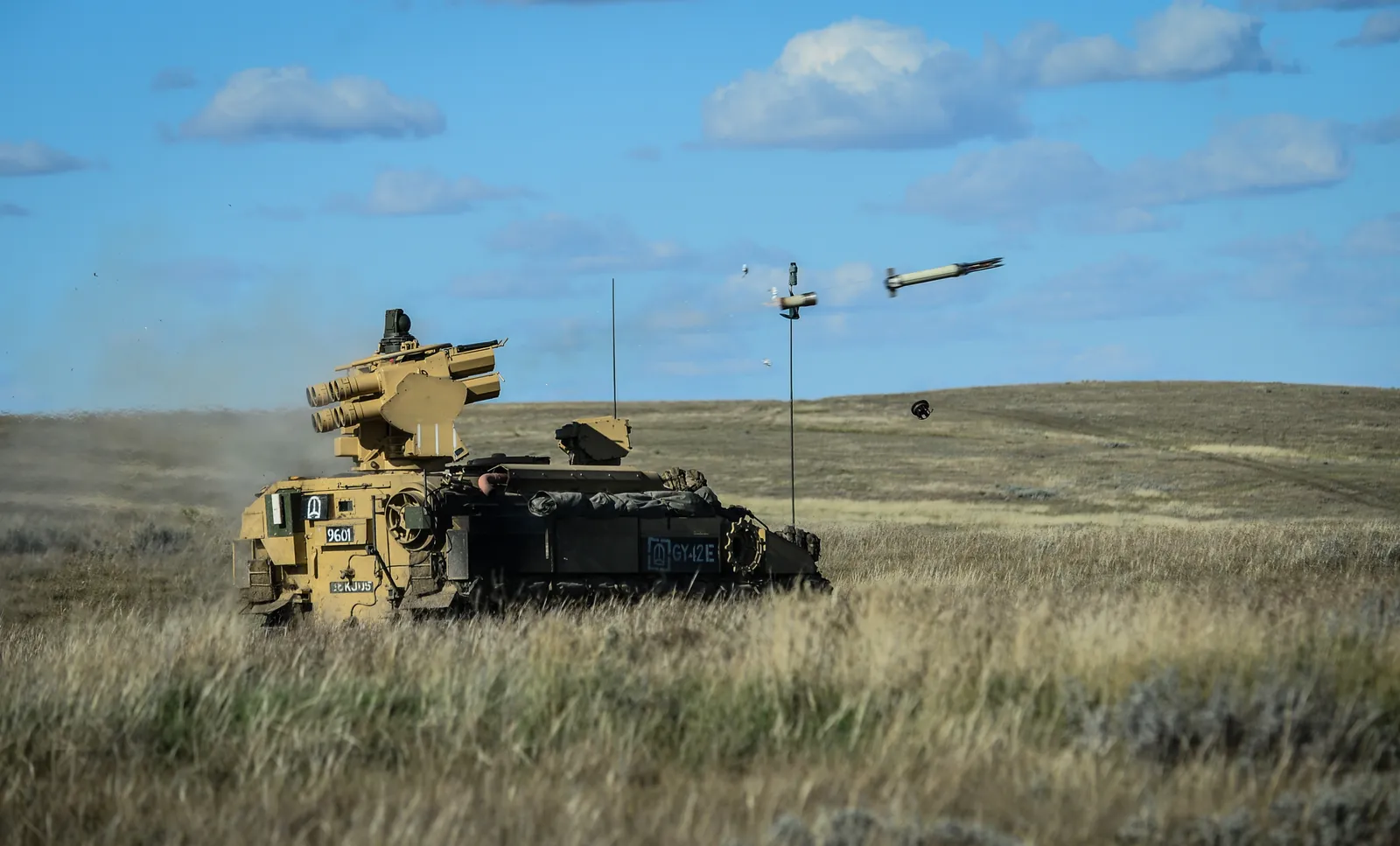
Eight ready Starstreak missiles with further missiles carried on the Stormer HVM vehicle
Manufacturer
Thales Air Defence, Belfast, United Kingdom
Ukraine transfer
Starstreak air-defense system and additional Starstreak missiles supplied by the United Kingdom from 2022
Guidance And Dart Payload

Starstreak differs from heat-seeking MANPADS by keeping the target under optical tracking and guiding the missile through semi-automatic line-of-sight laser beam riding. After launch, the missile releases three dart-like projectiles, which the British Army describes as a way to create multiple hit opportunities against fast low-level aircraft and helicopter targets.

Guidance

Semi-automatic line-of-sight beam riding, with the operator tracking the target through the aiming unit.

Effect

Three high-velocity dart projectiles are released after boost rather than a single infrared-homing missile body pursuing the target.

Launcher family

The missile can be fired from a shoulder launcher, a three-round lightweight launcher, or the Stormer self-propelled HVM vehicle.

Sources: British Army Starstreak HVM; Think Defence Starstreak HVM.
Variants

Starstreak is the missile family used across shoulder-fired, light launcher, and vehicle-mounted High Velocity Missile systems. This page covers the missile and light launch configurations, while the catalog keeps the tracked Stormer HVM platform as a separate vehicle-mounted system.

VariantConfigurationDesignation notes
Shoulder-launched StarstreakSingle-missile portable launcher

British Army material describes the portable Starstreak as a canister missile assembled with an aiming unit and ready to fire in a few seconds.

Sources: British Army Starstreak HVM

HVM Lightweight Multiple LauncherThree-missile light launcher

The Lightweight Multiple Launcher carries three ready canister missiles and can be carried on light wheeled vehicles such as a Land Rover.

Sources: British Army Starstreak HVM

Stormer HVM, Self-propelled short-range air-defense missile system, Air DefenseStormer HVMTracked self-propelled launcher

The Stormer HVM mounts the Starstreak SP HVM system on a tracked Stormer vehicle with eight ready missiles and additional rounds carried.

Sources: British Army Starstreak HVM

Starstreak A5Current British Army missile standard

Think Defence identifies Starstreak A5 as the current British Army generation and notes that HVM SP and LML variants can carry Starstreak A5 alongside Lightweight Multirole Missile rounds.

Sources: Think Defence Starstreak HVM

Launch Platforms

Starstreak can be fired from light portable launchers or from vehicle-mounted HVM systems; the cataloged tracked platform is linked separately because it has its own vehicle, sensor, transfer, and Ukraine-service context.

LauncherLauncher typeLaunch evidence
Stormer HVM, Self-propelled short-range air-defense missile system, Air DefenseStormer HVMTracked self-propelled air-defense launcher

British Army material identifies Stormer as the self-propelled Starstreak HVM mount, with eight ready missiles and additional missiles carried.

Sources: British Army Starstreak HVM

Timeline

Starstreak Key Events

  1. Shorts wins UK HVM production work

    Reference histories describe the Shorts Missile Systems design winning the UK High Velocity Missile competition, with development and production work following in November 1986.

    Sources: Think Defence Starstreak HVM

  2. Starstreak enters British Army service

    British Army and specialist references place the Starstreak HVM system in British service from 1997.

    Sources: British Army Starstreak HVM, Think Defence Starstreak HVM

  3. UK considers Starstreak for Ukraine

    A House of Commons Library timeline records the Defence Secretary telling Parliament that the UK was exploring Starstreak donations to help Ukrainian forces defend their skies.

    Sources: Commons Library Ukraine Military Assistance Timeline

  4. Starstreak included in UK missile package

    The Commons Library timeline says the Prime Minister announced a package of 6,000 defensive missiles that included the Starstreak air-defense system.

    Sources: Commons Library Ukraine Military Assistance Timeline

  5. Starstreak use reported in Ukraine

    The Independent, citing The Times and defence sources, reported that video from Luhansk showed Starstreak being fired in Ukraine and that Ukrainian forces had used the system for almost a week.

    Sources: Independent Starstreak Ukraine Report

  6. UK describes Starstreak launchers in Ukrainian air defense

    A UK Ministry of Defence announcement said the UK had provided Stormer vehicles fitted with Starstreak launchers and hundreds of anti-air missiles as part of Ukraine air-defense support.

    Sources: MOD Ukraine Air Defence Missiles

Media
Related Weapon Systems
Stormer HVM, Self-propelled short-range air-defense missile system, Air DefenseAir DefenseStormer HVMSelf-propelled short-range air-defense missile systemStormer HVM is a British self-propelled Starstreak High Velocity Missile air-defense system mounted on the tracked Alvis Stormer vehicle. It combines a protected CVR(T)-derived carrier, passive target-alerting equipment, and a roof launcher with eight ready Starstreak missiles for close air defense against low-flying aircraft, helicopters, and UAVs. The United Kingdom announced Stormer transfers to Ukraine in April 2022, later stated that six Stormer vehicles with Starstreak launchers had been supplied, and Ukrainian reporting placed the systems on the frontline by late July 2022.
LMM Martlet, Laser-guided lightweight multirole missile, Air DefenseAir DefenseLMM MartletLaser-guided lightweight multirole missileLMM Martlet is a British Thales-built lightweight multirole missile used as a short-range air-defense and anti-surface weapon. The 13 kg laser-guided missile is associated with Royal Navy Wildcat helicopters, Stormer-based short-range air-defense launchers, Ukrainian air-defense aid, and British counter-drone operations, giving it a compact role against drones, helicopters, small maritime craft, light vehicles, and other fast targets.
RBS 70, Laser beam-riding short-range air-defense missile system, Air DefenseAir DefenseRBS 70Laser beam-riding short-range air-defense missile systemRBS 70 is a Swedish short-range air-defense system built around a tripod launcher, optical or thermal sight, and laser beam-riding missiles. Saab's RBS 70 NG sight keeps the man-portable role while adding auto-tracking, thermal imaging, vehicle-integration, and networked or remote-control compatibility. Ukraine has fielded RBS 70 systems during the 2014 Russia-Ukraine War through Swedish and Australian support, including donated or procured launchers and training for Ukrainian personnel.
Skynex, Networked short-range air defense system, Air DefenseAir DefenseSkynexNetworked short-range air defense systemSkynex is Rheinmetall Air Defence's modular short-range air defense architecture built around the Oerlikon Skymaster battle management system, networked X-TAR3D-class sensors, and autonomous 35 mm Revolver Gun Mk3 effectors firing programmable AHEAD ammunition. German-funded Skynex systems in Ukrainian service have been reported in truck-mounted power-plant defense roles, while Italy received the first NATO-member Skynex battery in December 2025.
Gravehawk, Containerized short-range surface-to-air missile system, Air DefenseAir DefenseGravehawkContainerized short-range surface-to-air missile systemGravehawk is a UK-designed, Denmark-backed short-range air-defense system built for Ukraine by adapting Soviet-era R-73 air-to-air missiles for ground launch from a containerized twin-rail launcher. Official UK and parliamentary statements place it in Ukraine's wartime air-defense network, with prototypes delivered and a follow-on batch intended to help protect cities, troops, infrastructure, and energy facilities from Russian aerial attacks.

Sources