Naval Systems

Dyugon-class landing craft (Project 21820)

Also known as
  • Dyugon-class landing craft
  • Dyugon-class
  • Project 21820 Dyugon
  • Dugong-class landing craft
  • Project 21820 Dugong
  • Ataman Platov-class landing craft
  • Ataman Platov
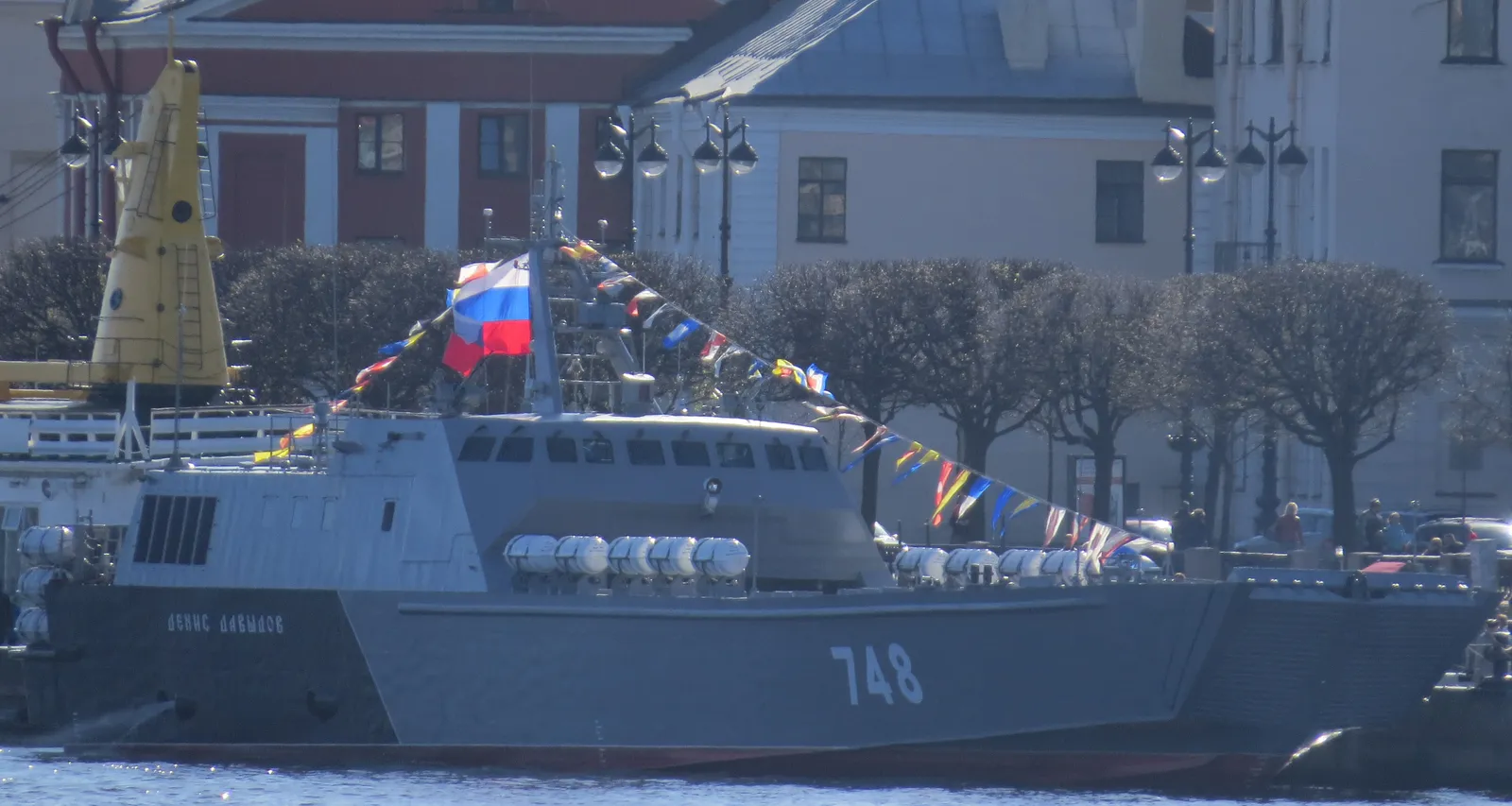
  • Denis Davydov
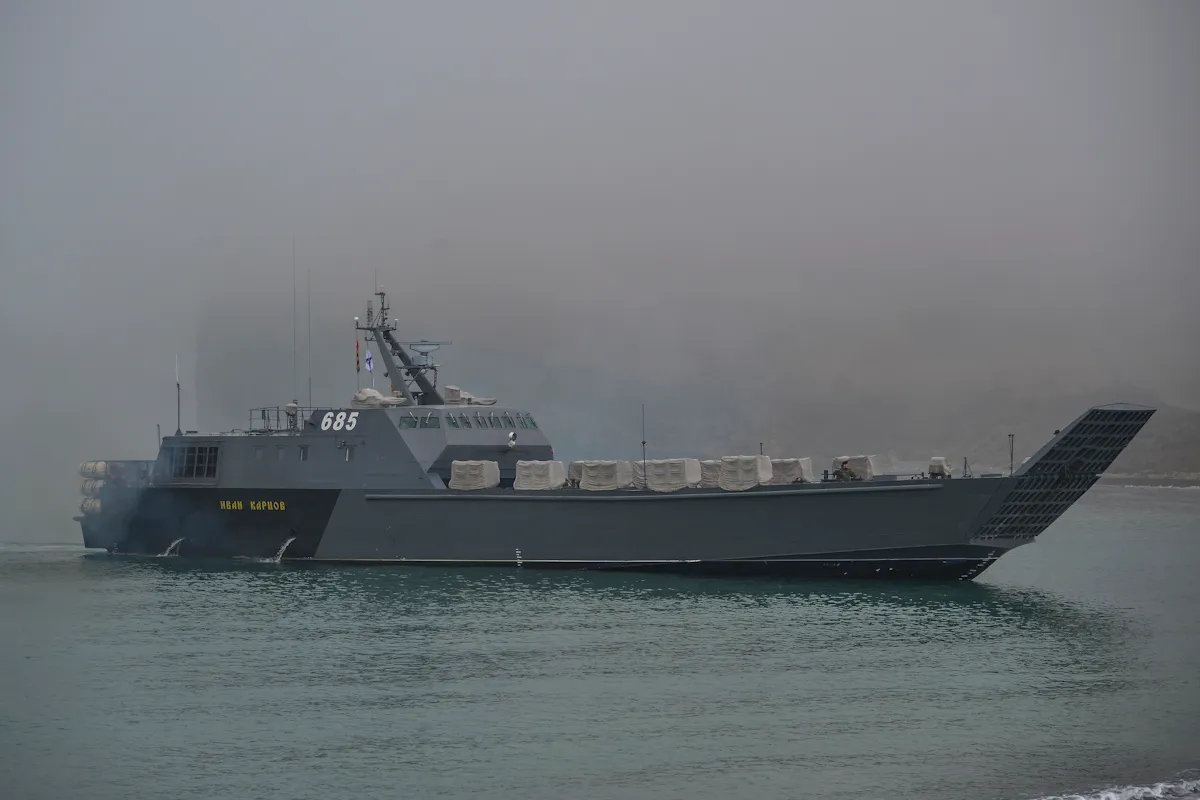
  • Ivan Kartsov
  • Lieutenant Rimsky-Korsakov
  • Midshipman Lermontov

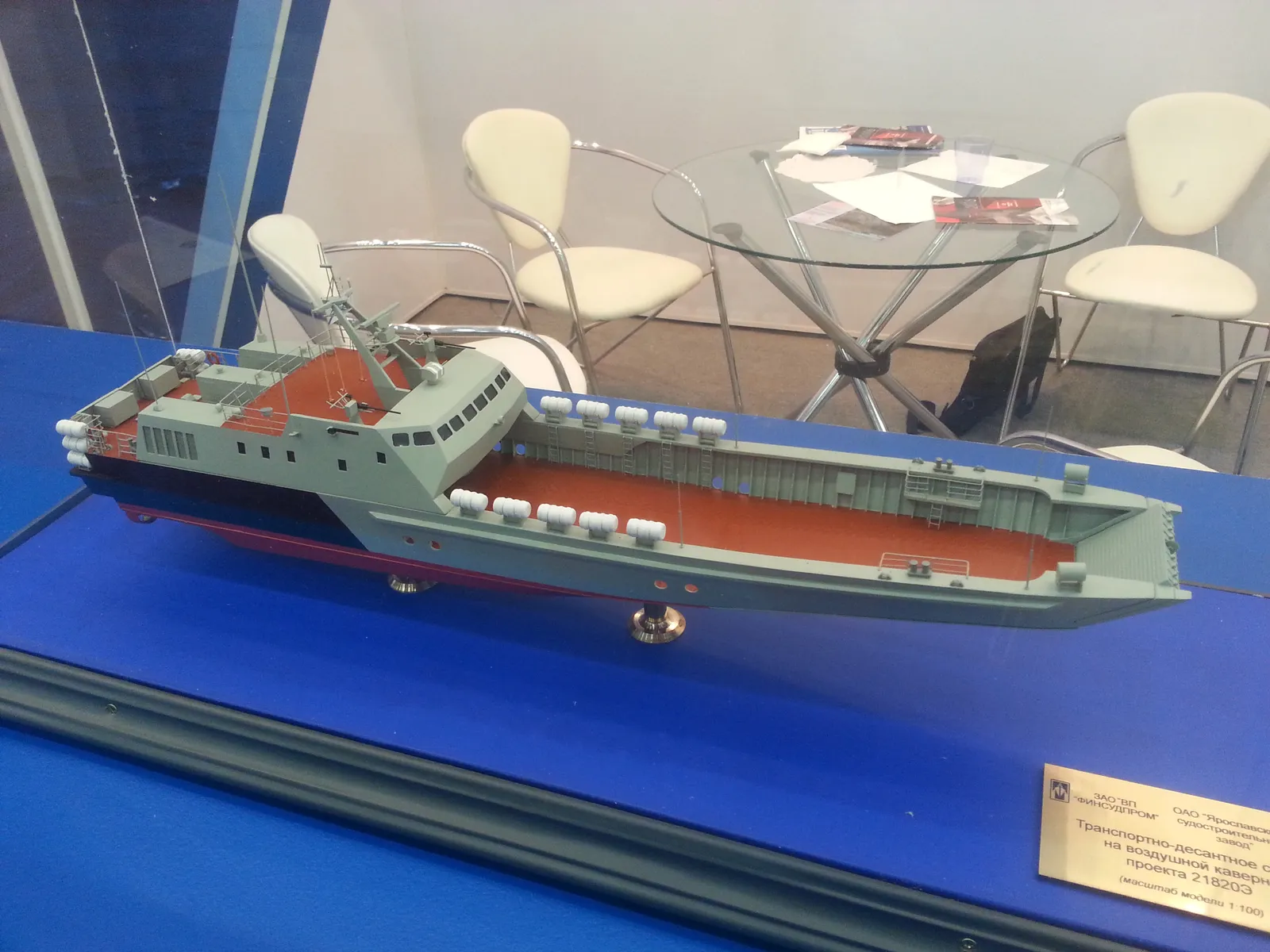
The Dyugon-class landing craft, Project 21820, is a Russian air-cavity fast landing craft developed by the Nizhny Novgorod Central Design Bureau for Hydrofoils as a larger successor to the Serna family. Built across Volga, Vostochnaya Verf, and Yaroslavl shipyards, the class moves tanks, armored vehicles, cargo, or marines to unimproved shores, and Russia used Dyugon craft around Snake Island in 2022 as part of Black Sea logistics and air-defense reinforcement activity.

Role in Conflicts

Side
Russia

Russian forces used Dyugon-class Project 21820 landing craft around Snake Island during the full-scale phase of the Russia-Ukraine War. Naval News reported a Pr.21820 craft near Snake Island on 2022-05-09, while The War Zone reported 2022-06-10 satellite imagery of a Dyugon-class craft south of the island with what appeared to be a Tor air-defense system on deck.

Role details
Profile / Specs

Profile

Origin
Russia
Type
Air-cavity landing craft
Service note
2010-present
Designer
Nizhny Novgorod Central Design Bureau for Hydrofoils named after R. E. Alekseev
Designed
2000s
Produced
2006-2015
Number built
5 commissioned
Developed from
Project 11770 Serna air-cavity landing craft

Specifications

Displacement
280 tons
Length
45-46 m
Beam
8.6 m
Draft
1.9 m
Crew
6-7
Speed
35 knots
Range
500 nmi cited by Deagel; 500 km listed by GlobalMilitary
Cargo capacity
Up to 120-140 tons; commonly described as up to three main battle tanks or five BTR-family armored vehicles, with deck limits affecting actual heavy-armor load
Troop capacity
Up to about 100-150 marines or troops depending on source and load plan
Propulsion
2 x 9,000 hp M507A-2D diesel engines driving waterjets
Armament
2 KPV 14.5 mm machine guns
Hull form
Air-cavity dynamic-support hull intended to reduce hydrodynamic resistance at speed
Class Vessels And Builders

The five completed Project 21820 craft were distributed across Russian fleets and shipyards rather than produced in a single yard. Open sources list Ataman Platov as the lead Caspian Flotilla craft, Ivan Kartsov as a Pacific Fleet craft, and Denis Davydov, Lieutenant Rimsky-Korsakov, and Midshipman Lermontov as Baltic Fleet craft.

CraftBuilderFleet context
Ataman PlatovShipbuilding Plant Volga, Nizhny NovgorodLead craft, commissioned in 2010 for the Caspian Flotilla.
Ivan KartsovVostochnaya Verf, VladivostokPacific Fleet craft, listed as active in the class.
Denis DavydovYaroslavl ShipyardBaltic Fleet craft accepted into Russian Navy service in 2014.
Lieutenant Rimsky-KorsakovYaroslavl ShipyardBaltic Fleet craft listed among the completed 2015 service group.
Midshipman LermontovYaroslavl ShipyardBaltic Fleet craft listed among the completed 2015 service group.

Sources: Deagel Project 21820; GlobalSecurity Project 21820 Ship List; Dyugon-class Specs & History.
Documented Deck Loads

Open-source reporting from Snake Island identified air-defense equipment carried or positioned on a Dyugon-class landing craft during Russian Black Sea operations.

Carried itemItem typeCarriage evidence
Tor-M2, Short-range surface-to-air missile system, Air DefenseTor-M2Tor-family short-range air-defense system

The War Zone reported a Tor-family air-defense vehicle visible on the deck of a Dyugon-class craft south of Snake Island on 2022-06-10; the report treated the exact operating status as uncertain, so the link points to the catalog's modern Tor-family record rather than asserting a confirmed subvariant.

Sources: Snake Island Reinforced By Russia With Additional Surface-To-Air Missiles

Air-Cavity Transport Role

Project 21820 uses an air-cavity hull concept rather than a conventional displacement-only landing-craft form. Public references describe compressed air under the hull as a way to reduce drag at speed, letting the craft move heavier vehicle loads than the smaller Project 11770 Serna while retaining high-speed beach-delivery performance.

Family position

GlobalMilitary and GlobalSecurity describe Dyugon as an enlarged follow-on to the Serna air-cavity landing craft family.

Sources: Dyugon-class Specs & History; GlobalSecurity Project 21820.

Cargo envelope

Sources commonly give a 120-140 ton payload class, with examples including tanks, BTR-family vehicles, troops, or mixed cargo.

Sources: Deagel Project 21820; GlobalSecurity Project 21820.

Operational caveat

GlobalSecurity recounts 2013 Russian reporting that some Navy officials criticized hull stresses and production quality, so the high-speed payload promise came with public reliability concerns.

Source: GlobalSecurity Project 21820.

Timeline

Dyugon-class landing craft (Project 21820) Key Events

  1. First unit commissioned

    Deagel and GlobalMilitary list 2010 as the commissioning year for the lead Dyugon-class craft Ataman Platov, marking the class's entry into Russian Navy service.

    Sources: Deagel Project 21820, Dyugon-class Specs & History

  2. Five vessels completed

    By 2015, open reference sources described five commissioned Dyugon-class vessels in Russian service, split among the Caspian, Baltic, and Pacific fleets and built across several shipyards.

    Sources: Deagel Project 21820, Dyugon-class Specs & History

  3. Dyugon observed near Snake Island

    Naval News reported a Pr.21820 Dyugon-class landing craft near Snake Island and assessed it was likely attempting to deliver another SA-15 Tor air-defense system.

    Sources: Naval News Snake Island Naval Operations

  4. Snake Island deployment observed

    The War Zone reported satellite imagery of a Dyugon-class landing craft operating south of Snake Island with what appeared to be a Tor air-defense system on deck.

    Sources: Snake Island Reinforced By Russia With Additional Surface-To-Air Missiles

Media
Related Weapon Systems
Serna-class landing craft (Project 11770), Air-cavity fast landing craft, Naval SystemsNaval SystemsSerna-class landing craft (Project 11770)Air-cavity fast landing craftProject 11770 Serna is a Russian air-cavity fast landing craft built for over-the-beach movement of vehicles, cargo, and assault troops to unimproved shores. KCHF and RussianShips list a 25.65 m, five-person craft capable of 35 knots and carrying one main battle tank, two BTRs, 92 troops, or 50 tons of cargo. During the Russia-Ukraine War, Russian Serna craft appeared as Black Sea logistics and air-defense transport targets around Snake Island and occupied Crimea.
Zubr-class air-cushion landing craft (Project 12322 Pomornik), Air-cushioned landing craft, Naval SystemsNaval SystemsZubr-class air-cushion landing craft (Project 12322 Pomornik)Air-cushioned landing craftThe Zubr class is a Soviet-designed Project 12322 Pomornik air-cushion landing craft developed by Almaz for high-speed amphibious lift. It can carry tanks, armored vehicles, troops, cargo, or naval mines directly onto prepared or unprepared shores, using bow and stern ramps and integral close-in armament. Greece operates the type as the Kefalonia/PTM class, while China acquired and locally expanded the related Project 958/Type 958 line.
BK-16 high-speed assault / landing craft (Project 02510), High-speed assault and landing craft, Naval SystemsNaval SystemsBK-16 high-speed assault / landing craft (Project 02510)High-speed assault and landing craftThe BK-16 is a Russian high-speed assault and landing craft of Project 02510, developed by Kalashnikov Concern's Rybinsk Shipyard for coastal, river-mouth, and unequipped-shore operations. Public sources distinguish domestic Project 02510 craft from the BK-16E export model, with both centered on troop transport, landing support, patrol, and modular fire-support or specialist mission fits; Russian craft are documented in wartime use or losses in the Black Sea and occupied Crimea during the Russia-Ukraine war.
BK-18 high-speed landing / assault craft (Project 02511), High-speed landing / assault craft, Naval SystemsNaval SystemsBK-18 high-speed landing / assault craft (Project 02511)High-speed landing / assault craftThe BK-18 high-speed landing / assault craft (Project 02511) is an enlarged Russian BK-series combat boat built by Rybinsk Shipyard for Kalashnikov Concern. Public references describe a 25-ton, 18.6-meter craft with pump-jet propulsion, a 40-knot top speed, 3 crew, and space for 19 embarked personnel; Russian Black Sea Fleet reporting places BK-18-type boats in anti-sabotage and base-protection duties connected to Tartus, Syria.
Ivan Gren-class landing ship (Project 11711), Large landing ship / landing ship tank, Naval SystemsNaval SystemsIvan Gren-class landing ship (Project 11711)Large landing ship / landing ship tankThe Ivan Gren-class landing ship (Project 11711) is a Russian large landing ship / landing ship tank designed by Nevskoe Design Bureau and built by Yantar Shipyard. The class carries troops, armored vehicles, cargo, helicopters, and obstacle-laying payloads for amphibious and naval transport missions; Pyotr Morgunov was part of Russia's Black Sea amphibious force during the full-scale invasion of Ukraine.
Project 1171 Tapir / Alligator-class large landing ship, Large landing ship / landing ship tank, Naval SystemsNaval SystemsProject 1171 Tapir / Alligator-class large landing shipLarge landing ship / landing ship tankThe Project 1171 Tapir / Alligator-class large landing ship is a Soviet-designed beachable landing ship tank built by Yantar Shipyard in Kaliningrad. The class was created to move troops, tanks, vehicles, ammunition, and cargo directly onto shore or through captured ports, and Russian use of the type as a Sea of Azov resupply ship was documented during the 2022 phase of the Russia-Ukraine War.

Sources