Naval Systems

Marshal Nedelin class (Project 1914) missile range instrumentation ship

Also known as
  • Project 1914
  • Project 1914 Zodiac
  • Project 1914.1
  • Project 19141
  • Project 19141M
  • Project 19142
  • Marshal Nedelin-class tracking ship
  • Marshal Nedelin-class missile range instrumentation ship
  • KIK Marshal Nedelin
  • KIK Marshal Krylov
  • Marshal Nedelin
  • Marshal Krylov

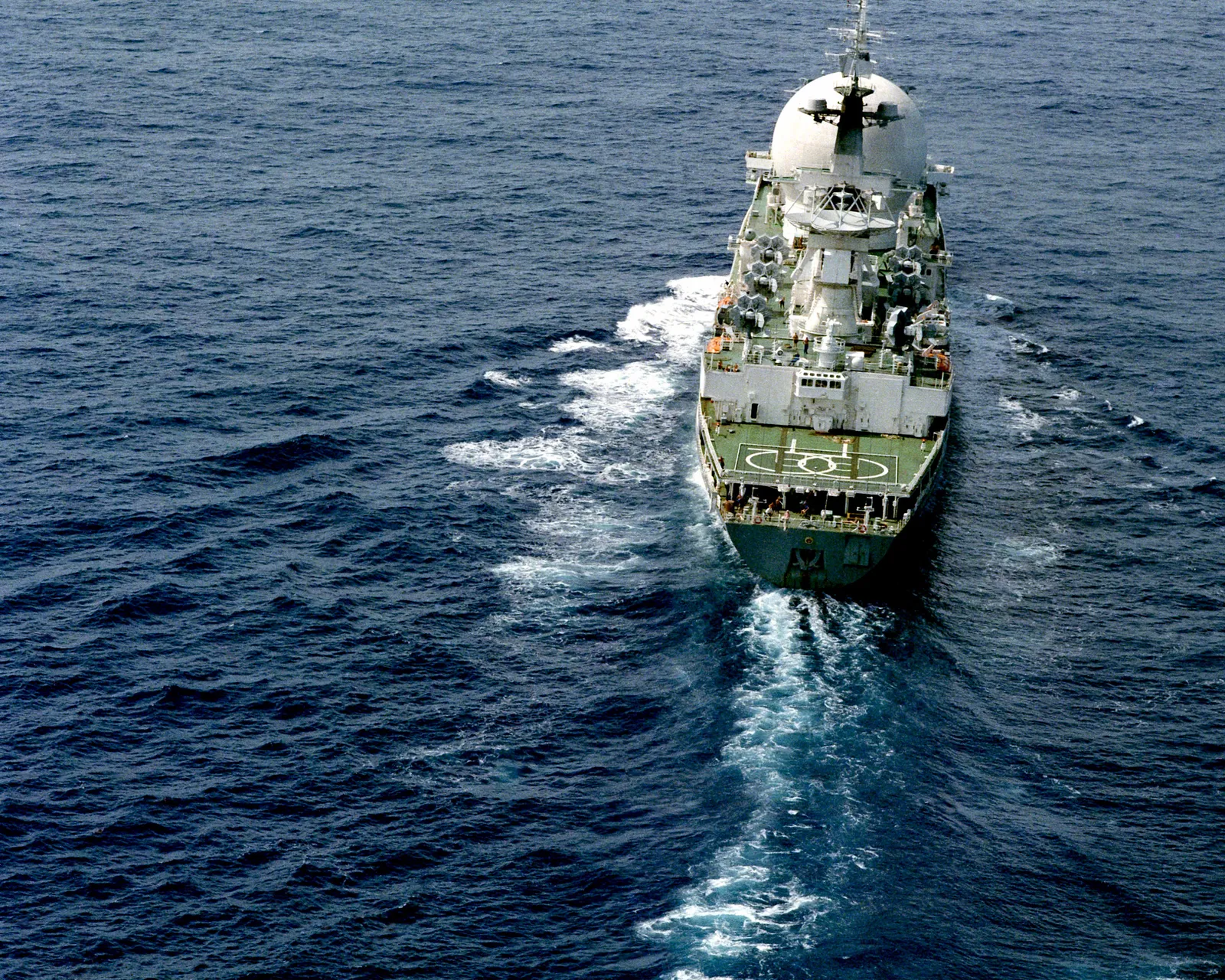
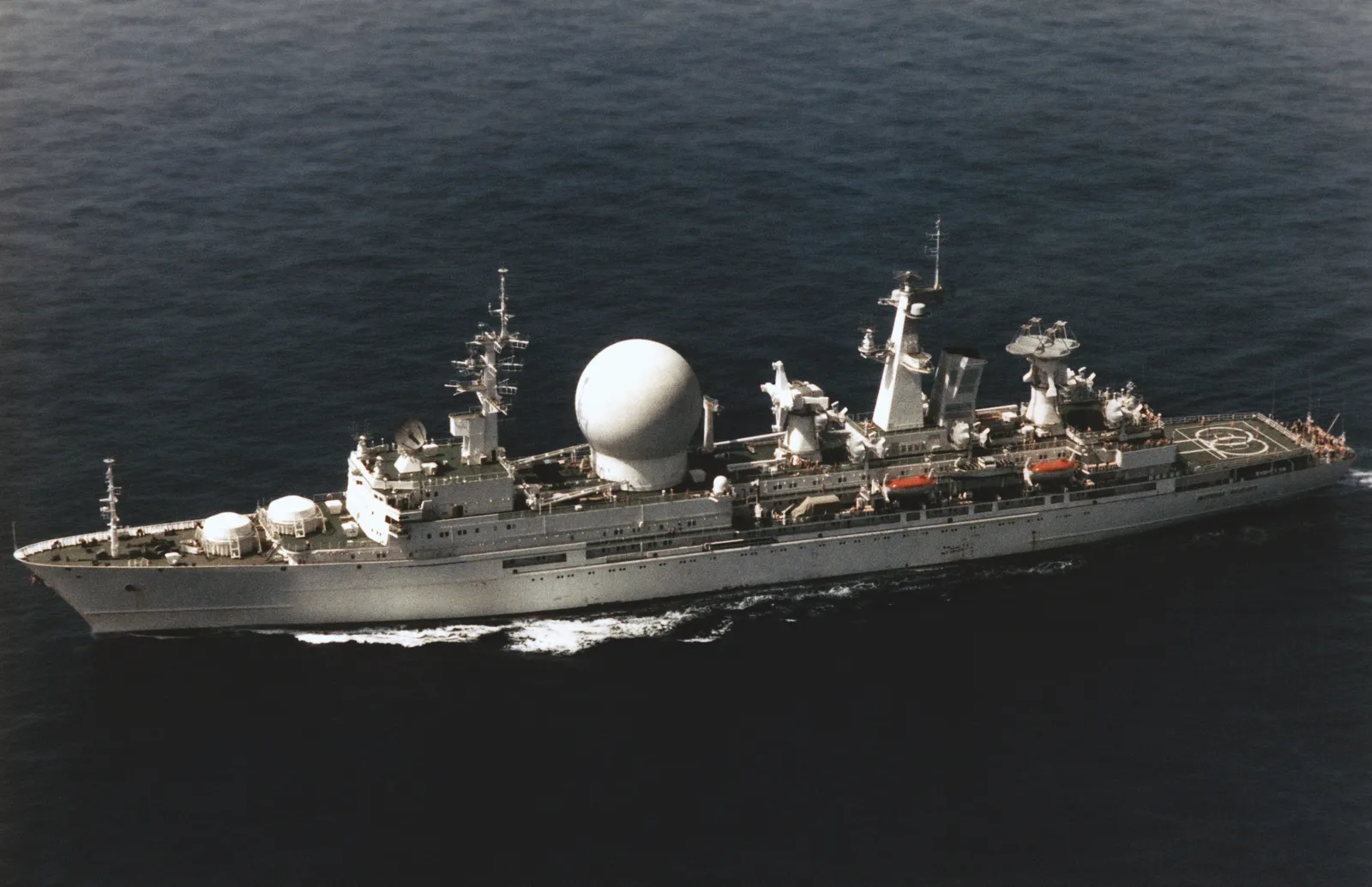
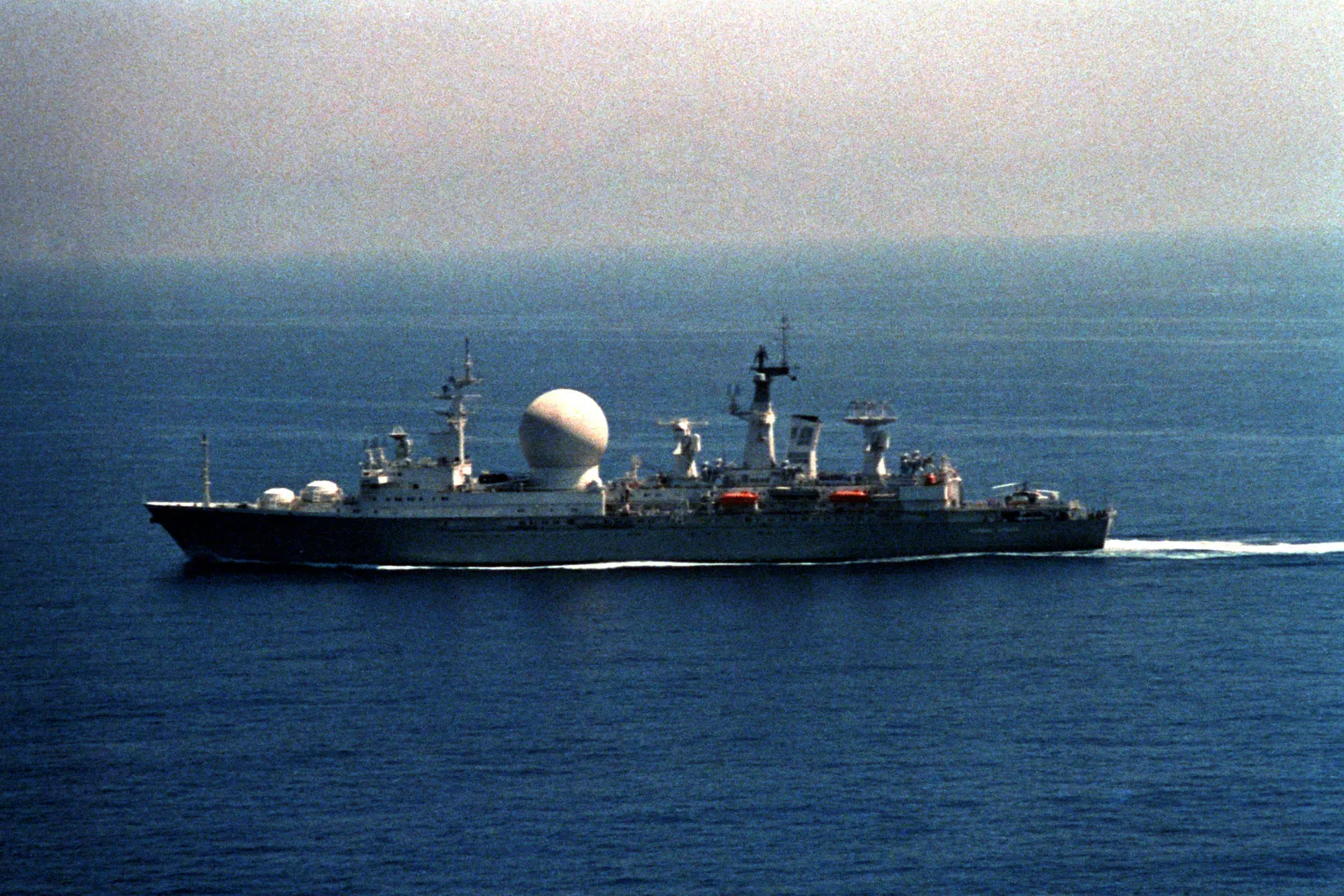
The Marshal Nedelin class (Project 1914 Zodiac) is a Soviet missile range instrumentation and space-tracking ship family built to support missile, launch-vehicle, spacecraft, telemetry, communications, and recovery work at sea. Two ships were completed at the Leningrad Admiralty association: the Project 1914 lead ship Marshal Nedelin and the modified Project 1914.1 Marshal Krylov, which remained in Russian Pacific Fleet service after a 2014-2018 modernization.

Profile / Specs

Profile

Origin
Soviet Union
Type
Missile range instrumentation and space-tracking ship class
Service note
Cold War and post-Soviet service
Designer
Baltsudoproekt
Designed
1970s
Produced
1977-1989
Number built
2 completed; 1 Project 19142 hull not completed

Specifications

Displacement
18,360 t standard / 25,300 t full load for Project 1914; 22,800 t standard / 23,780 t full load for Project 19141
Length
211.2 m for Project 1914; 211 m for Project 19141
Beam
27.7 m for Project 1914; 27.6 m for Project 19141
Draft
7.99 m for Project 1914; 8 m for Project 19141
Speed
22.76 knots
Range
20,000 nautical miles at 15.5 knots
Endurance
120 days
Propulsion
2 x 15,000 hp DGZA-6U diesels, 2 fixed-pitch propellers, 2 bow thrusters, 8 x 1,500 kW diesel generators
Armament
Provision for 6 x 30 mm AK-630 mounts with MR-123 Vympel-A fire control; TASS and SeaWaves emphasize measurement and communications roles rather than combat employment
Aviation
2 x Ka-27PS helicopters
Electronics
MR-320 Topaz or MR-755 Fregat-MA air/surface search radar by project, navigation radars, sonars, Zefir-A, Zefir-T, Kunitsa, Dyatel, Zodiak, Andromeda-1914, and Tayfun-2 systems
Crew
396 for Project 1914; 339 for Project 19141
Measurement And Support Role

Project 1914 ships were not strike platforms in the normal catalog sense. Their value was carrying sensors, communications equipment, aviation facilities, and specialist workspaces into ocean areas where shore ranges could not observe missile or spacecraft activity directly.

Mission areaDocumented rolePage context
Missile and space testingInstrumentation support for spacecraft, launch vehicles, cruise missiles, ballistic missiles, and related rocket-space systems.This is the main reason the record is treated as a relationship-only support ship rather than a conflict-use weapon entry.
Tracking and telemetrySpecial equipment, direction-finding, radar, communications, and measurement systems supported flight-profile and telemetry work at sea.RussianShips lists the Zefir, Kunitsa, Dyatel, Zodiak, Andromeda, and Tayfun equipment families in the class electronics fit.
Recovery and rescueSources describe search, rescue, and evacuation of crews and splashdown spacecraft or descent vehicles.The class sat between naval auxiliary, range instrumentation, and space-support roles rather than a single combatant category.
Fleet command supportPost-modernization reporting describes Marshal Krylov relaying information, supporting communications, and monitoring surface and air situations during Pacific Fleet exercises.Those exercise reports improve service context but do not establish direct use in a named armed conflict.
Variants

Project 1914 covered the original purpose-built missile range instrumentation ship, while Project 1914.1 / 19141 applied the modified Marshal Krylov configuration; RussianShips also records a 2014-2018 Project 19141M modernization for Marshal Krylov.

VariantConfigurationDesignation notes
Project 1914 Marshal NedelinLead ship

RussianShips lists Marshal Nedelin as yard number 02514, laid down on 19 November 1977, launched on 30 October 1981, commissioned on 30 December 1983, and decommissioned in 1998.

Sources: RussianShips Project 1914

Project 1914.1 / 19141 Marshal KrylovModified completed ship

RussianShips lists Marshal Krylov as the Project 19141 ship, laid down on 22 July 1982, launched on 24 July 1987, and commissioned on 31 December 1989; GlobalSecurity describes it as the changed Project 1914.1 ship that remained in service.

Sources: RussianShips Project 1914, GlobalSecurity Marshal Nedelin class program

Project 19141M Marshal Krylov modernizationModernized configuration

RussianShips records a Project 19141M modernization for Marshal Krylov at Dalzavod in Vladivostok from October 2014 to 2018, while TASS and later reporting describe the upgrade as focused on measurement equipment and Vostochny launch-support work.

Sources: RussianShips Project 1914, TASS Marshal Krylov modernization, SeaWaves Marshal Krylov Northern Sea Route

Project 19142 Marshal BiryuzovIncomplete planned ship

RussianShips lists the Project 19142 Marshal Biryuzov hull as not completed, and GlobalSecurity says the third ship was dismantled on the stocks.

Sources: RussianShips Project 1914, GlobalSecurity Marshal Nedelin class program

Timeline

Marshal Nedelin class (Project 1914) missile range instrumentation ship Key Events

  1. Marshal Nedelin is laid down

    RussianShips lists the Project 1914 lead ship Marshal Nedelin as laid down at the Leningrad Admiralty association on 19 November 1977.

    Sources: RussianShips Project 1914

  2. Lead ship enters service

    RussianShips gives 30 December 1983 as Marshal Nedelin's commissioning date.

    Sources: RussianShips Project 1914

  3. Marshal Krylov launches

    RussianShips, GlobalSecurity, and TASS identify Marshal Krylov as the Project 1914.1 / 19141 ship launched on 24 July 1987.

    Sources: RussianShips Project 1914, GlobalSecurity Marshal Nedelin class program, TASS Marshal Krylov modernization

  4. Marshal Krylov joins the fleet

    RussianShips lists Marshal Krylov as commissioned on 31 December 1989, and GlobalSecurity describes the ship joining the Navy at the end of 1989 before reaching its permanent Kamchatka basing area in 1990.

    Sources: RussianShips Project 1914, GlobalSecurity Marshal Nedelin class program

  5. Marshal Nedelin is decommissioned

    RussianShips records Marshal Nedelin as decommissioned on 30 May 1998; GlobalSecurity says the ship was removed from the fleet and cut for scrap.

    Sources: RussianShips Project 1914, GlobalSecurity Marshal Nedelin class program

  6. Marshal Krylov begins modernization

    TASS reported that Marshal Krylov arrived in Vladivostok in October 2014 for modernization at Dalzavod, with work aimed at measurement equipment and future Vostochny launch support.

    Sources: TASS Marshal Krylov modernization

  7. Modernized Marshal Krylov returns to service

    RussianShips records the Project 19141M modernization ending in 2018, and SeaWaves later summarized the ship as returned to service after modernization that year.

    Sources: RussianShips Project 1914, SeaWaves Marshal Krylov Northern Sea Route

  8. Finval-2023 command-support activity reported

    SeaWaves, citing the Russian Ministry of Defense, reported that Marshal Krylov supported Pacific Fleet exercises connected to Northern Sea Route communications, surface monitoring, and air monitoring.

    Sources: SeaWaves Marshal Krylov Northern Sea Route

Project 1914 Family

The family was small: one Project 1914 ship, one modified Project 1914.1 / 19141 ship, and one planned Project 19142 hull that was not completed.

Ship or configurationProjectStatus
Marshal Nedelin1914Completed lead ship; decommissioned in 1998.
Marshal Krylov1914.1 / 19141Completed modified ship; remained in Russian Pacific Fleet service after modernization.
Marshal Krylov modernization19141MDalzavod modernization recorded from October 2014 to 2018.
Marshal Biryuzov19142Planned third ship; not completed.
Media

Marshal Nedelin class (Project 1914) missile range instrumentation ship Images

Related Weapon Systems
Paltus-class submarine, Nuclear-powered special-purpose mini-submarine, Naval SystemsNaval SystemsPaltus-class submarineNuclear-powered special-purpose mini-submarineThe Paltus-class submarine is the NATO reporting name for Russia's Project 18511 Halibut nuclear-powered special-purpose deep-water station family. Open sources describe two boats, AS-21 and AS-35, as improved follow-ons to the Project 1851 X-Ray/Nelma design, built at the Leningrad/Admiralty yard for carrier-borne deep-sea missions, diver-support work, and GUGI-linked seabed operations; published dimensions vary widely because the class remains highly opaque.
Project 20380 / Steregushchiy-class corvette, Missile corvette, Naval SystemsNaval SystemsProject 20380 / Steregushchiy-class corvetteMissile corvetteProject 20380, known to NATO as the Steregushchiy class, is a Russian Navy guided-missile corvette family designed by Almaz and built by Severnaya Verf and Amur Shipyard for coastal escort, anti-surface, anti-submarine, and amphibious-support missions. The baseline ships combine Uran anti-ship missiles, Redut or Kortik air defense depending on hull, Paket-NK torpedo launchers, and a Ka-27 helicopter facility in a reduced-radar-signature corvette that remained in active Russian service during the 2014 Russia-Ukraine War.
Balzam class (Project 1826) intelligence ship, Intelligence collection ship, Naval SystemsNaval SystemsBalzam class (Project 1826) intelligence shipIntelligence collection shipBalzam class, also reported as Project 1826 Rubidiy and NATO Balzam, is a Soviet intelligence-collection ship class built by Yantar Shipyard in Kaliningrad for SIGINT and communications interception. Open-source class metadata places it between the earlier Primor'ye surveillance ships and the later Vishnya intelligence ship family, with four hulls completed from 1980 to 1987 and a defensive fit that included Strela-2 launchers and AK-630 close-in weapons.
Vanguard-class submarine, Nuclear-powered ballistic missile submarine, Naval SystemsNaval SystemsVanguard-class submarineNuclear-powered ballistic missile submarineThe Vanguard-class submarine is the Royal Navy's four-boat nuclear-powered ballistic missile submarine class for the United Kingdom's continuous at-sea nuclear deterrent. Built at Barrow-in-Furness by Vickers Shipbuilding and Engineering, the class carries Trident II D5 missiles, remains in service as the UK's single nuclear delivery platform, and is being sustained until Dreadnought-class submarines replace it in the 2030s.
Victor III-class submarine, Nuclear-powered attack submarine, Naval SystemsNaval SystemsVictor III-class submarineNuclear-powered attack submarineThe Victor III-class submarine is the NATO reporting name for the Soviet Project 671RTM/RTMK Shchuka nuclear-powered attack submarine. Built at Admiralty and Komsomolsk shipyards, it carried the Project 671 line into a quieter, missile-capable generation with updated combat electronics, a distinctive towed-array sonar pod, 533 mm and 650 mm bow tubes, and a loadout spanning torpedoes, RK-55 Granat cruise missiles, antisubmarine missiles, and mines. A small number of late boats remained tied to Russian Northern Fleet service decades after the Soviet collapse.
Project 1164 Atlant / Slava-class guided-missile cruiser, Guided-missile cruiser, Naval SystemsNaval SystemsProject 1164 Atlant / Slava-class guided-missile cruiserGuided-missile cruiserThe Project 1164 Atlant / Slava-class guided-missile cruiser is a Soviet-designed surface-strike cruiser class built at the 61 Kommunara yard in Mykolaiv. Its large angled anti-ship missile battery, S-300F Fort area air defense, Osa-M point defense, AK-130 gun, and helicopter deck made the class a Russian fleet flagship type, with Moskva documented in the 2008 Russo-Georgian War, Russia's Syria operation, and the 2022 phase of the Russia-Ukraine War before its sinking in the Black Sea.
Project 1265 Yakhont / Sonya-class minesweeper, Coastal minesweeper / minehunter, Naval SystemsNaval SystemsProject 1265 Yakhont / Sonya-class minesweeperCoastal minesweeper / minehunterThe Project 1265 Yakhont, better known as the Sonya-class minesweeper, is a Soviet wooden-hulled coastal mine-countermeasure vessel family built for shallow-water sweeping and minehunting work. RussianShips.info traces the baseline and export lines through Avangard and Vladivostok shipyards, while USNI News identifies Ukraine's Sonya-class minehunter as one of the mine-warfare vessels lost during Russia's 2014 annexation of Crimea.

Sources