Air Defense

LANZA LTR-25

Also known as
  • Lanza-LTR
  • Lanza LTR-25
  • Radar Lanza LTR-25
  • Long Range Tactical Radar
  • Lanza 3D LTR-25
  • LANZA 3D DADR
  • Deployable Air Defence Radar
  • DADR

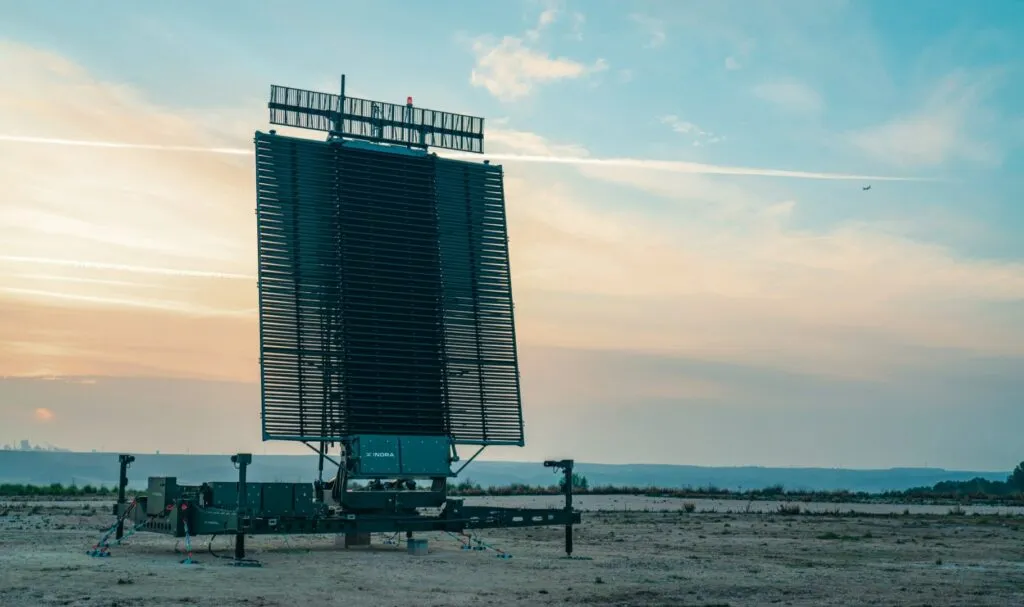
LANZA LTR-25 is a Spanish Indra deployable long-range 3D air-surveillance radar used to extend air-defense warning, tracking, and command-and-control coverage. Spain approved manufacture and supply of an LTR-25 for Ukraine in January 2026, while Indra describes the model as part of NATO's deployable radar component and in service with Ukraine's armed forces.

Role in Conflicts

Profile / Specs

Profile

Origin
Spain
Built by
Indra
Type
Deployable long-range 3D air-surveillance radar
Service note
2020s service and Ukraine aid context
Designer
Indra
Unit cost
37 million euro Spanish contract value for the Ukraine-destined radar and logistics support package
Produced
2020s

Specifications

Radar band
L-band
Radar type
Full solid-state 3D primary surveillance radar with pencil-beam architecture
Mission
Backup of air-defense networks and force projection in Indra datasheet language
Instrumented range
Up to 250 nautical miles
Coverage and processing
Digital beamforming, multiple long-range 3D coverage modes, monopulse elevation and azimuth processing
Identification
Integrated IFF/SSR modes 1, 2, 3/A, C, 4, S, and 5
Mobility
Transportable by two trucks or one C-130; deployable in less than two hours
Special capabilities
ECCM, anti-clutter processing, tactical ballistic missile detection and tracking, and small-drone identification in Indra public material
Radar Role

The LTR-25 is a sensor and air-picture asset rather than a missile launcher. Its conflict relevance comes from extending early warning, target tracking, and command-and-control inputs for other air-defense weapons.

Air picture

Indra describes a 3D primary surveillance radar that provides target altitude as part of the position report.

Source: Indra LTR-25 Datasheet.

Threat set

Public Indra material highlights tactical ballistic missile detection and small-drone identification as notable LTR-25 capabilities.

Source: Indra Air Defence Radars.

Deployment model

The datasheet lists transport by two trucks or a single C-130 and deployment in less than two hours.

Source: Indra LTR-25 Datasheet.

Variants

The LANZA family spans fixed, deployable, medium-range, civil-air-traffic-control, and naval radar configurations. This record covers the deployable long-range LTR-25 model.

VariantConfigurationDesignation notes
LANZA radar family, 3D air-surveillance and air-defense radar family, Air DefenseLANZA radar familyParent 3D radar family

The linked family record covers the broader LANZA line that includes fixed LRR, deployable LTR-25, mobile LTR-20, air-traffic-control PSR3D, and naval LANZA N configurations.

Sources: Indra LANZA Radar Family, Indra Air Defence Radars

LANZA LRRFixed long-range radar

Indra describes the LRR as the fixed long-range early-warning backbone model in the LANZA family.

Sources: Indra Air Defence Radars

LANZA LTR-20Mobile medium-range radar

Indra presents LTR-20 as the more versatile mobile member of the family for medium-range, gap-filler, and air-policing tasks.

Sources: Indra Air Defence Radars

LANZA NNaval radar

Indra's LANZA family brochure identifies LANZA N as the naval air-warfare branch.

Sources: Indra LANZA Radar Family

Timeline

LANZA LTR-25 Key Events

  1. LANZA DADR passes NATO ballistic-missile tracking tests

    Indra announced that the deployable LANZA DADR had passed NATO tactical-ballistic-missile detection and tracking tests using an NSPA certification and testing tool.

    Sources: Indra LANZA NATO TBM Tests

  2. Royal Air Force LTR-25 service described by Indra

    Indra stated that the RAF operated the long-range transportable Lanza 3D radar, identified as LTR-25, as part of United Kingdom airspace surveillance and deployable Global Enablement Team capability.

    Sources: Indra RAF LTR-25

  3. NATO deployable radar declared initially operational in Romania

    NATO's Deployable Air Command and Control Centre declared initial operational capability for its deployable air-defense radar in Romania, adding surveillance coverage on NATO's southeastern flank.

    Sources: NATO SHAPE DADR Romania

  4. Spanish radar refresh includes one LTR-25

    Indra said Spain's five-radar air-surveillance modernization package covered four fixed Lanza LRR radars and one deployable Lanza 3D LTR-25.

    Sources: Indra Spanish Air Force Lanza 2024

  5. Spain approves Ukraine LTR-25 contract

    Spain's Council of Ministers authorized manufacture, supply, and logistics support for one Lanza LTR-25 intended to strengthen Ukraine's defensive anti-aircraft capabilities.

    Sources: La Moncloa Lanza Contract

  6. Indra lists Ukraine among LTR-25 users

    Indra stated that LTR-25 radars were in service with NATO's deployable component and with countries including Spain, the United Kingdom, and Ukraine's armed forces.

    Sources: Indra FIDAE 2026

Service Context

Public official material places the LTR-25 in allied deployable air-surveillance service before the Ukraine contract. Indra described NATO, Spanish, and United Kingdom users for the deployable LANZA DADR/LTR-25 branch, while NATO public reporting documented deployable radar coverage added in Romania in 2024.

Ballistic-missile tracking

Indra reported that the deployable LANZA DADR completed NATO tactical-ballistic-missile detection and tracking tests in 2022.

Source: Indra LANZA NATO TBM Tests.

United Kingdom service

Indra identified the RAF's long-range transportable Lanza 3D radar as LTR-25 and tied it to airspace surveillance and deployable Global Enablement Team use.

Source: Indra RAF LTR-25.

Spanish refresh

Spain's Lanza modernization described by Indra includes four fixed LRR radars and one deployable Lanza 3D LTR-25.

Source: Indra Spanish Air Force Lanza 2024.

Media
Related Weapon Systems
LANZA radar family, 3D air-surveillance and air-defense radar family, Air DefenseAir DefenseLANZA radar family3D air-surveillance and air-defense radar familyThe LANZA radar family is Indra's Spanish L-band 3D air-surveillance and air-defense radar line, built around modular solid-state hardware and software-configurable operating modes. The family spans fixed long-range LRR sites, deployable LTR-25 radars, medium-range LTR-20 coverage, dual-use 3D PSR air-traffic-control radars, and LANZA N naval installations, with public Indra material tying newer LANZA radars to Spain's NATINAMDS-linked air-surveillance network and NATO deployable radar coverage.
LINZA EW-resistant multifunctional UAV, Multifunctional UAV, Aircraft & UAVsAircraft & UAVsLINZA EW-resistant multifunctional UAVMultifunctional UAVLINZA is a Ukrainian EW-resistant multifunctional UAV from Frontline Robotics, fielded by Ukrainian forces for front-line logistics, strike release, reconnaissance support, relay carriage, mining, and drone-recovery tasks. Public material distinguishes the 10-inch baseline drone from the Linza 3.0 upgrade, which adds a 12-inch frame, 4 kg payload, 15 km range, visual-inertial navigation, and reported German-Ukrainian production through Quantum Frontline Industries.
Iranian coastal surveillance radar sites, HF over-the-horizon 3D phased-array early-warning and coastal surveillance radar, Air DefenseAir DefenseIranian coastal surveillance radar sitesHF over-the-horizon 3D phased-array early-warning and coastal surveillance radarIranian coastal surveillance radar sites cover fixed early-warning and maritime-monitoring radars used around the Persian Gulf, Strait of Hormuz, and wider Iranian air-defense network. Public sources identify Ghadir/Qadir as a reported HF over-the-horizon 3D phased-array radar family, while CENTCOM's 2026 strike releases identify coastal radar sites at Goruk, Qeshm Island, and later Iranian coastal locations without publicly naming every radar model.
Voronezh-DM early-warning radar, Fixed early-warning phased-array radar, Air DefenseAir DefenseVoronezh-DM early-warning radarFixed early-warning phased-array radarVoronezh-DM is the decimeter-band member of Russia's prefabricated Voronezh strategic early-warning radar family, built for long-range missile-attack warning and aerospace surveillance in the national warning network. The Armavir site in Krasnodar Krai hosts two Voronezh-DM arrays that became conflict-relevant during the Russia-Ukraine war when Ukrainian drone attacks in May 2024 damaged at least one radar building or antenna structure; public analysis treats the site as strategically important while cautioning that its direct tactical value against Ukrainian weapons was probably limited.
Giraffe 75, Mobile air-defense surveillance and target-acquisition radar, Air DefenseAir DefenseGiraffe 75Mobile air-defense surveillance and target-acquisition radarGiraffe 75 is a Swedish mobile Giraffe-family air-surveillance radar, known in Swedish service as PS-90, built to give short- and medium-range air-defense units a raised-mast radar picture and target-acquisition support. Ukrainian sources have reported Giraffe 75/PS-90 radars in Ukrainian service during the 2014 Russia-Ukraine War, while Serbian M85 Žirafa systems show the same model lineage in later air-defense modernization context.
36D6 / ST-68U surveillance radar, Mobile three-coordinate air-surveillance radar, Air DefenseAir Defense36D6 / ST-68U surveillance radarMobile three-coordinate air-surveillance radarThe 36D6 / ST-68U Tin Shield family is a mobile Soviet-legacy three-coordinate surveillance radar used to detect and track low-, medium-, and high-altitude air targets for air-defense command posts, SAM units, and air-traffic-control tasks. Ukrainian sources identify Iskra as the enterprise behind ST-68U/19Zh6 development history and later 35D6/36D6M modernization, while open technical references describe the 36D6 as an S-band radar with 360-degree azimuth coverage, four beams, 350 kW peak transmitter power, and target-data output to automated air-defense users. In the 2014 Russia-Ukraine War, visually documented loss lists, WarSpotting entries, and General Staff-derived reporting place 36D6/ST-68U radars on both Russian and Ukrainian sides of the air-defense fight, including repeated Russian radar losses in occupied Crimea.

Sources