Aircraft & UAVs

Hispano-Suiza HS.404

Also known as
  • HS.404
  • HS 404
  • Hispano 20 mm cannon
  • 20mm Hispano
  • Hispano Mk.I
  • Hispano Mk.II
  • Hispano Mk.V
  • British Hispano
  • Birkigt Type 404
  • 20-mm Automatic Gun M1
  • 20-mm Aircraft Automatic Gun AN-M2
  • AN-M2 Hispano

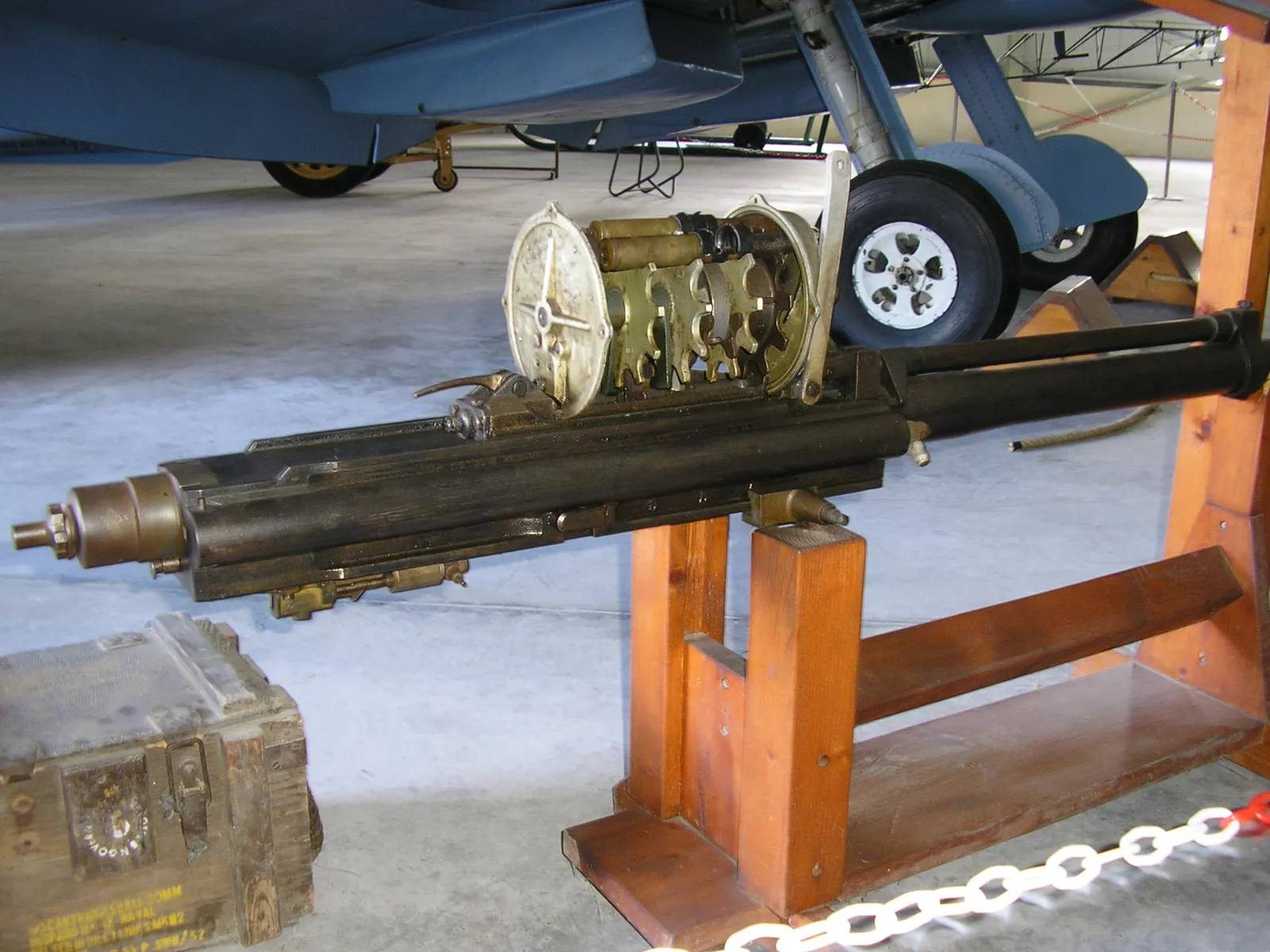
The Hispano-Suiza HS.404 was a 20x110 mm aircraft autocannon designed by Hispano-Suiza and adapted into British Hispano and U.S. M1/AN-M2 cannon lineages. Public sources support its manufacturer, ammunition, and aircraft-armament relationships, while direct named-conflict use is left unattached without exact weapon-conflict evidence.

Profile / Specs

Profile

Origin
Switzerland / France / United Kingdom
Type
20 mm aircraft autocannon
Service note
Mid-1930s design with major British wartime production and postwar derivatives
Designer
Marc Birkigt / Hispano-Suiza
Designed
Mid-1930s
Produced
British production before and during the Second World War; BMARC Grantham established from the late 1930s production program

Specifications

Caliber
20 mm
Cartridge family
20x110 mm Hispano
Role
Aircraft autocannon for fighter and night-fighter armament
Action
Combination blowback and gas-operated aircraft weapon in U.S. M1/AN-M2 technical-manual wording; Stoke-on-Trent Museums describes the Mk.II as gas operated
Feed
Original HS.404 drum magazine context; U.S. M1/AN-M2 manual lists drum magazine or disintegrating-link belt feed
Mk.V distinction
RAF Historical Society describes the late-war Mk.V as shortened, lightened, and speeded up from about 600 to 750 rpm
British Mk.II length
2.36 m
British Mk.II complete weight
42-50 kg
Representative rate of fire
600-850 rounds per minute for the British Mk.II museum summary; 600-700 rounds per minute cyclic rate for U.S. M1/AN-M2 manual data
Representative muzzle velocity
840-880 m/s for British Mk.II museum data; 850 m/s mean velocity in current Ordtech HS404/HS804 20x110mm ammunition data
Projectile weight
130 g in the museum Mk.II summary; 132-137 g shell weights in current Ordtech HS404/HS804 HE-family loadings
Variants

The record groups the original HS.404 design with British Hispano marks and U.S. M1/AN-M2 aircraft-gun models where public sources describe the same 20 mm Hispano cannon and ammunition lineage.

VariantConfigurationDesignation notes
HS.404Original Hispano-Suiza aircraft cannon

Chinn treats the Birkigt Type 404 as a Hispano-Suiza 20 mm cannon chapter subject, while the RAF Historical Society describes the HS 404 as a mid-1930s Hispano-Suiza design observed by British officers in 1936.

Sources: Chinn Machine Gun Volume I, RAF Historical Society Journal 45

British Hispano Mk.I / Mk.IIBritish service and production lineage

Chinn says the original Birkigt Type 404 was used as the model for the British Mark I and was followed by the Mark II; Stoke-on-Trent Museums describes the British belt-feed development adopted in 1941 as the Hispano Mk.II.

Sources: Chinn Machine Gun Volume I, Hispano Cannon

British Hispano Mk.VShortened and lightened late-war British lineage

The RAF Historical Society describes the late-war Mk.V as a shortened, lightened, faster-firing answer to the Hispano's length and weight, increasing from about 600 to 750 rpm.

Sources: RAF Historical Society Journal 45

M1 / AN-M2U.S. aircraft-gun models

War Department TM 9-227 covers the 20 mm Automatic Gun M1 and 20 mm Aircraft Automatic Gun AN-M2 as air-cooled aircraft weapons fed by drum magazine or disintegrating-link belt.

Sources: War Department TM 9-227

Ammunition Fired

The HS.404 family is documented with 20x110mm Hispano ammunition, including current HS404/HS804 loadings and historical aircraft loading imagery.

AmmunitionAmmunition typeFiring evidence
20x110mm Hispano projectiles, 20 mm cannon ammunition, Munitions20x110mm Hispano projectiles20x110mm cannon ammunition

Ordtech lists 20x110mm ammunition for HS404 and HS804 cannons, while the museum reference gives 20 mm x 110 mm projectile context for the British Hispano Mk.II.

Sources: 20X110mm ammunition, Hispano Cannon

Feed And Aircraft Integration

The HS.404 family moved from early drum-fed aircraft installations toward belt-fed British and American service models, which made the cannon more practical for wing and fuselage installations than a small in-flight drum supply.

Original feed limit

Stoke-on-Trent Museums describes HS.404 drum magazines as limited to at most 60 rounds, with no practical in-flight magazine change in most aircraft installations.

British belt feed

The same museum account says British engineers developed a belt-feeding mechanism and that the modified design was adopted in 1941 as the Hispano Mk.II.

U.S. feed options

War Department TM 9-227 lists drum magazine and disintegrating-link belt feed for the M1 and AN-M2 aircraft-gun models.
Timeline

Hispano-Suiza HS.404 Key Events

  1. HS.404 design lineage established

    Chinn identifies the Birkigt Type 404 as Hispano-Suiza's 20 mm cannon chapter subject, and RAF Historical Society material describes the HS 404 as a mid-1930s Hispano-Suiza design that impressed British observers in a 1936 firing demonstration.

    Sources: Chinn Machine Gun Volume I, RAF Historical Society Journal 45

  2. BMARC Grantham shadow factory set up

    Heritage Gateway states that British rearmament led to a government shadow factory at Grantham for production of the 20 mm Hispano-Suiza aircraft cannon under the British Manufacturing and Research Company name.

    Sources: Heritage Gateway BMARC Grantham

  3. RAF Hispano cannon re-arming photographed

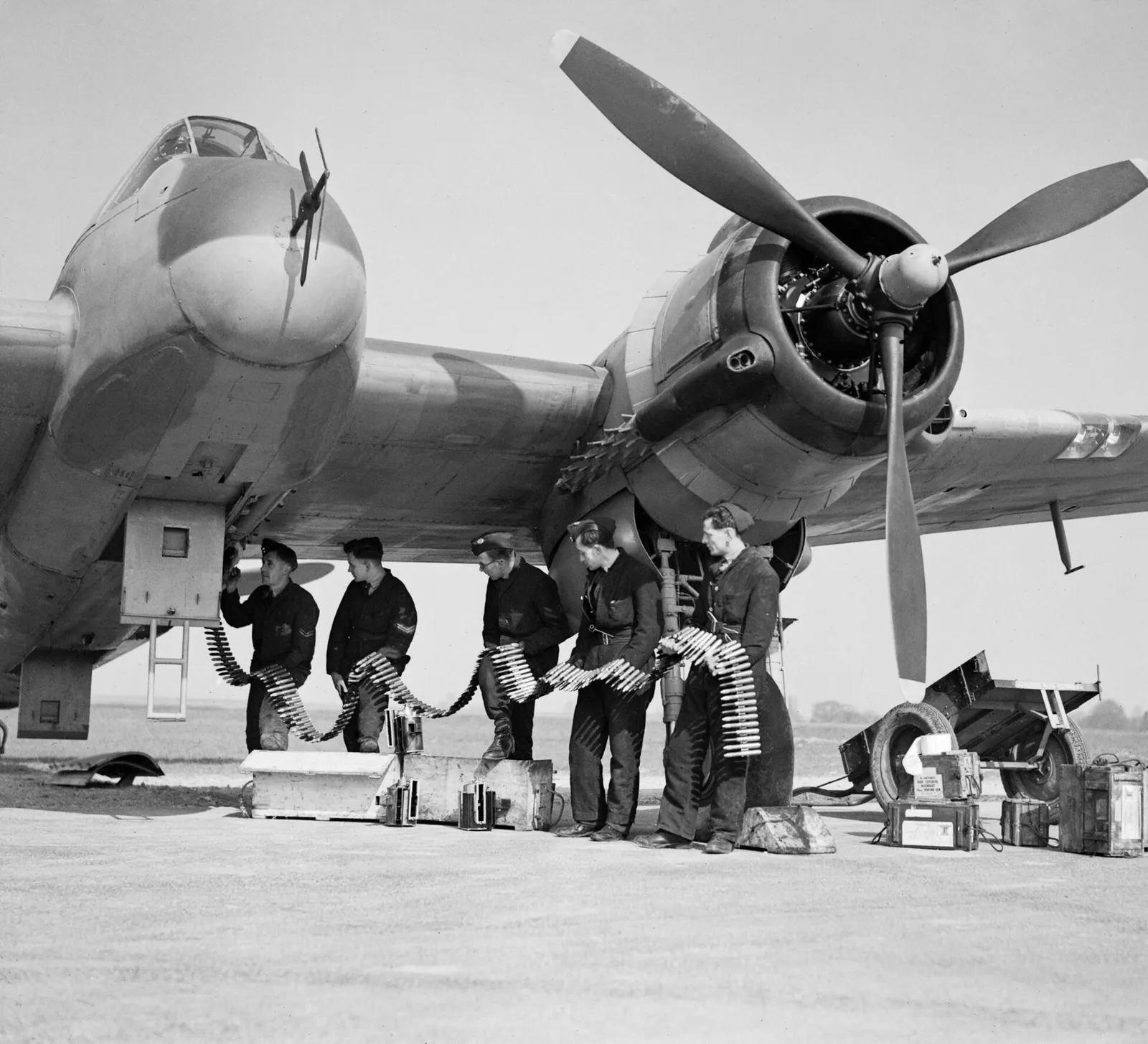
    The Wikimedia Commons/IWM image metadata identifies a Bristol Beaufighter Mk VIF being re-armed at Honiley with belts of ball and high-explosive incendiary ammunition for four 20 mm Hispano cannon.

    Sources: Wikimedia Commons Beaufighter Hispano Image

  4. U.S. M1 and AN-M2 manual issued

    War Department TM 9-227 provided technical guidance for the 20 mm Automatic Gun M1 and 20 mm Aircraft Automatic Gun AN-M2, including identification, operation, feed, and ammunition data.

    Sources: War Department TM 9-227

Media
Related Weapon Systems
2A14 23 mm cannon, 23 mm gas-operated autocannon, Air DefenseAir Defense2A14 23 mm cannon23 mm gas-operated autocannonThe 2A14 is the air-cooled 23 x 152B mm autocannon at the core of ZU-23 and ZU-23-2 short-range air-defense guns, with a quick-change barrel and a belt-feed layout that can be arranged from either side. Public conflict evidence most often documents it through the mounts that carry it: ZU-23-2 guns in Ukrainian service, SPLA-N air-defense fire in South Kordofan, Armenian and Artsakh losses in Nagorno-Karabakh, Houthi firing around Hudaydah, Tigray Defence Forces heavy weapons, and 2A14-pattern or ZU-23-2-pattern weapons with rebel forces in northern Mali.
2A72 30 mm automatic cannon, 30 mm dual-feed automatic cannon, ArtilleryArtillery2A72 30 mm automatic cannon30 mm dual-feed automatic cannonThe 2A72 is a Russian 30x165 mm dual-feed automatic cannon designed by KBP Instrument Design Bureau and manufactured by Tulamashzavod Joint Stock Company. It is a lighter, recoil-operated 2A42-family gun used as a coaxial cannon on BMP-3 and BMD-4M-type turrets and as the main weapon on 30 mm BTR-80A/BTR-82A installations, with direct open-source reporting tying BTR-82A 2A72 fire to fighting near Latakia during the 2011 Syrian Civil War.
Panhard AML 60 Serval, Wheeled reconnaissance armored car, Armored VehiclesArmored VehiclesPanhard AML 60 ServalWheeled reconnaissance armored carThe Panhard AML 60 Serval is a French AML-family 4x4 reconnaissance armored car that pairs the AML chassis with a Hispano-Suiza HE 60-20 Serval turret, a 60 mm breech-loaded mortar, and either M693 or HS.820/KAD 20 mm cannon armament. Boko Haram Insurgency sourcing is strongest for Serval seizure or recovery listings and broader Nigerian AML-60 deployments, so the conflict record separates Serval-specific capture evidence from less specific AML-60 field-use reporting.

Sources