Profile
- Origin
- United States
- Built by
- SRC Inc.RaytheonNorthrop Grumman
- Type
- Fixed-site counter-UAS system
- Service note
- 2020s-present
- Unit cost
- About $100 million per system, derived from a $1 billion Qatar package for 10 FS-LIDS systems
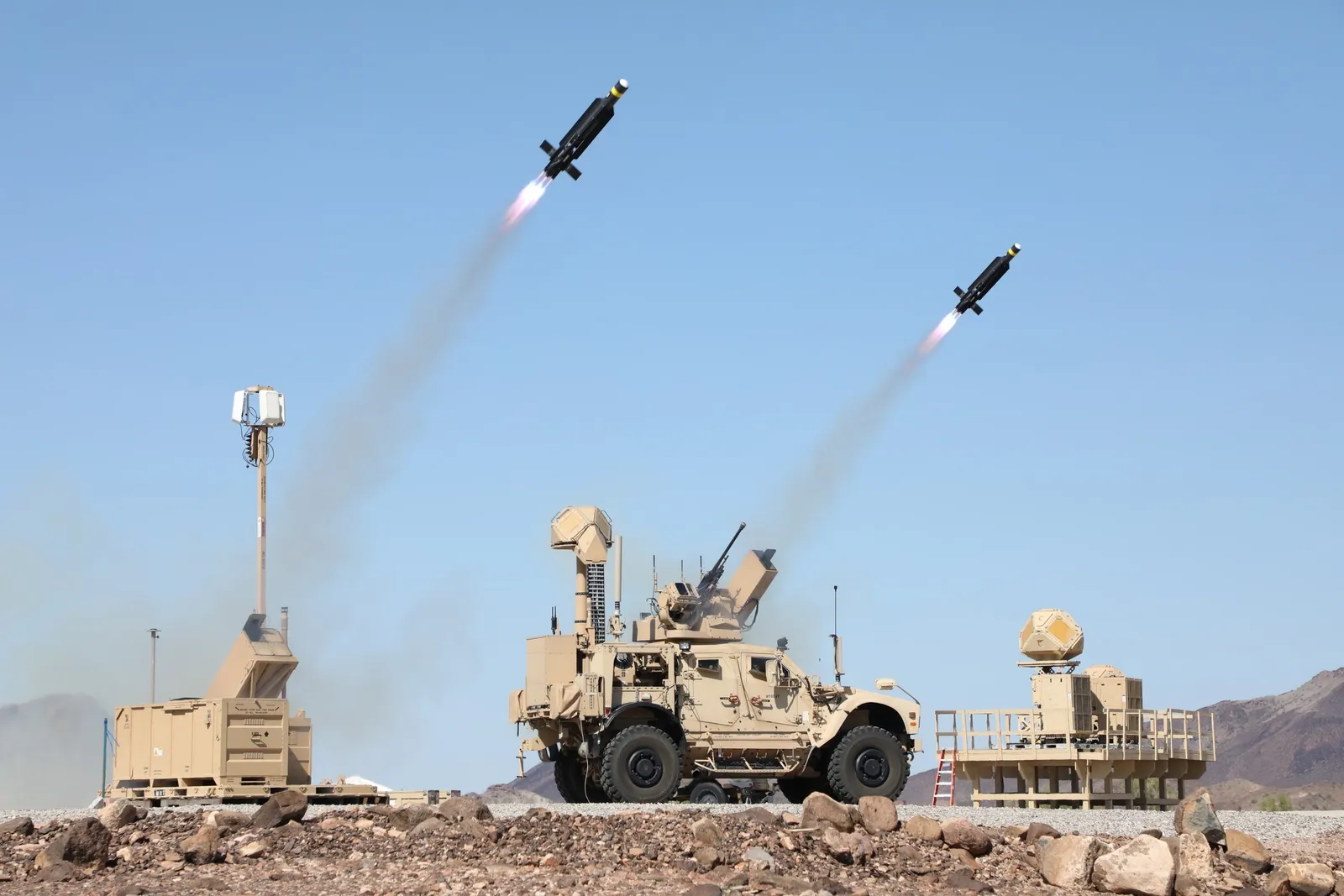
Fixed Site LIDS (FS-LIDS) is the U.S. Army's fixed-site Low, Slow, Small Unmanned Aircraft System Integrated Defeat System, built to protect bases and other static sites from small drones. Official SRC, RTX, Army, and U.S. arms-sale reporting describe it as a layered counter-UAS architecture that combines radar and EO/IR sensors, FAAD C2 command-and-control, electronic-warfare defeat, fixed Coyote launchers, and Coyote Block 2 interceptors.
FS-LIDS is documented as a fixed-site system of systems. The public sources describe a static or relocatable site-defense package in which radar and EO/IR sensors feed command-and-control, electronic warfare provides a non-kinetic defeat option, and Coyote interceptors provide a kinetic defeat layer.
KuMRFS, AN/TPQ-50, direction-finding sensors, and EO/IR cameras support detection, classification, and target tracking for small UAS.
FAAD C2 links the sensor picture and defeat options into the Army's integrated LIDS architecture.
CUAEWS supports electronic attack, while fixed launchers and Coyote Block 2 interceptors provide the kinetic layer listed in the Qatar FS-LIDS package.
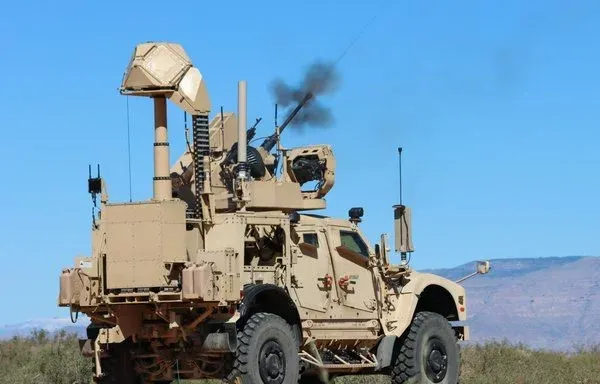
LIDS is publicly described as a family of fixed-site, fixed-relocatable, and mobile counter-UAS configurations.
| Variant | Configuration | Designation notes |
|---|---|---|
 | Mobile LIDS family member | RTX and SRC describe LIDS as deployable in fixed and mobile configurations; M-LIDS carries the mobile form of the architecture. Sources: Meet the US Army's LIDS: A sure shot against drones, LIDS Family of Systems Brochure |
FS-LIDS uses fixed launch equipment and Coyote interceptors for the kinetic part of its layered counter-UAS architecture.
| Compatible item | Item type | Compatibility evidence |
|---|---|---|
 | Counter-UAS interceptor | The Army says Coyote 2C integrates into fixed-site LIDS as a ground-launched, radar-guided interceptor, and the Qatar notification lists Coyote Block 2 interceptors in the FS-LIDS package. Sources: Army announces rapid acquisition authority contract for Coyote Interceptors, Federal Register Qatar FS-LIDS arms sales notification |
 | Fixed-site Coyote launcher | SRC says Coyote is launched from palletized fixed-site launchers, and the Qatar notification lists Coyote launchers with FS-LIDS. Sources: LIDS Family of Systems Brochure, Federal Register Qatar FS-LIDS arms sales notification |
The fixed-site system links sensor, command-and-control, and defeat layers rather than operating as a single launcher.
| Compatible item | Item type | Compatibility evidence |
|---|---|---|
 | Counter-UAS radar | Army AL&T identifies KuMRFS as the kinetic-defeat radar used with Coyote in FS-LIDS, and RTX describes KuRFS as the LIDS detect component. Sources: Innovation Draws International Interest, Meet the US Army's LIDS: A sure shot against drones, Federal Register Qatar FS-LIDS arms sales notification |
| Mobile LIDS family member | RTX and SRC describe LIDS as a family that can be configured in fixed-site or mobile forms, with shared sensor, C2, electronic-warfare, and Coyote defeat layers. Sources: Meet the US Army's LIDS: A sure shot against drones, LIDS Family of Systems Brochure |
Army AL&T says the Army initially deployed LIDS to U.S. Army Central Command's area of operations in 2017.
Sources: Innovation Draws International Interest
Army AL&T says the Joint C-UAS Office selected FS-LIDS and Coyote Block 2 as the initial DoD fixed-site and semi-fixed-site counter-UAS solution.
Sources: Innovation Draws International Interest
The DSCA notification covered ten FS-LIDS systems, 200 Coyote Block 2 interceptors, CUAEWS, Coyote launchers, KuMRFS radars, FAAD C2, EO/IR cameras, support, training, and sustainment.
Sources: Federal Register Qatar FS-LIDS arms sales notification
Raytheon said the $237 million Army contract included fixed-site and mobile LIDS systems plus Coyote effectors to support U.S. Central Command operations.
Sources: Raytheon Technologies awarded $237 million counter-UAS contract
The Army announced a rapid acquisition authority award for Coyote 2C interceptors and identified Coyote as a ground-launched, radar-guided component integrated into fixed-site LIDS.
Sources: Army announces rapid acquisition authority contract for Coyote Interceptors