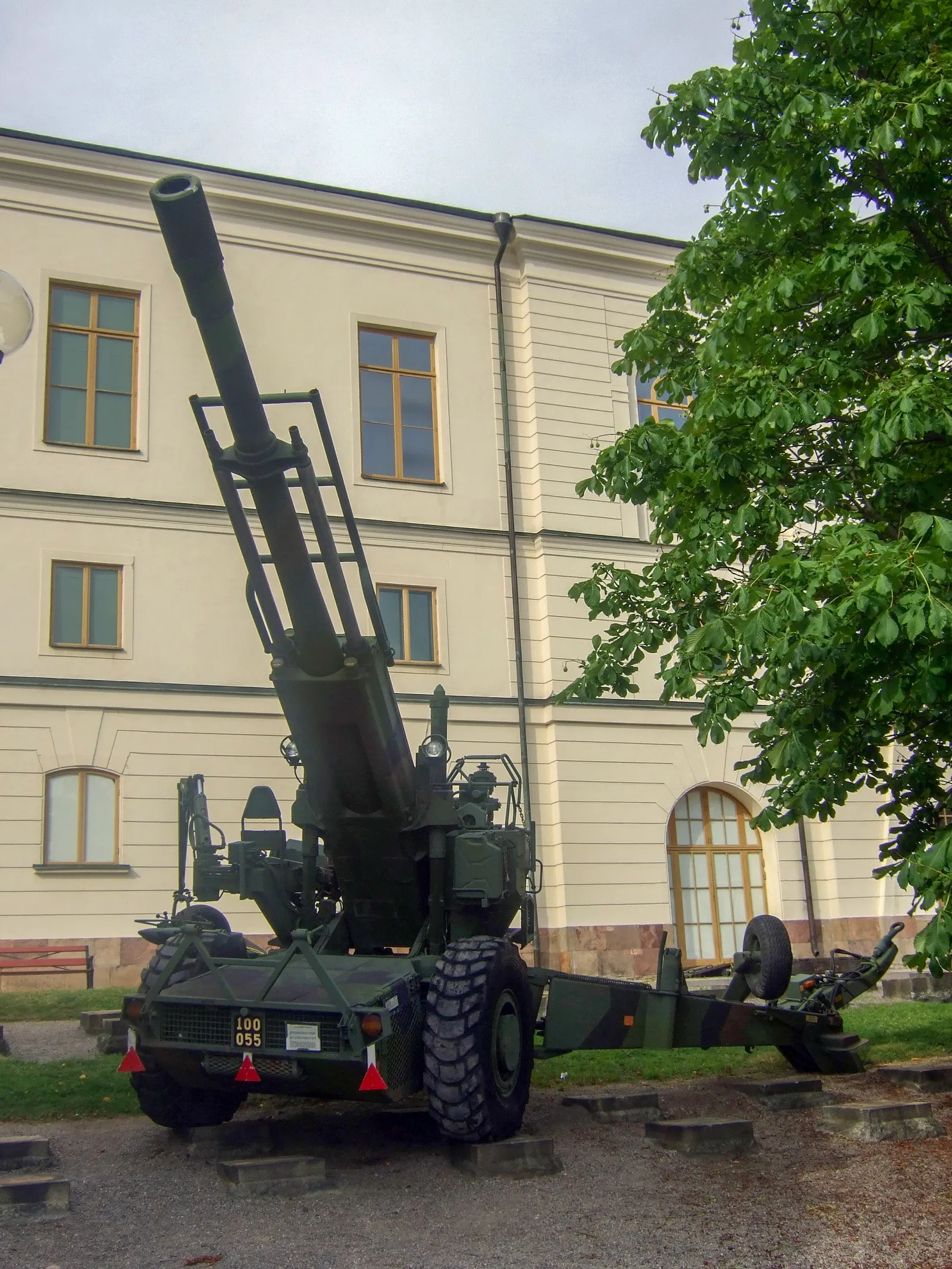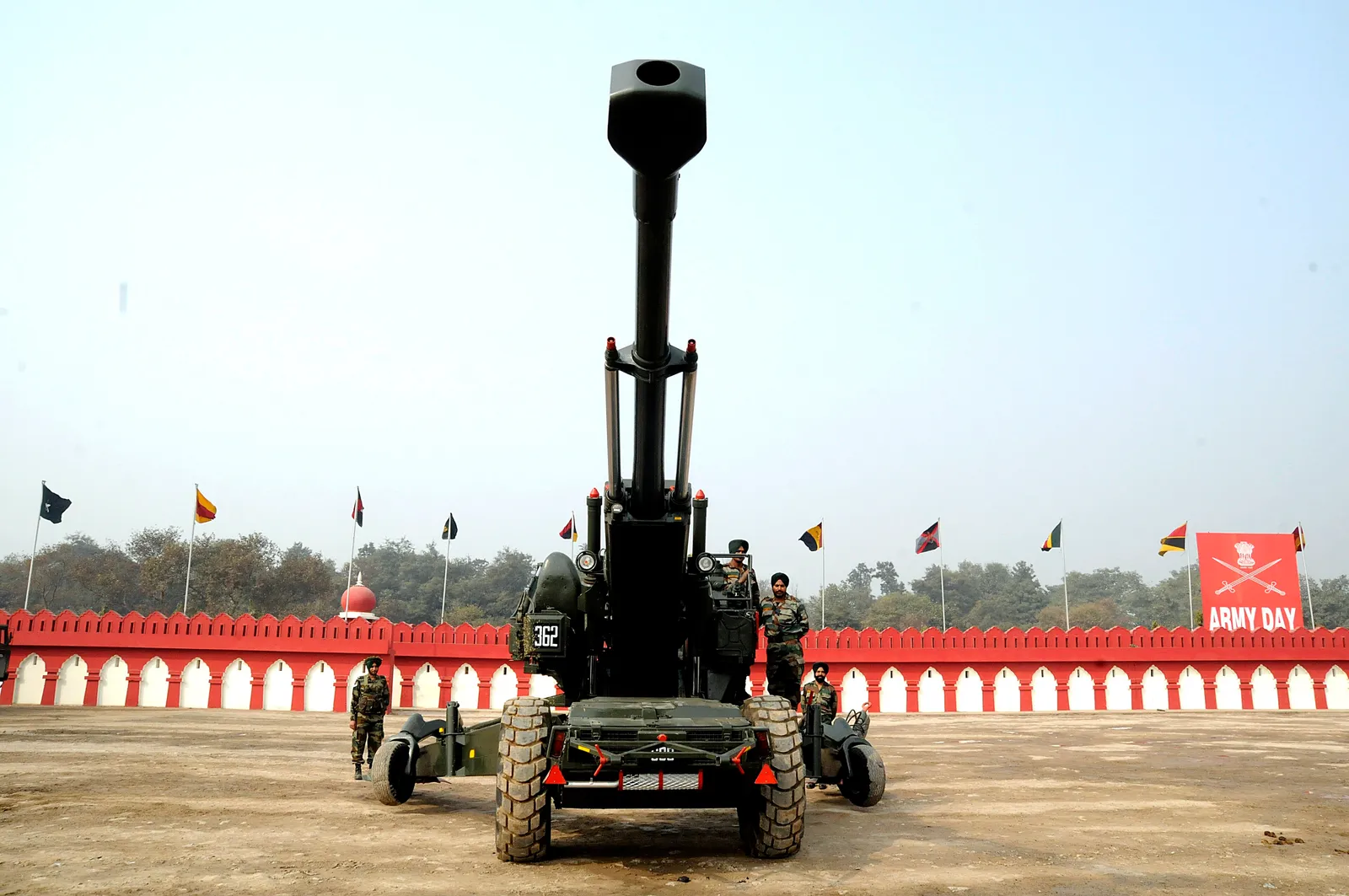
- Side
- India

During the 1999 Kargil War, Indian forces used 155 mm Bofors howitzers for sustained artillery fire support in the Kargil, Dras, Batalik, and Mushkoh sectors.
The 155 mm FH77B Bofors howitzer is a Swedish towed artillery piece developed by Bofors from the FH77A family and widely known in India as the Bofors gun. The export B-model retained the FH77 family’s auxiliary power unit for short self-movement, but used a longer 39-caliber barrel, screw breech, bag charges, and NATO-standard 155 mm ammunition. India’s 410-gun procurement made the FH77B a long-lived part of Indian Army artillery, with direct source-backed use in the 1999 Kargil War and later Line of Control firing in 2019 and 2025.
During the 1999 Kargil War, Indian forces used 155 mm Bofors howitzers for sustained artillery fire support in the Kargil, Dras, Batalik, and Mushkoh sectors.
In the 2019 India-Pakistan Border Skirmishes, the Indian Army used 155 mm Bofors guns to retaliate against Pakistan Army shelling along the Line of Control.
During the 2025 India-Pakistan Conflict, ORF analysis of Operation Sindoor said India used Bofors guns alongside M777 howitzers and loitering munitions during Line of Control artillery exchanges.
The FH77 family split between the original Swedish FH77A cased-charge arrangement, the FH77B export gun configured for NATO-standard 155 mm ammunition with bag charges, and later systems that reused FH77B design lineage.
| Variant | Configuration | Designation notes |
|---|---|---|
| FH77A | Original Swedish service model | Army Guide describes FH77B as an export model of the FH77A and says further development of FH77A resulted in FH77B. Sources: FH-77B (Towed howitzer) |
 | Self-propelled FH77B-family development | BAE Systems describes ARCHER as a wheeled, self-propelled 155 mm L52 howitzer developed from the successful towed FH77B. |
| Dhanush 155 mm/45-caliber gun | Indian modernization lineage | Defense News and CENJOWS describe Dhanush as an Indian 155 mm/45-caliber gun developed from available designs or original drawings for India's Swedish 155 mm/39-caliber Bofors guns. Sources: India's Dhanush artillery gun fails in trials, 155 mm 45 Calibre Dhanush Gun: a reality or a myth |
The FH77B was adapted for NATO-standard 155 mm ammunition, and Army Guide lists BONUS as a compatible top-attack projectile.
| Ammunition | Ammunition type | Firing evidence |
|---|---|---|
 | 155 mm standard artillery ammunition | The FH77B export configuration was developed around NATO-compatible 155 mm ammunition, which distinguishes it from the earlier FH77A ammunition arrangement. Sources: FH-77B (Towed howitzer), FH 77 155 mm Field Howitzer System |
 | 155 mm fire-and-forget anti-armor munition | Army Guide states that the FH77B can fire the 155 mm BONUS top-attack artillery projectile, while BAE Systems describes BONUS as compatible with most existing 155 mm artillery guns. Sources: FH-77B (Towed howitzer), Bofors 155mm BONUS munition |
Army Guide describes FH77A as the original Swedish Army model and says 200 were built between 1978 and 1984 before FH77B followed as a further development.
Sources: FH-77B (Towed howitzer)
GlobalSecurity records the Indian contract date for 410 FH77B howitzers, and Army Guide says the first production FH-77Bs for India left the Bofors factory in August 1986.
Sources: FH 77 155 mm Field Howitzer System, FH-77B (Towed howitzer)
The FH77B export variant used a slightly longer barrel, screw breech, bag charges, and a revised hydraulic loading system so it could fire NATO-standard 155 mm ammunition rather than the FH77A's original cased-charge arrangement.
Sources: FH-77B (Towed howitzer), FH 77 155 mm Field Howitzer System
Army Guide says the first production FH-77Bs for India left the Bofors factory in August 1986, marking the start of the Indian Army’s field deployment cycle.
Sources: FH-77B (Towed howitzer)
Bharat Rakshak records India's original plan for a much larger FH77B acquisition but says only 410 guns were purchased after the Bofors scandal froze the wider program.
Sources: 155mm Bofors FH-77B
IPCS described Indian use of 155 mm Bofors howitzers in the Kargil, Dras, Batalik, and Mushkoh sectors, while Bharat Rakshak says the FH77B proved its worth during the 1999 Kargil conflict.
Sources: Role of Artillery in Operation 'Vijay', 155mm Bofors FH-77B
BAE Systems describes ARCHER as a wheeled, self-propelled 155 mm L52 howitzer developed from the successful towed FH77B, making the Swedish gun family the direct parent of a modern artillery system.
Sources: ARCHER Wheeled Artillery System & Mobile Howitzer
Defense News described India's Dhanush 155 mm/45-caliber gun as an indigenous upgrade based on original drawings of the Swedish 155 mm/39-caliber Bofors guns India procured in the mid-1980s, and CENJOWS described OFB development from available original Bofors 155 mm/39-caliber designs.
Sources: India's Dhanush artillery gun fails in trials, 155 mm 45 Calibre Dhanush Gun: a reality or a myth
During the 2019 India-Pakistan Border Skirmishes, Indian defense reporting said the Indian Army used Bofors guns to respond to Pakistani shelling along the Line of Control.
Sources: Army uses Bofors guns to respond to border shelling by Pakistan, Indian Army warns Pakistan of dire consequences amid heavy artillery exchange on LoC