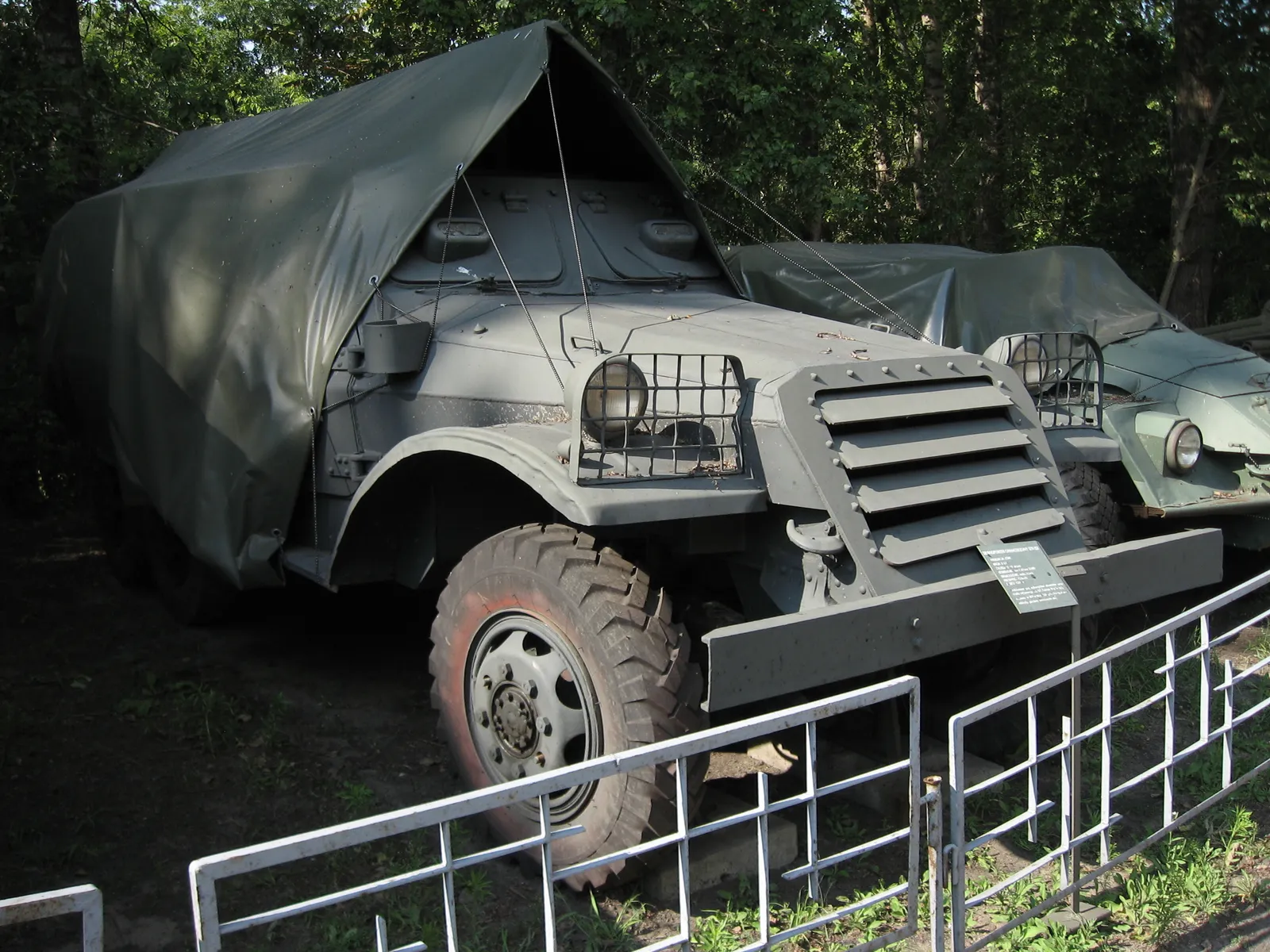

Houthi forces used at least one Soviet-era BTR-152 armored personnel carrier as an improvised carrier for a captured M167 Vulcan gun during the 2014 Yemen Civil War, turning it into a mobile direct-fire platform.
Role detailsArmored Vehicles
BTR-152
Also known as
- BTR 152
- SPW-152
- Schutzenpanzerwagen 152
- Type 56
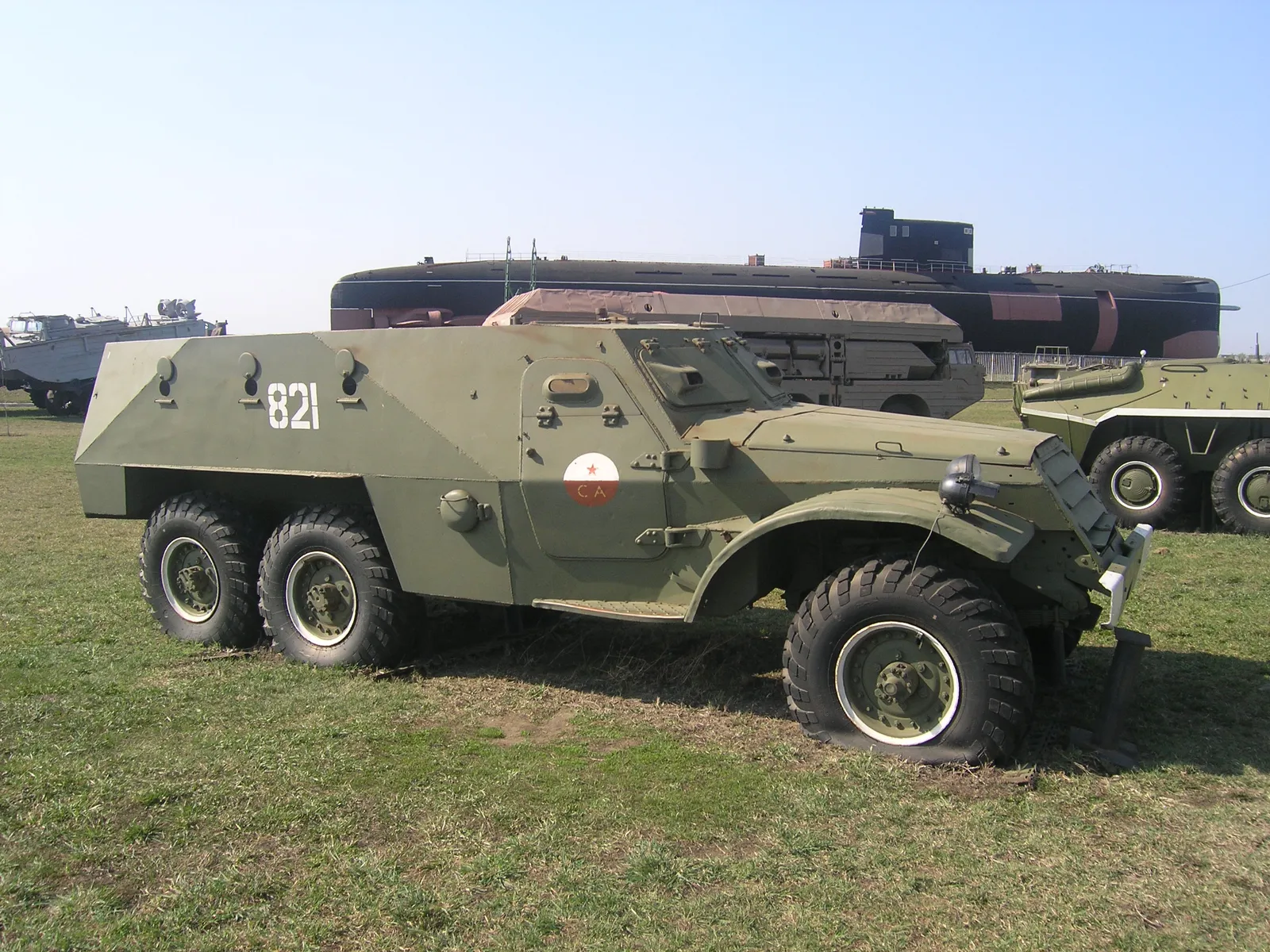
The BTR-152 is a Soviet postwar six-wheeled armored personnel carrier built on the ZiS-151 truck chassis and introduced in the early 1950s. Open-topped early vehicles later gave way to roofed and specialized variants, and Houthi forces in Yemen used one as a mobile carrier for a captured M167 Vulcan gun.
Role in Conflicts
Profile / Specs
Profile
- Origin
- Soviet Union
- Type
- Wheeled armored personnel carrier
- Service note
- Cold War
- Designer
- B. M. Fitterman and ZIS design team
- Designed
- 1946-1949
- Unit cost
- US$39,000 (reported export price to Iraq, 1964-1969)
- Produced
- 1950-1962
- Number built
- 12,421 BTR-152 series vehicles
- Developed from
- ZiS-151 truck chassis
Specifications
- Crew
- 2
- Capacity
- 17 passengers
- Weight
- 8.6 tonnes combat load
- Armament
- 7.62 mm SGMB machine gun on the standard vehicle; some BTR-152s mounted a 12.7 mm DShKM, and BTR-152A variants carried twin 14.5 mm KPV guns
- Chassis
- Wheeled 6x6 chassis based on the ZiS-151 truck
- Speed
- 75 km/h on road
- Range
- 600 km on road
- Armor
- Steel armor with about 13 mm front, 6-11 mm sides, and 4 mm floor
Design Changes
The BTR-152 moved from a simple open-topped postwar APC to a family of improved, roofed, and mission-specific variants.
| Change | Detail | Why it mattered |
|---|---|---|
| Base vehicle | ZiS-151 chassis with an open rear troop compartment | Kept production simple and used existing truck components. |
| Improved mobility | BTR-152V added a ZiL-157 chassis, external tire-pressure regulation, and a front winch | Improved cross-country mobility and recovery. |
| Protected variants | BTR-152K added an enclosed roof and NBC filtration | Reduced exposure to shell fragments, weather, and contamination. |
| Specialized mounts | Some vehicles carried single 12.7 mm DShKM guns, while BTR-152A variants mounted twin 14.5 mm KPVs | Extended the design into fire-support and anti-aircraft roles. |
Variants
- BTR-152V improved chassis variant
- BTR-152V1 with internal tire-pressure system
- BTR-152K enclosed-roof variant
- BTR-152U command vehicle
- Type 56 Chinese version
Mounted Weapons
The BTR-152 could carry a standard machine gun mount, and later field improvisations turned some vehicles into weapon carriers.
| Carried item | Item type | Carriage evidence |
|---|---|---|
 | Optional heavy machine gun | Weaponsystems.net notes that some BTR-152s mounted a single 12.7 mm DShKM heavy machine gun as the main armament. Sources: BTR-152 - Weaponsystems.net |
 | Improvised rotary cannon mount | The War Zone reported Houthi forces mounting a captured M167 Vulcan gun on a BTR-152 during the 2014 Yemen Civil War. Sources: Houthi Rebels In Yemen Have Technical Trucks Armed With Vulcan Cannons |
Timeline
BTR-152 Key Events
Postwar development
Weaponsystems.net dates BTR-152 development to 1946-1949 and describes the vehicle as a postwar response to the Red Army's need for a mass-produced APC.
Sources: BTR-152 - Weaponsystems.net
Enters Soviet service
Weaponsystems.net places the original BTR-152 production model and Soviet service entry in 1950.
Sources: BTR-152 - Weaponsystems.net
Roofed and improved variants appear
Weaponsystems.net says the BTR-152K closed-roof variant arrived in 1957 and that production shifted to the BTR-152K1 on the V1 chassis in 1959.
Sources: BTR-152 - Weaponsystems.net
Houthi field modification in Yemen
The War Zone documented Houthi use of a BTR-152 as a carrier for a captured M167 Vulcan gun during the 2014 Yemen Civil War.
Sources: Houthi Rebels In Yemen Have Technical Trucks Armed With Vulcan Cannons
Media
BTR-152 Images
Related Weapon Systems


Sources
Houthi Rebels In Yemen Have Technical Trucks Armed With Vulcan CannonsPublisher: The War Zone | Note: 2014 Yemen Civil War: used by Houthi forces as a Soviet-era BTR-152 wheeled armored personnel carrier mounting a captured M167 Vulcan gun. | Accessed: 2026-06-26BTR-152 - Weaponsystems.netPublisher: WeaponSystems.net | Note: Supports origin, development, production, producer history, designations, specifications, users, and variant background. | Accessed: 2026-06-26BTR-152 | The Littlefield Collection | RM Sotheby'sPublisher: RM Sotheby's | Note: Supports BTR-152 background as the first post-World War II Soviet APC, chassis lineage, improved model details, and specialized variant context. | Accessed: 2026-06-26BTR-152 Warsaw museum imagePublisher: Wikimedia Commons | Note: Supports image provenance and licensing context for the BTR-152 primary image. | Accessed: 2026-06-26BTR-152 Togliatty museum imagePublisher: Wikimedia Commons | Note: Supports image provenance and licensing context for the second BTR-152 gallery image. | Accessed: 2026-06-26The Economics of Soviet Arms Transfers to the Third WorldPublisher: JSTOR | Note: Supports the reported BTR-152 export price to Iraq in 1964-1969. | Accessed: 2026-06-26