Munitions

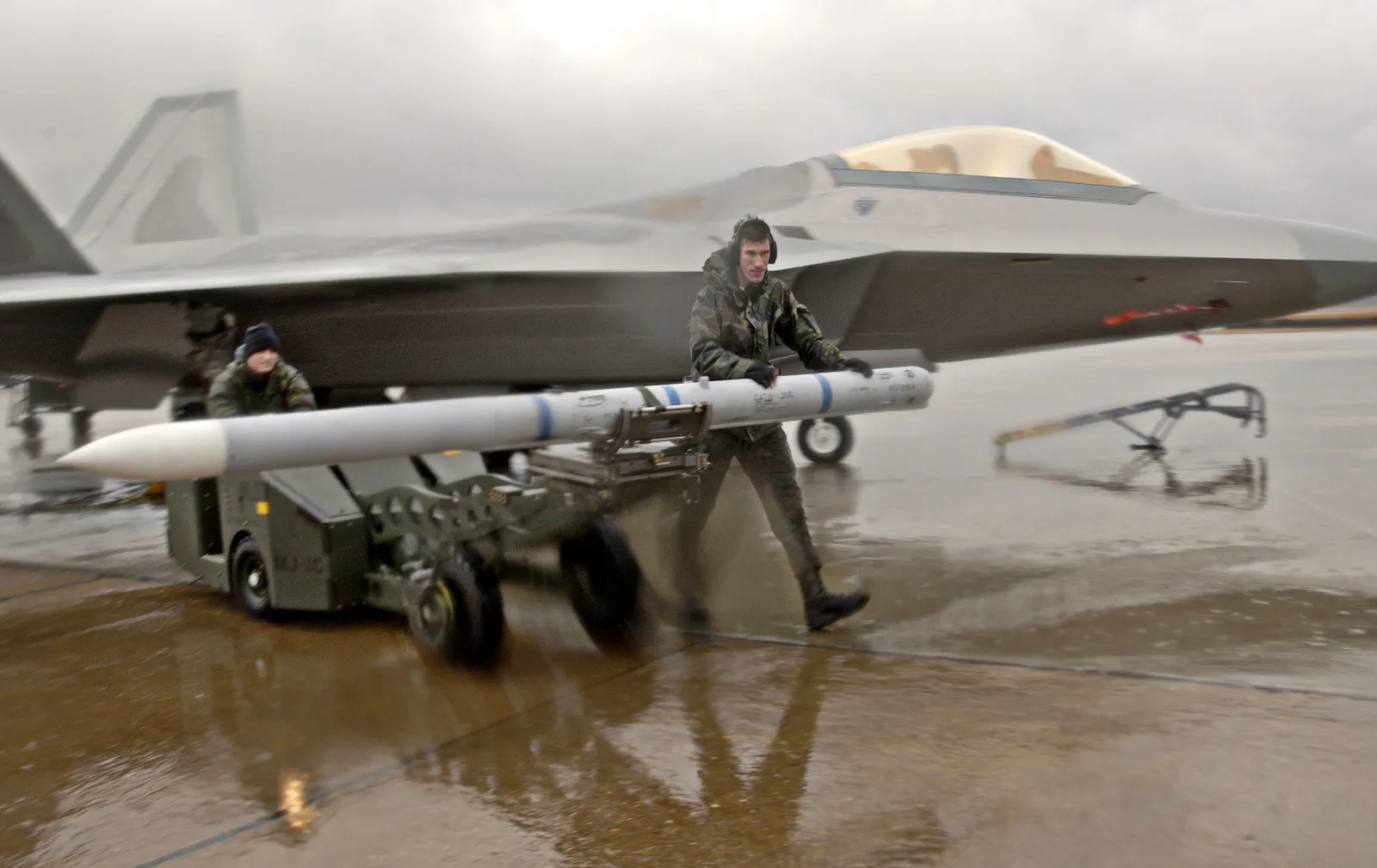
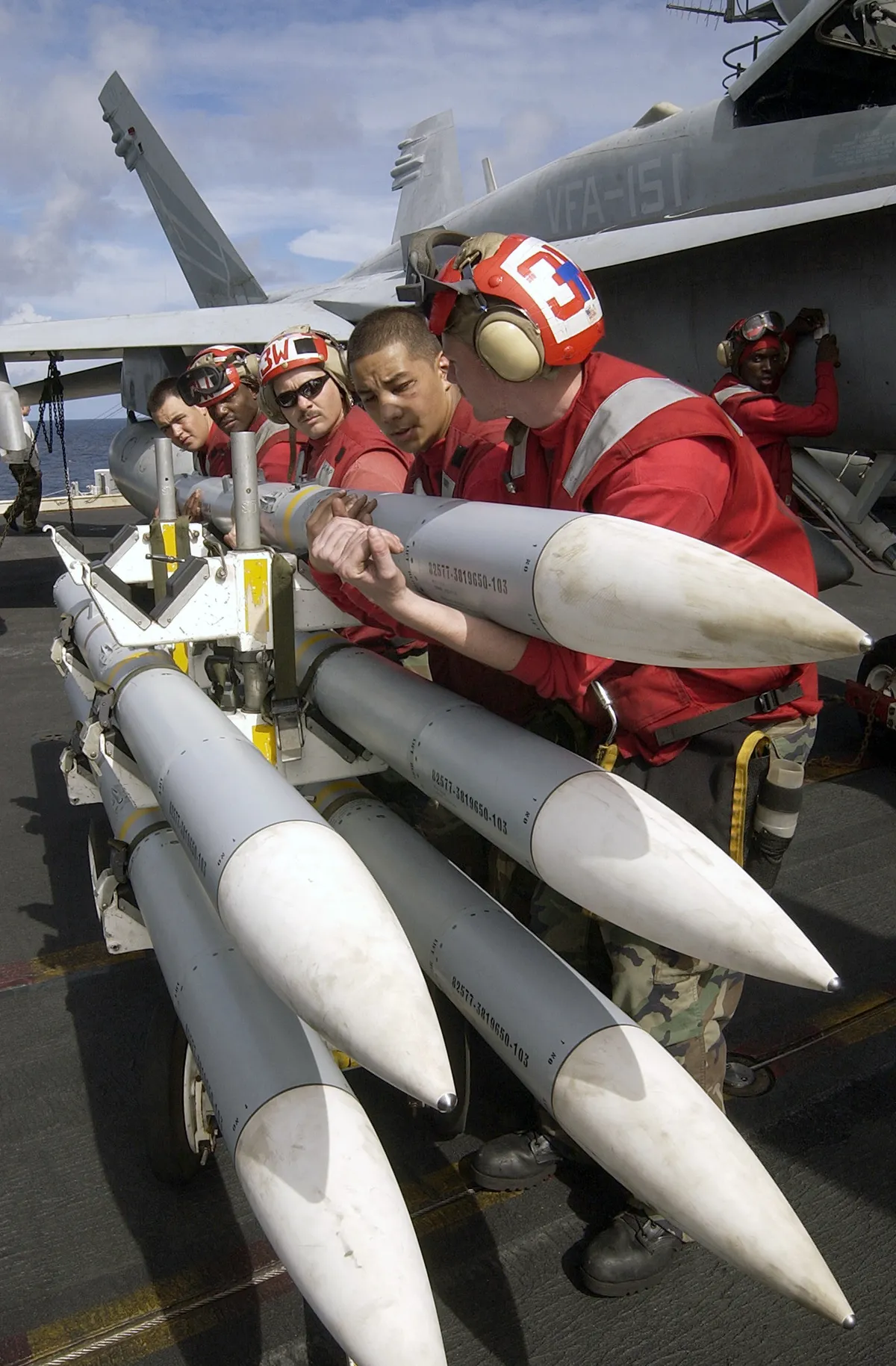
AIM-120B AMRAAM air-to-air missile

Also known as
  • AIM-120B
  • AIM-120B AMRAAM
  • AMRAAM B-model
  • Advanced Medium-Range Air-to-Air Missile AIM-120B

The AIM-120B AMRAAM is the reprogrammable B-model of Raytheon's active-radar, beyond-visual-range AIM-120 missile family. It kept the larger A/B control-surface layout while adding updated guidance electronics, and variant-specific combat tables identify AIM-120B use by a Dutch F-16 during Operation Allied Force.

Role in Conflicts

Profile / Specs

Profile

Origin
United States
Built by
Raytheon
Type
Beyond-visual-range air-to-air missile
Service note
1994-present
Designer
Hughes Aircraft Co. Missile System Group
Designed
Early 1990s B-model update
Produced
First delivered in late 1994; succeeded on the production line by AIM-120C-series deliveries from 1996

Specifications

Length
12 ft (3.66 m)
Diameter
7 in (17.8 cm)
Wingspan
21 in (53.3 cm) for AIM-120A/B according to NAVAIR
Weight
348 lb for AIM-120A/B/C/C-4 according to NAVAIR
Guidance
Inertial midcourse guidance with target updates, active radar terminal homing, and home-on-jam mode
Warhead
Blast-fragmentation
Propulsion
Solid-fuel rocket motor
B-model change
New WGU-41/B guidance section with reprogrammable EPROM modules, a digital processor, and electronics updates
B-Model Distinction

The AIM-120B is useful as a separate catalog entry because sources distinguish it from both the initial A model and the later clipped-fin C/D branch. Designation-Systems identifies the B model by its WGU-41/B guidance section, reprogrammable memory, new digital processor, and electronics updates; NAVAIR separately groups A/B dimensions with 21-inch wingspan and 348-pound weight.

Electronics

Reprogrammable B-model guidance section and updated digital electronics.

Source: Designation-Systems AIM-120 AMRAAM.

Airframe

A/B missiles keep the larger 21-inch wingspan, unlike the later C/D branch.

Source: NAVAIR AMRAAM product page.

Combat evidence

Variant-specific open evidence is strongest for the Dutch F-16 engagement over Kosovo on 24 March 1999.

Sources: Manned Aircraft Losses Over Former Yugoslavia; Air Power Australia AIM-120 combat-success table.
Variants

The B model sits between the initial AIM-120A and later clipped-fin C/D branch: it shares the larger A/B aerosurface dimensions while adding reprogrammable electronics.

VariantConfigurationDesignation notes
AIM-120 AMRAAM, Beyond-visual-range air-to-air missile, MunitionsAIM-120 AMRAAMFamily record

The family page covers broad AMRAAM service history and conflicts where sources do not identify a specific missile mark.

Sources: NAVAIR AMRAAM product page

AIM-120AInitial service model

Designation-Systems describes the A model as the original production version, followed by the late-1994 B model.

Sources: Designation-Systems AIM-120 AMRAAM

AIM-120C/D AMRAAM air-to-air missile, Beyond-visual-range air-to-air missile, MunitionsAIM-120C/D AMRAAM air-to-air missileClipped-fin successor branch

NAVAIR lists A/B wingspan separately from C/D, and Designation-Systems describes the AIM-120C as the clipped-wing and clipped-fin P3I follow-on first delivered in 1996.

Sources: NAVAIR AMRAAM product page, Designation-Systems AIM-120 AMRAAM

Carrier Aircraft

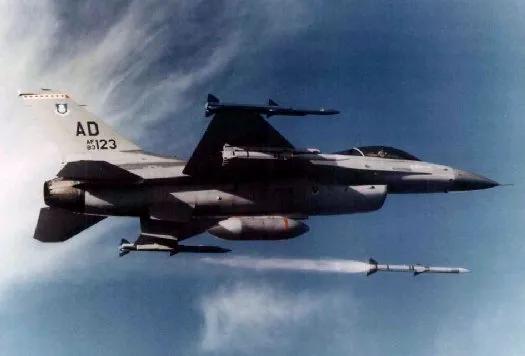
The AIM-120B is part of the wider AMRAAM family integrated on U.S. and allied fighters; the Kosovo use record gives the B model a directly documented F-16 combat connection.

CarrierCarrier typeCarriage evidence
F-16 Fighting Falcon, Multirole fighter aircraft, Aircraft & UAVsF-16 Fighting FalconMultirole fighter

The Air Force fact sheet lists F-16 compatibility for AMRAAM, and Kosovo sources connect the Dutch F-16 MiG-29 shootdown to AIM-120 missiles, with the U.S. DoD-derived table identifying that missile as AIM-120B.

Sources: USAF AIM-120 AMRAAM fact sheet, Manned Aircraft Losses Over Former Yugoslavia, Air Power Australia AIM-120 combat-success table

F-15 family fighter aircraft, Fighter aircraft family, Aircraft & UAVsF-15 family fighter aircraftAir-superiority fighter family

The Air Force fact sheet lists F-15 compatibility for AMRAAM; this is family compatibility context rather than variant-specific Kosovo B-model use.

Sources: USAF AIM-120 AMRAAM fact sheet

F/A-18 Hornet (Tactical), Carrier-capable multirole strike fighter, Aircraft & UAVsF/A-18 Hornet (Tactical)Carrier-capable strike fighter

The Air Force fact sheet lists Navy F/A-18 C-F compatibility for AMRAAM, and NAVAIR lists Navy and Marine Corps F/A-18 variants among AMRAAM platforms.

Sources: USAF AIM-120 AMRAAM fact sheet, NAVAIR AMRAAM product page

Timeline

AIM-120B AMRAAM air-to-air missile Key Events

  1. B-model deliveries begin

    Designation-Systems says AIM-120B deliveries began in late 1994 with a new WGU-41/B guidance section and reprogrammable electronics.

    Sources: Designation-Systems AIM-120 AMRAAM

  2. C-series follow-on enters delivery

    Designation-Systems describes the AIM-120C as the P3I follow-on first delivered in 1996, while NAVAIR distinguishes its clipped-fin dimensions from A/B missiles.

    Sources: Designation-Systems AIM-120 AMRAAM, NAVAIR AMRAAM product page

  3. Dutch F-16 AMRAAM kill over Kosovo

    Air Force historical material records a Dutch F-16 AIM-120 MiG-29 shootdown on the opening day of Operation Allied Force; an Air Power Australia table attributed to U.S. DoD identifies that engagement as AIM-120B.

    Sources: Manned Aircraft Losses Over Former Yugoslavia, Air Power Australia AIM-120 combat-success table

Media
Related Weapon Systems
AN/ALE-50 towed decoy, Towed decoy countermeasure, Electronic WarfareElectronic WarfareAN/ALE-50 towed decoyTowed decoy countermeasureThe AN/ALE-50 is a Raytheon airborne towed decoy countermeasure developed from Naval Research Laboratory work to draw radar-guided missiles away from combat aircraft. It entered production in December 1996, pairs a launcher/controller installation with expendable decoy canisters, and is documented on F-16, F/A-18E/F Super Hornet, and B-1B aircraft as a compact radio-frequency self-protection system used from Kosovo and Iraq to later U.S. air operations.

Sources