Aircraft & UAVs

AIDC F-CK-1 Ching-kuo

Also known as
  • Indigenous Defense Fighter
  • IDF
  • F-CK-1
  • F-CK-1 Ching-Kuo
  • Ching-Kuo

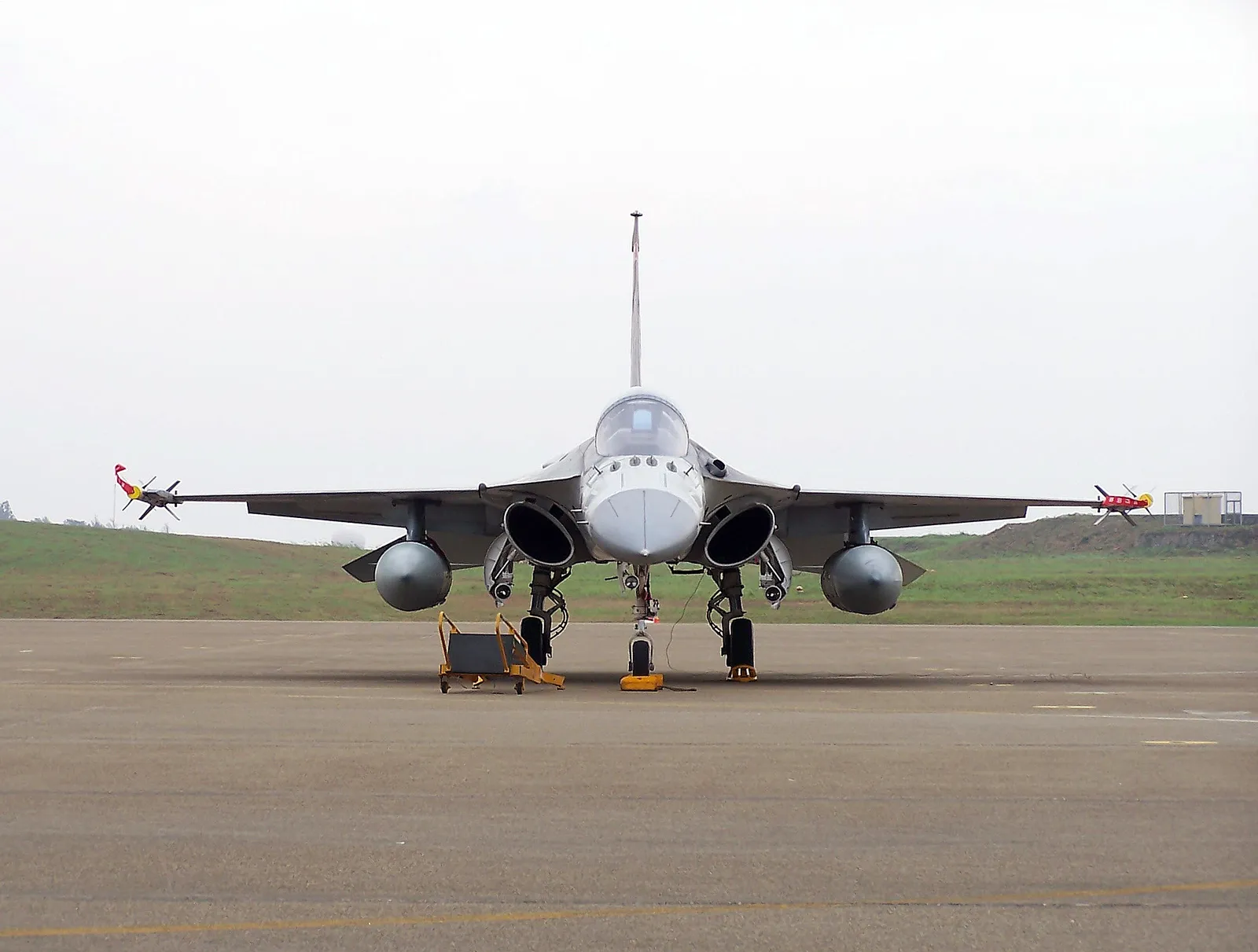
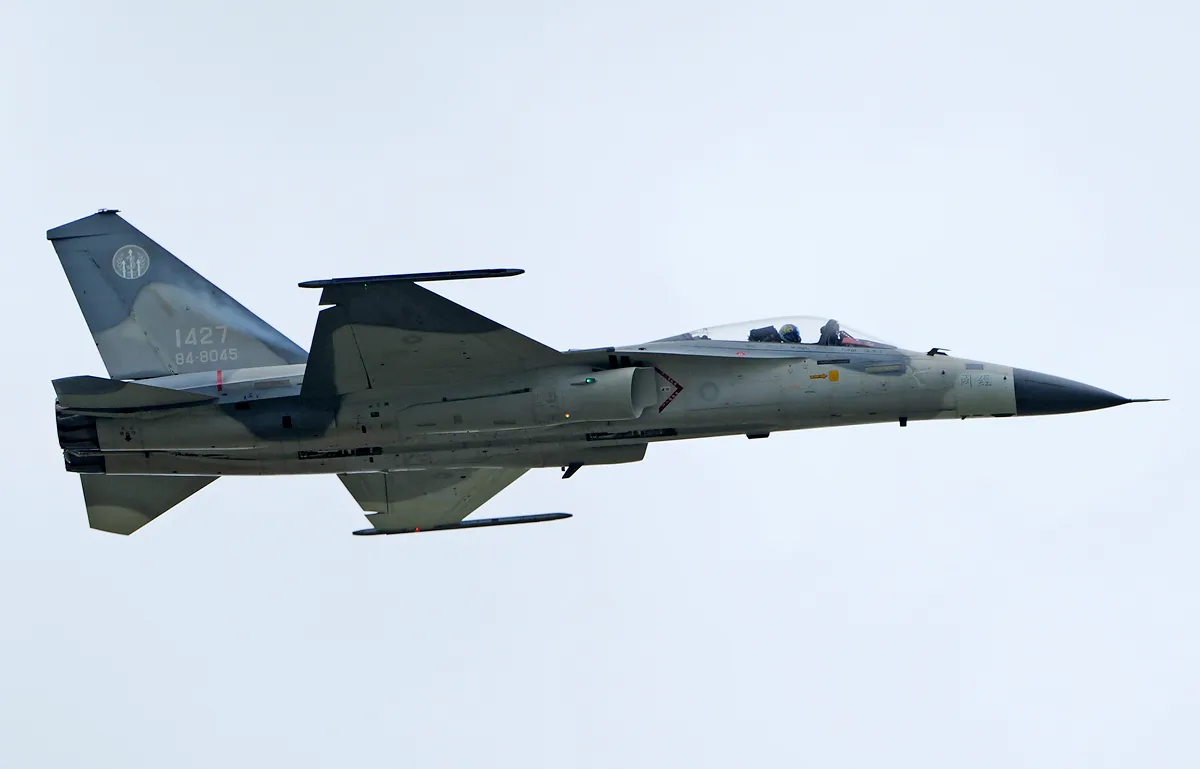
The AIDC F-CK-1 Ching-kuo, or Indigenous Defense Fighter (IDF), is Taiwan's lightweight supersonic twin-engine multirole fighter for the Republic of China Air Force. ROCAF material places it in service from 1992 and identifies interception, long-range strike, and close-air-support tasks, while AIDC and defense reporting document the Hsiang Sheng upgrade path that added improved avionics, electronic warfare changes, and Wan Chien standoff-missile carriage.

Role in Conflicts

Side
Unconfirmed conflict context

The ROCAF page documents the IDF as a frontline fighter in service since 1992, but the sources here do not isolate a single named post-2015 conflict, so the catalog keeps it in the 2015 Various Conflicts holding bucket.

Profile / Specs

Specifications

Wingspan
31 ft
Length
46 ft
Height
15 ft
Powerplant
Two TFE1042-70 turbofan engines
Max takeoff weight
27,600 lbs
Max thrust (with afterburner)
18,500 lbf
Max speed
Mach 1.6 / 600 kn
Max range
1,020 nm
Service ceiling
51,500 ft
Armament
TC-I missiles, AIM-9P4 missiles, TC-II missiles, WJ missiles, 20 mm cannon, MK-82/84 bombs, BDU-33 bombs, BDU-50 bombs, LUU-2D flares
Hsiang Sheng Upgrade Package

The Hsiang Sheng upgrade moved the IDF beyond the original F-CK-1A/B configuration while keeping the aircraft in Taiwanese service. AIDC identifies upgraded GD-53 radar, digital color avionics, a 32-bit digital flight-control computer, and conformal-fuel-tank work on the prototype aircraft; Defense News separately reported the completed fleet upgrade with a glass cockpit, improved electronic warfare capabilities, strengthened landing gear, and digital anti-skid changes.

Upgrade driver

The upgrade kept the domestic fighter force relevant after original IDF production ended.

Strike fit

ROCAF lists WJ missiles, Mk 82/84 bombs, and air-to-air missiles in the IDF armament set.

Fleet scope

Defense News reported 71 aircraft upgraded in Phase 1 and 56 aircraft upgraded to F-CK-1C/D standard in Phase 2.
Variants

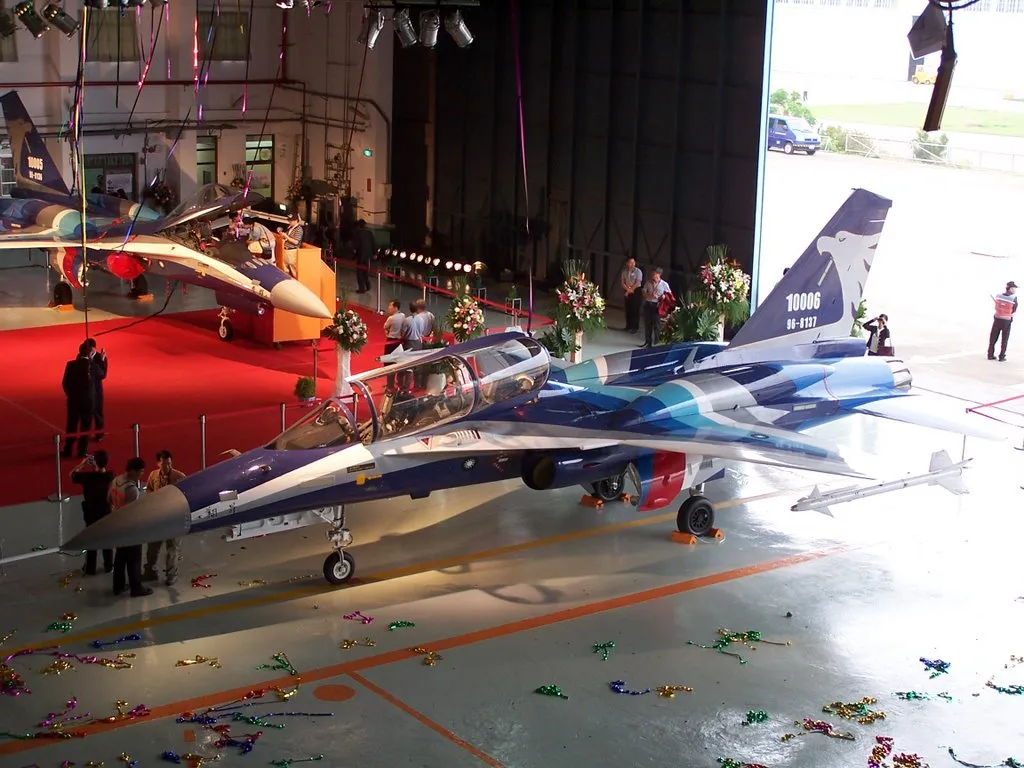
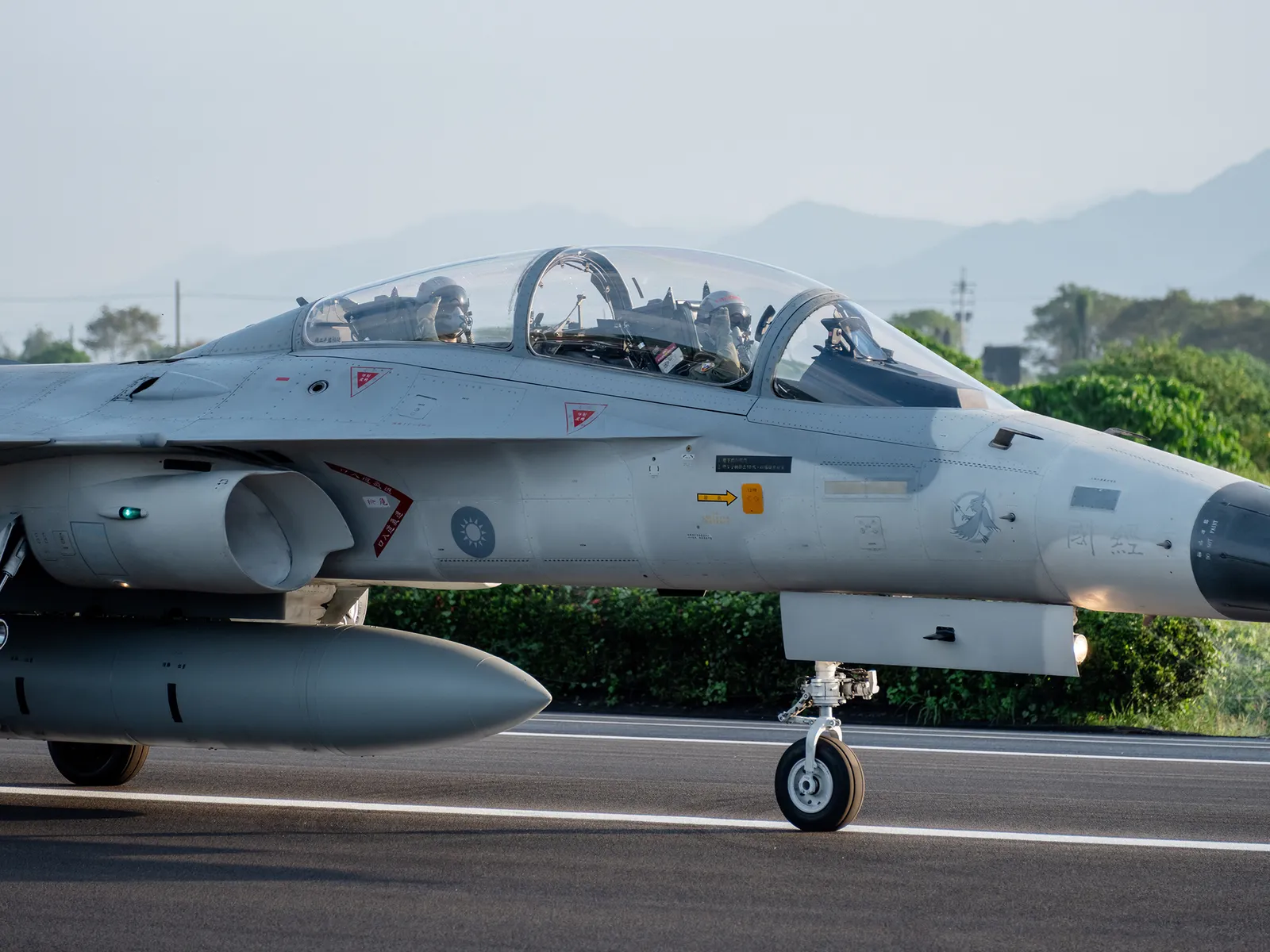
The F-CK-1 family is usually split between original single-seat/twin-seat A/B aircraft and the upgraded C/D Hsiang Sheng, also called Xiong Ying or Taiwan Eagle in AIDC material.

VariantConfigurationDesignation notes
F-CK-1AOriginal single-seat IDF fighter

AIDC identifies the IDF as a twin-engine multipurpose combat aircraft and records the first IDF flight in May 1989.

Sources: IDF Fighter | Aerospace Industrial Development Corporation

F-CK-1BOriginal twin-seat IDF fighter

AIDC records the twin-seat IDF first flight in July 1990.

Sources: IDF Fighter | Aerospace Industrial Development Corporation

F-CK-1C Hsiang ShengUpgraded single-seat variant

AIDC says the single-seat F-CK-1 C/D upgrade aircraft was assembled on July 19, 2006 and first flew on October 4, 2006 with upgraded GD-53 radar, digital color avionics, and a 32-bit digital flight-control computer.

Sources: AIDC F-CK-1 C/D, Taiwan fighter jets get new electronic warfare capabilities in latest upgrade

F-CK-1D Hsiang Sheng / Xiong YingUpgraded twin-seat variant

AIDC says the twin-seat upgraded aircraft first flew on March 14, 2007 and was officially demonstrated on March 27, 2007, when President Chen Shui-bian named the IDF C/D Xiong Ying.

Sources: AIDC F-CK-1 C/D

Carried Munitions

The ROCAF weapons page lists the IDF as carrying WJ missiles, Mark 82 and Mark 84 bombs, and AIM-9P4 air-to-air missiles.

Carried itemItem typeCarriage evidence
Wan Chien air-launched cruise missile, Air-launched subsonic cruise missile, MunitionsWan Chien air-launched cruise missileAir-launched standoff cruise missile

ROCAF lists WJ missiles in the IDF armament set, and CSIS identifies Wan Chien as an air-launched cruise missile carried by Taiwan's F-CK-1 Ching-kuo.

Sources: IDF - Fighters - AIR FORCE COMMAND HEADQUARTERS, MND, Wan Chien | Missile Threat

Mk 82 500-pound unguided bomb, Air-delivered 500-pound low-drag general-purpose bomb, MunitionsMk 82 500-pound unguided bomb500-pound strike bomb

The ROCAF page says the IDF can carry Mark 82 bombs for strike missions.

Sources: IDF - Fighters - AIR FORCE COMMAND HEADQUARTERS, MND

Mk 84 Mod 4 2,000-pound unguided bomb, 2,000-pound unguided general-purpose bomb, MunitionsMk 84 Mod 4 2,000-pound unguided bomb2,000-pound strike bomb

The ROCAF page says the IDF can carry Mark 84 bombs for strike missions.

Sources: IDF - Fighters - AIR FORCE COMMAND HEADQUARTERS, MND

AIM-9P4 Sidewinder missile, Short-range air-to-air missile, MunitionsAIM-9P4 Sidewinder missileShort-range air-to-air missile

The ROCAF page lists AIM-9P4 missiles among the IDF's armament options.

Sources: IDF - Fighters - AIR FORCE COMMAND HEADQUARTERS, MND

BDU-33 practice bomb, Practice bomb, MunitionsBDU-33 practice bombPractice bomb

The ROCAF page lists BDU-33 bombs among the IDF's armament options.

Sources: IDF - Fighters - AIR FORCE COMMAND HEADQUARTERS, MND

LUU-2 illuminating flare, air-launched illumination flare, MunitionsLUU-2 illuminating flareIllumination flare

The ROCAF page lists LUU-2D flares among the IDF's armament options.

Sources: IDF - Fighters - AIR FORCE COMMAND HEADQUARTERS, MND

Timeline

AIDC F-CK-1 Ching-kuo Key Events

  1. First prototype rollout

    NCSIST says the first prototype rollout was held in December 1988 and the aircraft was named Ching-kuo.

    Sources: Ching-kuo IDF High Performance Fighter | NCSIST

  2. First IDF flight

    AIDC and NCSIST both record the first IDF flight in May 1989.

    Sources: IDF Fighter | Aerospace Industrial Development Corporation, Ching-kuo IDF High Performance Fighter | NCSIST

  3. Twin-seat IDF first flight

    AIDC records the twin-seat IDF first flight in July 1990.

    Sources: IDF Fighter | Aerospace Industrial Development Corporation

  4. ROCAF service entry

    The Republic of China Air Force says the IDF entered service in 1992.

    Sources: IDF - Fighters - AIR FORCE COMMAND HEADQUARTERS, MND

  5. Production ends

    AIDC's 2018 annual report says production of the IDF ended in 1999.

    Sources: Aerospace Industrial Development Corporation Annual Report 2018

  6. Performance-upgrade program begins

    NCSIST describes a 2001-2008 Ching-kuo performance-upgrade program to increase internal fuel, improve electronic warfare and self-defense capability, extend combat range, and broaden air-to-surface roles.

    Sources: Ching-kuo IDF High Performance Fighter | NCSIST

  7. Hsiang Sheng single-seat first flight

    AIDC says the upgraded single-seat F-CK-1 C/D aircraft was assembled in July 2006 and made its first flight on October 4, 2006.

    Sources: AIDC F-CK-1 C/D

  8. Hsiang Sheng twin-seat first flight

    AIDC says the twin-seat upgraded aircraft first flew on March 14, 2007 and was publicly demonstrated later that month.

    Sources: AIDC F-CK-1 C/D

  9. Hsiang Sheng upgrade completed

    AIDC says the F-CK-1 C/D Hsiang Sheng upgrade was completed and delivered to the ROCAF in October 2018.

    Sources: Aerospace Industrial Development Corporation Annual Report 2018

Media
Related Weapon Systems
AIDC AT-3/T-5 Brave Eagle, Advanced jet trainer and light attack aircraft family, Aircraft & UAVsAircraft & UAVsAIDC AT-3/T-5 Brave EagleAdvanced jet trainer and light attack aircraft familyThe AIDC AT-3/T-5 family covers Taiwan's indigenous jet trainer line, starting with the AT-3 Tzu Chung, which first flew in 1980 and entered ROCAF service in 1985, and continuing through the XA-3 attack derivative and T-5 Brave Eagle advanced trainer. AIDC, ROCAF, and Janes sources describe the T-5/T-5A as a 66-aircraft replacement program for older AT-3 and F-5 training aircraft, with production aircraft delivered from 2021.
Chengdu J-10C, Single-engine multirole fighter aircraft, Aircraft & UAVsAircraft & UAVsChengdu J-10CSingle-engine multirole fighter aircraftThe Chengdu J-10C is a Chinese single-engine multirole fighter developed by Chengdu Aircraft Industry Group and exported as the J-10CE. Public manufacturer and state-media material emphasizes all-weather multirole missions, AESA-class radar, electronic-warfare and cooperative-engagement features, PL-15/PL-15E beyond-visual-range missile compatibility, and Pakistan's documented use of the type during the 2025 India-Pakistan Conflict.

Sources