Profile
- Origin
- Taiwan
- Type
- Air-launched subsonic cruise missile
- Service note
- 2011-present
- Designed
- Program reported from about 2000
- Produced
- 2011-present service period
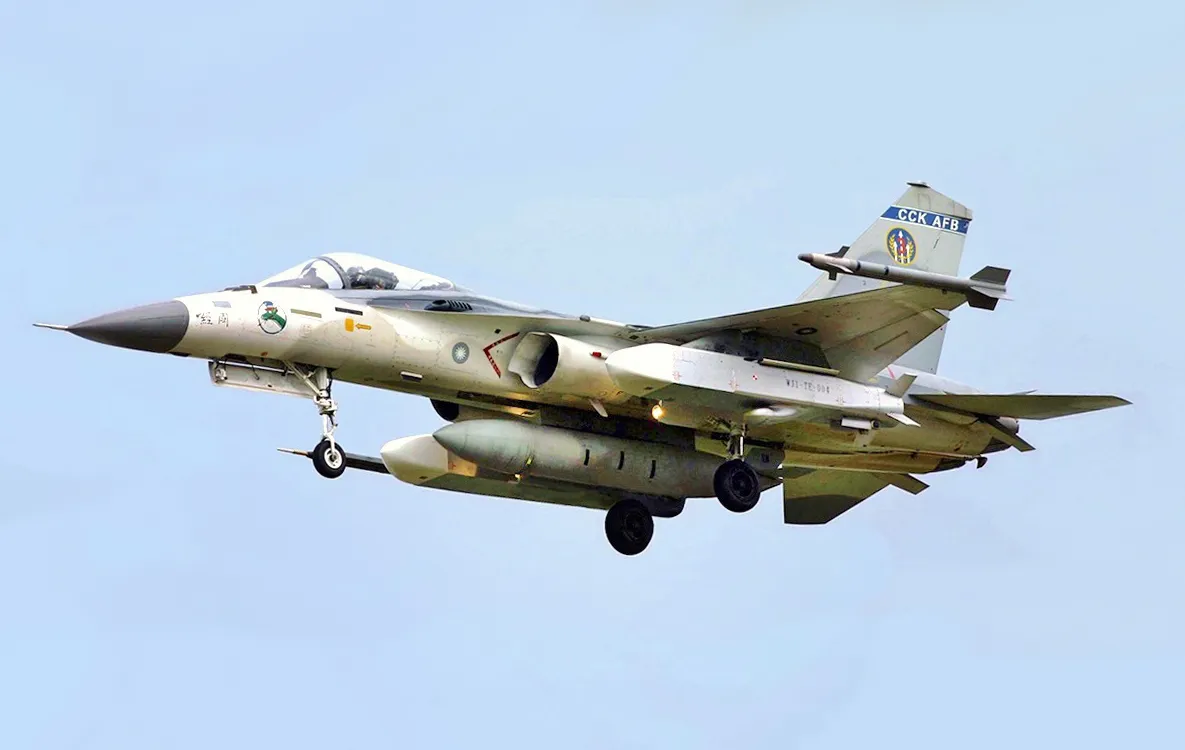
Wan Chien is a Taiwanese air-launched subsonic cruise missile built for the Republic of China Air Force's F-CK-1 Ching-kuo fleet. Official and specialist sources describe it as an NCSIST-developed standoff weapon for airfield and fixed-target attack, with public reporting since 2018 documenting operational status, live-fire testing, Penghu display, and continuing production rather than combat employment.
Public sources usually describe Wan Chien as one missile family; Taiwan News reporting in 2024 says the baseline missile is classified as Wan Chien-I and that NCSIST has developed and tested an extended-range Wan Chien-II.
| Variant | Configuration | Designation notes |
|---|---|---|
| Wan Chien-I | Baseline air-launched cruise missile | Taiwan News reported that the Air Force and NCSIST classify the mass-produced baseline missile as Wan Chien-I, with the baseline range reported around 200-240 km depending on source. Sources: Mass production of Taiwan's Wan Chien cruise missiles nears completion, Wan Chien | Missile Threat |
| Wan Chien-II | Reported extended-range version | Taiwan News and Taipei Times reporting describe an improved or extended-range version associated with a possible 400 km reach; the record treats this as reported rather than officially confirmed specification data. Sources: Mass production of Taiwan's Wan Chien cruise missiles nears completion, Taiwan Air Force orders extra Wan Chien missiles, Cruise missile project on track: source |
Public sources identify the F-CK-1 Ching-kuo as the missile's carrier aircraft and the ROCAF's official IDF page describes Wan Chien as an airstrip-strike weapon, but the available public record does not tie the missile to a named armed conflict.
| Carrier | Carrier type | Carriage evidence |
|---|---|---|
 | Multirole fighter | The ROCAF armaments page says the IDF can strike enemy airstrips with the Wan Chien cruise missile, while CSIS identifies the Wan Chien as carried by Taiwan's F-CK-1 Ching-kuo Indigenous Defense Fighter. Sources: IDF - Fighters - AIR FORCE COMMAND HEADQUARTERS, MND, Wan Chien | Missile Threat |
Public reporting frames Wan Chien as a standoff strike weapon for Taiwan's IDF force rather than as a combat-used munition. The strongest documented activity is operational testing, public display, and procurement tied to Taiwan's deterrence posture.
Official and specialist sources describe airstrip, air-base, port, missile-site, radar-position, and troop-concentration attack roles.
The missile is associated with upgraded F-CK-1 Ching-kuo aircraft, including C/D aircraft displayed with the weapon at Penghu.
The missile has reported operational status, live-fire testing, and continuing production, but no source-backed named armed-conflict use.
This record is relationship-only because current public sources support missile identity, specifications, manufacturer context, F-CK-1 carriage, test activity, display, and production, but not direct use of the Wan Chien in a named armed conflict.
CSIS lists the Wan Chien as in service from 2011 to the present.
Sources: Wan Chien | Missile Threat
NCSIST records the Wan-Chien airfield joint-strike missile system debuting in the Hsiang Sheng project in 2014.
Sources: NCSIST History
CSIS notes that the Wan Chien was declared fully operational in 2018.
Sources: Wan Chien | Missile Threat, Cruise missile now operational: defense source
TWZ reported that President Tsai Ing-wen was shown Wan Chien missiles at Makung Air Force Base on Penghu, where F-CK-1C/D aircraft deploy rotationally.
Sources: Taiwan Displays Air-Launched Cruise Missiles At Air Base In Heart Of Taiwan Strait
Taiwan's Sea-Air Combat Power Improvement Plan Purchase Special Regulation listed the Wan-Chien Air-to-Ground Missile System among covered procurement items through the end of 2026.
Sources: Sea-Air Combat Power Improvement Plan Purchase Special Regulation
Taiwan News reported that an Indigenous Defense Fighter fired a Wan Chien during an exercise, with NCSIST production capacity described as 50 missiles per year.
Sources: Taiwan IDF jet test fires Wan Chien air-to-ground cruise missile
Taiwan News reported a five-year air-force budget item for additional Wan Chien missiles from 2024 to 2028, with reporting that an improved version could extend range.
Sources: Taiwan Air Force orders extra Wan Chien missiles
Taipei Times reported that a three-year plan aimed to produce 150 Wan Chien missiles by the end of 2024 and that F-CK-1 wings had tested the missile in live-fire drills.
Sources: Cruise missile project on track: source
Taiwan News reported that the baseline missile is classified as Wan Chien-I and that NCSIST had developed and tested an extended-range Wan Chien-II.
Sources: Mass production of Taiwan's Wan Chien cruise missiles nears completion


