Armored Vehicles

YP-408

Also known as
  • DAF YP-408
  • DAF YP 408
  • YP 408
  • YP-408 PWI
  • Pantserwiel Infanterie

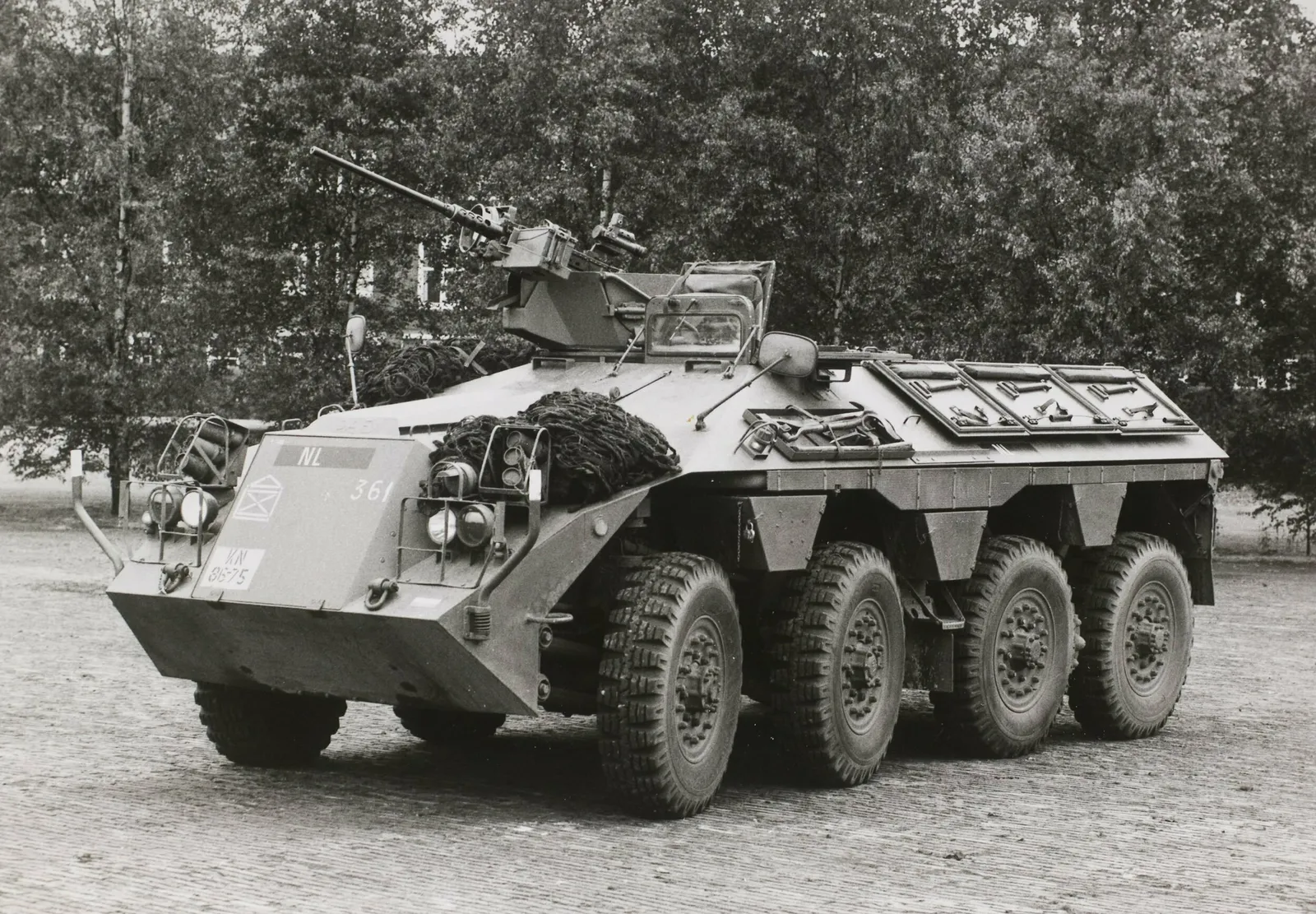
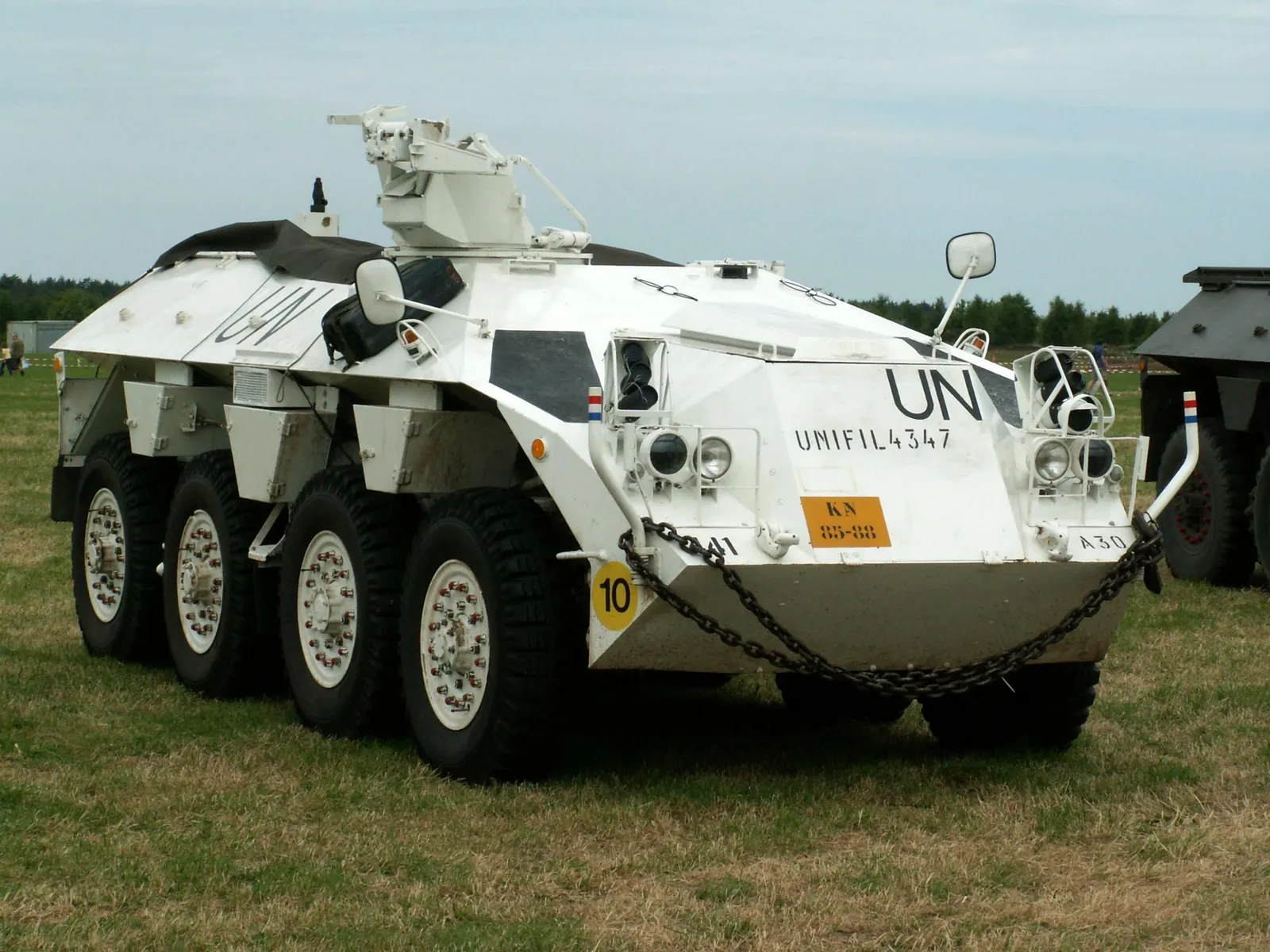
The YP-408 was a Dutch 8x6 wheeled armored personnel carrier developed and produced by DAF for the Royal Netherlands Army. It carried infantry under armor, used DAF's wheeled automotive layout, served with Dutch UNIFIL troops in southern Lebanon, and appeared in command, ambulance, cargo, mortar-tractor, anti-tank, and radar variants before replacement by the tracked YPR-765 family.

Profile / Specs

Profile

Origin
Netherlands
Built by
DAF
Type
Wheeled armored personnel carrier
Service note
Cold War Dutch armored personnel carrier
Designer
DAF
Designed
Late 1950s
Produced
1964-1968
Number built
750 built for the Royal Netherlands Army; Army Guide lists 758 total vehicles including later quantities

Specifications

Layout
8x6 wheeled armored personnel carrier
Crew and passengers
Army Guide lists 2 crew and 9 troops; WeaponSystems.net lists 2 crew plus 10 troops for the PWI configuration
Weight
9,900 kg empty weight listed by Army Guide; WeaponSystems.net gives 11 to 13 t combat load
Dimensions
6.23 m length, 2.40 m width, and 1.87 m hull-roof height
Main armament
12.7 mm M2HB heavy machine gun in a one-person turret for the baseline PWI configuration
Engine
DAF DS 575 6-cylinder turbo diesel rated at 165 hp
Mobility
82 km/h road speed; Army Guide lists 300 km range and WeaponSystems.net lists 500 km road range / 300 km field range
Protection
Steel armor, 8 to 16 mm thickness
Variants

YP-408 designations used the Dutch Pantserwiel prefix for wheeled armored roles, with the baseline infantry carrier supplemented by command, medical, cargo, mortar, anti-tank, and radar configurations.

VariantConfigurationDesignation notes
YP-408 PWIInfantry carrier

Baseline armored personnel carrier and the most numerous configuration; WeaponSystems.net lists 429 built.

Sources: YP-408, YP-408 Wheeled armoured personnel carrier

YP-408 PWCOCommand vehicle

Command-post version with a six-person crew, map table, and additional radios; WeaponSystems.net lists 179 built.

Sources: YP-408

YP-408 PWGWTAmbulance vehicle

Unarmed casualty-transport version for two stretcher patients and four seated patients; WeaponSystems.net lists 28 built.

Sources: YP-408, Materieel van toen: DAF YP 408

YP-408 PWVArmored cargo carrier

Cargo variant intended to move about 1.5 t of supplies forward under armor; WeaponSystems.net lists 28 built.

Sources: YP-408

YP-408 PWMTMortar tractor

Mortar support vehicle for the MO-120-RT towed mortar, with crew and ammunition carriage; WeaponSystems.net lists 86 built.

Sources: YP-408

YP-408 PWATAnti-tank vehicle

PWI conversion with a pedestal-mounted TOW launcher; WeaponSystems.net describes about 55 conversions.

Sources: YP-408, Materieel van toen: DAF YP 408

YP-408 PWRDRBattlefield-surveillance radar vehicle

Reconnaissance/radar conversion carrying the Marconi ZB-298 battlefield-surveillance radar; WeaponSystems.net describes about 29 conversions.

Sources: YP-408, Materieel van toen: DAF YP 408

Mounted Armament

The baseline infantry carrier used a heavy machine-gun armament rather than a cannon turret.

Carried itemItem typeCarriage evidence
12.7 mm heavy machine gun, Belt-fed, crew-served heavy machine gun class, Infantry Weapons12.7 mm heavy machine gunHeavy machine gun

WeaponSystems.net identifies the YP-408 PWI's main armament as a 12.7 mm M2HB heavy machine gun in a one-person turret, while Dutch Defence describes the crew weapon as a .50 machine gun.

Sources: YP-408, Materieel van toen: DAF YP 408

Anti-Tank Variant Armament

The anti-tank conversion was a specific YP-408 variant rather than the standard infantry-carrier fit.

Carried itemItem typeCarriage evidence
BGM-71 TOW, Heavy anti-tank guided missile, Infantry WeaponsBGM-71 TOWAnti-tank guided missile

WeaponSystems.net describes the YP-408 PWAT as a PWI conversion with a pedestal-mounted TOW launcher, while Dutch Defence lists anti-tank weapons among the YP-408 family roles.

Sources: YP-408, Materieel van toen: DAF YP 408

Timeline

YP-408 Key Events

  1. DAF development begins

    Dutch Defence's Materieelgezien account places YP-408 development at DAF in the late 1950s, before the Royal Netherlands Army ordered an infantry-carrier version.

  2. Service entry

    Army Guide and WeaponSystems.net identify 1964 as the service-entry period for the DAF-built YP-408 armored personnel carrier.

  3. Domestic crisis response

    Dutch Defence's retrospective describes YP-408 vehicles being used in the 1970s during hostage incidents, including medical transport after the 1977 train hijacking at De Punt.

  4. UNIFIL deployment begins

    Dutch Defence sources state that white-painted Dutch YP-408 vehicles served with UNIFIL in southern Lebanon from 1979 to 1983, with 58 vehicles used by Dutchbat.

  5. Dutch retirement

    Dutch Defence describes the Royal Netherlands Army saying farewell to the YP-408 in 1987 as tracked YPR-765 vehicles took over the role.

Service Context

Dutch sources place the YP-408 mainly in Cold War Royal Netherlands Army service, with the infantry carrier intended for mobile armored infantry work on roads and firm terrain. The same retrospective records domestic use during 1970s hostage incidents and a white-painted UNIFIL deployment in southern Lebanon from 1979 to 1983.

UNIFIL vehicles

A 2014 Dutch Defence note says 58 YP-408 armored vehicles operated with the Dutch infantry battalion in Lebanon.

Suriname service

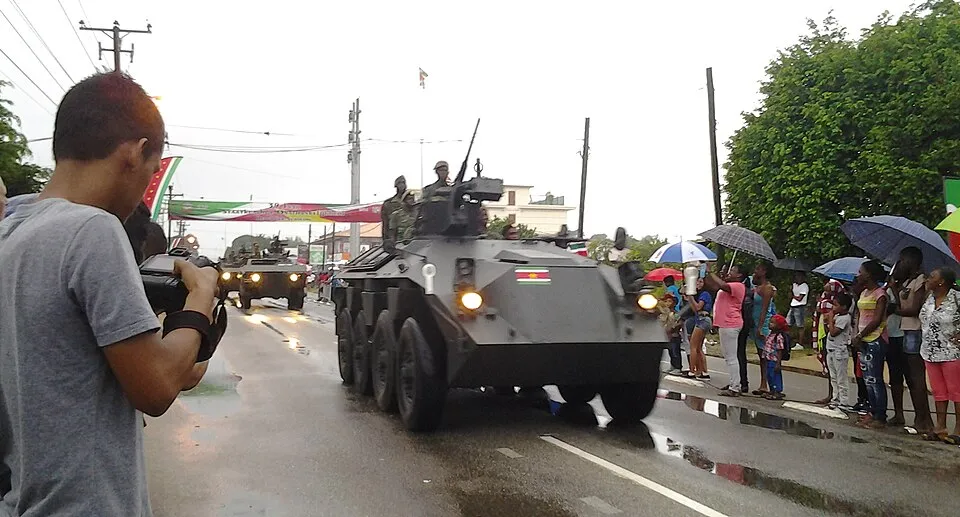
Army Guide lists YP-408 vehicles still in Surinamese service, while the existing image source documents a Suriname-marked vehicle.

Replacement

Dutch Defence and Army Guide both connect the YP-408's withdrawal to the tracked YPR-765, which offered better cross-country mobility and a different infantry-fighting-vehicle role.
Media
Related Weapon Systems
YPR-765, Tracked infantry fighting vehicle and armored personnel carrier family, Armored VehiclesArmored VehiclesYPR-765Tracked infantry fighting vehicle and armored personnel carrier familyThe YPR-765 and Belgian AIFV-B are closely related branches of FMC's AIFV family, a tracked infantry fighting vehicle and armored carrier derived from the M113 lineage. Dutch and Belgian vehicles combine aluminum armor with spaced steel applique, road and amphibious mobility, and variant-specific weapons ranging from a 25 mm cannon to machine guns, TOW missiles, MILAN launchers, medical-evacuation fittings, or remote weapon stations. SIPRI transfer data and Dutch official aid lists identify 353 AIFV-APC/YPR tracked armored vehicles delivered or pledged to Ukraine, and Ukrainian border-guard reporting cited by Army Recognition shows Belgian-made AIFV-B-C25 vehicles joining the same wartime AIFV/YPR family in Ukrainian service.
FV432, Tracked armored personnel carrier, Armored VehiclesArmored VehiclesFV432Tracked armored personnel carrierThe FV432 is the British FV430-series tracked armored personnel carrier built around a simple steel-hulled troop compartment for carrying infantry, command teams, mortar crews, engineers, or evacuation loads under armor. GKN Sankey produced the type for British service from the early 1960s, and the family later split into command, ambulance, mortar, recovery, engineering, and upgraded Bulldog forms. Public sources directly document FV432 vehicles with British coalition forces in the 1990 Gulf War and later FV432 APC transfers to Ukrainian Territorial Defense Forces during the 2014 Russia-Ukraine War.

Sources