Aircraft & UAVs

Nomad

Also known as
  • Sikorsky Nomad
  • Nomad VTOL UAS
  • Nomad family of drones

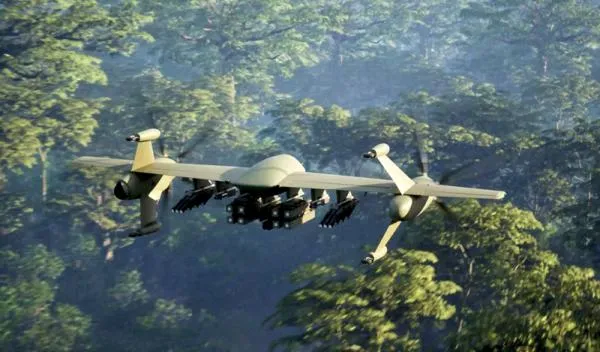
The Sikorsky Nomad is a U.S. family of twin-proprotor, rotor-blown-wing VTOL uncrewed aircraft developed by Sikorsky, a Lockheed Martin company, for runway-independent operations. Public sources reviewed through July 2026 show Nomad as a development and demonstration family using MATRIX autonomy, with intended reconnaissance, light attack, contested logistics, maritime, communications-relay, and civil-response missions rather than confirmed conflict fielding.

Role in Conflicts

Side
Unconfirmed conflict context

Sikorsky introduced Nomad as a runway-independent rotor-blown-wing VTOL UAS family for reconnaissance, light attack, logistics, maritime, communications, and other missions; public reporting available by 2026-07-13 did not identify operational combat use or a named field operator.

Profile / Specs

Profile

Origin
United States
Type
Rotor-blown-wing VTOL UAS family
Service note
2020s-present
Designer
Sikorsky
Designed
2024-2025
Produced
Prototype development announced in 2025; no public production order identified
Developed from
Rotor-blown-wing VTOL UAS demonstrator

Specifications

Configuration
Twin proprotor tail-sitter rotor-blown-wing VTOL UAS
Autonomy
Sikorsky MATRIX flight autonomy system
Nomad 50 demonstrator
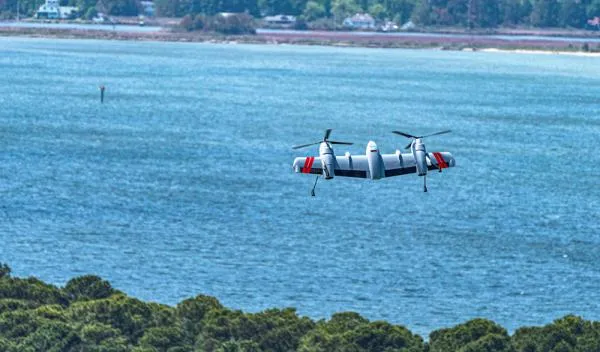
115 lb / 52 kg battery-powered prototype with a 10.3 ft composite wingspan
Demonstrated flight
More than 40 takeoffs and landings, 30 helicopter-airplane transitions, and 86 kt top cruise in horizontal flight during January 2025 testing
Propulsion
Hybrid-electric powertrains on smaller variants; larger variants use a conventional drivetrain
Scale
Scaled from Group 3 UAS to Group 4/5 sizes
Wingspan
Nomad 50 prototype: 10.3 ft; Nomad 100: 18 ft; family concept described up to a Black Hawk-sized footprint
Mission set
Designed for reconnaissance, light attack, contested logistics, maritime patrol, communications relay, and land or sea-based operations
Command interface
Lockheed Martin says Nomad's MATRIX open architecture can integrate with command-and-control systems including the Army Universal UAS Controller and USMC MANGL
What Makes Nomad Distinct

Lockheed Martin positions Nomad as a runway-independent twin-proprotor UAS that combines helicopter-style vertical flight with fixed-wing cruise efficiency.

Flight concept

The rotor-blown-wing tail-sitter can take off, hover, and land vertically, then transition to wing-borne cruise.

Autonomy

Sikorsky MATRIX provides the flight-autonomy layer and is also used across DARPA EVADE platforms.

Scaling path

Public material describes a family spanning Group 3 aircraft toward Group 4/5 and Black Hawk-sized footprints.

Mission emphasis

Nomad is being framed for ISR, light attack, cargo/logistics, maritime patrol, communications relay, civil response, and ship or austere-site operations.
Variants

Sikorsky uses Nomad as a scalable family name, with public sources distinguishing the flown Nomad 50 prototype from the larger Group 3 Nomad 100 demonstrator.

VariantConfigurationDesignation notes
Nomad 50Flown battery-powered prototype

A 115 lb / 52 kg demonstrator with a 10.3 ft composite wingspan; Sikorsky reported more than 40 takeoffs and landings, 30 transitions, and 86 kt in horizontal flight during January 2025 testing.

Sources: Sikorsky Successfully Flies Rotor Blown Wing UAS in Helicopter and Airplane Modes

Nomad 100Group 3 demonstrator

An 18 ft wingspan Group 3 variant that Sikorsky said was under construction at the October 2025 family reveal; AIN later reported Sikorsky still intended to fly the larger Nomad 100 in 2026.

Sources: Lockheed Martin Sikorsky Introduces Nomad™ Family of Long-Endurance, Runway-Independent Drones, Three Sikorsky Demonstrators Target First Flights in 2026

Complementary Aircraft

Lockheed Martin frames Nomad as a force multiplier that can complement existing rotorcraft missions rather than replace them outright.

Compatible itemItem typeCompatibility evidence
Black Hawk helicopter, Medium-lift military utility helicopter family, Aircraft & UAVsBlack Hawk helicopterUtility helicopter

Sikorsky says Nomad complements the missions of aircraft such as the Black Hawk; the source describes operational complementarity, not carriage or launch compatibility.

Sources: Nomad™ | Lockheed Martin

Timeline

Nomad Key Events

  1. Rotor-blown-wing test work supports ANCILLARY

    Sikorsky said it was flight-testing a battery-powered rotor-blown-wing proof-of-concept vehicle and, if selected for a later DARPA ANCILLARY phase, planned a 300 lb hybrid-electric version with a 60 lb ISR payload.

    Sources: Sikorsky Flight-Tests Scalable ‘Rotor Blown Wing’ UAS for DARPA Project, DARPA Shows Concepts for the Future of VTOL Uncrewed Aerial Systems

  2. Transition testing completed

    Sikorsky reported that the 10.3 ft demonstrator completed more than 40 takeoffs and landings, 30 transitions between helicopter and airplane modes, and 86 kt top cruise in horizontal flight.

    Sources: Sikorsky Successfully Flies Rotor Blown Wing UAS in Helicopter and Airplane Modes

  3. Nomad 50 flight testing

    Sikorsky said it had completed successful extended flight tests of its 10.3-foot-wingspan Nomad 50 prototype before the family reveal later in 2025.

    Sources: Lockheed Martin Sikorsky Introduces Nomad™ Family of Long-Endurance, Runway-Independent Drones

  4. Nomad 50 flight demonstration published

    Lockheed Martin published a video of Nomad flying in helicopter and airplane modes on 26 March 2025.

    Sources: Sikorsky Successfully Flies Rotor Blown Wing UAS in Helicopter and Airplane Modes

  5. Family introduced

    Sikorsky unveiled the Nomad future family of aircraft, describing a scalable runway-independent VTOL UAS line with Nomad 100 in build.

    Sources: Lockheed Martin Sikorsky Introduces Nomad™ Family of Long-Endurance, Runway-Independent Drones

  6. Nomad 100 under construction

    The October 2025 launch materials said Sikorsky was already building the Nomad 100, a Group 3 variant with an 18-foot wingspan and first flight expected in the following months.

    Sources: Lockheed Martin Sikorsky Introduces Nomad™ Family of Long-Endurance, Runway-Independent Drones

  7. Nomad 100 first flight remains planned

    AIN reported that Sikorsky flew a Nomad 50 demonstrator in 2025 and intended to fly the larger Nomad 100 in 2026.

    Sources: Three Sikorsky Demonstrators Target First Flights in 2026

Nomad Family Snapshot

The public launch materials divide the family into a small flown prototype and a larger build-phase variant.

VariantWingspanStatusSource note
Nomad 5010.3 ftPrototype flight tests completedLockheed Martin said the January 2025 test campaign completed more than 40 takeoffs and landings and 30 transitions.
Nomad 10018 ftUnder constructionThe October 2025 launch materials said first flight was expected in the coming months; AIN later reported a 2026 first-flight target.
Media
Related Weapon Systems
Sikorsky S-70UAS U-Hawk, Autonomous cargo utility helicopter UAS, Aircraft & UAVsAircraft & UAVsSikorsky S-70UAS U-HawkAutonomous cargo utility helicopter UASThe Sikorsky S-70UAS U-Hawk is a 2025 autonomous UH-60L Black Hawk conversion that removes the cockpit, adds clamshell doors and a rear ramp, and turns the helicopter into a cargo-first UAS. Sikorsky said it completed the redesign in 10 months and showed payload options ranging from palletized cargo to a HIMARS rocket pod and Naval Strike Missile loads; no direct conflict use or public first-flight confirmation was found in sources checked through July 4, 2026.
CH-53K King Stallion, Heavy-lift transport helicopter, Aircraft & UAVsAircraft & UAVsCH-53K King StallionHeavy-lift transport helicopterThe Sikorsky CH-53K King Stallion is the U.S. Marine Corps' new-build heavy-lift transport helicopter for replacing the CH-53E Super Stallion. Built by Sikorsky as a Lockheed Martin company, it reached Marine Corps initial operational capability in April 2022, entered full-rate production in December 2022, and is being fielded for ship-to-shore assault support, heavy equipment movement, degraded-visual-environment operations, and distributed maritime logistics.
Black Hawk helicopter, Medium-lift military utility helicopter family, Aircraft & UAVsAircraft & UAVsBlack Hawk helicopterMedium-lift military utility helicopter familyThe Black Hawk is Sikorsky's twin-engine medium-lift military utility helicopter family, developed from the U.S. Army's 1972 UTTAS requirement and fielded from 1978-79. The cataloged family covers utility, special-operations, armed, and HH-60G Pave Hawk rescue variants, with directly documented use from the 1993 Battle of Mogadishu to NATO combat search and rescue over Kosovo, U.S.-led operations in Afghanistan and Iraq, and Ukrainian Defence Intelligence Black Hawk missions during the Russia-Ukraine war.
LampreyMMAUV, Multi-mission autonomous undersea vehicle, Naval SystemsNaval SystemsLampreyMMAUVMulti-mission autonomous undersea vehicleLockheed Martin's LampreyMMAUV is a plug-and-play autonomous undersea vehicle publicly unveiled in 2026 for covert access, sea denial, ISR, and seabed-warfare missions. Official material describes a 24 cubic foot internal payload bay, host-ship or submarine attachment, battery recharge while attached, optional UAV launch tubes, and mission kits for torpedoes, decoys, sensors, or other payloads; public sources reviewed for this entry document development and exercise activity rather than confirmed armed-conflict use.

Sources