Aircraft & UAVs

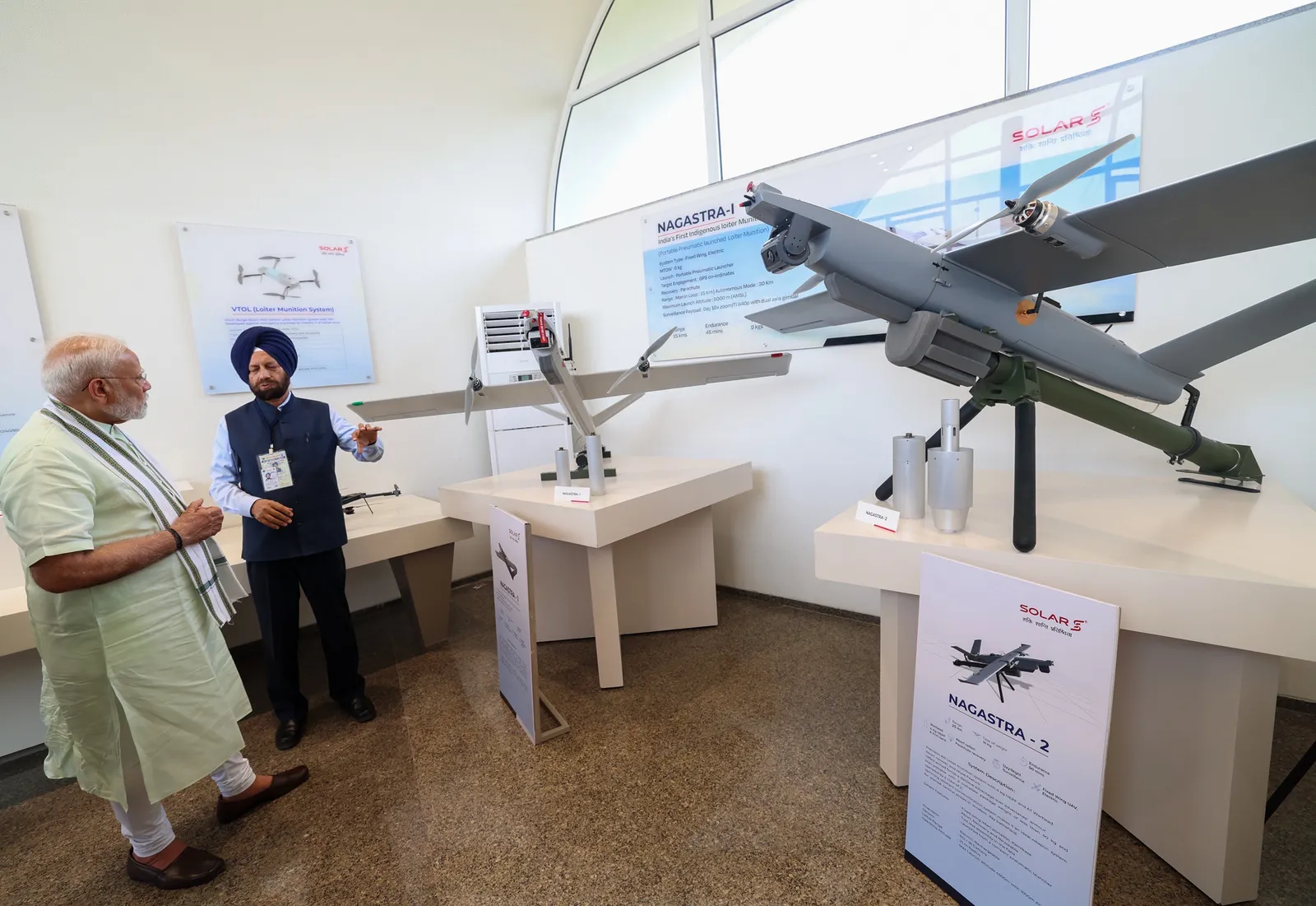
Nagastra-1

Also known as
  • Nagastra
  • NAGASTRA-1
  • Nagastra 1

Nagastra-1 is an Indian man-portable fixed-wing loitering munition developed for the Indian Army by Economic Explosives Limited, now tied publicly to Solar Defence and Aerospace Limited. It combines day-night surveillance, operator control, autonomous range, and a small high-explosive fragmentation warhead for precision strikes, while official Indian reporting identified Nagastra drones as used during Operation Sindoor in the 2025 India-Pakistan Conflict.

Role in Conflicts

Side
India
Role in conflict
Precision loitering munition strike

India's defence ministry said Solar Group's Nagastra drones were successfully used during Operation Sindoor, accurately striking terrorist targets; public sources do not give a munition-by-munition target list.

Nagastra Family Track

Official product listings and later procurement reporting show Nagastra-1 sitting inside a growing Solar Defence loitering-munition line. The public record is strongest for Nagastra-1 and Nagastra-1R; other family names are listed by India's Department of Defence Production but have less public technical detail.

Family itemPublic statusCatalog treatment
Nagastra-1Delivered to the Indian Army from 2024 and identified by India's defence ministry in Operation Sindoor context.Main weapon record.
Nagastra-1RAbout 450 units ordered in 2025, with reporting on night-operation sensor options and reusable launcher-system context.Structured variant until a separate directly sourced conflict-use page is justified.
Nagastra FPV, Nagastra-1B, Man Portable LMS, Nagastra-2, Nagastra-2B, Nagastra-3Listed in a 2026 Department of Defence Production product page for Solar Defence and Aerospace loitering munitions.Family variants without separate catalog records because public conflict-use sourcing remains limited.
Profile / Specs

Profile

Origin
India
Type
Man-portable fixed-wing loitering munition
Service note
Inducted in the mid-2020s
Designer
Economic Explosives Limited and Z-Motion Autonomous Systems
Designed
Early 2020s
Unit cost
Not publicly confirmed
Produced
2024-present
Number built
At least 120 delivered in the initial batch reported in 2024, with a later public Army order for about 450 Nagastra-1R systems reported in 2025

Specifications

Launch platform
Man-portable pneumatic launcher
Air vehicle
Fixed-wing electric UAV
Air vehicle weight
About 9 kg
System weight
About 30 kg in two rucksacks
Endurance
About 30 minutes
Range
15 km man-in-the-loop; 30 km autonomous mode
Warhead
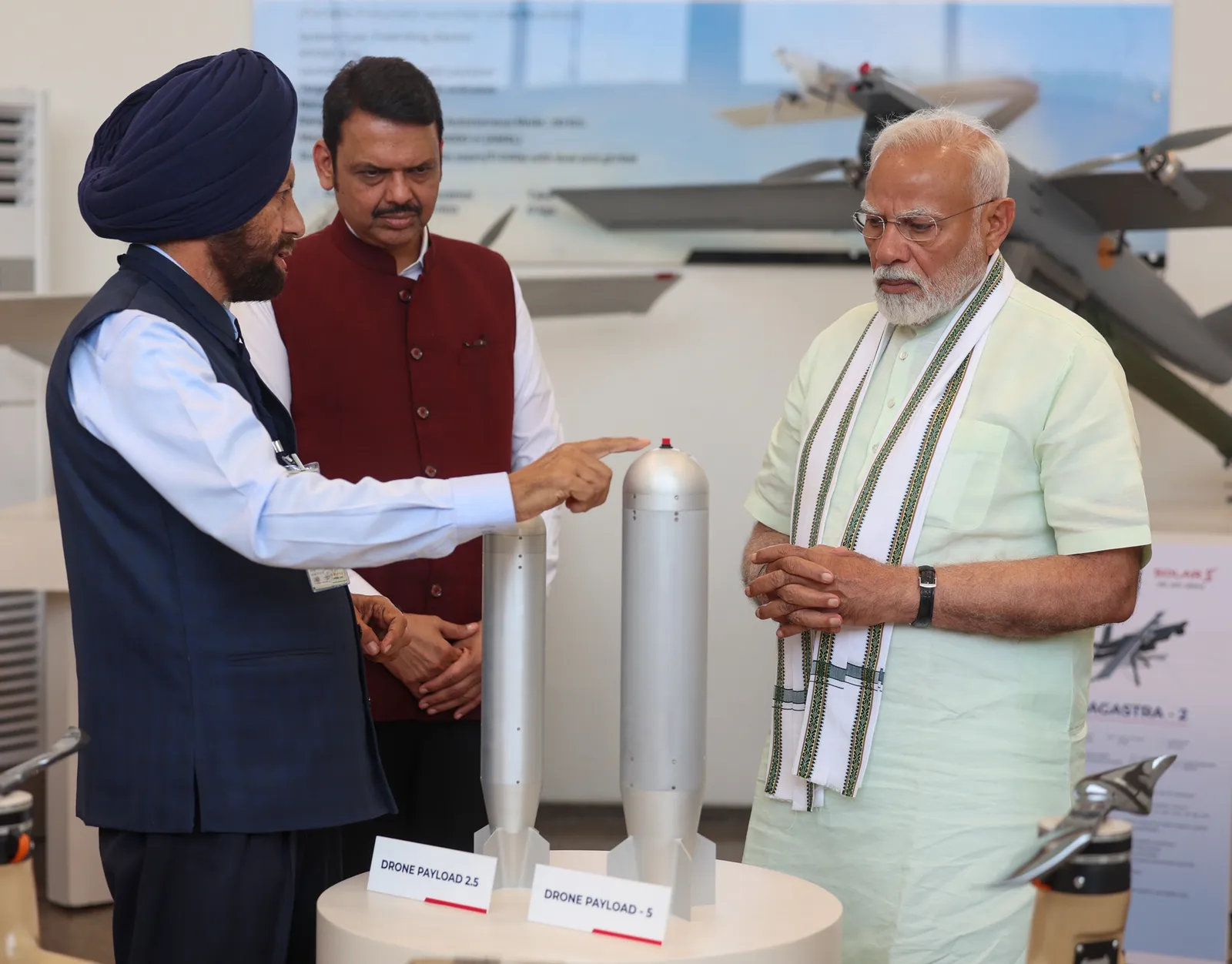
1 kg high-explosive fragmentation warhead for soft-skin targets
Sensors
Day and night surveillance cameras
Recovery
Mission-abort and parachute soft-landing capability
Indigenous content
Reported as more than 75 percent
Portable System Layout

Nagastra-1 is best understood as a small complete loitering-munition kit rather than only the expendable air vehicle. Public reporting describes a two-rucksack system with launch, control, communication, sensor, and payload elements.

ElementSourced roleWhy it matters
Fixed-wing electric air vehicleAbout 9 kg airframe with 30-minute enduranceKeeps the strike munition man-portable while retaining loiter time for target search.
Ground control and communication setOperator control, communication control, and payload linksSupports man-in-the-loop operation inside the reported 15 km control range.
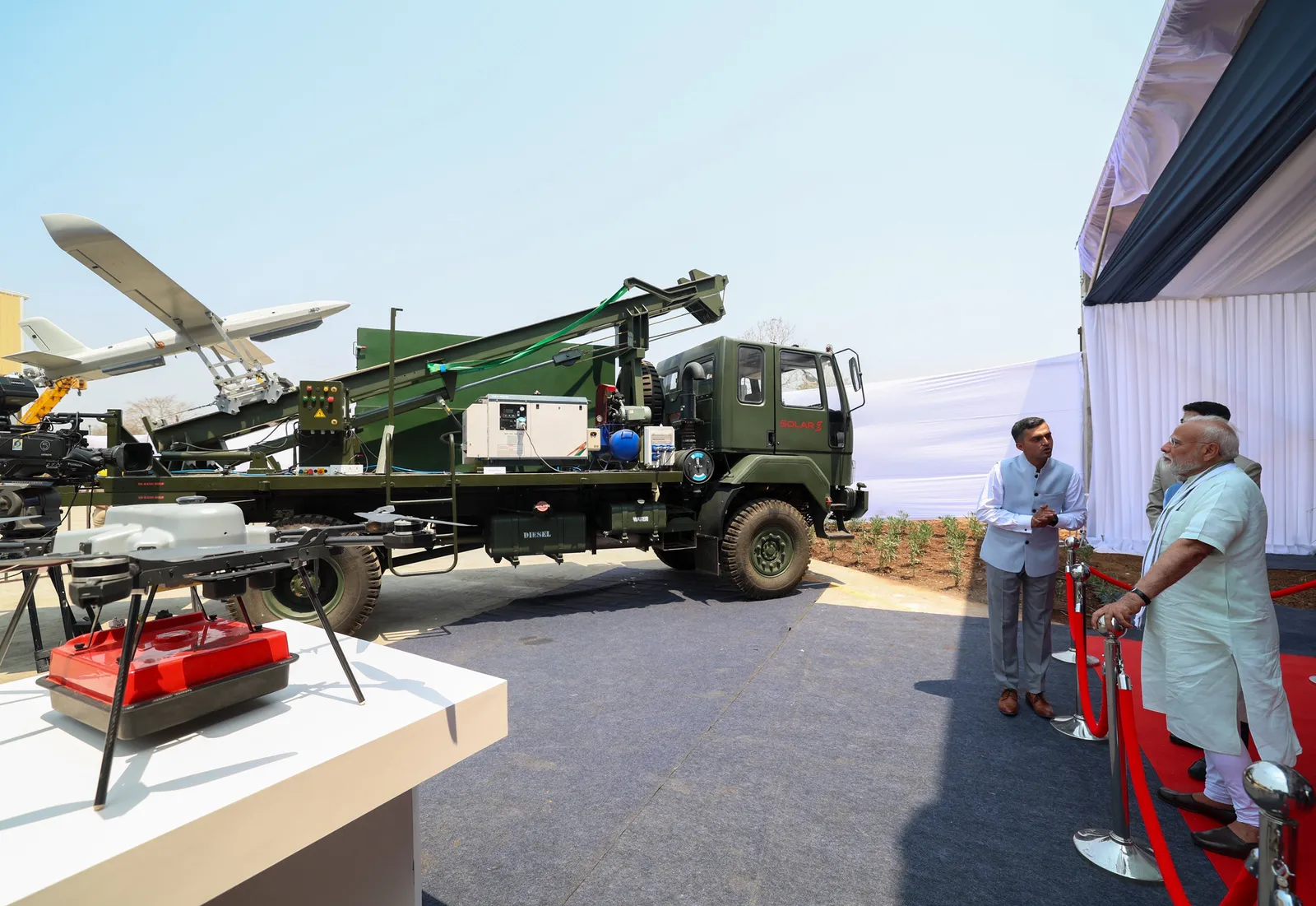
Pneumatic launcherPortable launch mechanism carried with the systemAllows use without a runway or vehicle-mounted rail.
Recovery functionMission abort and parachute soft landingLets the operator recover the air vehicle when a strike is not authorized or a target is not confirmed.
Variants

Public Indian government and Solar-family reporting describe Nagastra as a broader loitering-munition family rather than a single one-off air vehicle.

VariantConfigurationDesignation notes
Nagastra-1RReusable upgraded Nagastra-1 derivative

Reported Army order for about 450 units, with night-operation sensor options and reusable launcher-system context.

Sources: ETGovernment Army Loitering Munition Contracts, Times of India Nagastra-1R Order

Nagastra FPVFirst-person-view loitering munition family member

Listed by India's Department of Defence Production among Solar Defence and Aerospace loitering-munition product variants.

Sources: Department of Defence Production Loitering Munitions

Nagastra-1BNagastra family member

Listed by India's Department of Defence Production among Solar Defence and Aerospace loitering-munition product variants.

Sources: Department of Defence Production Loitering Munitions

Man Portable LMSMan-portable loitering munition system

The Department of Defence Production lists Man Portable LMS alongside Nagastra-1 and Nagastra-1R orders for Solar Defence and Aerospace.

Sources: Department of Defence Production Loitering Munitions

Nagastra-2Longer-range family development

Public reporting describes Nagastra-2 as a follow-on version under development with greater range and payload than the baseline system.

Sources: Times of India Nagastra-1R Order, Department of Defence Production Loitering Munitions

Nagastra-2BNagastra-2 family member

Listed by India's Department of Defence Production among Solar Defence and Aerospace loitering-munition product variants.

Sources: Department of Defence Production Loitering Munitions

Nagastra-3Longer-range family development

Public reporting describes Nagastra-3 as another follow-on version under development with greater range and payload than Nagastra-1.

Sources: Times of India Nagastra-1R Order, Department of Defence Production Loitering Munitions

Timeline

Nagastra-1 Key Events

  1. Initial delivery reported

    NDTV/ANI reported that pre-delivery inspection for the first batch had been completed in May 2024 before 120 loitering munitions were delivered to Pulgaon.

    Sources: Army Inducts Indigenous Nagastra-1 Precision Kamikaze Drones

  2. Nagastra-1R order reported

    ETGovernment reported an Army contract for about 450 Nagastra-1R loitering munitions from Solar Defence and Aerospace Limited.

    Sources: ETGovernment Army Loitering Munition Contracts

  3. Operation Sindoor use publicly identified

    India's defence ministry said Solar Group Nagastra drones had been used during Operation Sindoor and struck terrorist targets.

    Sources: Solar Defence Facility and Nagastra Operation Sindoor Use

  4. Official product listing names broader Nagastra family

    India's Department of Defence Production listed Solar Defence and Aerospace loitering munitions including Nagastra, Nagastra-1R, Nagastra FPV, Nagastra-1B, Man Portable LMS, Nagastra-2, Nagastra-2B, and Nagastra-3.

    Sources: Department of Defence Production Loitering Munitions

Media
Related Weapon Systems
IAI Harop, Long-range loitering munition, Aircraft & UAVsAircraft & UAVsIAI HaropLong-range loitering munitionThe IAI Harop is an Israeli long-range loitering munition that combines UAV-style search and surveillance with an expendable precision-strike role. Israel Aerospace Industries presents it as a second-generation electro-optical attack system launched from land or naval canisters, controlled by a remote human operator, and able to attack high-value targets from multiple dive angles. Direct public sourcing ties Harop to Azerbaijan's 2020 Nagorno-Karabakh campaign and India's 2025 Operation Sindoor.
YIHA-III, Loitering munition / one-way attack UAV, Aircraft & UAVsAircraft & UAVsYIHA-IIILoitering munition / one-way attack UAVYIHA-III is the reporting name for Baykar's Sivrisinek loitering munition, a catapult-launched one-way attack UAV associated with Baykar's work at Pakistan's National Aerospace Science and Technology Park. Baykar's 2026 product page describes UM and UMX configurations with relay-assisted communications, autonomous navigation, and a 20 kg warhead, while Reuters and Indian government reporting tied Yiha/YIHA-III drones to Pakistan's May 2025 drone exchanges with India.
Warmate, Loitering munition, Aircraft & UAVsAircraft & UAVsWarmateLoitering munitionWarmate is a Polish electric loitering munition from WB Electronics/WB Group designed as a portable reconnaissance-strike system with interchangeable warheads, autonomous flight modes, and dismounted or vehicle-mounted launch options. WB Group says the system entered Polish Army service in 2017 and continues in production for Polish and foreign users; conflict records include Ukrainian strikes against Russian air-defense and radar systems, Indian use in 2025, and caveated photographed wreckage in Libya.

Sources