Profile
- Origin
- United States
- Built by
- Boeing
- Type
- Intercontinental ballistic missile
- Service note
- 1962-present
- Designed
- 1950s
- Produced
- 1968-1978
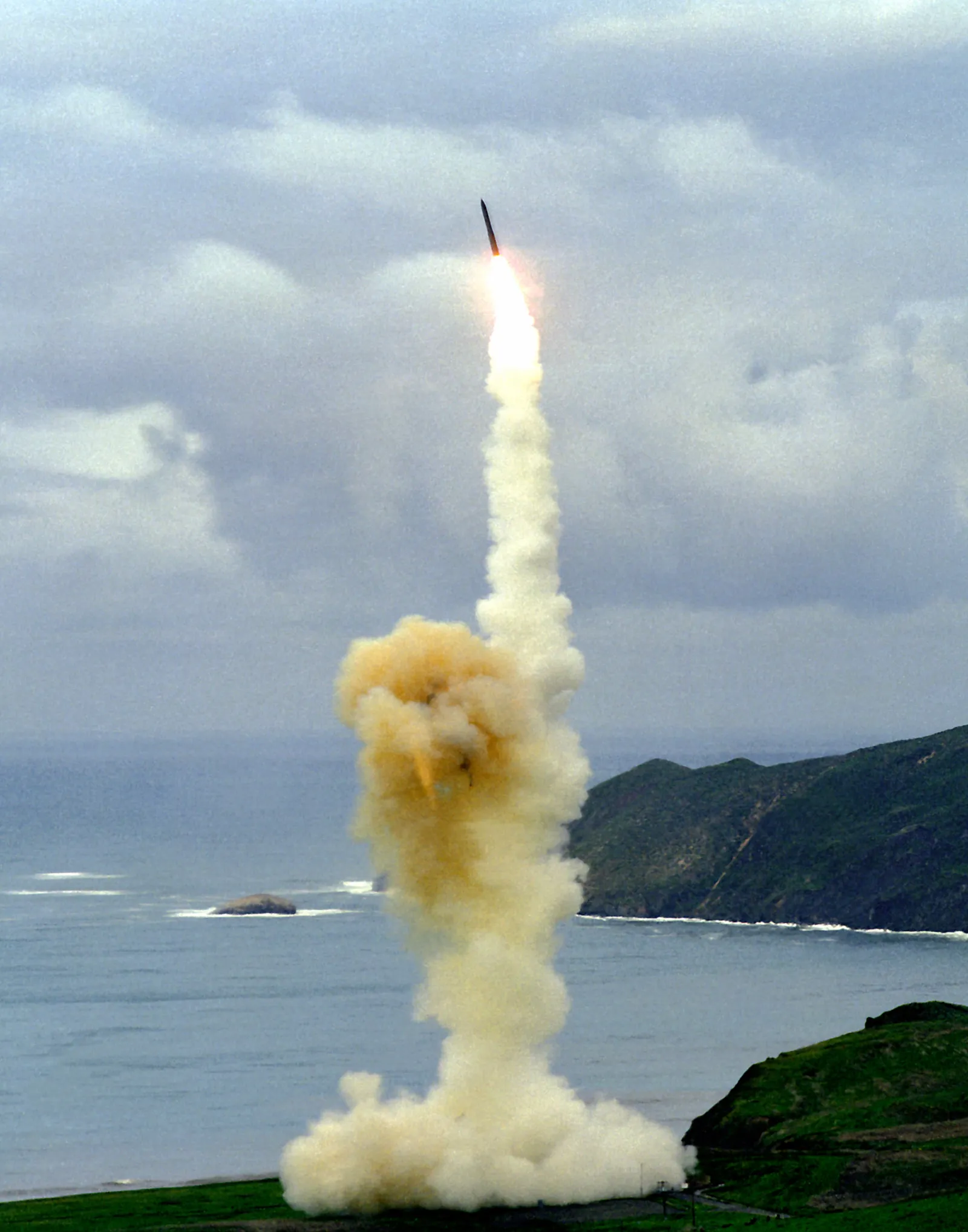
The Minuteman intercontinental ballistic missile is the United States' silo-launched, solid-fuel land-based strategic nuclear missile family. Boeing-built Minuteman III missiles remain the current operational generation, with 400 missiles dispersed at F.E. Warren, Malmstrom, and Minot and sustained through life-extension work while the LGM-35A Sentinel replacement program is restructured.
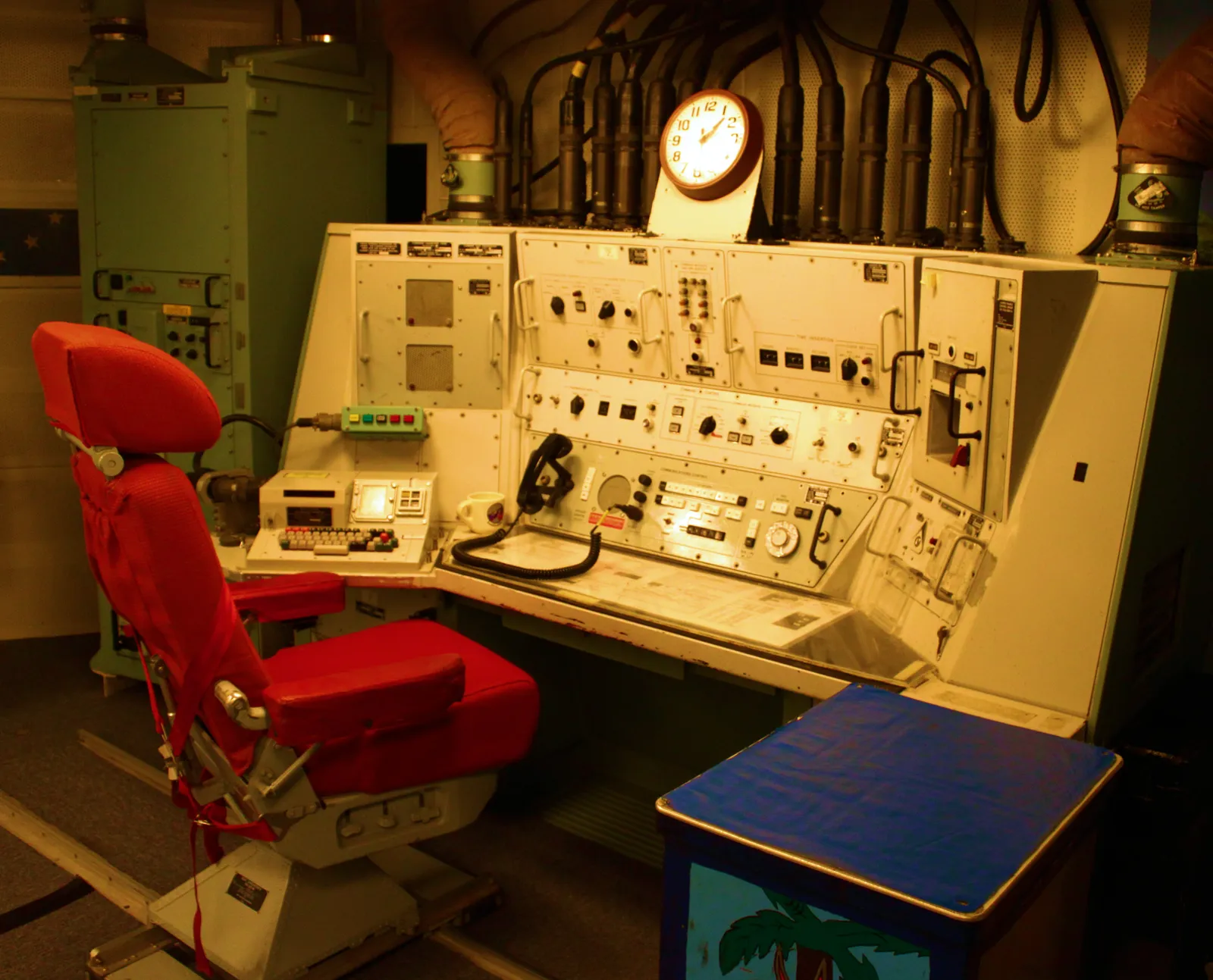
Minuteman is more than the missile body. Official Air Force sources describe a dispersed field of hardened silos connected to underground launch control centers, with redundant communications linking crews to national command authorities.
AFNWC lists 400 current Minuteman III missiles dispersed across F.E. Warren, Malmstrom, and Minot.
Two-officer missile combat crews remain on alert in underground launch control centers.
The Air Force fact sheet says specially configured E-6B airborne launch control center aircraft can assume command and control if isolated missiles lose ground command capability.
Source labels: Minuteman III (LGM-30G); LGM-30G Minuteman III Air Force Fact Sheet.
The Minuteman III generation introduced MIRV carriage, but public museum records distinguish that design capacity from the current U.S. load. The National Museum says each missile has been limited to one warhead since 2005, and the Smithsonian's Minuteman III object record describes the current single-warhead configuration as an arms-control result.
Minuteman III was designed around multiple independently targetable reentry vehicles and was the first missile fielded with that capability.
Museum sources describe current Minuteman III missiles as carrying one nuclear warhead under U.S.-Russia arms-control limits.
Source labels: Boeing LGM-30G Minuteman III; Smithsonian Minuteman III Missile.
The Minuteman family uses LGM-30 series designations: the U.S. Air Force explains LGM as silo-launched, surface-attack guided missile, with 30 identifying the Minuteman series and the trailing letter distinguishing the model.
| Variant | Configuration | Designation notes |
|---|---|---|
| LGM-30A Minuteman IA | Initial Minuteman I model | Museum timeline data lists 150 Minuteman IA missiles in the 1962 operational Minuteman I force. |
| LGM-30B Minuteman IB | Improved Minuteman I model | The museum identifies Minuteman IB as LGM-30B and lists 650 Minuteman IB missiles in the 1962 operational force. |
| LGM-30F Minuteman II | Second-generation Minuteman | The museum identifies Minuteman II as LGM-30F and lists it as operational in 1966 with 450 missiles deployed in nine squadrons. |
| LGM-30G Minuteman III | Current Minuteman generation | The Air Force identifies LGM-30G as the current Minuteman III; museum sources describe it as operational in 1970 and the only current U.S. land-based ICBM after Minuteman II and Peacekeeper retirements. Sources: LGM-30G Minuteman III Air Force Fact Sheet, Boeing LGM-30G Minuteman III, Minuteman Timeline |
The National Museum of the United States Air Force says the C-5A Galaxy can accommodate two Minuteman intercontinental ballistic missiles.
| Carrier | Carrier type | Carriage evidence |
|---|---|---|
 | Strategic airlifter | The National Museum of the United States Air Force says the C-5A Galaxy can accommodate two Minuteman intercontinental ballistic missiles. Sources: National Museum C-5A Galaxy |
The National Museum timeline records Department of Defense approval for Minuteman missile-family development.
Sources: Minuteman Timeline
The National Museum timeline records the first successful Minuteman test flight.
Sources: Minuteman Timeline
Minuteman I became operational with a force listed by the museum as 150 Minuteman IA and 650 Minuteman IB missiles.
Sources: Minuteman Timeline
The Minuteman II generation became operational, with the museum listing 450 deployed missiles in nine squadrons.
Sources: Minuteman Timeline
Minuteman III became operational as the most modern Minuteman model, initially listed by the museum at 550 deployed missiles.
Sources: Minuteman Timeline, Boeing LGM-30G Minuteman III
AFNWC records the first Minuteman III alert at the 741st Strategic Missile Squadron.
Sources: Minuteman III 50th Anniversary Year
The museum timeline records the start of Minuteman II system deactivation.
Sources: Minuteman Timeline
Boeing reported that the Minuteman III Guidance Replacement Program achieved initial operational capability on July 20, 2000.
Sources: Boeing Minuteman III Guidance Replacement Program IOC
The National Museum states that Minuteman III can carry three warheads but has been treaty-limited to one warhead since 2005.
Sources: Boeing LGM-30G Minuteman III
Air Force reporting said the final Minuteman III life-extension programs intended to carry the platform through 2020 were scheduled for completion in 2015.
Sources: Life Extension Programs modernize ICBMs
GAO reported that Sentinel delays require prolonged Minuteman III operation and that Air Force officials were assessing options to operate Minuteman III potentially through 2050.
Sources: GAO Minuteman III Sentinel transition risks
AFNWC states that life-extension programs kept Minuteman III viable as fielded until 2030, beyond its original 10-year service life.
Sources: Minuteman III 50th Anniversary Year