Support Equipment

MG-361 Kentavr sonar

Also known as
  • MG-361 Centaur
  • Sonar Station MG-361 (Centaur)
  • MG-361 sonar station
  • MG-361 Kentavr-SK
  • Kentavr-SK
  • GAS MG-361

MG-361 Kentavr sonar is a Ukrainian digital sonar station cataloged by SE SFTF Progress as a towed hydroacoustic system for surface vessels. The catalogue describes a flexible extended antenna, 360-degree surveillance, 30-70 km submarine detection, torpedo detection of at least 30 km, and an interface role that can pass targeting data to a ship weapons-control system.

Profile / Specs

Specifications

System type
Digital sonar station
Antenna
Towed flexible extended antenna
Submarine detection range
30-70 km
Torpedo detection range
At least 30 km
Signal analysis band
0.3-3.8 Hz
Surveillance sector
360 degrees
Antenna towing depth
50-200 m
Towing speed
2-8 knots; 13 knots maximum
Detection role
Detects and classifies underwater and surface objects by noise emission in low and sound frequency ranges
Tracking role
Tracks submarine coordinates and feeds weapons-control targeting data
Platform fit
Surface vessels
Carrier Vessel

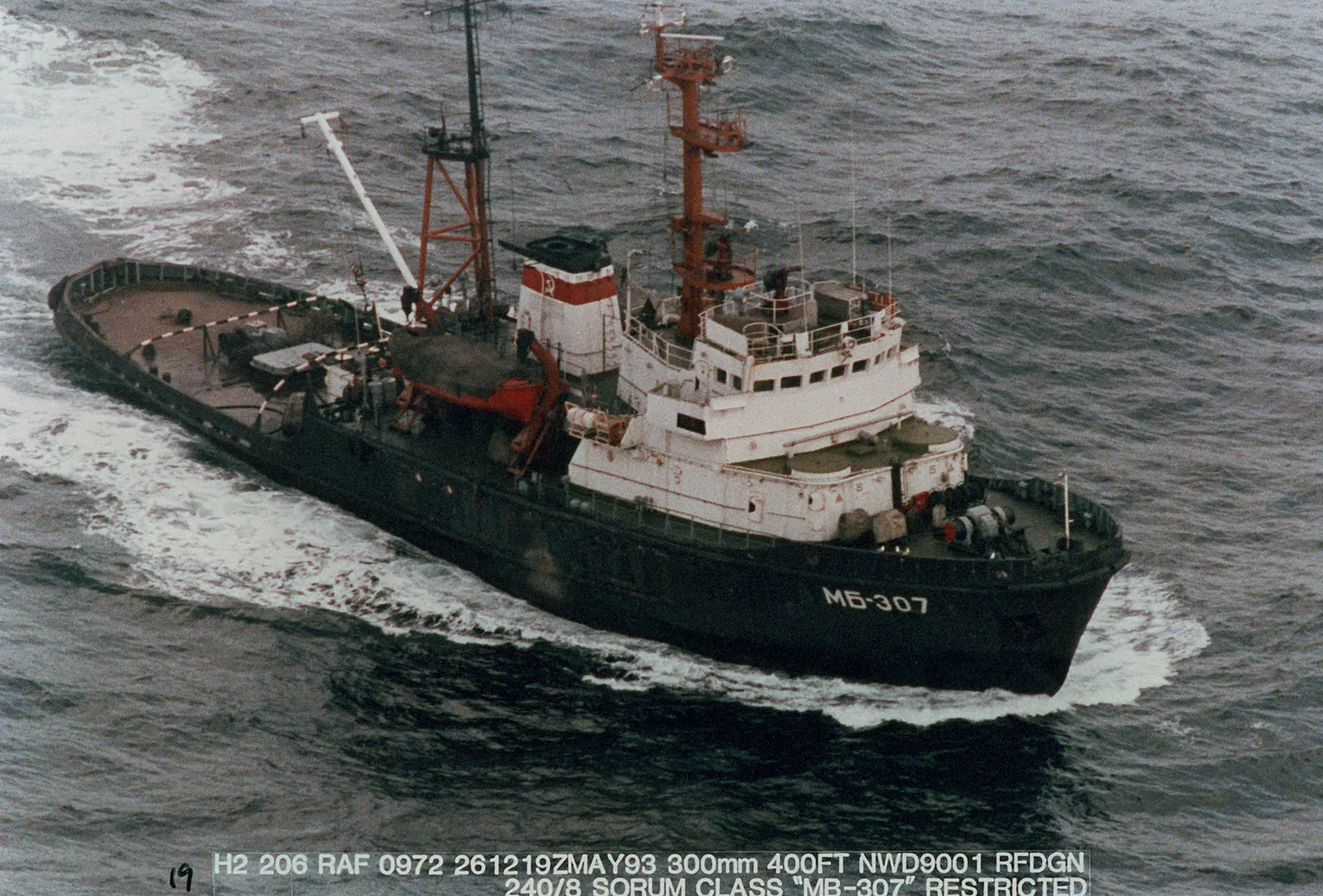
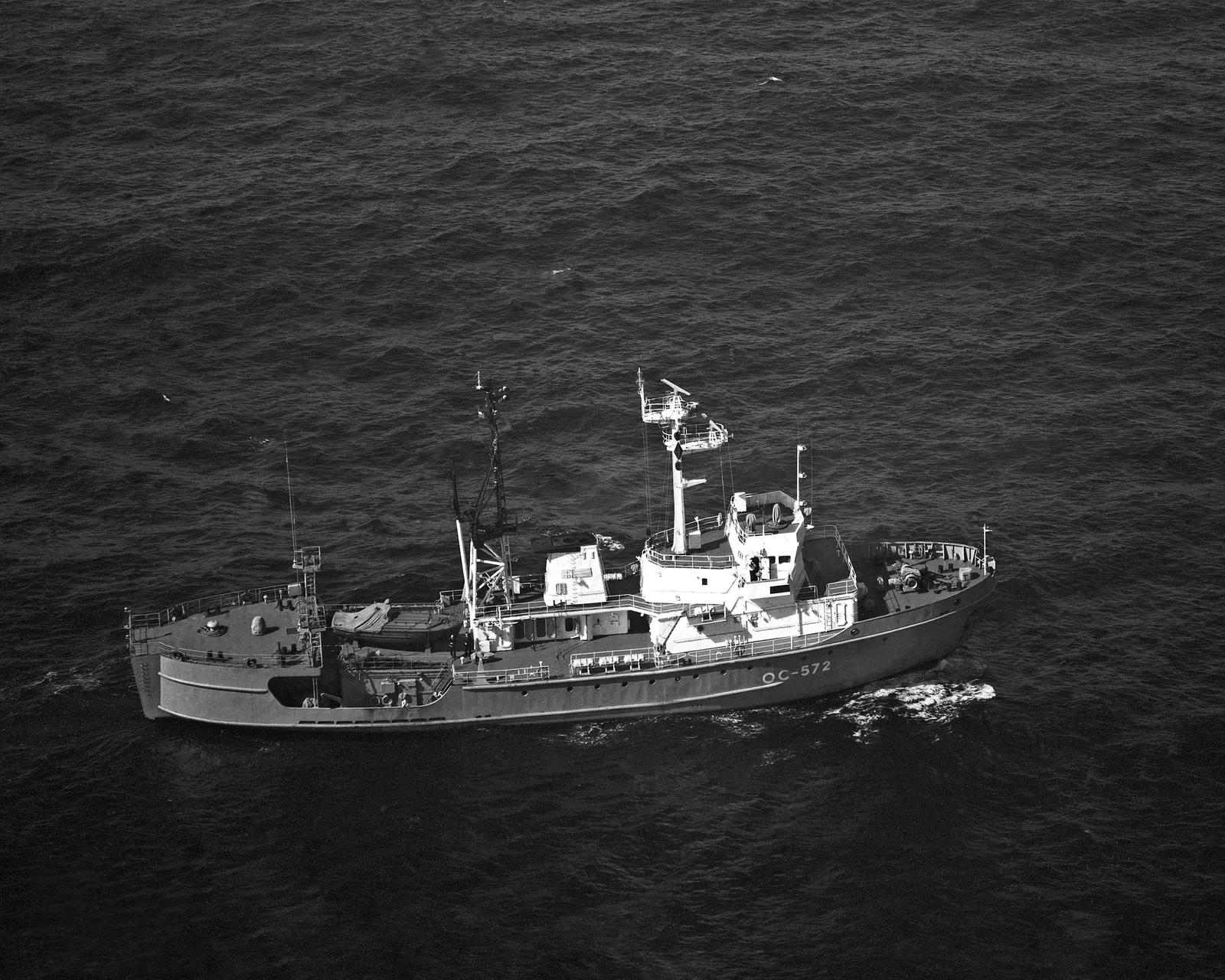
Project 07452 Chusovoy carries MG-361 Kentavr sonar as part of its electronics fit.

CarrierCarrier typeCarriage evidence
Project 07452 Chusovoy intelligence ship, Intelligence-gathering ship, Naval SystemsProject 07452 Chusovoy intelligence shipIntelligence ship

RussianShips lists MG-361 Kentavr sonar in Chusovoy's electronics fit.

Sources: Seagoing tug - Project 745

Sonar Function And Integration

MG-361 is best documented as a relationship-only sonar component rather than as a stand-alone combat weapon. Progress describes the station as a digital towed-array system for surface vessels, while RussianShips.info identifies it in the Project 07452 Chusovoy electronics fit.

Detection role

Progress lists submarine detection at 30-70 km and torpedo detection of at least 30 km.

Towed array fit

The antenna is cataloged for 50-200 m towing depth, 2-8 knot towing speed, and 13 knot maximum towing speed.

Known catalog carrier

Project 7452 / Project 07452 Chusovoy is the cataloged carrier with MG-361 listed in its electronics fit.

Russian-service terminology

A Morskoy Sbornik modernization article refers to the installed MG-361 on GS-31 as the standard Kentavr-SK sonar station.

Sources: SHIPBUILDING AND MARINE EQUIPMENT INDUSTRY - Progress; Seagoing tug - Project 745; Morskoy Sbornik MG-361 modernization article.

Timeline

MG-361 Kentavr sonar Key Events

  1. Modernization hardware prepared

    A Morskoy Sbornik article says Minotavr apparatus for modernizing the MG-361 fitted to GS-31 was manufactured, bench-tested, and shipped to Northern Fleet radio-technical service stores in 2006.

    Sources: Morskoy Sbornik MG-361 modernization article

  2. GS-31 shipboard work begins

    The same article describes April-September 2008 preparation and pier-side work to remove parts of the standard Kentavr-SK equipment and install Minotavr apparatus on GS-31.

    Sources: Morskoy Sbornik MG-361 modernization article

  3. Modernized apparatus completes acceptance testing

    The article reports November 2008 testing in heavy weather and says the Minotavr apparatus met customer requirements after shipboard trials.

    Sources: Morskoy Sbornik MG-361 modernization article

Media
Related Weapon Systems
Medium- and shallow-water multibeam sounding system, Hydrographic survey system, Support EquipmentSupport EquipmentMedium- and shallow-water multibeam sounding systemHydrographic survey systemMedium- and shallow-water multibeam sounding system is a shipboard hydrographic survey sonar class used for bathymetric mapping in coastal and mid-depth waters. Xiamen University lists a Kongsberg EM 710 1° x 1° fit under the Chinese medium- and shallow-water designation, while Kongsberg describes the EM 710 as a configurable 70-100 kHz multibeam echo sounder for high-resolution seabed mapping. Haixun 08 is documented carrying medium- and shallow-water multibeam systems in a GONDOLA structure alongside a deep-water multibeam system.
MG-757 Anapa-M anti-saboteur sonar, Anti-saboteur sonar, Naval SystemsNaval SystemsMG-757 Anapa-M anti-saboteur sonarAnti-saboteur sonarMG-757 Anapa-M, also described as Anapa-ME, is a Russian shipborne anti-saboteur sonar built by Taganrog Plant Priboy for harbor-defense and close ship-protection work. It is described as detecting and tracking combat swimmers or diver-propulsion targets, passing target coordinates to anti-saboteur grenade-launcher control systems, and appearing in the sensor fits of several Russian patrol, corvette, frigate, and mine-countermeasures classes.
36D6 / ST-68U surveillance radar, Mobile three-coordinate air-surveillance radar, Air DefenseAir Defense36D6 / ST-68U surveillance radarMobile three-coordinate air-surveillance radarThe 36D6 / ST-68U Tin Shield family is a mobile Soviet-legacy three-coordinate surveillance radar used to detect and track low-, medium-, and high-altitude air targets for air-defense command posts, SAM units, and air-traffic-control tasks. Ukrainian sources identify Iskra as the enterprise behind ST-68U/19Zh6 development history and later 35D6/36D6M modernization, while open technical references describe the 36D6 as an S-band radar with 360-degree azimuth coverage, four beams, 350 kW peak transmitter power, and target-data output to automated air-defense users. In the 2014 Russia-Ukraine War, visually documented loss lists, WarSpotting entries, and General Staff-derived reporting place 36D6/ST-68U radars on both Russian and Ukrainian sides of the air-defense fight, including repeated Russian radar losses in occupied Crimea.
Upholder/Victoria-class submarine, Diesel-electric patrol submarine, Naval SystemsNaval SystemsUpholder/Victoria-class submarineDiesel-electric patrol submarineThe Upholder/Victoria class is a four-boat Type 2400 diesel-electric submarine line designed in the United Kingdom as the Royal Navy's late-Cold-War successor to the Oberon class. The Vickers Shipbuilding and Engineering design was ordered for HMS Upholder in 1983, followed by three Cammell Laird-built boats, but the Royal Navy withdrew the class in 1994 as it moved to an all-nuclear submarine force. Canada acquired the reserve boats in 1998, renamed them as the Victoria class, and rebuilt them around Canadian fire-control, communications, and Mk 48 heavyweight-torpedo requirements. Current Royal Canadian Navy and National Defence material frames the class as Canada's covert underwater-surveillance and deterrence force while Victoria Class Modernization keeps the boats in service into the mid-to-late 2030s.

Sources