- Side
- Israel

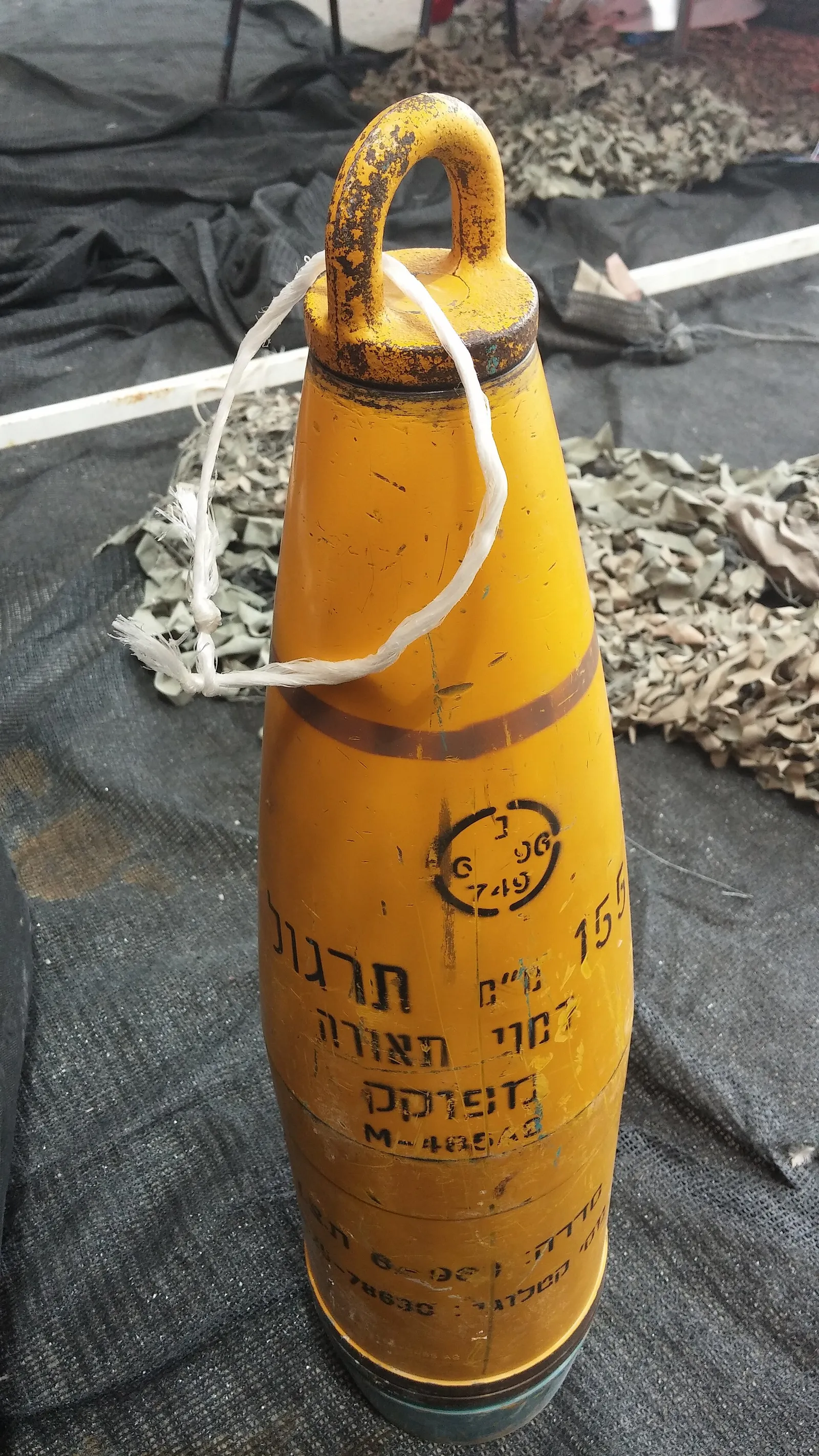
Human Rights Watch documented marked 155 mm M485A2 illumination rounds outside homes in Khuza'a after Israeli operations in Gaza, tying the projectile family to Israeli artillery use during the 2008 Gaza War.
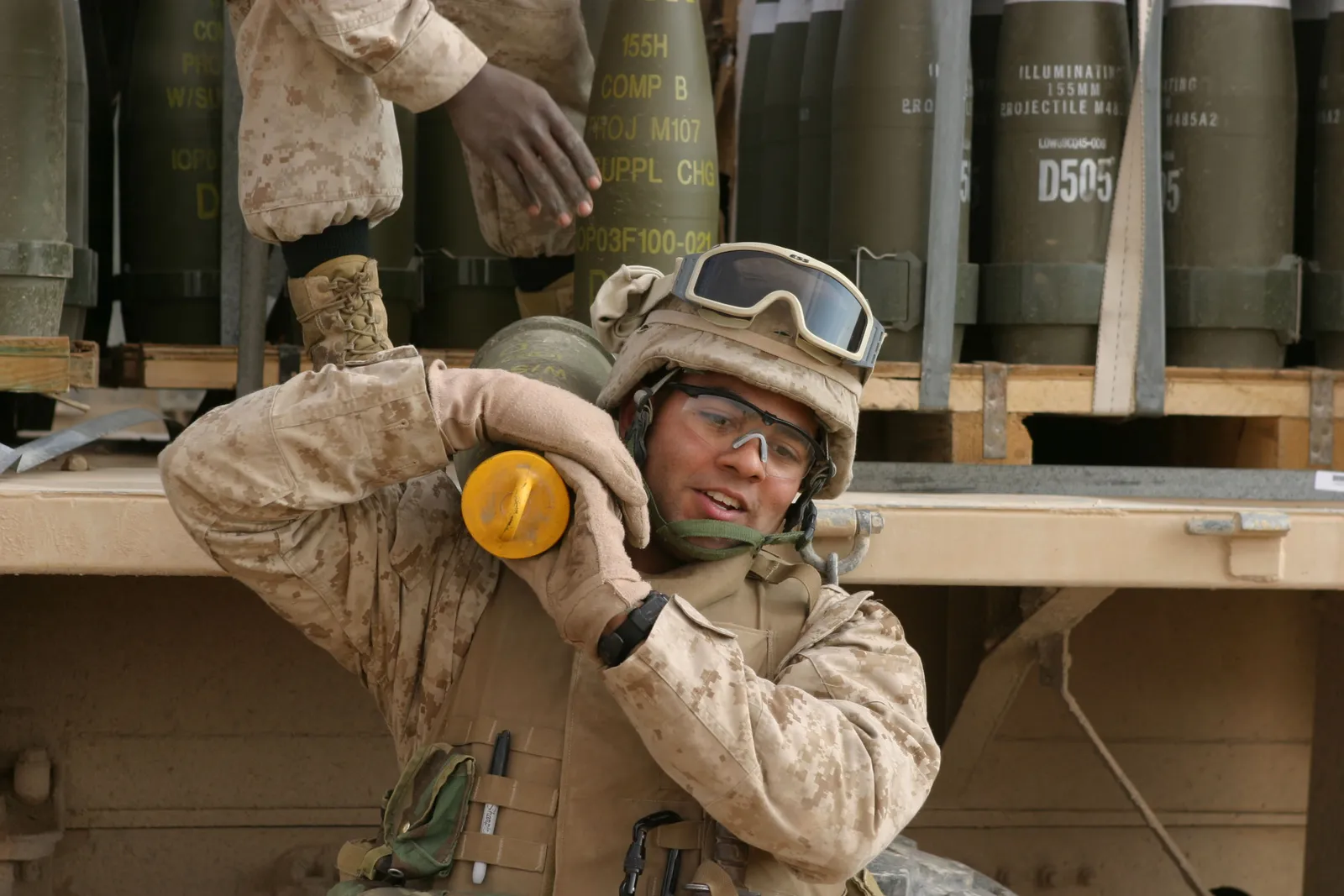
The M485-series 155 mm illumination projectile is a U.S.-origin visible-light artillery round that ejects a parachute flare to light battlefield areas for artillery observers and maneuver forces. Army sources describe the M485A2 as an updated visible-light round built through the Pine Bluff and Crane ammunition base, while conflict investigators documented M485A2-marked remnants in Gaza in 2009 and 2023.
Human Rights Watch documented marked 155 mm M485A2 illumination rounds outside homes in Khuza'a after Israeli operations in Gaza, tying the projectile family to Israeli artillery use during the 2008 Gaza War.
Le Monde's 2023 Israel-Hamas War investigation says Israeli forces fired an M485 A2 illuminating shell near Al-Shifa Hospital in Gaza, and the fragment matched the Israeli shell pattern in the article's forensic reporting.
Role detailsThe Army ammunition portfolio treats the M485A2 as a standard 155 mm visible-light illumination round. Its official entry combines the round's role, supported U.S. weapon systems, and production background recorded by the Army.
| Field | Documented detail |
|---|---|
| DODIC | D505 |
| U.S. weapon systems |   |
| Build note | Army reporting describes Crane Army Ammunition Activity supplying parachute and candle assemblies to Pine Bluff Arsenal for M485A2 visible-light rounds. |
| Payload | 1,000,000 candlepower illumination, with public sources describing burn times from at least 100 seconds to approximately two minutes. |
Sources: JPEO Ammunition Portfolio Book; U.S. Army Picatinny illumination projectile article; Yugoimport M485A2 M4A2 Data Sheet.
Army reporting places the M485A2 inside a broader illumination-projectile family: visible-light M485A2 rounds, infrared M1066 rounds for night-vision users, and later extended-range M1123/M1124 projectiles that reused demilitarized DPICM shell bodies.
| Projectile | Illumination type | Documented context |
|---|---|---|
| M485A2 | Visible light | Updated visible-light round built from the older M107 projectile-body family. |
| M1066 | Infrared | Entered Army inventory in 2010 to provide illumination visible through night-vision equipment. |
| M1124 | Visible light, extended range | Developed with reused DPICM shell bodies to extend illumination range compared with M485A2/M1066 rounds. |
Source: U.S. Army Picatinny illumination projectile article.
Army and manufacturer ammunition references list the M485A2 as separate-loading ammunition for standard 155 mm howitzers rather than for a single proprietary gun.
| Firing weapon | Weapon type | Firing evidence |
|---|---|---|
| 155 mm self-propelled howitzer | The JPEO portfolio book lists the M485A2 with the M109A6 Paladin as one of its supported 155 mm weapon systems. Sources: JPEO Ammunition Portfolio Book |
| 155 mm towed howitzer | The same Army portfolio entry lists the M777 alongside the M485A2 for 155 mm illumination use. Sources: JPEO Ammunition Portfolio Book |
 | 155 mm towed howitzer | Yugoimport's M485A2/M4A2 ammunition sheet lists weapon compatibility with M198/M199 155 mm howitzers. Sources: Yugoimport M485A2 M4A2 Data Sheet |
The Army portfolio book gives the M485A2 a March 1985 materiel-release date and identifies it as DODIC D505.
Sources: JPEO Ammunition Portfolio Book
Army reporting said the M1123 infrared and M1124 visible-light extended-range projectiles had reached Milestone C and Type Classification Standard after development work that reused demilitarized DPICM shell bodies.
Sources: U.S. Army Picatinny illumination projectile article
The JPEO ammunition portfolio still listed the M485A2 as a visible-light projectile for the M109A6 Paladin and M777 155 mm howitzers.
Sources: JPEO Ammunition Portfolio Book
Le Monde published its Al-Shifa shelling investigation, saying Israeli forces fired an M485A2 illuminating shell near the hospital and that fragments matched the Israeli shell pattern.
Sources: Le Monde Al-Shifa shelling investigation