Munitions

Kowsar cruise anti-ship missile

Also known as
  • Kosar
  • C-701 Kowsar
  • C-701 Kosar
  • C-701T Kowsar
  • C-701R Kowsar
  • TL-10 Kowsar
  • TL-10A Kowsar
  • FL-8 Kowsar
  • Kowsar-1
  • Kowsar-2
  • Kowsar-3

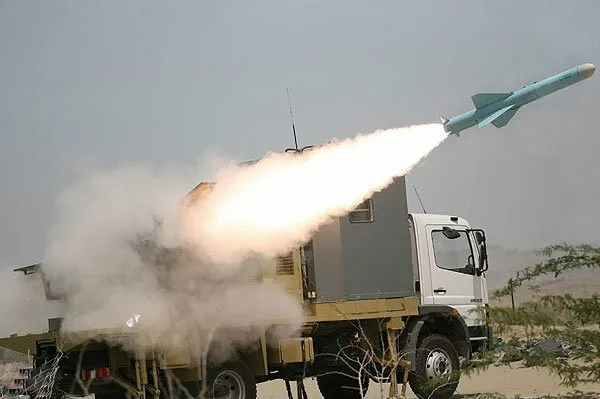
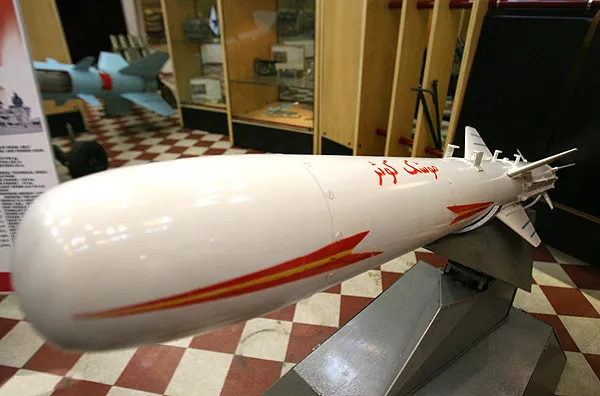
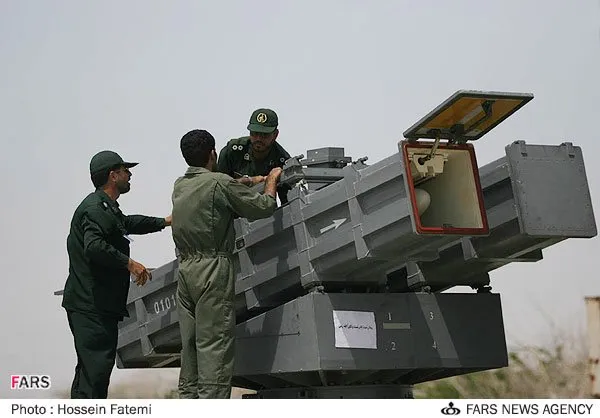
The Kowsar cruise anti-ship missile is an Iranian short-range anti-ship missile family built by the Aerospace Industries Organization and associated with the Chinese C-701/TL-10 class. Public reporting describes Kowsar variants with television, infrared, or active-radar seeker options and coastal, ship, helicopter, jet, and small-boat launch roles, including C-701 Kowsar carriage on IRGC Navy Peykaap/Zolfaghar craft.

Profile / Specs

Specifications

Length
About 2.5 m to 2.69 m depending on seeker variant
Diameter
About 0.18 m for Kowsar-1 in Iranian public reporting
Launch weight
About 105 kg to 120 kg depending on public variant reference
Range
About 15 km to 25 km in public references; USCC reports an 18 km maximum for earlier Kosar data
Speed
Mach 0.8 to about Mach 1 in Iranian public reporting, depending on variant
Warhead
Generally 29-30 kg HE/SAP or semi-armor-piercing in CSIS and USCC references
Guidance
TV/electro-optical, infrared, or active-radar/millimeter-wave seeker options with inertial mid-course guidance in public references
Launch platforms
Coastal, ship/boat, and air-launch roles are described in public references
Boat carriage
CSIS lists C-701 Kowsar or C-704 Nasr missiles for Bavar/Peykaap II and Zolfaghar/Peykaap III craft
Likely targets
Small and medium-sized surface vessels in littoral waters
Variants

Public sources describe Kowsar/Kosar as a compact C-701/TL-10-class anti-ship missile line, but they do not always separate Iranian variant names from seeker or platform configurations. The rows below keep the variant distinctions to values directly stated in open references.

VariantConfigurationDesignation notes
Kowsar TL-10ATV-guided lightweight anti-ship missile

CSIS lists a TL-10A Kowsar with a 3-15 km range, Mach 0.85 speed, a 30 kg semi-armor-piercing warhead, and TV guidance.

Sources: CSIS Iranian Sea-Air-Missile Threat

Kowsar-1C-701T / TV-guided anti-ship variant

CSIS identifies Kowsar-1 as C-701T with 4-15 km range and TV guidance; Iran Press separately reports a 15-19 km range and 105 kg launch weight.

Sources: CSIS Iranian Sea-Air-Missile Threat, Iran Press Kowsar missile article

Kowsar-2Reported infrared or heavier short-range variant

CSIS says little information is available and describes Kowsar-2 as likely infrared-guided, while Iran Press reports 110 kg weight, Mach 1 speed, and 25 km range.

Sources: CSIS Iranian Sea-Air-Missile Threat, Iran Press Kowsar missile article

Kowsar-3C-701R / radar-guided anti-ship variant

CSIS identifies Kowsar-3 as C-701R with 4-25 km range, Mach 0.78 speed, a 29 kg warhead, and radar guidance; Iran Press reports about 120 kg launch weight and 25 km range.

Sources: CSIS Iranian Sea-Air-Missile Threat, Iran Press Kowsar missile article

C-701 / TL-10-derived KosarLineage description

USCC reporting describes at least two Kosar versions derived from the Chinese C-701/TL-10, with TV and active-radar seeker forms and inertial mid-course guidance.

Sources: USCC China-Iran limited partnership report

Launch Platforms

Open references tie Kowsar/Kosar to small Iranian missile craft rather than only to coastal launchers.

CarrierCarrier typeCarriage evidence
Peykaap / Zolfaghar missile boat, Fast attack craft / missile boat, Naval SystemsPeykaap / Zolfaghar missile boatFast attack craft / missile boat

CSIS lists C-701 Kowsar or C-704 Nasr missiles as armament options for Bavar/Peykaap II and Zolfaghar/Peykaap III craft.

Sources: CSIS Iranian Sea-Air-Missile Threat

Lineage And Evidence Limits

Kowsar/Kosar sits in the small anti-ship cruise missile branch of Iran's missile inventory. Iran Watch and Aviation Week place the program in early-2004 production reporting, while USCC treats the public missile as derived from the Chinese C-701/TL-10 class with seeker variants rather than as a clean-sheet design.

Family position

The missile is shorter ranged than Iran's C-802/Noor-derived systems and is most often described for coastal, helicopter, jet, or small-boat launch roles.

Platform record

CSIS lists Kowsar/C-701 armament on Bavar/Peykaap II and Zolfaghar/Peykaap III craft, matching the catalog's linked Peykaap/Zolfaghar missile-boat support page.

Conflict-use status

Reviewed sources support Iranian service and carriage relationships, but not a direct Kowsar firing or transfer in a specific cataloged conflict, so this record remains relationship-only.

Sources: Iran Watch Missile Milestones; Aviation Week Kosar production report; USCC China-Iran limited partnership report; CSIS Iranian Sea-Air-Missile Threat.

Timeline

Kowsar cruise anti-ship missile Key Events

  1. Iran says the missile is being built

    Iran said it had begun manufacturing the Kowsar/Kosar cruise missile; Iran Watch identifies AIO as the builder and describes shore-, air-, and ship-launched variants.

    Sources: Iran Watch Missile Milestones, Kosar / Nasr

  2. Kowsar enters Iranian service

    GlobalSecurity says Kowsar entered service in Iran in 2005 and that early missiles were assembled and tested from Chinese-supplied subassemblies.

    Sources: Kosar / Nasr

  3. Boat and truck variants are tested

    GlobalSecurity reports Kosar missiles fitted to Peykaap II patrol craft were test-fired during 2006 exercises and that a shore-mounted truck variant was also tested.

    Sources: Kosar / Nasr

  4. CSIS summarizes small-boat armament

    CSIS listed C-701 Kowsar or C-704 Nasr missiles as possible armament for Bavar/Peykaap II and Zolfaghar/Peykaap III fast attack craft in its Gulf shipping threat study.

    Sources: CSIS Iranian Sea-Air-Missile Threat

Media
Related Weapon Systems
Peykaap / Zolfaghar missile boat, Fast attack craft / missile boat, Naval SystemsNaval SystemsPeykaap / Zolfaghar missile boatFast attack craft / missile boatThe Peykaap and Zolfaghar missile-boat family covers North Korean IPS-16-derived Iranian fast attack craft adapted for torpedo or anti-ship missile attack. Official and specialist references place Peykaap I torpedo boats, Peykaap II/Bavar missile boats, and Peykaap III/Zolfaghar missile boats inside the IRGC Navy small-craft inventory, with Kowsar/TL-10, Zafar, and Nasr/C-704-family missile fits on the missile variants. Current Strait of Hormuz reporting discusses IRGCN small-boat swarms and missile threats, but public sources reviewed for this entry did not identify a Peykaap/Zolfaghar hull in a specific 2026 engagement.
Zulfiqar air-defense fast boat, Air-defense fast boat, Naval SystemsNaval SystemsZulfiqar air-defense fast boatAir-defense fast boatThe Zulfiqar air-defense fast boat is an Iranian IRGC Navy small craft configured around short-range surface-to-air missiles rather than the usual gun, rocket, torpedo, or anti-ship missile fit seen on many Iranian fast boats. Iranian reporting said the Zolfaghar high-speed boat joined the IRGC Navy in March 2023 with Nawab air-defense missiles, while Covert Shores assessed the displayed craft as a Bladerunner-derived hull with a radome and vertical-launch missile cells for local air cover around small-boat groups.
Anti-aircraft missiles, Ship-launched surface-to-air missile, MunitionsMunitionsAnti-aircraft missilesShip-launched surface-to-air missileShip-launched surface-to-air missiles documented in the Choe Hyon destroyer's air-defense fit. CSIS identifies the destroyer's air-defense system as Russian Pantsir-M and reports anti-aircraft missile launches during the 28 April 2025 test activity, while Naval News separately notes an unspecified forward VLS-launched SAM and a Pantsir-M-style close-in weapon system with short-range missiles. The exact North Korean missile designation remains publicly unconfirmed.
Iranian small attack boats, Small attack boat / fast attack craft, Naval SystemsNaval SystemsIranian small attack boatsSmall attack boat / fast attack craftIranian small attack boats are a mixed Islamic Revolutionary Guard Corps Navy fast attack craft and fast inshore attack craft force used for swarm harassment, mine laying, anti-ship missile attack, and littoral sea denial around the Persian Gulf and Strait of Hormuz. The family covers domestically produced speedboats and named classes such as Ashura/Ashoora, Tareq, Zolfaghar/Peykaap, Thondor/Houdong, Boghammar-derived craft, and Bladerunner-derived craft rather than a single standardized design.
Iranian naval surface vessels, Naval surface vessels, Naval SystemsNaval SystemsIranian naval surface vesselsNaval surface vesselsIranian naval surface vessels in this catalog cover two overlapping fleets: the regular Islamic Republic of Iran Navy's larger frigates, corvettes, and missile boats, and the IRGC Navy's missile boats, patrol craft, fast-attack craft, small boats, and newer missile catamarans. The fleet is usually described as a Strait of Hormuz and Gulf littoral force, combining anti-ship missiles, swarm tactics, boarding pressure, mine-capable boats, and limited larger-combatant presence rather than a peer blue-water surface fleet.

Sources