- Side
- Israel

The IDF and Ynet reported that Maglan made Iron Sting operational during the opening weeks of the war, using it against Hamas rocket-launching sites in Gaza and later in Khan Younis with 98th Division units.
Role detailsIron Sting is an Israeli 120 mm laser- and GPS-guided mortar munition from Elbit Systems that gives mortar units a precision-fire option without changing the basic 120 mm smoothbore mortar role. Elbit's 2025 brochure lists GPS, combined laser/GPS, and laser-only guidance modes, a 1.5-10 km range depending on the mortar system, and less-than-5 m CEP in semi-active laser mode. Israeli and defense reporting document Maglan and other IDF commando units using it in Gaza and along the Lebanon border after October 2023.
The IDF and Ynet reported that Maglan made Iron Sting operational during the opening weeks of the war, using it against Hamas rocket-launching sites in Gaza and later in Khan Younis with 98th Division units.
Role detailsYnet reported that Maglan reserve soldiers shifted some Iron Sting fire toward Lebanon, including junctions used by Hezbollah fighters after attacks along the border; Breaking Defense later cited an IDF-mentioned launch-post strike in Lebanon on 2023-12-15.
Public reporting identifies Iron Sting as an IDF commando-unit precision mortar round rather than a general inventory count. The sources below support the visible conflict rows and also show the limits of public information about quantities fired.
| Date or period | Theater | Reported use | Source |
|---|---|---|---|
| 2023-10-22 reporting | Gaza Strip | Ynet said Maglan reserve troops used Iron Sting against a Hamas rocket-launching site and fired roughly half of 12 early precision rounds toward Gaza. | Ynet Iron Sting first operational use |
| Late 2023 to early 2024 reporting | Khan Younis and Gaza | Breaking Defense reported IDF mentions of Iron Sting use by 98th Division commando units against rocket launchers, a weapon-storage compound, and other targets in Khan Younis. | Breaking Defense Iron Sting inside look |
| 2023-10-22 and 2024-02 reporting | Lebanon border | Ynet reported fire toward Lebanon against junctions used by Hezbollah fighters, while Breaking Defense cited an IDF-mentioned 2023-12-15 launch-post strike in Lebanon. | Ynet Iron Sting first operational use; Breaking Defense Iron Sting inside look |
| Quantity caveat | Public reporting | Breaking Defense said the IDF did not provide the number of Iron Sting systems in use or the number of rounds fired so far. | Breaking Defense Iron Sting inside look |
Public cost reporting for Iron Sting is about procurement value, not a clean per-round price. The two official announcements below describe the same July 2024 purchase in different ways.
| Date | Documented amount | What was said |
|---|---|---|
| 2024-07-29 | Over $220 million | The Israeli Ministry of Defense said it signed an order for thousands of Iron Sting rounds from Elbit Systems. |
| 2024-07-29 | About $190 million | Elbit said it won a two-year supply contract for Iron Sting guided mortar munitions. |
Iron Sting keeps the mortar-tube launch model but adds onboard guidance, selectable fuzing, and a short mission-loading sequence for maneuver units.
| Feature | Documented detail | Source |
|---|---|---|
| Guidance | GPS/IMU, GPS plus semi-active laser, and semi-active laser-only modes. | Iron Sting 2025 brochure |
| Accuracy | CEP 50% less than 10 m with GPS and less than 5 m with semi-active laser guidance. | Iron Sting 2025 brochure |
| Range | 1.5-10 km depending on the mortar system. | Iron Sting 2025 brochure |
| Launch method | Fired from a standard smoothbore 120 mm mortar; Breaking Defense observed a Humvee-mounted launcher. | Iron Sting 2025 brochure; Breaking Defense Iron Sting inside look |
| Loading time | 15 seconds for mission loading. | Iron Sting 2025 brochure |
| Warhead and fuze | 10.8 kg fragmentation-and-blast warhead with PD, PDD, and proximity fuze modes. | Iron Sting 2025 brochure |
Iron Sting is a 120 mm guided mortar munition, so its practical value depends on compatible smoothbore mortar systems and the fire-control chain around them.
| Firing weapon | Weapon type | Firing evidence |
|---|---|---|
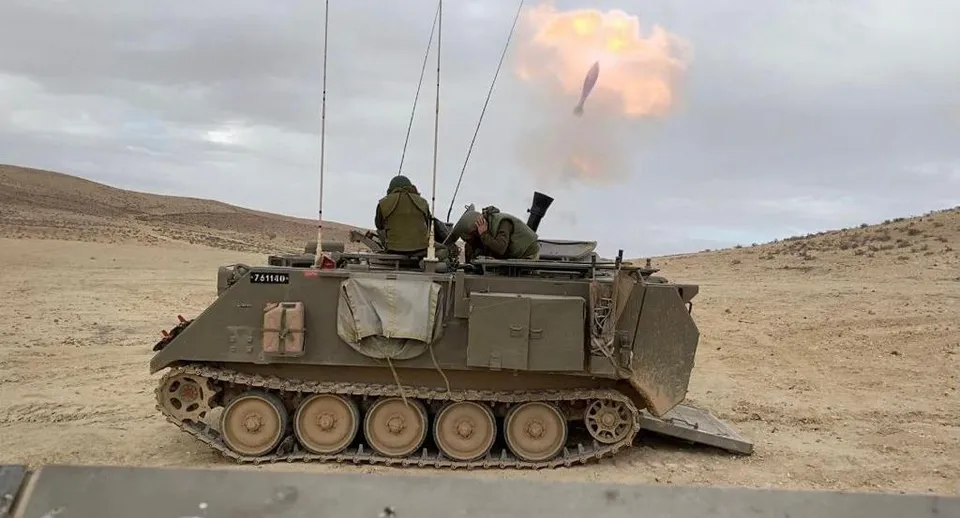
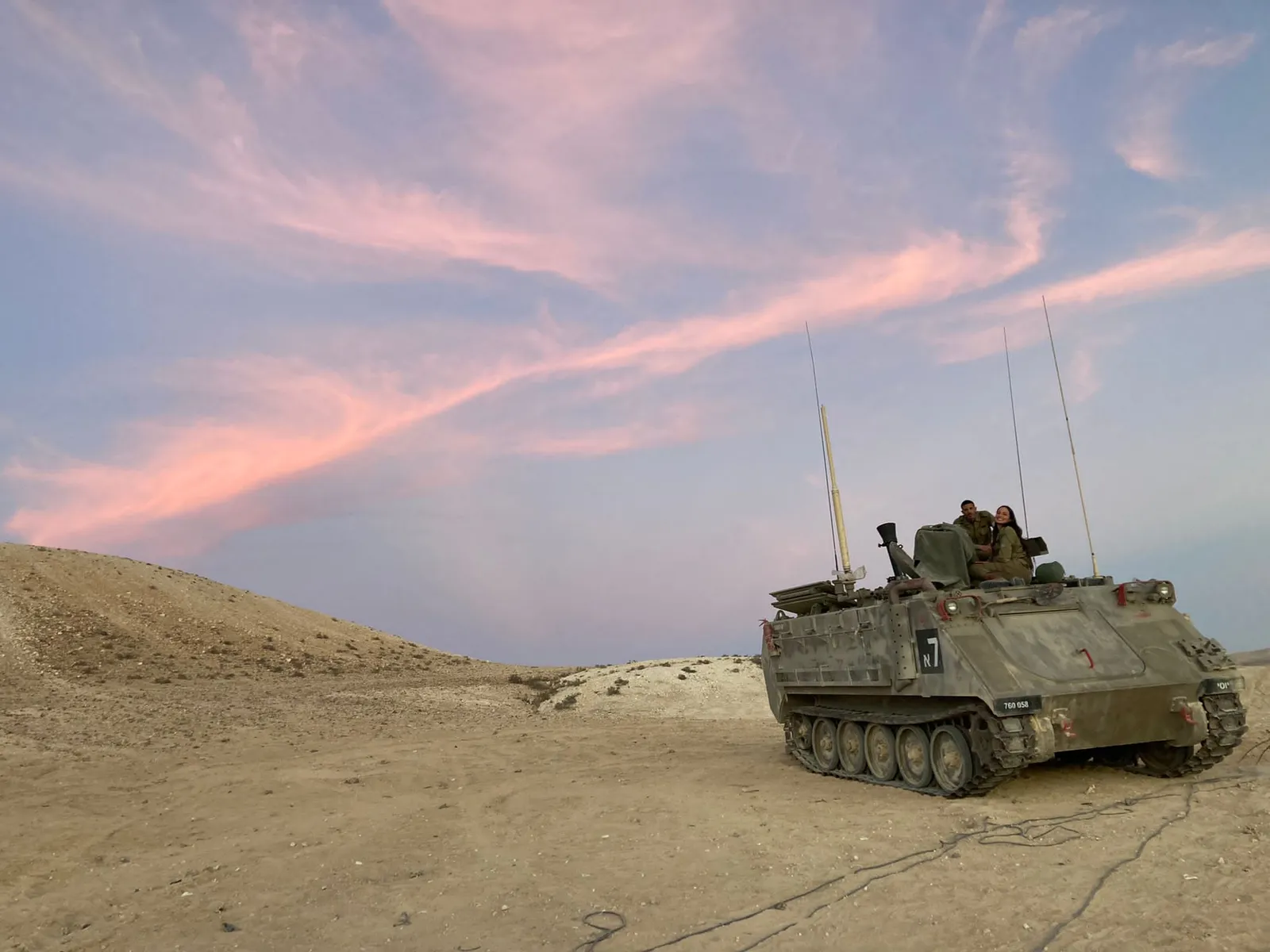
 | 120 mm mortar tube | Elbit's brochure says Iron Sting is fired from standard smoothbore 120 mm mortars; Breaking Defense described a Humvee-mounted launcher and noted the system can also be mounted on vehicles such as an M113. Sources: Iron Sting 2025 brochure, Breaking Defense Iron Sting inside look |
Elbit, the Ministry of Defense DDR&D, and the IDF Ground Forces said Iron Sting had completed final trials in southern Israel and could enter serial production.
Sources: Iron Sting reveal, March 2021
The IDF said Maglan made Iron Sting operational a few days after the war began and used it against Hamas launching posts in Gaza; Ynet separately reported early fire toward Gaza and Lebanon.
Sources: Meet the IDF's Newly Operational Iron Sting GPS and Laser-Guided Mortar Munition, Ynet Iron Sting first operational use
The Israeli Ministry of Defense said it signed an order worth over $220 million for thousands of Iron Sting munitions from Elbit Systems.
Sources: Israel MOD Iron Sting order, July 2024