- Side
- Israel

Fielded by Israel during Operation Pillar of Defense in the 2012 Gaza-Israel Conflict; an IDF account says Iron Dome soldiers intercepted more than 400 rockets fired from Gaza during the eight-day conflict.
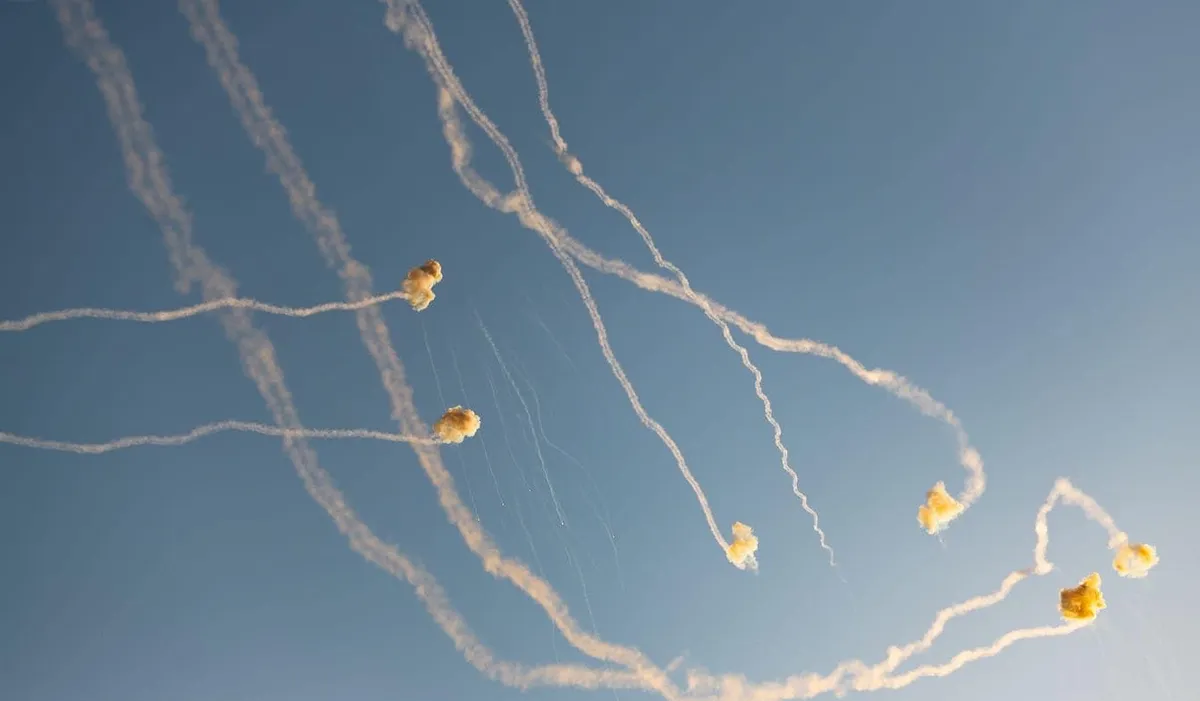
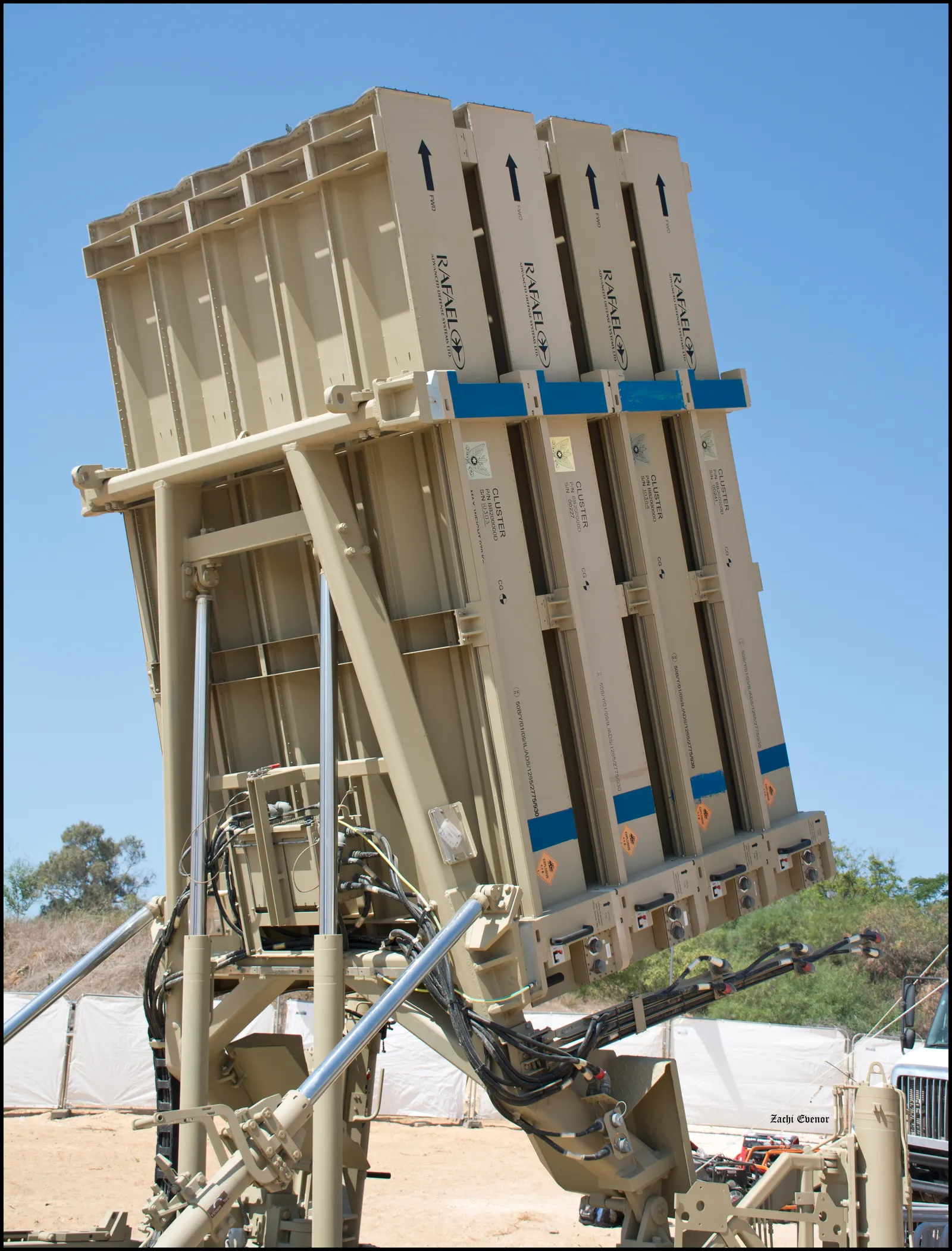
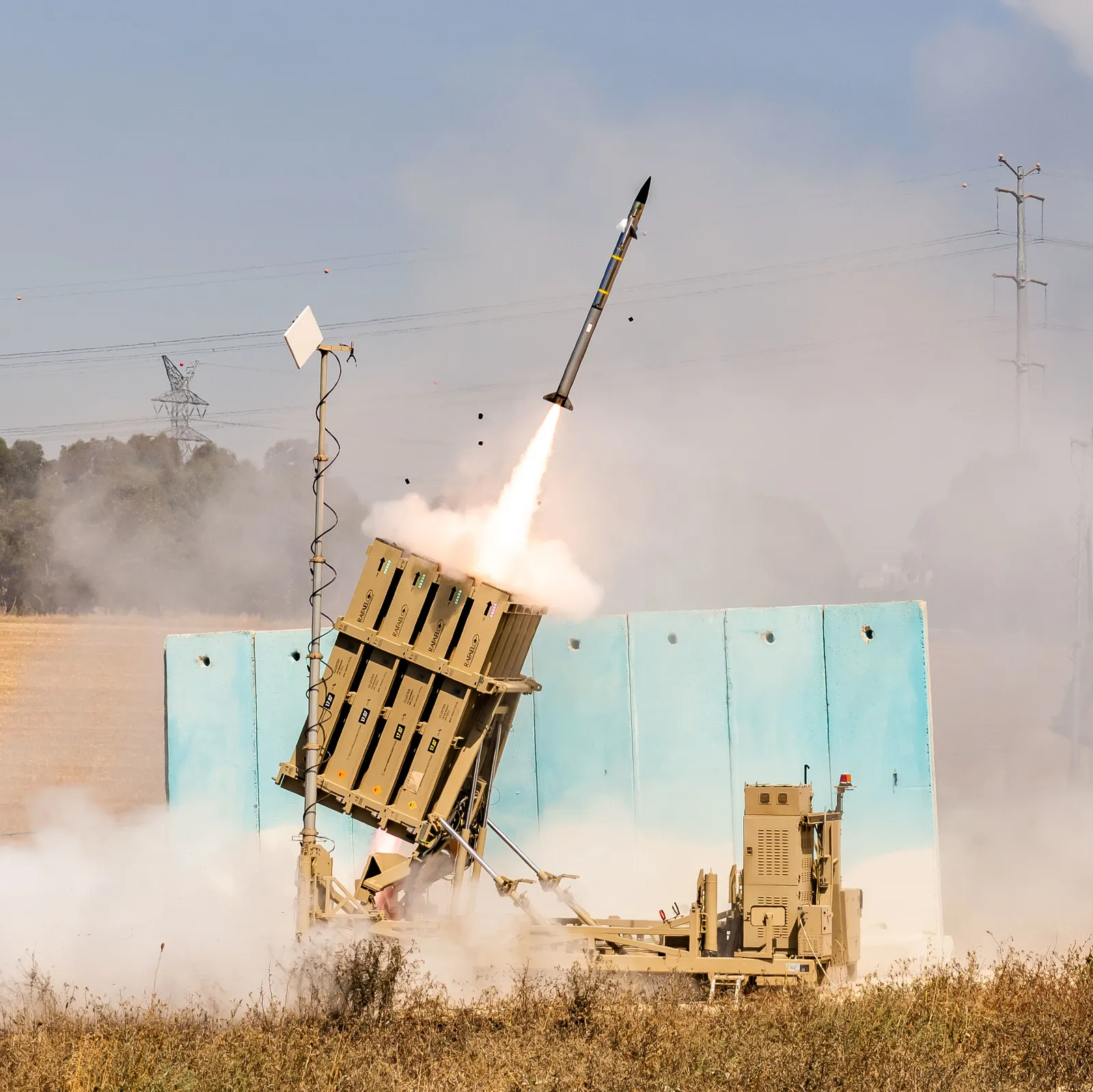
Iron Dome is an Israeli mobile short-range air-defense system built by Rafael and Israel Aerospace Industries to detect, track, and intercept rockets, artillery threats, and some UAVs before they hit populated areas. Known in Hebrew as Kippat Barzel, it became operational in 2011 and has documented combat use from the 2012 Gaza-Israel Conflict through later Gaza, Lebanon, and Iran-related fighting, including the April 2024 Iran-Israel exchange.
Fielded by Israel during Operation Pillar of Defense in the 2012 Gaza-Israel Conflict; an IDF account says Iron Dome soldiers intercepted more than 400 rockets fired from Gaza during the eight-day conflict.
Used by Israel during the 2014 Gaza War; CSIS says nine Iron Dome batteries were active at the start of the conflict and that the system successfully shot down 735 incoming rockets.
Used by Israel during the May 2021 Israel-Palestine Crisis to intercept rockets launched from Gaza, including Reuters-documented interceptions seen from Ashkelon on May 11, 2021.
Fielded by Israel during the May 2023 Israel-Gaza Conflict; Reuters imagery documented Iron Dome intercepting rockets launched from the Gaza Strip near Sderot on May 10, 2023.
Fielded by Israel in the 2023 Israel-Hamas War to intercept rockets fired from Gaza toward Israeli towns and cities, including IDF-documented Iron Dome activity during October 2023 rocket attacks.
Role detailsFielded by Israel in the 2023 Israel-Hezbollah Conflict, including a January 2024 Iron Dome interception of a UAV that crossed from Lebanon and August 2024 interceptions during a Hezbollah rocket and UAV salvo.
Fielded by Israel during the 2024 Iran-Israel Exchange; AP imagery directly documents Iron Dome launching in central Israel on April 14, 2024 to intercept missiles fired from Iran.
Role detailsUsed by Israel in the 2025 Israel-Iran Conflict as part of the layered air-defense network, with Reuters-captioned imagery documenting Iron Dome intercepting an Iranian missile during the June 2025 fighting.
Role detailsIron Dome is a battery-level system rather than a single launcher. Open sources describe it as a combination of radar, launchers, command functions, and interceptors that work together to decide which threats are worth engaging.
| Component | Reader takeaway | Source |
|---|---|---|
| System core | The IDF describes Iron Dome as a compilation of the technology itself, the launch machinery, the soldiers who operate it, and the commanders who supervise the network. | 16.05.2023 Israel's Life Saving Invention: The Iron Dome | IDF |
| Radar | CSIS identifies the EL/M-2084 multimission radar as the sensor that feeds the battery's engagement decisions. | Iron Dome (Israel) |
| Launcher load | CSIS says each launcher can hold up to 20 Tamir interceptors. | Iron Dome (Israel) |
| Battery composition | CSIS describes a battery as having three or four launchers plus a battle-management system and fire-control radar. | Iron Dome (Israel) |
Iron Dome names the land-based battery family; official manufacturer and partner material also describes shipboard and U.S.-producible family configurations.
| Variant | Configuration | Designation notes |
|---|---|---|
| C-Dome | Naval Iron Dome configuration | Rafael material presents C-Dome as the shipboard member of the Iron Dome family for naval air defense, and Rafael says the system made its first combat interception from an Israeli Navy Sa'ar 6 corvette in April 2024. Sources: IRON DOME Family brochure, C-DOME First Combat Interception |
| SkyHunter | U.S.-producible Iron Dome version | RTX says Raytheon and Rafael introduced SkyHunter as a system based on Iron Dome that can be produced in the United States for the U.S. and allied customers; later RTX reporting ties U.S. Tamir and SkyHunter production to the Marine Corps MRIC program. Sources: RTX Iron Dome System and SkyHunter Missile, R2S Tamir Production Contract |
Iron Dome batteries fire Tamir interceptors.
| Ammunition | Ammunition type | Firing evidence |
|---|---|---|
 | Interceptor missile | CSIS describes Iron Dome launchers as carrying up to 20 Tamir interceptors, and Rafael identifies Tamir as the interceptor missile inside the Iron Dome family. Sources: Iron Dome (Israel), IRON DOME Family brochure |
Calculator
Cost inputs are editable estimates. The default Tamir price uses CBS News reporting that interceptors cost about $40,000-$50,000 each, while CSIS reports up to 20 interceptors per launcher. The battery-level system cost is reported separately in open-source reporting.
CSIS says Israel began developing Iron Dome in 2007, launching the program that would produce the Tamir interceptor and the first operational batteries.
Sources: Iron Dome (Israel)
The Jerusalem Post reported that the first Iron Dome battery was deployed near Beersheba in March 2011 and intercepted a rocket days later.
Sources: Ukraine considers buying the Iron Dome - report
The IDF says Iron Dome's first operational use came during Operation Pillar of Defense in 2012, when more than 400 rockets were intercepted.
Sources: 16.05.2023 Israel's Life Saving Invention: The Iron Dome | IDF
An IDF explainer said that by October 2014 Iron Dome had intercepted more than 1,200 rockets, showing how quickly the system had moved from first deployment to repeated combat use.
Sources: Could the Iron Dome Protect You One Day? | IDF
CSIS Missile Threat reported that Azerbaijan's defense industry minister confirmed an Iron Dome purchase from Israel, while noting that the number of batteries was not disclosed.
Sources: Azerbaijan Purchases Iron Dome System from Israel
The U.S. Army says the United States and Israel signed an August 2019 agreement for two Iron Dome Defense System-Army batteries as an interim defense against cruise missiles, UAVs, rockets, artillery, and mortars.
Sources: Army executes Iron Dome Defense System live fire at White Sands Missile Range
At White Sands Missile Range, U.S. Army soldiers from 3-43 ADA used the acquired IDDS-A system to engage eight cruise-missile surrogate targets during coordinated performance and live-fire testing.
Sources: Army executes Iron Dome Defense System live fire at White Sands Missile Range
The U.S. Defense Department said the United States was sending two U.S. Iron Dome systems to Israel to bolster air-defense capabilities and civilian protection after the October 2023 attacks.
Sources: U.S. Military Continues Focus on Supporting Israel, Ukraine
Rafael said C-Dome, the naval Iron Dome configuration on Israeli Navy Sa'ar 6 corvettes, made its first combat interception of a hostile target at sea in April 2024.
Sources: C-DOME First Combat Interception
RTX said R2S received a US$1.25 billion contract for Tamir production in Camden, Arkansas, supporting Iron Dome and SkyHunter missiles for the Marine Corps MRIC program.
Sources: R2S Tamir Production Contract
Iron Dome remains primarily associated with Israeli air defense, but open sources also document U.S. interim procurement, Marine Corps integration of Iron Dome components, and limited export reporting.
| Context | Status | Source-backed note |
|---|---|---|
| Israel | Primary operator | RTX describes ten Iron Dome batteries protecting Israeli citizens and infrastructure, with each battery using launchers, radar, and Tamir interceptors. |
| U.S. Army IDDS-A | Interim procurement | The U.S. Army says two Iron Dome Defense System-Army batteries were acquired under an August 2019 U.S.-Israel agreement and delivered for testing before live-fire work at White Sands. |
| U.S. Marine Corps MRIC | Integrated components | Marine Corps Systems Command says MRIC incorporates technology from Iron Dome, while RTX later tied Tamir and SkyHunter production to the MRIC program. |
| Azerbaijan | Reported purchase | CSIS reported a confirmed purchase statement from Azerbaijan's defense industry minister, but did not identify the number of batteries or document combat use. |
| C-Dome | Naval family member | Rafael identifies C-Dome as the naval version of Iron Dome and says it achieved its first combat interception from an Israeli Navy Sa'ar 6 corvette in April 2024. |