Air Defense

ARBALET-K weapon station

Also known as
  • Arbalet-K
  • Arbalet K
  • Arbalet-K short range shipborne air defense system

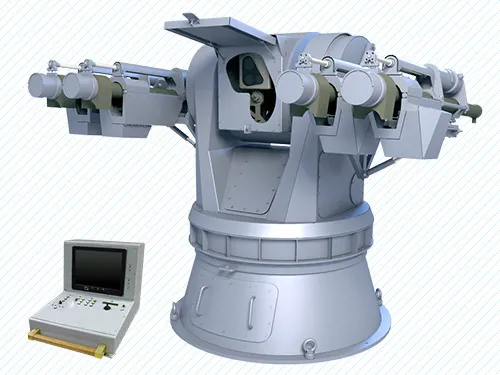
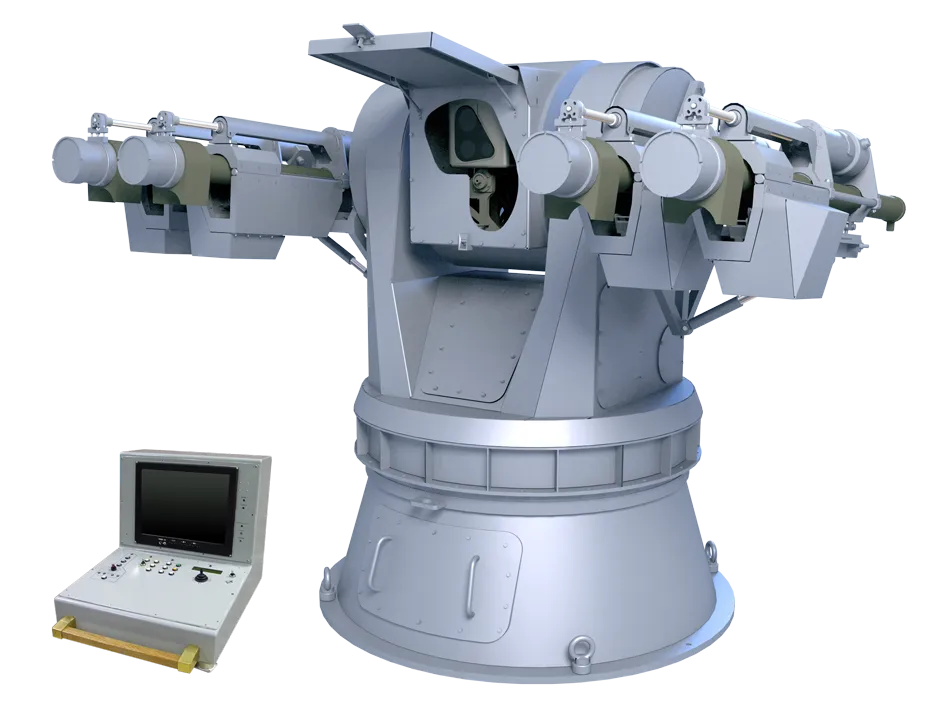
ARBALET-K is a Ukrainian shipborne short-range air-defense missile station from Luch that adapts Igla-type missiles to a naval mount with a thermal imager, control panel, and two twin-missile launch units. Public sources document shipment to Kazakhstan's navy, a December 2015 firing from the missile boat Oral, and a Ukrainian Lan/Vespa missile-boat design that listed it in the planned armament.

Design Notes

Luch presents ARBALET-K as a compact shipborne close-defense station that turns Igla-type missiles into a mounted naval air-defense fit rather than a shoulder-fired team weapon.

Missile fit

Two launch units carry two Igla-type missiles each, giving the station four ready missiles.

Fire-control package

The listed system components include a guidance device, thermal imager, control panel, traverse platform, and actuator base.

Engagement envelope

The manufacturer lists a 500-5,000 m range, 10 m minimum target altitude, and a traverse envelope from minus 150 to plus 150 degrees in heading.

Profile / Specs

Profile

Origin
Ukraine
Type
Shipborne short-range air-defense missile station
Service note
2010s-present
Designer
State Kyiv Design Bureau 'Luch'
Produced
2010s-present

Specifications

Role
Short-range shipborne air defense
System components
Base with actuators, control panel, guidance device, thermal imager, traverse platform, two launch units, spares and accessories, and operating documentation
Missile fit
Two launching units with two Igla-type missiles on each unit
Targets
Jet, propjet, propeller-driven aircraft, and helicopters
Engagement range
500-5,000 m
Minimum altitude
10 m
Maximum altitude
2,000 m against jet aircraft on head-on courses; 2,500 m against jet aircraft in pursuit; 3,000-3,500 m against helicopters and propjet aircraft depending on course
Target speed
360 m/s head-on; 320 m/s pursuit
Target detection
12 km by day; 7 km by night
Traverse
Heading from minus 150 to plus 150 degrees; elevation from minus 25 to plus 60 degrees; roll ±25 degrees
Documented naval fit
Project 0250 Bars-type Kazakhstan missile-artillery boats with four Igla MANPADS missiles, reported in 2018 Ukrainian modernization coverage
Dimensions
1,730 x 2,245 x 1,590 mm
Weight
1,140 kg
Operating temperature
Minus 40 to plus 60 degrees Celsius
Compatible Missiles

Luch identifies Igla-type air-defense guided missiles as the missile family used by the station.

Launched itemItem typeLaunch evidence
Igla, Man-portable infrared-homing surface-to-air missile system, Air DefenseIglaInfrared-guided surface-to-air missile family

Luch's product page says ARBALET-K uses air-defense guided missiles of Igla type and has two launch units with two Igla-type missiles on each unit.

Sources: ARBALET-K short range shipborne air defense system

Service Context

Open sources reviewed for this record document export, shipboard testing, and proposed installation context rather than direct battlefield employment. That makes ARBALET-K a relationship-only support page in the catalog.

Kazakhstan delivery

Army Recognition reported a 2014 Luch shipment of ARBALET-K and Bar'er-VK systems to the Navy of Kazakhstan, with an earlier batch already in operation.

Caspian test firing

Tumba.kz and Eurasianet reported that Kazakhstan conducted training or test firing from the missile-artillery ship Oral in December 2015.

Project 0250 Bars fit

Interfax-Ukraine reported that Ukrainian equipment supplied for Kazakhstan's Bars-type Project 0250 boats included ARBALET-K with four Igla MANPADS missiles.

Ukrainian boat design

UNIAN reported that the Lan/Vespa missile-boat project planned to include ARBALET-K among a domestic Ukrainian weapons package.

Timeline

ARBALET-K weapon station Key Events

  1. Luch ships Arbalet-K to the Navy of Kazakhstan

    Army Recognition reported that Luch shipped another batch of Arbalet-K systems to the Navy of Kazakhstan and said an earlier batch was already in operation.

    Sources: Ukroboronprom Supplied Missile Systems "Arbalet-K" and "Bar'er-Vk" to Navy of Kazakhstan

  2. Kazakhstan tests Arbalet-K from the missile boat Oral

    Tumba.kz and Eurasianet reported that Kazakhstan's Ministry of Defense tested or conducted training fire from the Arbalet-K air-defense missile system on the missile-artillery ship Oral in the Caspian Sea.

    Sources: Kazakhstan Navy training fire from Arbalet-K, Following Russia, Kazakhstan Tests Missile On Caspian

  3. Ukraine offers modernization path for Kazakhstan Bars-type boats

    Interfax-Ukraine reported that Ukrainian-supplied equipment for Kazakhstan's Project 0250 Bars-type missile-artillery boats included ARBALET-K with four Igla MANPADS missiles.

    Sources: Ukroboronprom Bars boat modernization offer

  4. Lan missile-boat project names Arbalet-K among planned weapons

    UNIAN reported that the Lan missile-boat project for Ukraine's Naval Forces would include Arbalet-K in its planned domestic armament package.

    Sources: Designers reveal missile boat to be manufactured for Ukrainian Navy

Media

ARBALET-K weapon station Images

Related Weapon Systems
SARMAT system, Remote-controlled anti-tank missile combat module, Infantry WeaponsInfantry WeaponsSARMAT systemRemote-controlled anti-tank missile combat moduleThe SARMAT system is a Ukrainian Luch remote-controlled anti-tank missile combat module for combat vehicles, light ships, and coast guard motorboats. It combines a rotating launcher, laser-beam guided RK-3 or RK-2S missile options, a machine gun, remote-control hardware, and optional thermal imaging; Ukrainian sources later documented SARMAT-equipped Spartans and other Luch anti-tank systems in front-line service during the 2014 Russia-Ukraine War.
Project 1164 Atlant / Slava-class guided-missile cruiser, Guided-missile cruiser, Naval SystemsNaval SystemsProject 1164 Atlant / Slava-class guided-missile cruiserGuided-missile cruiserThe Project 1164 Atlant / Slava-class guided-missile cruiser is a Soviet-designed surface-strike cruiser class built at the 61 Kommunara yard in Mykolaiv. Its large angled anti-ship missile battery, S-300F Fort area air defense, Osa-M point defense, AK-130 gun, and helicopter deck made the class a Russian fleet flagship type, with Moskva documented in the 2008 Russo-Georgian War, Russia's Syria operation, and the 2022 phase of the Russia-Ukraine War before its sinking in the Black Sea.
Paltus-class submarine, Nuclear-powered special-purpose mini-submarine, Naval SystemsNaval SystemsPaltus-class submarineNuclear-powered special-purpose mini-submarineThe Paltus-class submarine is the NATO reporting name for Russia's Project 18511 Halibut nuclear-powered special-purpose deep-water station family. Open sources describe two boats, AS-21 and AS-35, as improved follow-ons to the Project 1851 X-Ray/Nelma design, built at the Leningrad/Admiralty yard for carrier-borne deep-sea missions, diver-support work, and GUGI-linked seabed operations; published dimensions vary widely because the class remains highly opaque.
Skif/Stugna-P, Man-portable anti-tank guided missile system, Infantry WeaponsInfantry WeaponsSkif/Stugna-PMan-portable anti-tank guided missile systemSkif, known in Ukrainian service as Stugna-P, is a Ukrainian laser-beam-riding anti-tank guided missile system from State Kyiv Design Bureau Luch. The tripod launcher, guidance unit, thermal imager, and remote-control panel let crews fire from covered positions up to 50 m from the launcher, while RK-2-series 130 mm and 152 mm missiles give infantry and mobile teams a long-range anti-armor weapon in the 2014 Russia-Ukraine War.
Gravehawk, Containerized short-range surface-to-air missile system, Air DefenseAir DefenseGravehawkContainerized short-range surface-to-air missile systemGravehawk is a UK-designed, Denmark-backed short-range air-defense system built for Ukraine by adapting Soviet-era R-73 air-to-air missiles for ground launch from a containerized twin-rail launcher. Official UK and parliamentary statements place it in Ukraine's wartime air-defense network, with prototypes delivered and a follow-on batch intended to help protect cities, troops, infrastructure, and energy facilities from Russian aerial attacks.

Sources