Air Defense

Akash Air Force Launcher

Also known as
  • AAFL
  • Akash launcher
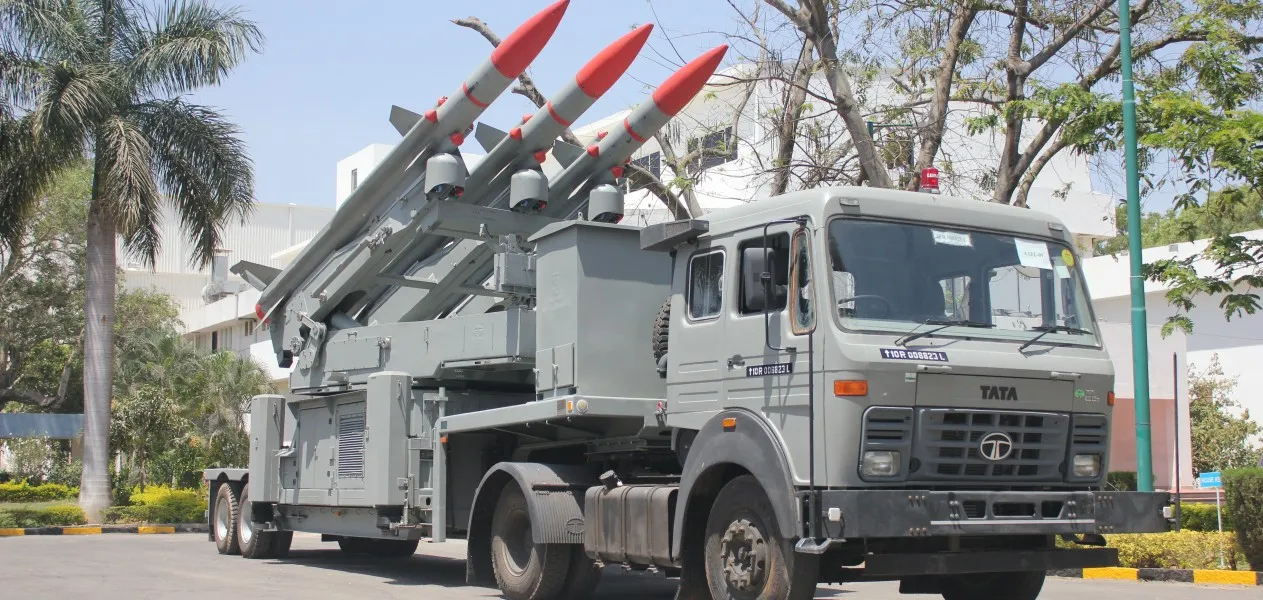
  • Akash Air Force Launcher (AAFL)

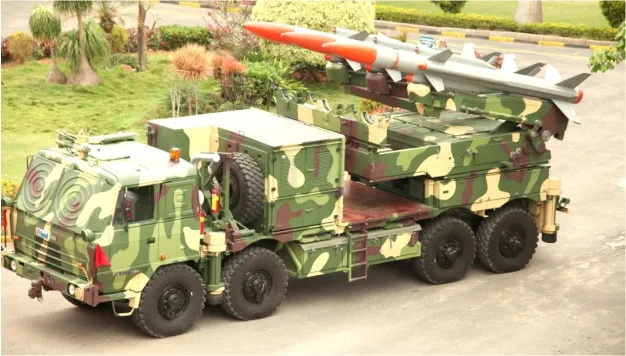
Akash Air Force Launcher (AAFL) is a Tata Advanced Systems mobile launch platform jointly developed with DRDO for the Indian Air Force's Akash medium-range surface-to-air missile units. The trailer-mounted, self-powered launcher carries up to three Akash missiles, supports single or salvo firing, and works as one node in a firing unit with control, radar, loading, and maintenance vehicles.

Profile / Specs

Profile

Origin
India
Type
Trailer-mounted mobile launcher for Akash medium-range surface-to-air missiles
Service note
Modern Indian mobile air-defense launcher
Designer
Tata Advanced Systems / DRDO

Specifications

Missile capacity
Up to 3 Akash missiles
Launch modes
Single or salvo
Launcher architecture
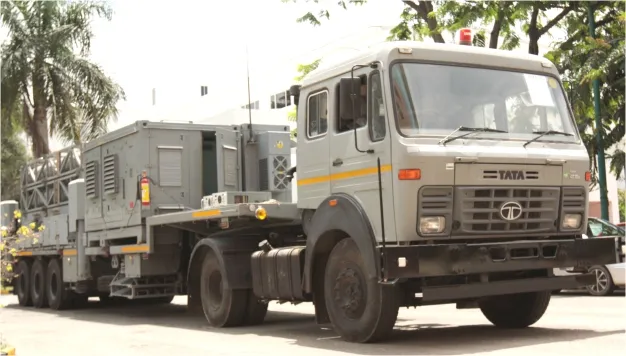
Self-powered electro-mechanical launcher mounted on a trailer and towed by a prime mover
Automation
Fully automated checkout and auto-launch
Stabilization
Electro-mechanical outrigger jacks with auto-leveling
Communications
Dual-redundant RF wireless and physical link to the flight control centre
Fire unit role
Four AAFLs form part of an Akash firing unit with a Flight Control Centre, Flight Level Radar, Transporter-cum-Loader Vehicle, and Flight Equipment Maintenance Vehicle
Operating environment
All-weather day/night operation in harsh terrain
Parent system guidance
Akash uses command guidance with radar support; BEL describes system-level group and autonomous operating modes
Akash System Context

AAFL is best read as a launch node inside the larger Akash weapon system. DRDO and BDL describe Akash as a mobile surface-to-air missile system for protecting vulnerable points and areas, while BEL describes the system-level radar, command-guidance, and multi-target engagement architecture that gives launchers their firing context.

System role

Akash provides area and point air defense against threats such as aircraft, helicopters, and UAVs.

Networked engagement

BEL describes real-time multi-sensor processing, threat evaluation, and simultaneous engagement of multiple targets from different directions.

Mobility

BDL says the entire weapon system is configured on mobile platforms with road and rail transportability and quick deployment capability.

Sources: DRDO Industry Partner - Akash; BDL Akash Weapon System; BEL Akash Missile System.

Launched Missile

Tata Advanced Systems identifies AAFL as the Air Force launcher platform for Akash medium-range surface-to-air missiles.

Launched itemItem typeLaunch evidence
Akash, Mobile short-range surface-to-air missile system, Air DefenseAkashSurface-to-air missile system

The AAFL product page says the launcher can transport and launch up to three Akash medium-range surface-to-air missiles in single or salvo mode.

Sources: Tata Advanced Systems - Akash Air Force Launcher

Launcher Architecture

Tata describes AAFL as a trailer-mounted, self-powered launcher built for mobile Akash air-defense units. The launcher handles checkout and launch automation, levels itself with electro-mechanical outrigger jacks, and keeps both RF wireless and physical communications links to the flight control centre.

Ready load

Up to three Akash medium-range surface-to-air missiles can be transported and launched from one AAFL.

Fire unit

Four AAFLs form part of an Akash firing unit with a Flight Control Centre, Flight Level Radar, Transporter-cum-Loader Vehicle, and Flight Equipment Maintenance Vehicle.

Command link

The launcher keeps dual-redundant communications with the flight control centre through RF wireless and physical links.

Sources: Tata Advanced Systems - Akash Air Force Launcher; BEL Akash Missile System.

Timeline

Akash Air Force Launcher Key Events

  1. 100th AAFL delivery reported

    Pro MFG Media reported that Tata Advanced Systems and L&T jointly delivered the 100th Akash Air Force Launcher for the Indian Air Force at TASL's Vemagal facility.

    Sources: Pro MFG 100th AAFL Delivery

  2. AAFLs used in Astrashakti firing-unit demonstration

    India Today reported that an IAF Akash firing unit at Astrashakti used two AAFL launchers with five armed missiles while engaging four unmanned aerial targets in an exercise setting.

    Sources: India Today Astrashakti AAFL Exercise

Media
Related Weapon Systems
Mobile Autonomous Launcher, Single-vehicle land launcher that carries two or three canisterised BrahMos missiles, Support EquipmentSupport EquipmentMobile Autonomous LauncherSingle-vehicle land launcher that carries two or three canisterised BrahMos missilesThe Mobile Autonomous Launcher is BrahMos Aerospace's road-mobile land launcher for the BrahMos missile family. It is built on a high-mobility 12x12 carrier, carries two or three canisterised missiles depending on configuration, and combines protected crew space, fire control, command, control, communications, and power systems for single or salvo launch from one vehicle.
A200/M20 missile launcher, Road-mobile guided rocket and short-range ballistic missile launcher, ArtilleryArtilleryA200/M20 missile launcherRoad-mobile guided rocket and short-range ballistic missile launcherThe A200/M20 launcher is a Chinese road-mobile launch platform marketed around ALIT/CASC A200 and A300 guided rockets plus CASIC M20 short-range ballistic missiles. Public export reporting describes A200, A300, and M20 weapons sharing a general launcher platform, while the Belarusian Polonez family shows an A200-derived launcher path and the AR2/PHL-03 remains a separate Ethiopian 300 mm MLRS. In the 2020 Tigray War, Tigrayan forces captured elements of Ethiopia's A200/M20 force and used the capability for deep strikes before Ethiopian government forces recaptured or found abandoned launchers, missiles, rocket canisters, and loaders.
Advanced Self Protection Jammer, Electronic warfare jammer, Electronic WarfareElectronic WarfareAdvanced Self Protection JammerElectronic warfare jammerThe Advanced Self Protection Jammer is an Indian DRDO airborne electronic-warfare pod associated with the HAL Tejas self-protection fit. Official Indian releases describe it as protecting the aircraft against acquisition radars, fire-control radars, anti-aircraft artillery, and airborne multirole radars, while later procurement approvals extended related external self-protection jammer pods into Su-30MKI electronic-warfare planning.

Sources