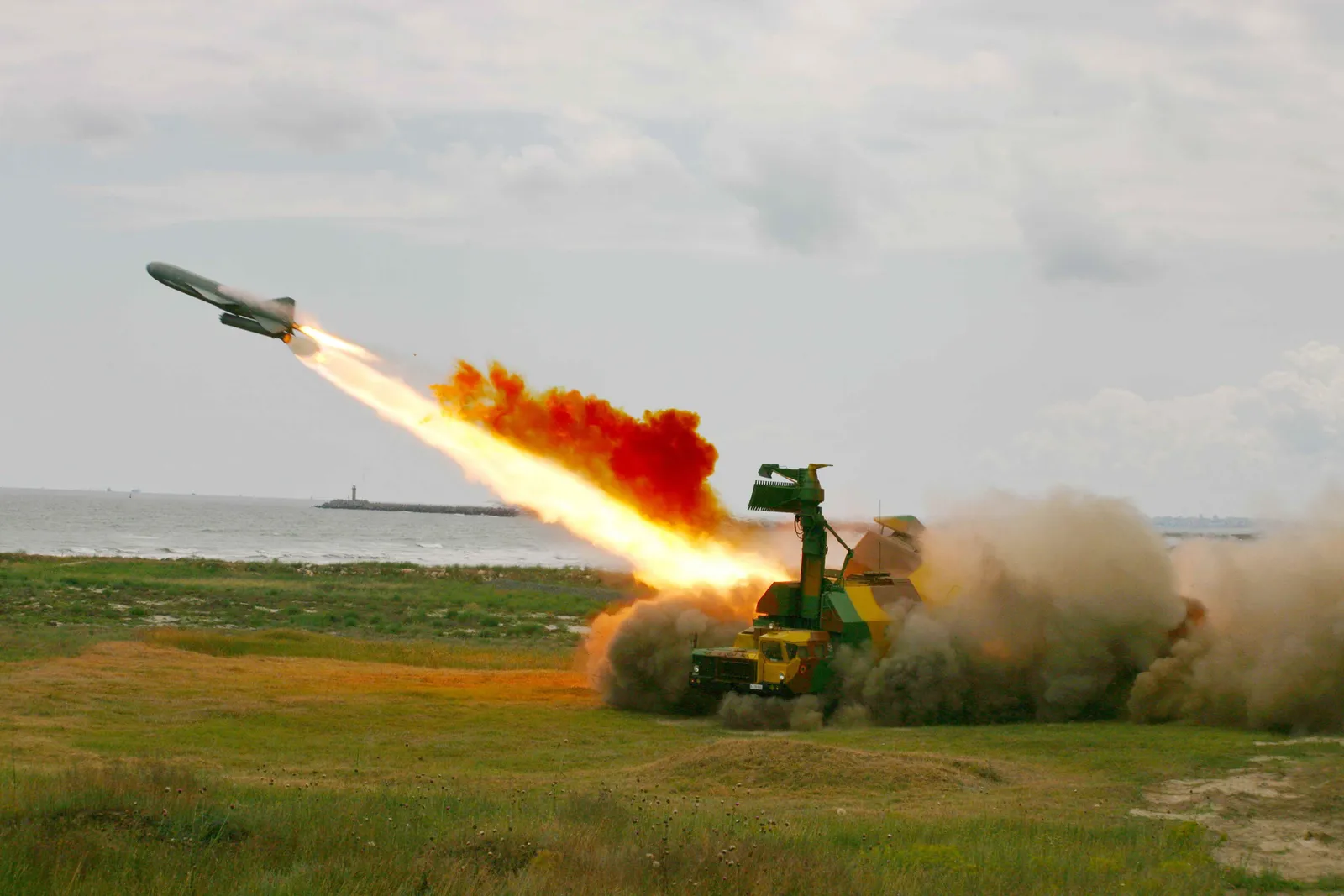

Houthi-aligned forces held P-21/P-22 Rubezh/Styx stocks seized from Yemeni government forces after 2014; UN reporting later identified a Rubezh/P-15 coastal anti-ship missile displayed at Hudaydah, while launcher-fired combat use remains unconfirmed.
Role detailsNaval Systems
4K51 Rubezh coastal-defense missile
Also known as
- 4K51 Rubezh
- 3P51 Rubezh
- 3P51M Rubezh
- 3P51
- 3P51M
- SSC-3 Styx
- SS-C-3 Styx
- Rubezh
- Rubesh
- Rubezh-E
- 4K51E Rubezh-E
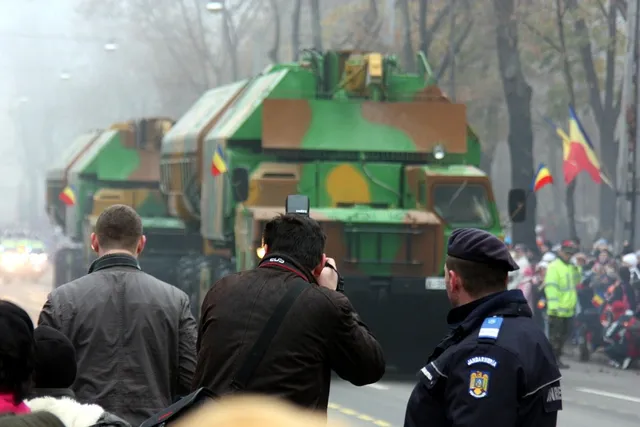
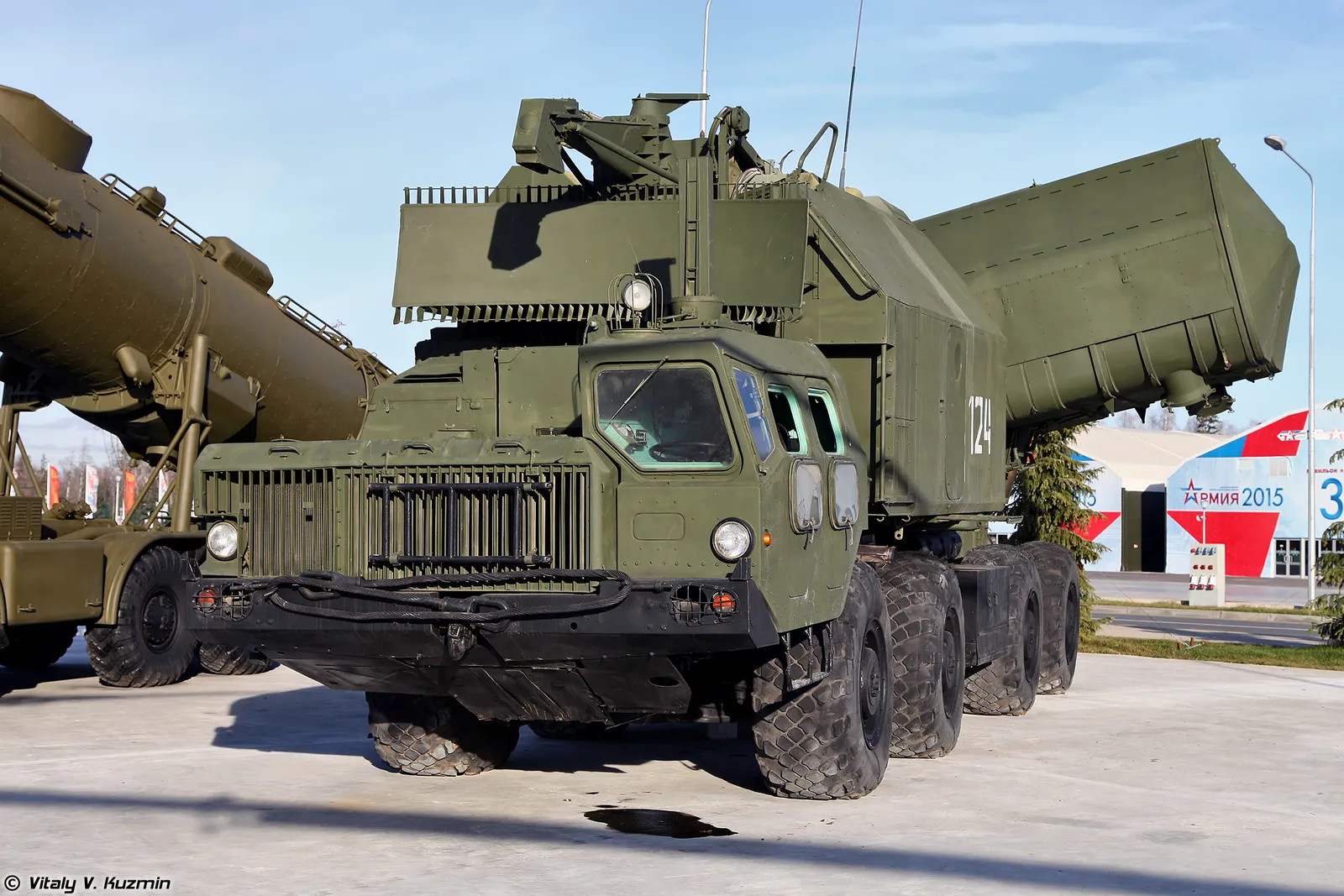
The 4K51 Rubezh is a Soviet mobile coastal-defense system that puts radar, fire-control equipment, and twin P-15 Termit launch containers on a single MAZ-543-family 8x8 vehicle. Its compact TELAR layout made it exportable and self-contained compared with earlier Soviet coastal batteries; in the 2014 Yemen Civil War, Houthi forces acquired Rubezh/P-15 stocks from Yemeni military inventories and continued to display the type as part of their anti-shipping arsenal.
Role in Conflicts
Profile / Specs
Profile
- Origin
- Soviet Union
- Built by
- KBM Kolomna
- Type
- Mobile coastal-defense missile system
- Service note
- Late Cold War to present
- Designer
- KBM Kolomna
- Designed
- 1970-1978
- Produced
- 1978-?
Specifications
- Crew
- 5 on the 3P51M launcher vehicle
- Launcher
- 3P51/3P51M TELAR on MAZ-543/MAZ-543M 8x8 chassis with twin KT-161 launch containers
- Missile
- P-15M, P-20/P-21, or P-22 Termit / SS-N-2 Styx anti-ship cruise missile family
- Range
- 8-80 km with P-15M-class missiles
- Radar and fire control
- 3Ts-25 Garpun surface-search radar and command module on the launcher vehicle; earlier sources also mention MR-331 Rangout/Square Tie fits
- Battery composition
- Typical battery of four 3P51M launch vehicles, four KrAZ-255B transloaders, optional mast-mounted radar, and support vehicles
- Launcher weight
- About 43.5 t at combat load for 3P51M
- Dimensions
- About 13.95 m long and 3.0 m wide for 3P51M
- Mobility
- About 60 km/h on roads
Variants
The public 4K51 designation covers the coastal-defense system, while 3P51 and 3P51M identify the self-propelled launch and fire-control vehicle generations. Rubezh-E / 4K51E is the export form of this Termit-family system and should not be confused with the later Kh-35UE-based Rubezh-ME.
| Variant | Configuration | Designation notes |
|---|---|---|
| 3P51 | Original launch/fire-control vehicle | Original production vehicle on the earlier MAZ-543 chassis; WeaponSystems.net notes that pre-production vehicles may have used the MR-331 Rangout radar before Garpun-equipped production vehicles. Sources: 4K51 Rubezh |
| 3P51M | Improved launcher vehicle | Improved production model introduced in the 1980s on the MAZ-543M chassis, described by WeaponSystems.net as the most common version. Sources: 4K51 Rubezh, Missilery.info 4K51 Rubezh |
| Rubezh-E / 4K51E | Export system | Export Rubezh form associated with P-21 and P-22 anti-ship missiles; Russian defense-industry references distinguish it from the later Rubezh-ME system. Sources: Raduga Rubezh-E Export History, Raduga Production Chronology |
Ammunition Fired
The 4K51 Rubezh is the coastal firing system, while P-15 Termit / SS-N-2 Styx is the anti-ship missile family carried in its rear twin launcher.
| Ammunition | Ammunition type | Firing evidence |
|---|---|---|
 | Anti-ship cruise missile | The 3P51/3P51M launch vehicle carries two ready-to-fire P-15-family missiles in a rear rotating twin launcher; WeaponSystems.net identifies the 4K51 as firing the P-15 Termit / SS-N-2 Styx missile. Sources: 4K51 Rubezh, P-15 Termit (SS-N-2 Styx) |
Launcher And Missile Architecture
Rubezh is unusually compact for a Cold War coastal missile battery because the launch tubes, radar, fire-control equipment, and command spaces are all carried on the 3P51/3P51M vehicle. That makes the launcher the central combat element rather than only a transporter for a separate battery radar.
Self-contained TELAR
WeaponSystems.net describes the 3P51 vehicle as the sole component of the 4K51 firing system, with the twin launcher, command module, and radar on one MAZ-543-family chassis.
Missile dependency
The system's reach and terminal options depend on the P-15/P-20/P-21/P-22 Termit missile family; public references place the maximum range for P-15M-class rounds at about 80 km.
Battery scale
Missilery.info describes a battery with four launchers and four transport-reloading vehicles, giving the battery sixteen missiles when reload vehicles are included.
Sources: 4K51 Rubezh; Missilery.info 4K51 Rubezh; Soviet/Russian Cruise Missiles.
Timeline
4K51 Rubezh coastal-defense missile Key Events
Rubezh development begins
Missilery.info places the start of Rubezh shore-based missile-system development in 1970, using the P-15M Termit missile family rather than a new anti-ship missile.
Sources: Missilery.info 4K51 Rubezh
State trials period
WeaponSystems.net lists Soviet state trials for the 4K51 Rubezh in 1975-1977 before service adoption.
Sources: 4K51 Rubezh
Adopted by the Soviet Navy
Missilery.info states that the Rubezh complex with the upgraded Termit-R missile was adopted by the USSR Navy on 22 October 1978.
Sources: Missilery.info 4K51 Rubezh
3P51M chassis upgrade
In the first half of the 1980s, the self-propelled launcher was upgraded as the 3P51M on the improved MAZ-543M chassis.
Sources: Missilery.info 4K51 Rubezh, 4K51 Rubezh
Rubezh-E export form documented
A Russian defense-industry chronology lists Rubezh-E in 1983, while Raduga-linked reporting describes export Rubezh-E complexes with P-21 and P-22 missiles.
Sources: Raduga Production Chronology, Raduga Rubezh-E Export History
Rubezh shown at Hudaydah parade
The UN Panel of Experts on Yemen identified a Rubezh anti-ship cruise missile shown in Hudaydah among Houthi-displayed anti-ship systems.
Sources: UN Panel Yemen 2023 Final Report
Media
4K51 Rubezh coastal-defense missile Videos
4K51 Rubezh coastal-defense missile Images
Related Weapon Systems


Sources
4K51 RubezhPublisher: WeaponSystems.net | Note: Supports 4K51 Rubezh launcher background, developer/producer context, service status, system specifications, and the direct firing relationship to the P-15 Termit missile. | Accessed: 2026-07-01Missilery.info 4K51 RubezhPublisher: Missilery.info | Note: Supports Rubezh development chronology, October 1978 Soviet Navy adoption, 3P51M MAZ-543M upgrade, battery composition, missile types, range, speed, launch mass, and autonomous target-detection context. | Accessed: 2026-07-01Soviet/Russian Cruise MissilesPublisher: Air Power Australia | Note: Supports 3P51 TELAR layout, MAZ-543 chassis, twin KT-161 launch tube design, P-15M/P-21/P-22 armament, and Garpun-E targeting-system context. | Accessed: 2026-07-01Raduga Rubezh-E Export HistoryPublisher: Dubna Press | Note: Supports export Rubezh-E context and the P-21/P-22 missile association reported for Raduga-linked self-propelled coastal anti-ship complexes. | Accessed: 2026-07-01Raduga Production ChronologyPublisher: Oboronprom | Note: Supports the Russian defense-industry chronology that lists the Rubezh coastal missile complex in 1978 and Rubezh-E in 1983. | Accessed: 2026-07-01P-15 Termit (SS-N-2 Styx)Publisher: Missile Defense Advocacy Alliance | Note: Supports P-15 Termit missile background, designer/producer, range, and launch-role specifications used by the 4K51 Rubezh system. | Accessed: 2026-07-01Houthi Explainer: Military ArsenalPublisher: The Iran Primer / USIP | Note: Supports 2014 Yemen Civil War direct-use context: Rubezh/P-15 anti-ship missiles were acquired by Houthi forces from Yemeni military stocks. | Accessed: 2026-07-01UN Panel Yemen 2023 Final ReportPublisher: United Nations Security Council | Note: Supports 2014 Yemen Civil War direct-use context: the Panel identified a Rubezh/P-15 coastal anti-ship missile displayed by Houthi forces at Hudaydah and cautioned that it could not confirm all displayed systems were operational. | Accessed: 2026-07-01TWZ Houthi Anti-Ship Missile ArsenalPublisher: The War Zone | Note: Supports 2014 Yemen Civil War direct-use context: reporting says Houthi forces obtained P-21/P-22 Rubezh coastal-defense missiles from Yemeni government stocks and that their remaining operational status is unclear. | Accessed: 2026-07-01The Houthi War MachinePublisher: Combating Terrorism Center at West Point | Note: Supports 2014 Yemen Civil War direct-use context: Ansar Allah took control of Yemen's coastal missile batteries and used pre-existing anti-ship missiles, with the source identifying likely older P-21 Styx II among those systems. | Accessed: 2026-07-01Tank Encyclopedia BROM 4K51 RubezhPublisher: Tank Encyclopedia | Note: Supports background on 4K51 Rubezh/BROM, its MAZ-543 chassis, P-15M Termit missile fit, and Yugoslav-service context used to identify the selected Tank Encyclopedia explainer video. | Accessed: 2026-07-01Romanian 4K51 Rubezh missile launchPublisher: Wikimedia Commons | Note: Supports image provenance and CC BY-SA 3.0 licensing for the Romanian 4K51 Rubezh missile launch photo. | Accessed: 2026-07-01Romanian missile launchersPublisher: Wikimedia Commons | Note: Supports image provenance and CC BY-SA 2.0 licensing for the Romanian 4K51 Rubezh parade launcher photo. | Accessed: 2026-07-01ParkPatriot2015part5-17Publisher: Wikimedia Commons | Note: Supports image provenance and CC BY-SA 3.0 licensing for the 4K51 Rubezh TELAR photo. | Accessed: 2026-07-01