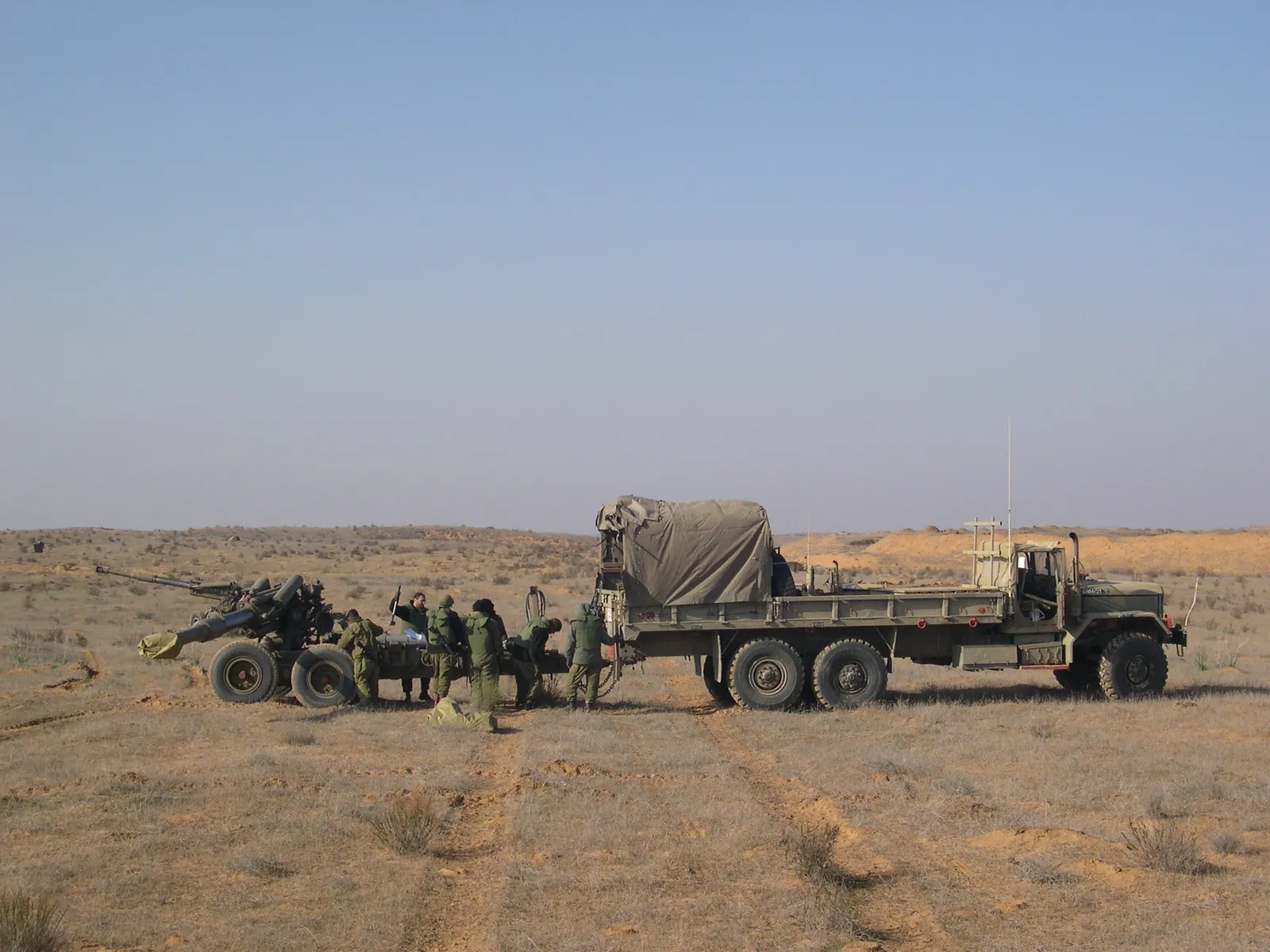
During Operation 1027, 3BHA resistance forces were reported to have seized Israeli-made Soltam Systems M-71 155 mm howitzers from junta forces; available sourcing supports capture/possession, not confirmed firing after capture.
155 mm Soltam M-71
- Soltam M-71
- M-71
- M71
- 155mm Soltam M-71
- M-71 155mm Towed Howitzer
- Soltam 155 mm M-71 gun-howitzer
- G4
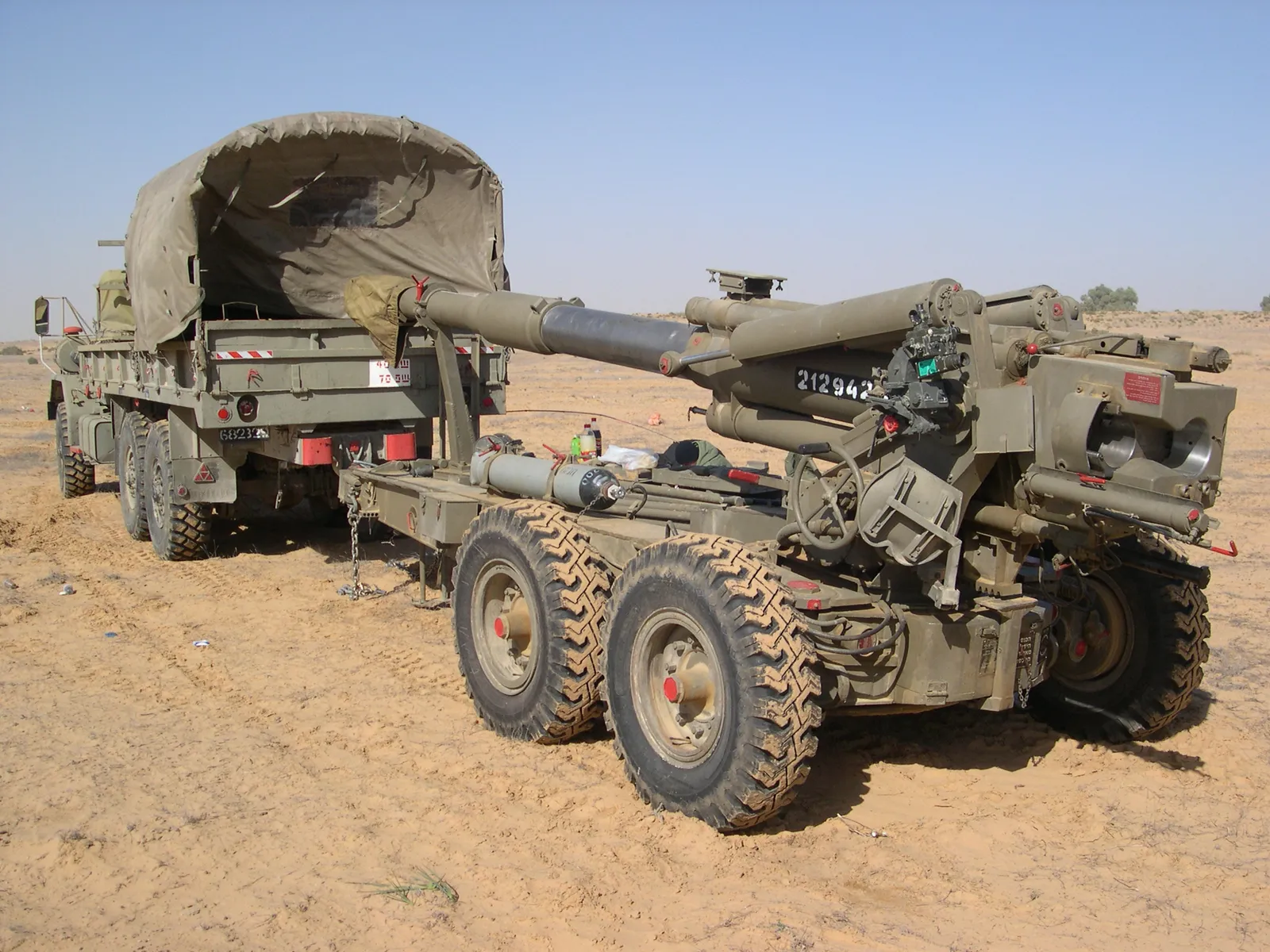
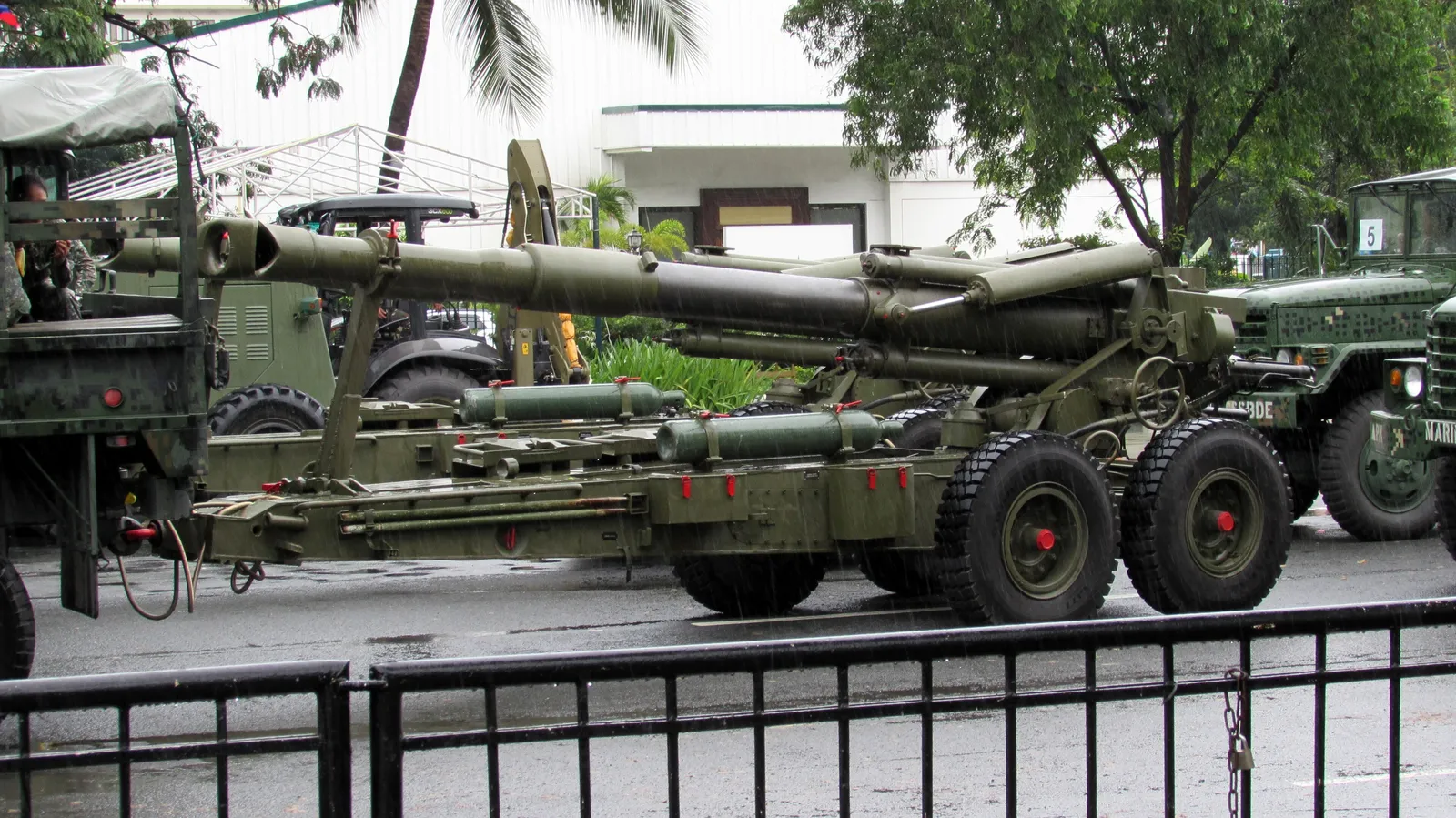
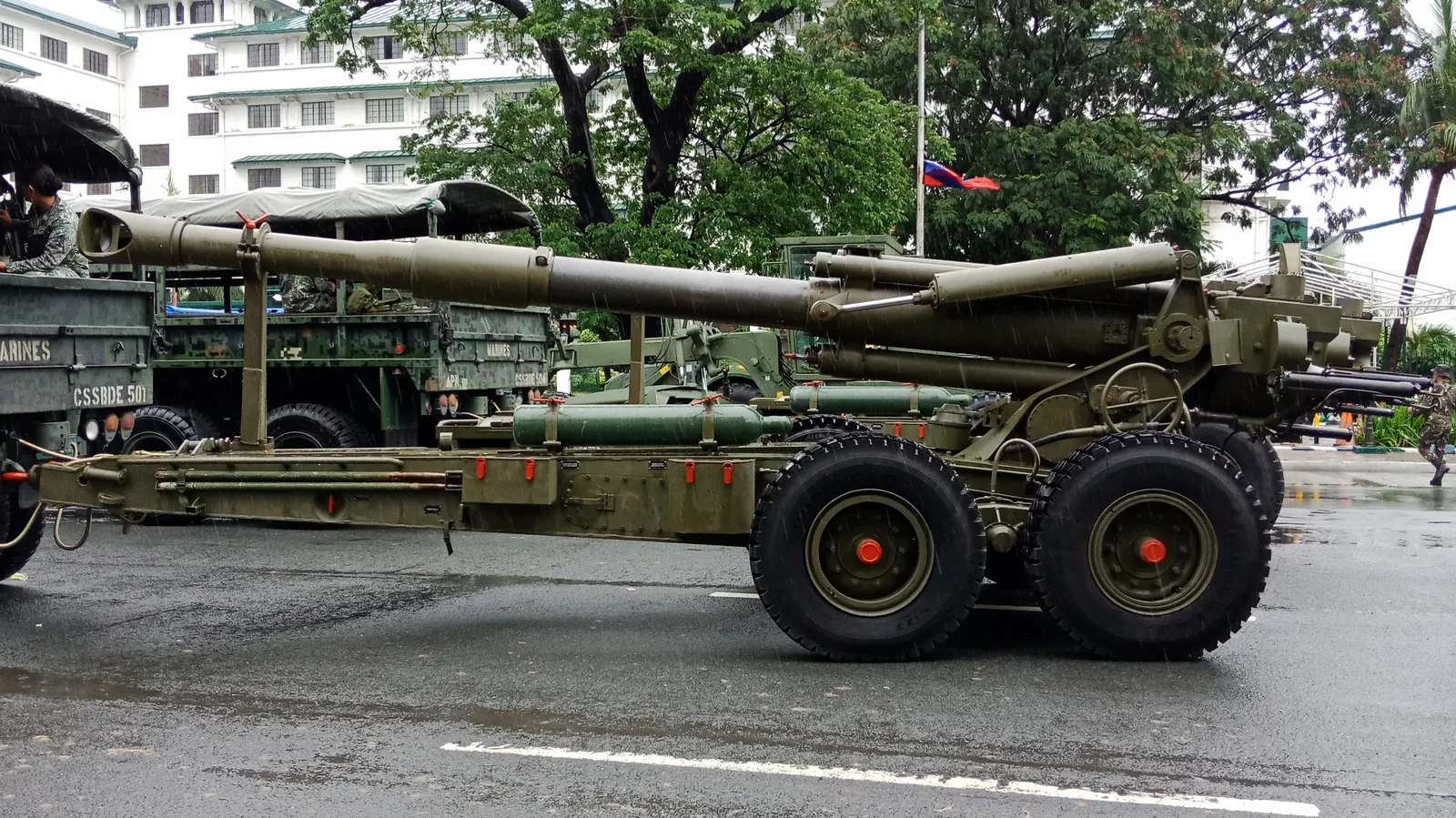
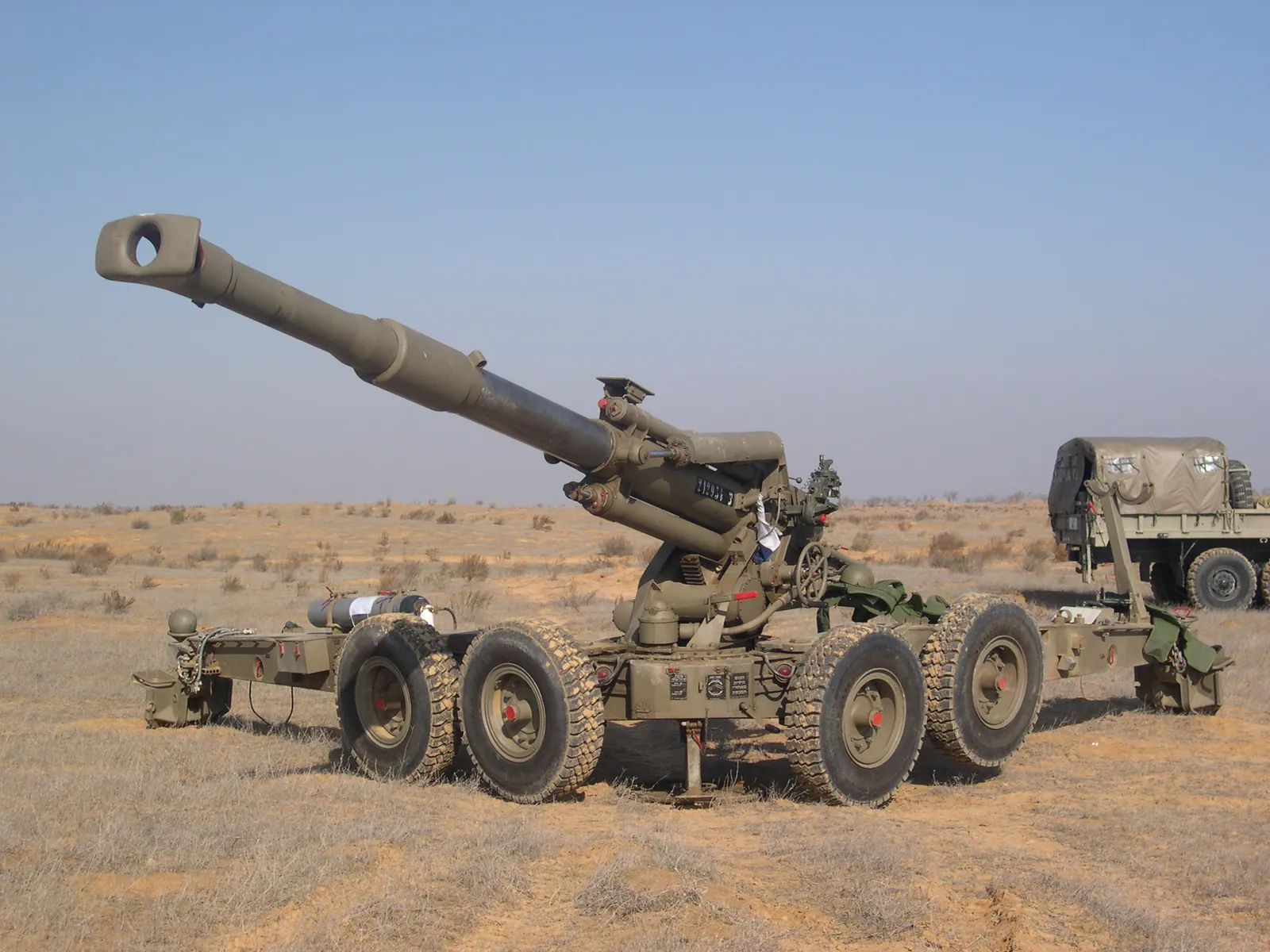
The Soltam M-71 is an Israeli 155 mm/39-caliber towed howitzer developed from Soltam's earlier M-68 gun-howitzer line. It combines NATO-standard 155 mm ammunition, a split-trail carriage, horizontal sliding-block breech, compressed-air rammer, and high-speed towing gear; in Myanmar's post-2021 civil war, open reporting places M-71 guns in the captured artillery inventory from Operation 1027 rather than proving post-capture firing.
Role in Conflicts
Profile / Specs
Profile
- Origin
- Israel
- Built by
- Soltam Systems
- Type
- 155 mm/39-caliber towed howitzer
- Service note
- Developed from the Soltam M-68 line in the 1970s and marketed by Soltam and later Elbit as a 155 mm field howitzer
- Designer
- Soltam Systems
- Designed
- Prototype completed in 1974 after M-68 development work
- Unit cost
- Not publicly established
- Produced
- Initial M-71 production pieces rolled out in 1975; later M-71/839/845 production is reported dormant
- Number built
- Over 200 M-68/M-71-family guns in open-reference production summaries; exact M-71-only total not publicly established
- Developed from
- Soltam M-68
- Developed into
- Soltam 839/845 and ATHOS 2052 design line
Specifications
- Caliber
- 155 mm NATO
- Barrel
- 39-caliber barrel; 6.045 m tube length listed in open references
- Crew
- 8
- Weight
- About 9,200 kg
- Maximum range
- Elbit markets a typical maximum range of 28.5 km depending on projectile, propellant, and charge zone; open references list longer base-bleed range figures
- Rate of fire
- Up to 5 rounds per minute maximum; 2 rounds per minute sustained in open reference summaries
- Breech
- Automatic horizontal sliding-block breechblock
- Carriage
- Four-wheel split-trail carriage with tandem running gear for high-speed towing
- Elevation and traverse
- Open references list -5 to +52 degrees elevation and about 90 degrees total traverse
Soltam 155 mm Design Family
The M-71 sits between the earlier M-68 and later Soltam 839/845 and ATHOS artillery lines. Open references treat ATHOS 2052 as visibly descended from the 839/845 branch but distinct enough to be considered a separate system, while Elbit currently markets ATHOS and ATMOS as newer 155 mm/52-caliber autonomous artillery products.
M-68: 155 mm/33-caliber towed howitzer basis for the M-71 recoil, breech, and carriage layout.
839, 839P, and 845: later Soltam refinements in the same broad towed-gun line, including auxiliary propulsion on P models.
ATHOS 2052 and ATMOS are better future catalog records than M-71 variants: ATHOS is a distinct towed 155 mm/52-caliber system, while ATMOS is Elbit's truck-mounted 155 mm/52-caliber system.
Sources: WeaponSystems.net Soltam M-71; Army Guide M-71; Forecast International M-71/839/845 and ATHOS 2052; Elbit ATHOS brochure; Elbit ATMOS.
Operator And Ammunition Notes
The M-71's export record is broader than the single conflict-use row on this page. Public references identify operators in Asia, Africa, Latin America, and the Middle East, while the current conflict row is limited to direct reporting of captured M-71 howitzers in Myanmar. Philippine government reporting also identifies the M-71 Soltam in Philippine Army service as one of the 155 mm platforms compatible with newly procured precision-guided munitions.
Operator inventory does not automatically create a conflict-use row. The Myanmar row is included because a conflict-specific source directly names M-71 howitzers in captured wartime materiel.
Elbit describes the M-71 as suitable for NATO-standard and other 155 mm ammunition, with range dependent on projectile, propellant, and zone.
The Philippine News Agency reported in 2025 that M-71 Soltam towed howitzers were among Philippine Army 155 mm platforms able to use acquired precision-guided munitions.
Sources: Elbit M-71; Army Guide M-71; PNA 155 mm PGM Acquisition; Operation 1027: The Need for a New Political Imagination and a Pragmatic Strategy.
Variants
The M-71 is the 39-caliber development of the earlier Soltam M-68. Later Soltam 839, 839P, 845, and ATHOS 2052 guns are best treated as follow-on design-family context rather than simple M-71 variants.
| Variant | Configuration | Designation notes |
|---|---|---|
| Soltam M-68 | Earlier 155 mm/33-caliber predecessor | The M-68 supplied the recoil system, breech, and carriage basis; the M-71 added a longer 39-caliber barrel and compressed-air rammer. Sources: WeaponSystems.net Soltam M-71, Army Guide M-71 |
| Soltam 839 | Improved 39-caliber follow-on | Forecast International describes the 839 as a later Soltam development using the same 39-caliber ordnance as the M-71 with redesigned saddle and carriage features. |
| Soltam 839P | 839 with auxiliary propulsion unit | The P suffix marks an APU-equipped configuration with hydraulic wheel drive for limited self-movement. |
| Soltam 845 | 45-caliber follow-on | Forecast International describes the 845 as essentially an 839P fitted with 45-caliber ordnance. |
Timeline
155 mm Soltam M-71 Key Events
M-71 prototype completed
Army Guide identifies 1974 as the first-prototype point for the M-71 after development from the M-68.
Initial production follows
Army Guide and Forecast International place the first production pieces in 1975.
Elbit completes Soltam acquisition
Elbit Systems completed acquisition of Mikal's holdings in Soltam, placing the legacy M-71 product line under Elbit's land-systems portfolio.
M-71 guns reported seized in Operation 1027
ISP-Myanmar reported Soltam Systems M-71 155 mm howitzers among major weapons seized by 3BHA forces during Operation 1027.
Philippine Army PGM compatibility noted
The Philippine News Agency reported that new 155 mm precision-guided munitions were compatible with the Philippine Army's ATMOS 2000 and M-71 Soltam howitzer systems.
Media
Related Weapon Systems