Munitions

BR-471B

Also known as
  • 53-BR-471B

BR-471B is a Soviet 122 mm APBC shell developed in 1944 as an improved successor to BR-471. Tankograd describes it as a blunt-tipped round with a 25 kg projectile, A-IX-2 bursting charge, and 795-800 m/s muzzle velocity, while the A-19/D-25T Commons plate and later Soviet heavy-tank reporting place it in the postwar 122 mm heavy-gun loadout.

Profile / Specs

Profile

Origin
Soviet Union
Type
122 mm armor-piercing capped shell
Service note
Developed in 1944-1945; postwar Soviet service
Designed
1944
Unit cost
Not publicly documented
Produced
From early 1945
Number built
Not publicly documented
Developed from
BR-471

Specifications

Caliber
122 mm
Projectile mass
25 kg
Muzzle velocity
795-800 m/s
Explosive charge
0.156 kg A-IX-2
Body material
KhZNM steel
Fuze
MD-8 base fuze on early rounds; later DBR and DBR-2
Role
Armor-piercing capped projectile with improved oblique-armor performance over BR-471
Firing Guns

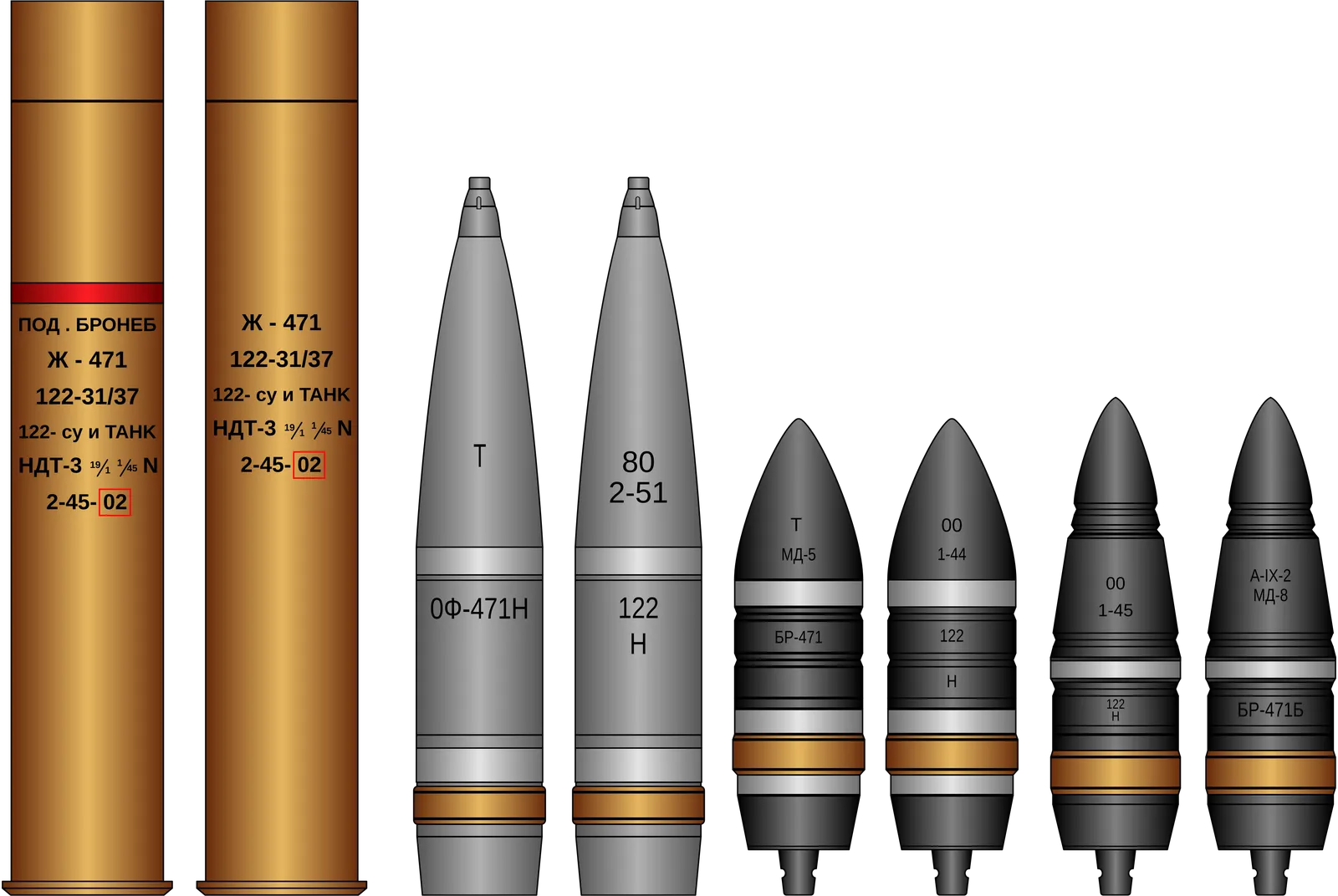
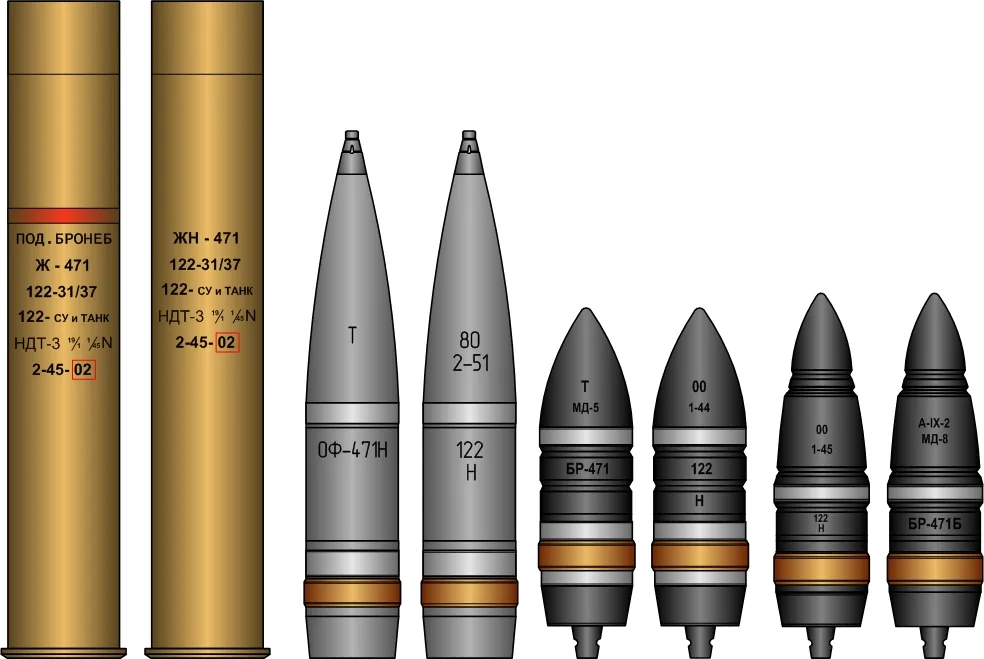
A Commons ammunition plate explicitly lists BR-471B among the rounds for the A-19 and D-25T family.

Firing weaponWeapon typeFiring evidence
A-19 122 mm field gun, 122 mm towed corps gun, ArtilleryA-19 122 mm field gun122 mm field gun

The ammunition plate for the A-19 and D-25T family explicitly names BR-471B among the listed armor-piercing shells.

Sources: D25T shells.svg

Design Notes

The surviving references describe BR-471B as a short-lived wartime improvement that stayed useful after the war because Soviet heavy tanks and guns kept the 122 mm system in service.

TopicSource-backed detail
DevelopmentTankograd says BR-471B was tested in summer 1944 and began supplanting BR-471 in 1945.
Ballistic contextTank Archives' comparative-penetration article gives the 122 mm D-25 gun's trial results against Panther armor, useful context for BR-471B's improved anti-armor role.
Heavy-tank contextTankograd says the round was originally available to the T-10 in 1953, and Tank Archives notes that the Soviets kept the 122 mm gun on heavy tanks until the T-10 era.
Visible plateThe Wikimedia Commons ammunition plate for the A-19 and D-25T family labels BR-471B among the listed shells.
Timeline

BR-471B Key Events

  1. Summer testing reported

    Tankograd says BR-471B was tested in summer 1944 as the improved successor to BR-471.

    Sources: Tankograd BR-471B analysis

  2. Begins replacing BR-471

    Tankograd says BR-471B began supplanting BR-471 in 1945, but the war ended before it could see much European combat.

    Sources: Tankograd BR-471B analysis

  3. Available for T-10 loadouts

    Tankograd says BR-471B was originally available to the T-10 in 1953, showing the round's continued postwar relevance.

    Sources: Tankograd BR-471B analysis

Media
Related Weapon Systems
D-25 122 mm tank gun, 122 mm tank and self-propelled gun family, ArtilleryArtilleryD-25 122 mm tank gun122 mm tank and self-propelled gun familyThe D-25 was a Soviet 122 mm gun family adapted from A-19-line ballistics for heavy tanks and self-propelled guns. D-25T armed the wartime IS-2 heavy tank and later IS-series vehicles, with directly sourced use on Soviet IS-2s in the Second World War, Egyptian IS-3M tanks in the 1967 Six-Day War, and captured Israeli IS-3 fixed bunkers in the 1969 War of Attrition. D-25S was the semi-automatic self-propelled-gun variant associated with ISU-122S, and the family used separate-loading A-19/D-25 ammunition including OF-471 high-explosive fragmentation and BR-471 armor-piercing projectiles.

Sources