Artillería

Lanzacohetes múltiple Polonez

Also known as
  • B-200 Polonez
  • V-200 Polonez
  • Polonez-M
  • B-300 Polonez-M
  • Polonez MLRS
  • Polonez MRL

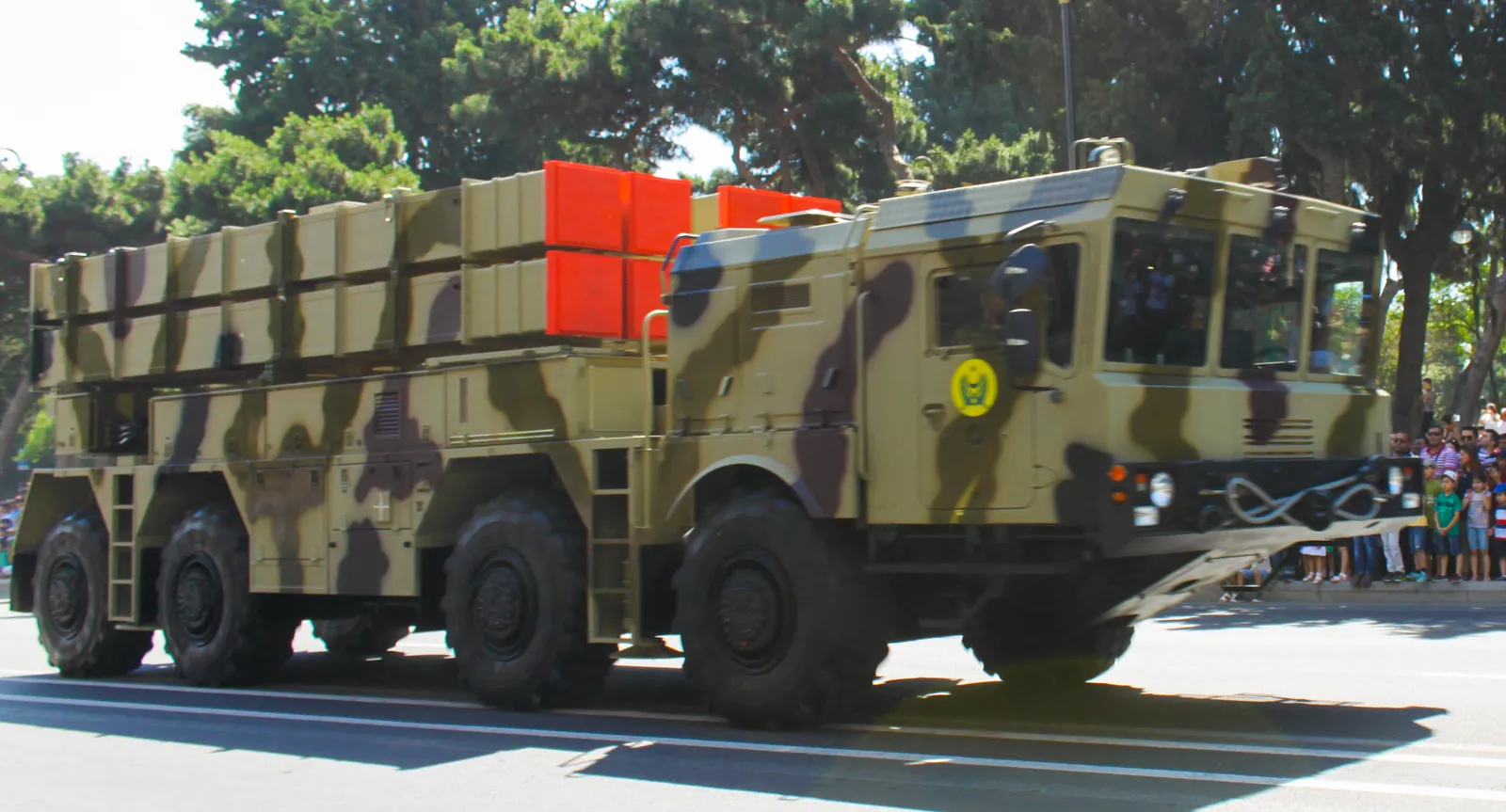
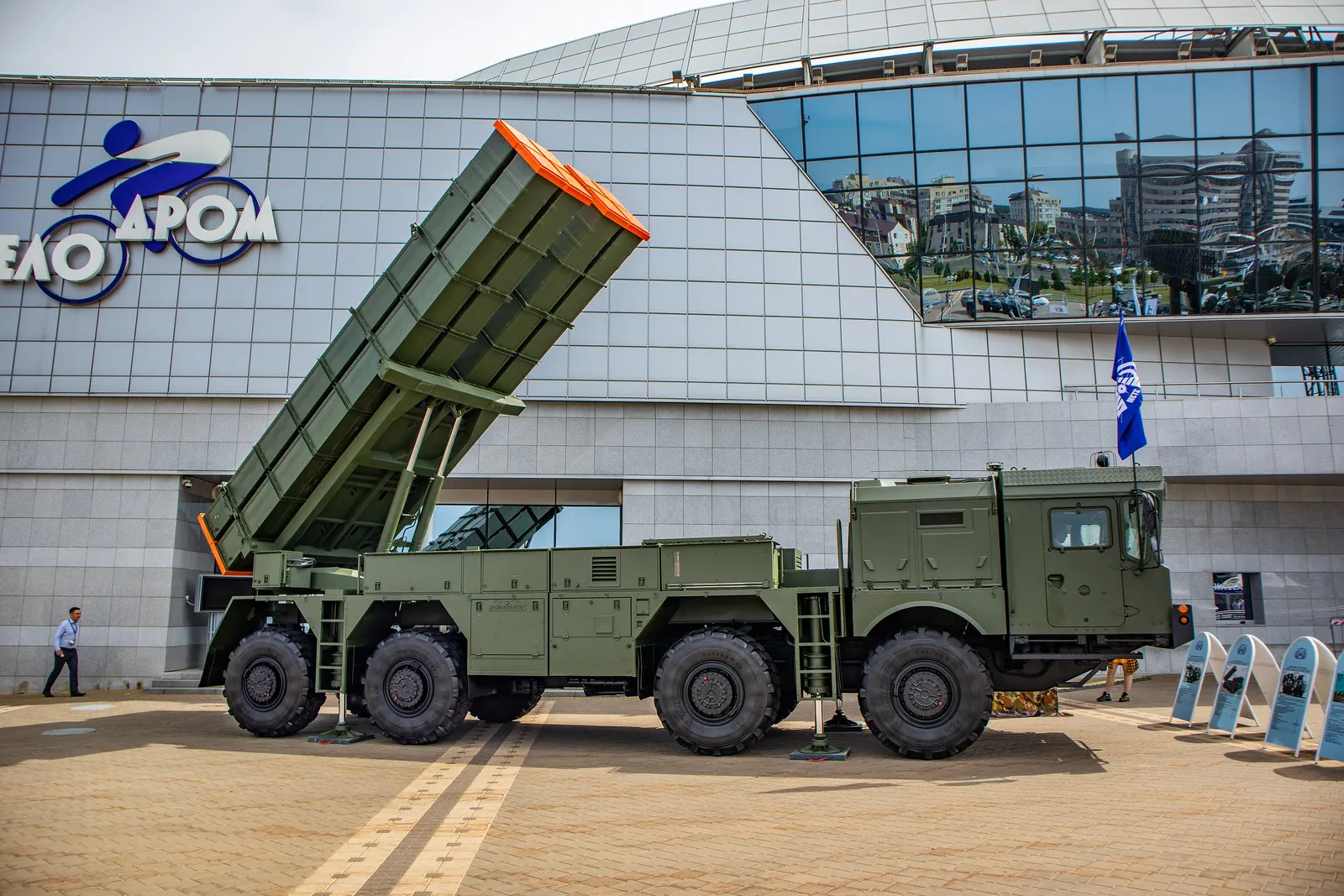
El Polonez es un lanzacohetes múltiple bielorruso de largo alcance construido en torno a ocho cohetes guiados de 301 mm en contenedores sobre un chasis MZKT 8x8. El sistema B-200 entró en servicio bielorruso en 2016, Azerbaiyán exhibió lanzadores Polonez importados en 2018, y CSIS lista el tipo en el inventario de artillería de cohetes de largo alcance de Azerbaiyán durante la guerra de Nagorno-Karabaj de 2020.

Role in Conflicts

Role in conflict
Artillería de cohetes de precisión de largo alcance

Azerbaiyán desplegó Polonez en el inventario de artillería de cohetes de largo alcance de la guerra de Nagorno-Karabaj de 2020; CSIS lista el sistema con un alcance aproximado de 200 km, aunque señala que el BM-30 Smerch pareció tener mayor protagonismo.

Profile / Specs

Profile

Origin
Bielorrusia
Built in
Belarus
Type
Lanzacohetes múltiple sobre ruedas de 301 mm
Service note
Introducido en servicio bielorruso a mediados de la década de 2010 y exportado a Azerbaiyán antes de la guerra de 2020.
Designer
Precision Electro-Mechanics Plant (ZTEM)
Designed
Década de 2010
Produced
Década de 2010-presente

Specifications

Calibre
Cohetes guiados de 301 mm
Cohetes listos
8 cohetes en dos pods en contenedores de cuatro celdas
Alcance
B-200: 50-200 km; variantes posteriores Polonez-M/B-300 anunciadas hasta unos 290-300 km
Chasis
Camión pesado sobre ruedas 8x8 de la familia MZKT-7930
Tripulación
3
Velocidad en carretera
Aproximadamente 70 km/h
Preparación para combate
Aproximadamente 10 minutos
System Elements

La batería B-200 Polonez es más que un camión lanzador. Informes oficiales bielorrusos describen un lanzador, un vehículo de transporte-recarga y un elemento móvil de mando y control construidos en torno a chasis de camiones bielorrusos sobre ruedas.

ElementoChasisFunción documentada
Vehículo de combate B-200BMFamilia MZKT-7930 8x8Transporta dos pods de cuatro celdas con ocho cohetes de 301 mm listos.
Vehículo transportador-recargador B-200TZMFamilia MZKT-7930 8x8Transporta otros ocho cohetes en dos pods para apoyo de recarga.
Puesto móvil C2 B-200BMUMAZ-631705-262 6x6Proporciona estaciones de trabajo de mando y control para la unidad lanzadora.
Variants

Las fuentes públicas suelen dividir la familia entre el B-200 Polonez original, basado en el sistema chino de cohetes guiados A200, y la mejora Polonez-M/B-300 de mayor alcance.

VariantConfigurationDesignation notes
Polonez-M / B-300Mejora de alcance extendido

La reimpresión de Jane's por GKVP identificó el desarrollo del B-300 para un alcance aproximado de 300 km, mientras que informes públicos posteriores describen al Polonez-M como la variante bielorrusa mejorada.

Sources: Belarus to Develop New Long-Range MRL, MILEX 2019 Polonez-M Enters Belarusian Service

Cohetes disparados

El Polonez usa cohetes guiados de largo alcance en contenedores en lugar de paquetes abiertos de rieles, con la familia A200 como base documentada del sistema B-200 original.

AmmunitionAmmunition typeFiring evidence
A200 guided rocket, 301 mm guided artillery rocket, MunitionsA200 guided rocketCohete de artillería guiado de la clase de 301 mm

Informes oficiales bielorrusos dicen que el B-200 Polonez se produjo con asistencia china y se basó en el MRL chino A200; los datos de producto del A200 listan cohetes de largo alcance guiados por INS/GNSS para ataques de la clase de 50-200 km.

Sources: Belarus to Develop New Long-Range MRL, A200 Rocket Weapon System

Timeline

Lanzacohetes múltiple Polonez Key Events

  1. El Polonez aparece en el desfile de Minsk

    Informes públicos identificaron el nuevo lanzador bielorruso Polonez 8x8 como un sistema vinculado a cohetes guiados chinos A200.

    Sources: New Polonez MLRS Unveiled in Belarus

  2. Bielorrusia recibe sistemas B-200

    Informes oficiales bielorrusos dijeron que una división de artillería de cohetes de la 336th Rocket Artillery Brigade recibió el sistema B-200 Polonez en 2016.

    Sources: Belarus to Develop New Long-Range MRL

  3. Azerbaiyán exhibe lanzadores Polonez importados

    Informes azerbaiyanos y especializados documentaron al presidente Ilham Aliyev inspeccionando sistemas Polonez recién entregados junto con misiles LORA.

    Sources: A New Batch of Polonez Weapons Arrived in Azerbaijan, Jamestown Azerbaijan Shows off Polonez and LORA

  4. Contexto del inventario de guerra en Nagorno-Karabaj

    Durante la guerra de 2020, CSIS listó el Polonez entre los sistemas de artillería de cohetes de largo alcance de Azerbaiyán, aunque advirtió que el Smerch parecía ser el sistema de cohetes más destacado.

    Sources: CSIS Air and Missile War in Nagorno-Karabakh

Media
Related Weapon Systems
A200/M20 missile launcher, Road-mobile guided rocket and short-range ballistic missile launcher, ArtilleryArtilleryA200/M20 missile launcherRoad-mobile guided rocket and short-range ballistic missile launcherThe A200/M20 launcher is a Chinese road-mobile launch platform marketed around ALIT/CASC A200 and A300 guided rockets plus CASIC M20 short-range ballistic missiles. Public export reporting describes A200, A300, and M20 weapons sharing a general launcher platform, while the Belarusian Polonez family shows an A200-derived launcher path and the AR2/PHL-03 remains a separate Ethiopian 300 mm MLRS. In the 2020 Tigray War, Tigrayan forces captured elements of Ethiopia's A200/M20 force and used the capability for deep strikes before Ethiopian government forces recaptured or found abandoned launchers, missiles, rocket canisters, and loaders.
9M528 high-explosive fragmentation rocket, 300 mm high-explosive fragmentation rocket, MunitionsMunitions9M528 high-explosive fragmentation rocket300 mm high-explosive fragmentation rocketThe 9M528 is a Russian 300 mm high-explosive fragmentation artillery rocket for the 9K58/BM-30 Smerch family. It is the unitary blast-fragmentation option in the Smerch ammunition set, carrying a 243 kg warhead with 95 kg of explosive and 800 preformed fragments to a reported 90 km maximum range. Human Rights Watch linked the designation to the 2020 Nagorno-Karabakh fighting after Azerbaijan's mine-action agency identified a 9M528 rocket at Ayrija in Goranboy district.
9M27K1 cargo rocket, 220 mm Uragan cluster cargo rocket carrying 30 9N235 submunitions, MunitionsMunitions9M27K1 cargo rocket220 mm Uragan cluster cargo rocket carrying 30 9N235 submunitionsThe 9M27K1 is a Soviet/Russian 220 mm Uragan cargo rocket designed for the BM-27 9K57 launcher family. Technical and humanitarian-monitoring sources identify it as the Uragan round that carries 30 9N235 high-explosive fragmentation submunitions over a 10 to 35 km envelope, with Ukraine-war reporting often grouping it with the closely related 9M27K because their remnants can be difficult to separate without markings.
BM-30 Smerch, 300 mm heavy multiple launch rocket system, ArtilleryArtilleryBM-30 Smerch300 mm heavy multiple launch rocket systemThe BM-30 Smerch, also designated 9K58, is a Soviet-designed heavy multiple launch rocket system built around 300 mm rockets and a 12-tube launcher on an 8x8 wheeled chassis. Its ammunition family includes high-explosive, cargo, mine-laying, sensor-fuzed, and thermobaric rounds, making Smerch a deep-fire artillery system rather than a front-line direct-fire weapon. In Ukraine, Syria, and Nagorno-Karabakh, documented Smerch-family remnants and firing reports tie the launcher to long-range area fires, including cluster-munition attacks.
BM-27 Uragan, 220 mm self-propelled multiple launch rocket system, ArtilleryArtilleryBM-27 Uragan220 mm self-propelled multiple launch rocket systemThe BM-27 Uragan is the Soviet 9K57 220 mm multiple launch rocket system, built around the 16-tube 9P140 launcher and 9T452 transporter-loader on ZIL-135LM-family wheeled chassis. Its rocket family gives heavier payloads than BM-21 Grad-class systems, including high-explosive fragmentation, cluster, incendiary, fuel-air explosive, and mine-scattering rounds. Documented use spans Russia-Ukraine, Syria, Yemen, Nagorno-Karabakh, and the 2008 Russo-Georgian War, with the system still relevant through Ukrainian overhaul work and Bureviy modernization.

Sources