Aircraft & UAVs

Shahed-101

Also known as
  • Shahed 101
  • Shahed-101 UAV
  • Shahed-101 OWA-UAV
  • Shahed 101 type UAV
  • شاهد ۱۰۱
  • Morad-5
  • Murad-5

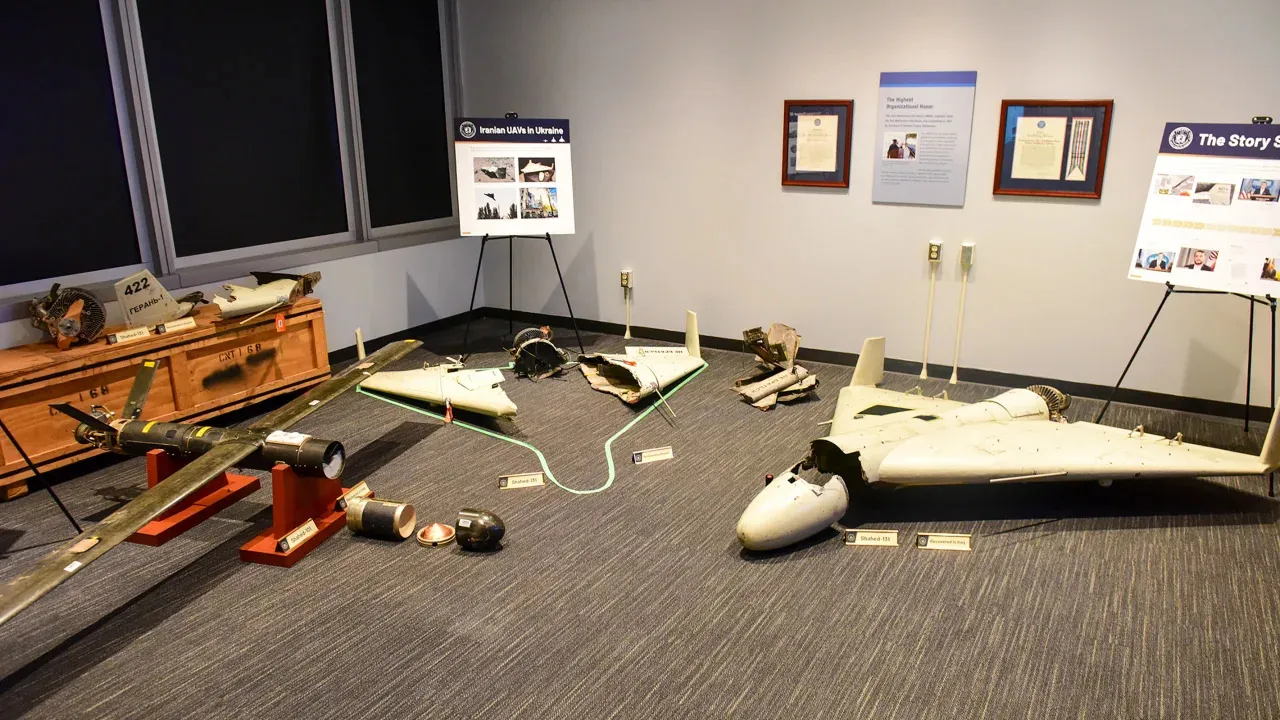
The Shahed-101 is a smaller Iranian one-way attack UAV in the wider Shahed loitering-munition family, publicly documented through recovered Iraqi material, Hezbollah launches toward Israel, Houthi use in Yemen, and Russian fielding against Ukraine. Open sources describe piston and electric-motor configurations, a compact warhead, satellite/inertial navigation, and a battlefield-to-mid-range strike role below the larger Shahed-131 and Shahed-136 classes. June 2025 Israel-Iran debris records identify a Shahed-101/107 series, but do not isolate the Shahed-101 submodel.

Role in Conflicts

Side
Russia

Russian forces have fielded Shahed-101 drones in the Ukraine theater, with Fenix Insight documenting a Kursk-region appearance and Ukrainian reporting describing recovered examples as Iranian-made 2024 production using CRPA satellite navigation and an 8-9 kg warhead.

Role details
Profile / Specs

Profile

Origin
Iran
Type
Small one-way attack UAV / loitering munition
Service note
2020s-present small one-way attack UAV
Designer
Shahed Aviation Industries
Designed
Publicly documented by the early 2020s
Produced
2020s; Ukrainian reporting describes recovered 2024 Iranian production

Specifications

Role
Small one-way attack UAV / loitering munition
Origin
Iranian-developed Shahed-family UAV
Warhead
About 8-9 kg in Ukraine-recovered examples reported by Ukrainian defense sources
Guidance
Satellite/inertial navigation; Ukrainian sources describe a four-element CRPA antenna on recovered examples
Range
Several hundred kilometers in Ukrainian frontline reporting; public estimates vary by configuration
Propulsion
Piston-powered recovered examples are reported in Ukraine; electric-motor Shahed-101-type UAVs are reported in Hezbollah use
Launch method
Small UAV/loitering munition launch arrangements; public sources do not provide a single confirmed standard launcher
Primary targets
Fixed or pre-planned targets, logistics routes, infrastructure, and rear-area military targets in reported use
Configuration Notes

Public Shahed-101 reporting is split between recovered piston-powered examples in Ukraine and electric-motor Shahed-101-type UAVs attributed to Hezbollah. OSMP's June 2025 Israel-Iran collection adds Shahed-101/107-series debris context, but the reviewed records do not identify the exact Shahed-101 submodel. The available record is strong enough to identify the weapon family and directly sourced conflict appearances, but not enough to treat every reported configuration as a separate catalog entry.

Navigation

Ukraine-focused sources describe satellite and inertial navigation, with a four-element CRPA antenna on recovered examples.

Warhead class

Ukrainian reporting gives an 8-9 kg class warhead; Euromaidan Press cites an approximately 8 kg shaped-charge and fragmentation warhead in a recovered example.

Sourcing limit

Precise range, propulsion, payload, and 2025 Israel-Iran subtype attribution vary by reported configuration and should be read as public estimates rather than manufacturer-confirmed specifications.
Variants

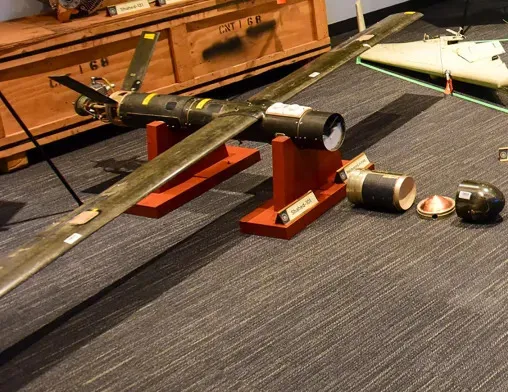
Public sources treat Shahed-101 as part of Iran's smaller Shahed loitering-munition family rather than the larger delta-wing Shahed-131 and Shahed-136 classes. Reporting also describes electric-motor and wider militia-adapted Shahed-101-family versions.

VariantConfigurationDesignation notes
Electric-motor Shahed-101 typeQuiet approach variant

Alma reports Hezbollah use of Shahed-101-type UAVs with electric motors, while later reporting describes electric-powered Shahed-101 versions intended to reduce acoustic warning.

Sources: Alma Shahed-101 Hezbollah Use, Army Recognition Electric Shahed-101

Shahed-101 family militia variantsIraqi militia adaptation

Terrogence describes Islamic Resistance in Iraq material showing standard and visibly wider Shahed-101-family loitering munitions, with possible local modification under Iranian-backed militia production networks.

Sources: Terrogence Shahed-101 Family

Shahed-107, Long-range explosive-reconnaissance UAV / loitering munition, Aircraft & UAVsShahed-107Related Shahed-101-family model

Sky News described the Shahed-107 as a Shahed-101-family UAV, while OSMP separately groups some June 2025 debris as Shahed-101/107 series rather than resolving it to a single submodel.

Sources: Sky News Shahed-107 Report, OSMP Shahed-101/107 Israel-Iran Collection

Shahed-131, Long-range one-way attack UAV, Aircraft & UAVsShahed-131Larger same-origin one-way attack UAV

DIA and Shahed-family references place the Shahed-101 alongside larger Iranian Shahed UAVs, with Shahed-131 separately documented as a bigger one-way attack UAV used by Russia as Geran-1.

Sources: DIA Iranian UAV Display Release, Shahed Drones Wikipedia Baseline

Shahed-136, Long-range one-way attack UAV, Aircraft & UAVsShahed-136Longer-range companion family

The Shahed-136 is the larger Shahed/Geran family member with a heavier airframe and wider conflict-use record than the smaller Shahed-101.

Sources: Shahed Drones Wikipedia Baseline

Timeline

Shahed-101 Key Events

  1. DIA displays newly declassified Shahed-101 material

    The Defense Intelligence Agency said its updated Iranian UAV display included the first public showing of a newly declassified Shahed-101 recovered in Iraq, supporting Iranian origin context.

    Sources: DIA Iranian UAV Display Release

  2. Kabri-area attack prompts Shahed-101 assessment

    Alma assessed that fragments from Hezbollah's July 11, 2024 Kabri-area suicide-UAV attack suggested a Shahed-101 with an electric motor, and later reported Hezbollah launches of the type from July 2024.

    Sources: Alma Kabri Shahed-101 Assessment, Alma Shahed-101 Hezbollah Use

  3. Terrogence describes Shahed-101 family militia versions

    Terrogence reported that Islamic Resistance in Iraq material showed standard and modified Shahed-101-family loitering munitions used in claimed attacks toward Israel.

    Sources: Terrogence Shahed-101 Family

  4. OSMP catalogs Shahed-101/107-series remnants from the Israel-Iran war

    OSMP's June 2025 Israel-Iran collection includes Syrian debris records attributed to the Shahed-101/107 series, giving family-level context without direct Shahed-101 conflict-use attribution.

    Sources: OSMP Shahed-101/107 Israel-Iran Collection

  5. Ukraine reports Shahed-101 frontline appearances

    Ukrainian reporting citing Serhii Flash described increasing Shahed-101 appearances in frontline zones, an 8-9 kg warhead, several-hundred-kilometer range, 4-element CRPA navigation, and 2024 Iranian manufacture.

    Sources: Mezha Shahed-101 Frontline Report, Defence Blog Shahed-101 Ukraine Report

  6. Recovered Ukraine wreckage described as Iranian-built

    Euromaidan Press summarized Ukrainian inspection footage and Militarnyi reporting that identified Iranian markings on Shahed-101 components recovered from Russian use in Ukraine.

    Sources: Euromaidan Press Shahed-101 Wreckage Analysis

Media
Related Weapon Systems
Shahed-107, Long-range explosive-reconnaissance UAV / loitering munition, Aircraft & UAVsAircraft & UAVsShahed-107Long-range explosive-reconnaissance UAV / loitering munitionThe Shahed-107 is an Iranian high-wing one-way attack UAV first reported as a Shahed-101-family explosive-reconnaissance design offered to Russia and later documented by Ukrainian intelligence through recovered or examined Shahed-107 components. Public sources distinguish between early 1,500 km range claims from Iranian media and a DIU-assessed battlefield sample with a 15 kg warhead, DLE 111 two-stroke engine, 28 L fuel tank, X-shaped tail, anti-jam navigation equipment, and about 300 km operational range.
Arash-2, Long-range one-way attack UAV / loitering munition, Aircraft & UAVsAircraft & UAVsArash-2Long-range one-way attack UAV / loitering munitionThe Arash-2 is an Iranian long-range one-way attack UAV in the Arash/Kian family, publicly described by Iranian military reporting as a strategic-range system aimed at Israeli targets and radar or fixed-infrastructure attack. Open sources describe booster-assisted or container-style launch, a claimed 2,000 km class range, and possible seeker configurations, while conflict reporting ties the type to Iranian strikes and U.S. counter-drone attacks during the 2025 Israel-Iran Conflict.
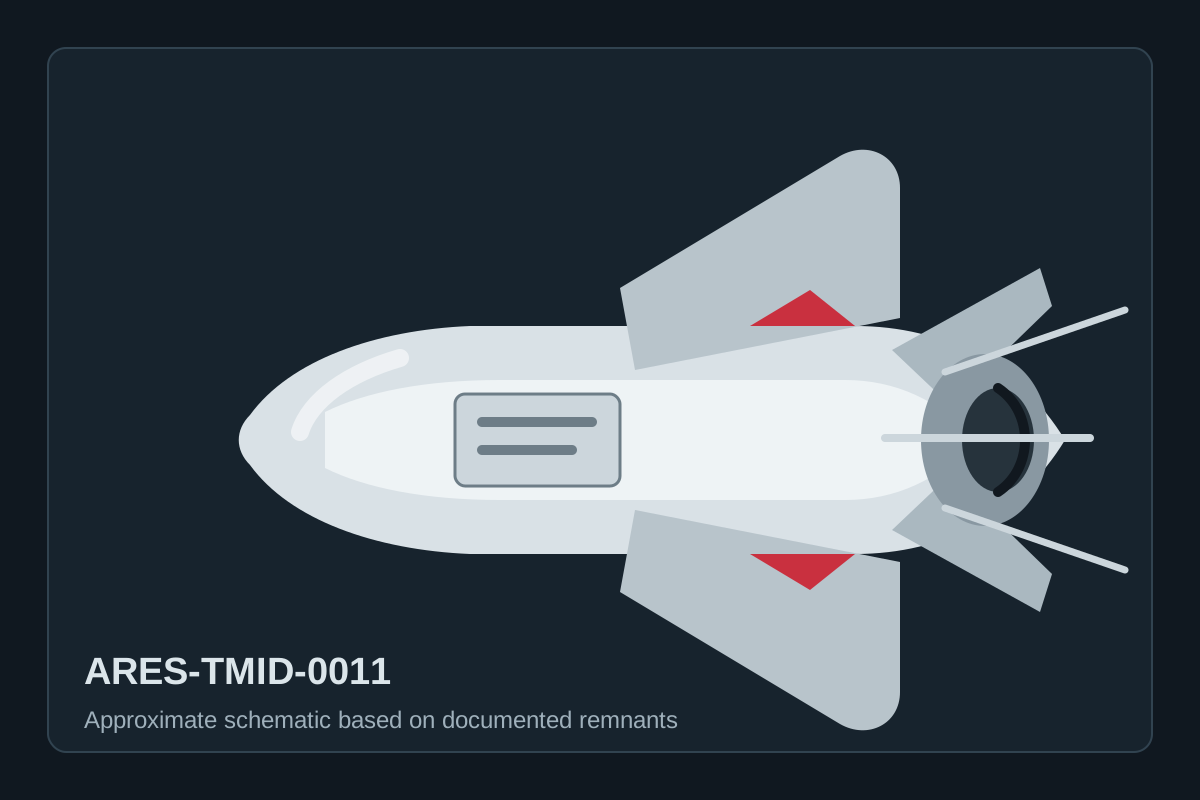
Unidentified Israeli turbojet-powered one-way-attack munition, One-way-attack munition, MunitionsMunitionsUnidentified Israeli turbojet-powered one-way-attack munitionOne-way-attack munitionARES tracks this provisional Israeli-origin munition as TMID-0011: a turbojet-powered one-way-attack weapon assessed as a guided UAV or loitering-munition missile. ARES says no publicly acknowledged Israeli munition closely fits the remnants, with the closest public analogue probably being the U.S. AGM-190 Black Arrow. Open-source reporting places it in Gaza during the 2023 Israel-Hamas War, in Lebanon during the 2023 Israel-Hezbollah Conflict, and in Iran during renewed Israel-Iran fighting, while the launch platform remains unidentified.
Garpiya-A1, Long-range one-way attack UAV / loitering munition, Aircraft & UAVsAircraft & UAVsGarpiya-A1Long-range one-way attack UAV / loitering munitionGarpiya-A1 is a Russian long-range one-way attack UAV attributed in Reuters reporting to Izhevsk Electromechanical Plant (IEMZ) Kupol and a Chinese engine/component supply chain. Public reporting describes it as Shahed-like, powered by Xiamen Limbach L-550E engines, produced from 2023, and used by Russian forces in Ukraine; U.S. and EU sanctions material plus Reuters-syndicated reporting place it inside a wider production network that kept expanding after sanctions.

Sources