Munitions

RSM-56 Bulava

Also known as
  • Bulava
  • RSM-56
  • R-30
  • R-30 Bulava
  • D-30
  • D-30 missile system
  • SS-N-32
  • SS-NX-30
  • 3M30
  • 3K30

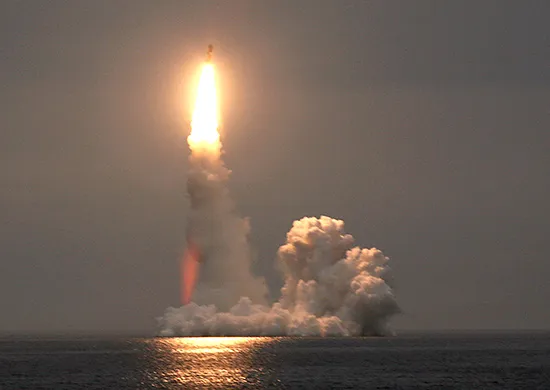
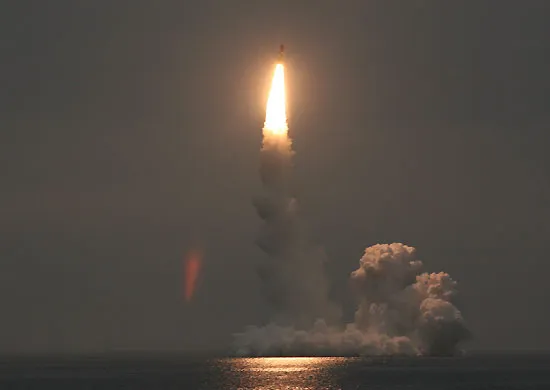
The RSM-56 Bulava is a Russian submarine-launched ballistic missile designed by the Moscow Institute of Thermal Technology for the Borei/Project 955 SSBN family. CSIS identifies it as an intercontinental-range SLBM with an 8,300 km range estimate, MIRV payload, and operational status; RussianSpaceWeb ties the program to the abandoned R-39 Bark replacement path and Votkinsk serial production. This page stays relationship-only because public sources document strategic service, tests, and launch-platform relationships rather than independent use in a named armed conflict.

Profile / Specs

Profile

Origin
Russia
Type
Submarine-launched ballistic missile (SLBM)
Service note
1990s-present
Designer
Moscow Institute of Thermal Technology
Designed
1990s
Produced
2007-2008 production contracts; operational service reported by CSIS as 2013

Specifications

Class
Submarine-launched ballistic missile
Basing
Submarine-launched
Length
12.1 m
Diameter
2.0 m
Launch weight
36,800 kg
Payload
Up to 10 MIRVs; 1,150 kg payload
Warhead
Nuclear, 100-150 kt class warheads reported by CSIS
Propulsion
Three-stage solid propellant
Range
8,300 km
Accuracy
250-300 m CEP estimate reported by CSIS
Borei-class loadout
Project 955/955A submarines carry 16 Bulava ICBMs per vessel in current TASS reporting; CSIS notes 12-16 missile capacity in earlier Borey-class context
Service entry
CSIS lists 2013 in-service status; Russian press reported Navy acceptance in 2018 and a formal Russian Armed Forces acceptance decree dated May 7, 2024
Status
Operational
Variants

Bulava naming mixes missile, treaty/reporting, industrial, and missile-system indexes: R-30 Bulava is the Russian missile name, 3M30 is the industrial designation, RSM-56 is the treaty name, and D-30 is used for the missile system.

VariantConfigurationDesignation notes
R-30 Bulava / 3M30Missile and industrial designation

RussianSpaceWeb maps R-30 Bulava to the 3M30 industrial name and RSM-56 treaty name for the same submarine-launched missile.

Sources: Bulava Submarine-Based Ballistic Missile

SS-N-32 / SS-NX-30NATO and U.S. reporting names

CSIS uses NATO SS-N-32 for the current Missile Threat entry; RussianSpaceWeb's designation table lists SS-NX-30 as the U.S. name.

Sources: RSM-56 Bulava (SS-N-32), Bulava Submarine-Based Ballistic Missile

D-30 missile systemSystem-level designation

TASS describes the D-30 missile system as including the R-30 Bulava missile and being designed as armament for Borei/Borei-A strategic submarines.

Sources: Russian News Reports Bulava Service Ready, Sea-launched Bulava ICBM accepted for service in Russian Armed Forces

Launch Platforms

Open sources document Bulava as the SLBM carried and test-launched by Borei-class ballistic-missile submarines, while earlier trials used the modified Dmitry Donskoy as a test platform.

LauncherLauncher typeLaunch evidence
Borei-class submarine, Nuclear-powered ballistic missile submarine (SSBN), Naval SystemsBorei-class submarineBallistic-missile submarine

CSIS describes Bulava as designed for Borey/Project 955 SSBNs; Russian Strategic Nuclear Forces documents submerged four-missile Bulava salvos by Yuri Dolgorukiy in 2018 and Vladimir Monomakh in 2020.

Sources: RSM-56 Bulava (SS-N-32), Four-Missile Bulava Salvo, First Bulava Launches From The Pacific

Timeline

RSM-56 Bulava Key Events

  1. MIT assigned Bulava development

    RussianSpaceWeb says the Moscow Institute of Thermal Technology was assigned the submarine-based R-30 Bulava after the R-39 Bark program, moving a design bureau known for land-based mobile ICBMs into the SLBM role.

    Sources: Bulava Submarine-Based Ballistic Missile

  2. First powered flight test

    RussianSpaceWeb records a September 2005 Bulava launch from the Dmitry Donskoy test submarine toward the Kura impact range in Kamchatka.

    Sources: Bulava Submarine-Based Ballistic Missile

  3. First submerged launch

    RussianSpaceWeb identifies the December 2005 Dmitry Donskoy firing as Bulava's first launch from a submerged vessel.

    Sources: Bulava Submarine-Based Ballistic Missile

  4. Four-missile Borei salvo

    Russian Strategic Nuclear Forces reported that Project 955 submarine Yuri Dolgorukiy launched four Bulava missiles while submerged in the White Sea, with warheads reaching Kura.

    Sources: Four-Missile Bulava Salvo

  5. Russian press reports service acceptance

    CSIS reported TASS's statement that the D-30 system with R-30 Bulava had been accepted for Russian Navy service after the 2018 tests.

    Sources: Russian News Reports Bulava Service Ready

  6. First Pacific Fleet Bulava launch

    Russian Strategic Nuclear Forces reported that Vladimir Monomakh conducted a four-missile Bulava salvo from the Sea of Okhotsk toward the Chizha test range, the first Bulava launch by a Pacific Fleet-based submarine.

    Sources: First Bulava Launches From The Pacific

  7. Formal acceptance decree reported

    TASS quoted MIT chief designer Yury Solomonov saying a May 7, 2024 decree accepted the Bulava missile system for service in the Russian Armed Forces.

    Sources: Sea-launched Bulava ICBM accepted for service in Russian Armed Forces

Media
Related Weapon Systems
Delta III-class submarine, Ballistic missile submarine, Naval SystemsNaval SystemsDelta III-class submarineBallistic missile submarineThe Delta III-class submarine is the NATO reporting name for the Soviet Project 667BDR Kalmar, a Sevmash-built nuclear-powered ballistic missile submarine designed around the D-9R launch system and 16 R-29R / SS-N-18 submarine-launched ballistic missiles. The class introduced a MIRV-capable Soviet SSBN design, remained visible in Russian Pacific Fleet strategic exercises into the 2010s, and ended regular SSBN service when K-44 Ryazan was withdrawn after the other Project 667BDR boats had already left service.
JL-3 submarine-launched ballistic missile, Submarine-launched ballistic missile, MunitionsMunitionsJL-3 submarine-launched ballistic missileSubmarine-launched ballistic missileThe JL-3 is a Chinese solid-fueled submarine-launched ballistic missile reported as the CSS-N-20 and as a longer-range follow-on to the JL-2 for China's sea-based nuclear deterrent. U.S. Department of Defense reporting says China probably fielded the missile on Jin-class Type 094 submarines, while specialist assessments caution that the pace of JL-2 replacement and exact payload details remain publicly uncertain.
Kh-22, Air-launched supersonic anti-ship cruise missile, MunitionsMunitionsKh-22Air-launched supersonic anti-ship cruise missileThe Kh-22, NATO reporting name AS-4 Kitchen, is a large Soviet air-launched cruise missile designed by Raduga for attacks on carrier groups, radar-contrast surface targets, and major fixed targets. Its liquid-propellant rocket motor, supersonic flight profile, and roughly one-ton conventional or nuclear warhead made it a heavy standoff weapon for Tu-22, Tu-22M, and modified Tu-95K-22 bomber variants. Russia has repurposed Kh-22-family missiles for land attack in the 2014 Russia-Ukraine War, where the missile's naval-targeting heritage, large warhead, and high terminal speed have produced severe urban-strike risks and a difficult air-defense problem.
Kh-32, Supersonic air-launched anti-ship and land-attack cruise missile, ArtilleryArtilleryKh-32Supersonic air-launched anti-ship and land-attack cruise missileThe Kh-32 is a Russian supersonic air-launched cruise missile derived from the Kh-22 family for long-range attacks on ships and fixed ground targets. Built by the Raduga design bureau within Russia's Tactical Missiles Corporation network, it is carried by Tu-22M3-series bombers and combines a high-altitude flight profile, inertial navigation, and terminal radar homing. Russia has used the Kh-22/Kh-32 family against Ukraine, where its speed, steep terminal profile, and anti-ship design heritage make interception difficult and raise accuracy risks when fired at urban land targets.

Sources