Profile
- Origin
- Japan
- Built by
- Icom Inc.
- Type
- discontinued 2 m VHF handheld transceiver
- Service note
- 2004-2014
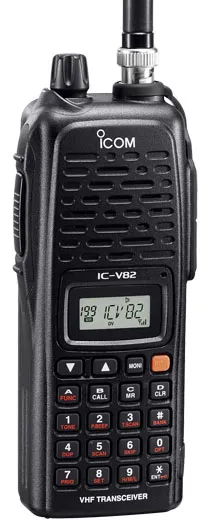
Icom IC-V82 is a discontinued Japanese VHF handheld transceiver in the 2-meter class. The catalog treats it as support equipment because the standard radio was not a weapon; its relevance comes from September 2024 Lebanon reporting about IC-V82-marked radios converted into explosive devices, alongside Icom and AP cautions that the reported devices may not have been genuine Icom products.
Icom's V82/U82 manual family used the V82 designation for the VHF model and U82 for the companion UHF model.
| Variant | Configuration | Designation notes |
|---|---|---|
| IC-U82 | UHF companion model | Icom's manual family groups the IC-V82 and IC-U82 together, with different band and output-power specifications. |
The related weapon entry covers the modified pager and radio devices; this page covers the underlying IC-V82 radio model and the authenticity caveats around reported IC-V82-marked devices.
| Compatible item | Item type | Compatibility evidence |
|---|---|---|
 | Booby-trapped communications device | Amnesty International linked the 18 September 2024 wave to IC-V82 handheld radios with hidden explosive devices, while Icom and AP reporting cautioned that the devices could not be confirmed as genuine Icom-shipped radios. Sources: Lebanon: Establish international investigation into deadly attacks using exploding portable devices, Icom IC-V82 follow-up notice, AP Lebanon walkie-talkie explosions live coverage |
The IC-V82 entry remains relationship-only because the cataloged radio is a communications device, not the explosive payload. The weaponized entry covers the modified devices reported in Lebanon; this page explains why IC-V82-marked radios matter to that record.
| Issue | Sourced context |
|---|---|
| Model status | Icom said the IC-V82 was produced and exported from 2004 to October 2014 and was not shipped by the company after discontinuation. |
| Reported attack connection | Amnesty International said the 18 September 2024 device wave involved handheld radios, including IC-V82 models, consistent with hidden explosive devices inside radios. |
| Authenticity caveat | Icom said it could not confirm whether the reported products were shipped by the company, and AP reported an Icom America assessment that the exploded devices appeared to be knockoffs. |
Icom later said the IC-V82 was produced and exported from 2004, including shipments to the Middle East.
Sources: Icom IC-V82 follow-up notice
Icom said production and export ended in October 2014 and that the company had not shipped the model after discontinuation.
Sources: Icom IC-V82 follow-up notice
Amnesty International said the second wave of exploding portable devices involved handheld radios, including IC-V82 models, consistent with radios containing hidden explosive devices.
Sources: Lebanon: Establish international investigation into deadly attacks using exploding portable devices
Icom said it could not confirm whether the reported IC-V82 devices had been shipped by the company, and AP reported that an Icom America executive described the exploded radio devices as apparent knockoffs.
Sources: Icom IC-V82 follow-up notice, AP Lebanon walkie-talkie explosions live coverage