Armored Vehicles

Buffel

Also known as
  • Buffel APC
  • Buffel MPV
  • Buffel mine-protected APC
  • Buffalo
  • Unicorn
  • Unibuffel

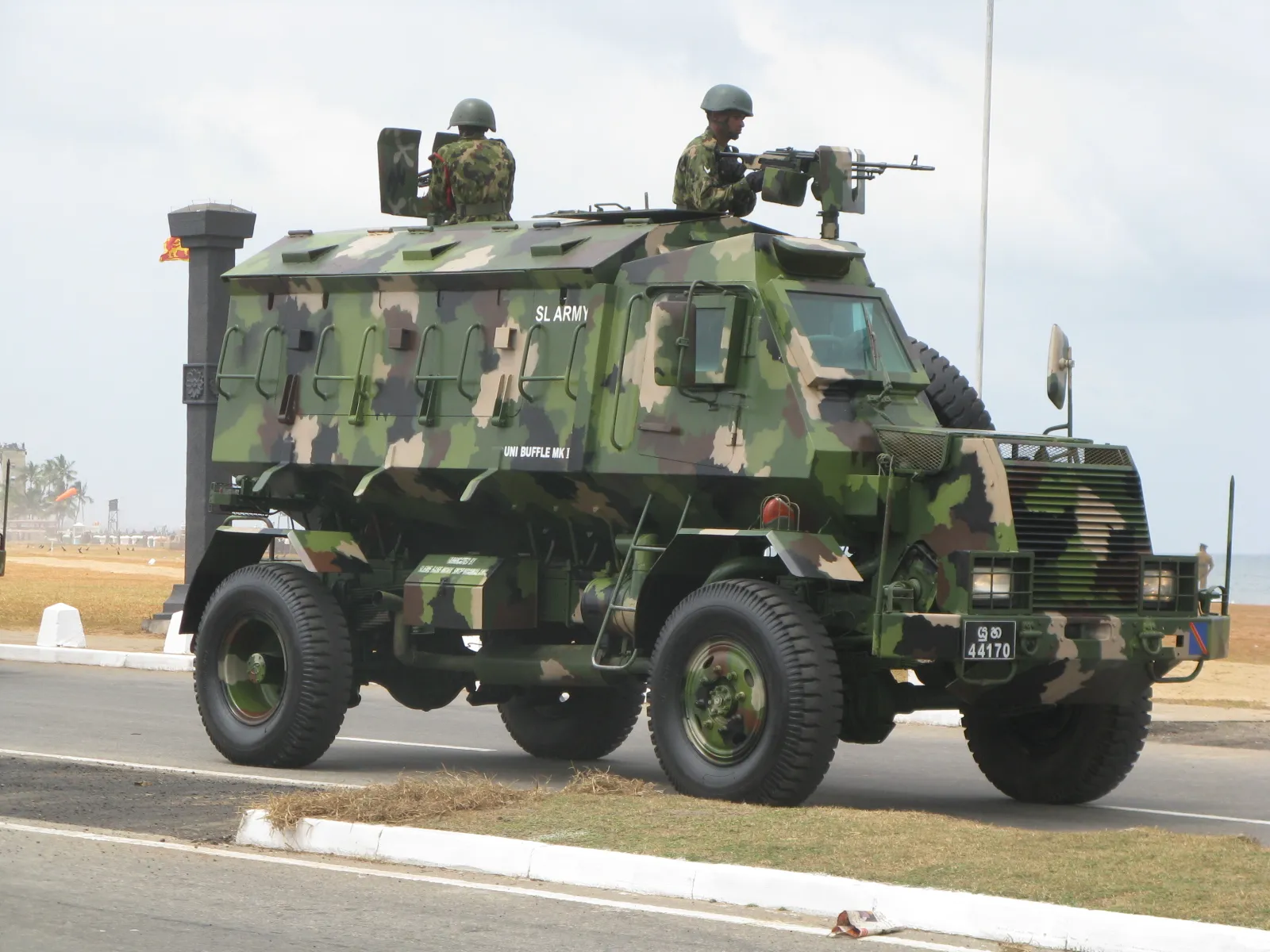
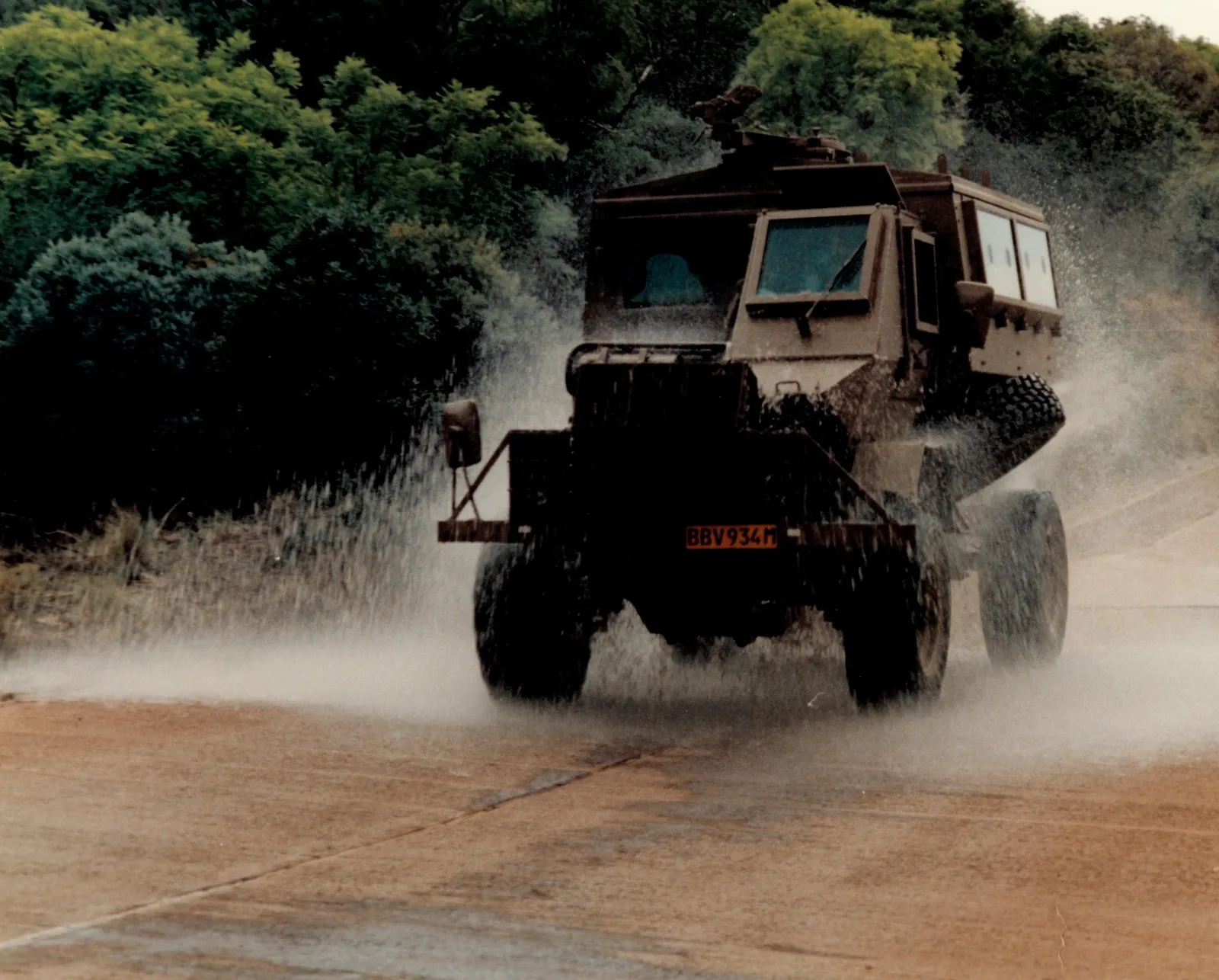
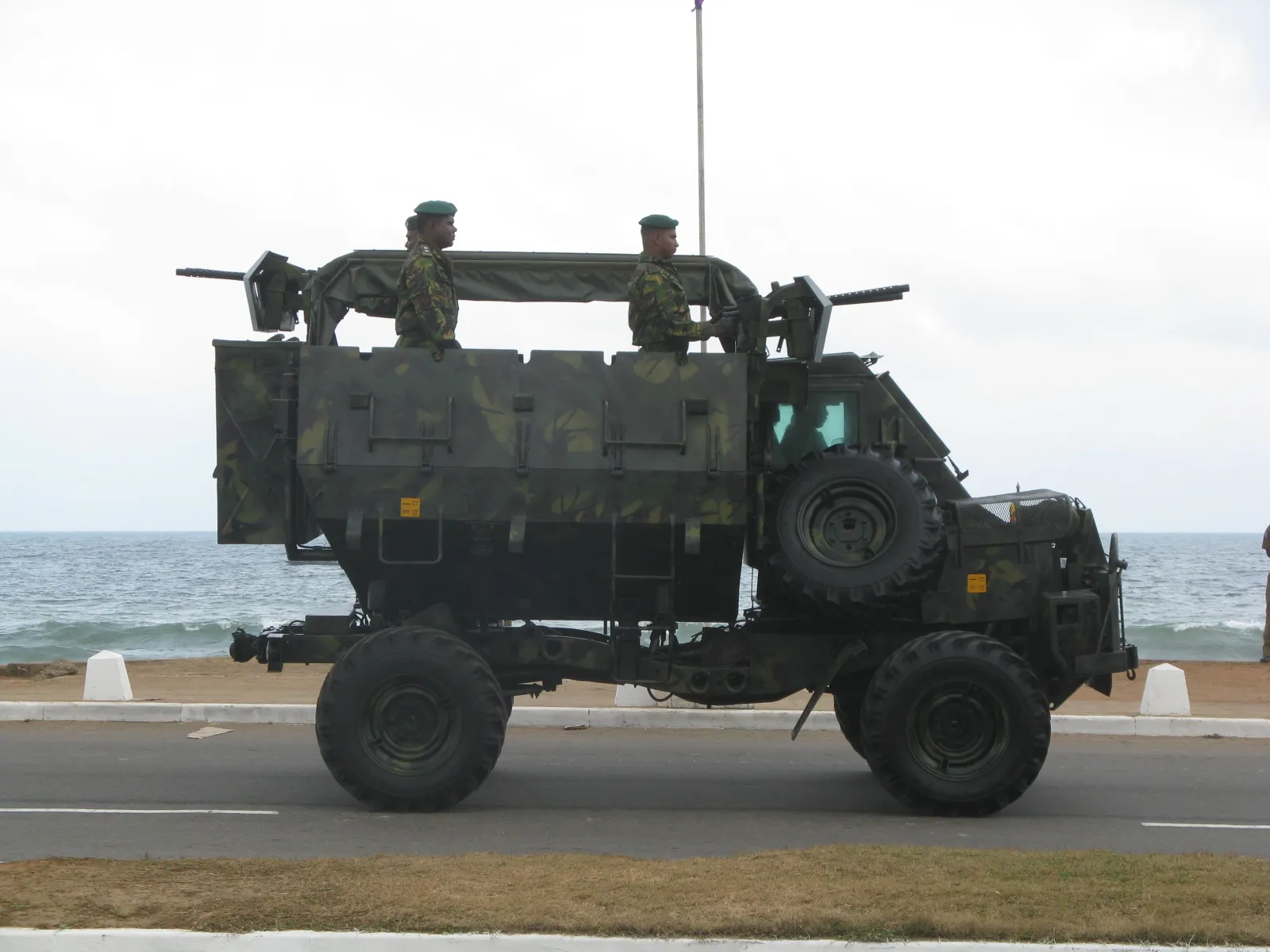
The Buffel is a South African 4x4 mine-protected armored personnel carrier built around a Unimog chassis, a V-shaped blast-deflecting hull, and an open or enclosed troop compartment. South African forces used Buffels for protected mobility in the Border War, while Sri Lanka imported the lineage and built Unicorn and Unibuffel derivatives for troop movement during the civil war against the LTTE.

Role in Conflicts

Side
South Africa

South African Border War sources document SADF Buffels as mine-protected troop carriers in SWA/Angola operations, including Operation Firewood vehicles assigned to reconnaissance and parachute elements and one Buffel lost after the Indungo action.

Border War Service Context

The Buffel's South African service centered on protected mobility in mine-threatened Border War terrain rather than heavy armored combat. Sources place the vehicle in SADF motorized patrol, transport, and logistics roles in South West Africa and Angola, with Operation Firewood records showing Buffels assigned to reconnaissance and parachute elements during a 1987 attack on a SWAPO base near Indungo.

Primary User

South African Defence Force units operating in SWA/Angola.

Operational Value

Mine-protected transport for troops moving through roads, bush tracks, and cross-border operating areas.

Documented Loss

One Buffel mine-protected vehicle was abandoned after the Indungo action and subsequently fell into SWAPO hands.
Profile / Specs

Profile

Origin
South Africa
Built by
ARMSCOR
Type
Mine-protected armored personnel carrier
Service note
Late Cold War mine-protected vehicle family with later Sri Lankan derivative service
Designer
South African state armaments and defence research organizations
Designed
1970s
Produced
Late 1970s-1990s for the South African Buffel family; Sri Lankan derivatives from the late 1980s onward
Number built
About 2,400-2,985 South African Buffel-family vehicles in specialist estimates; Sri Lanka also produced Unicorn and Unibuffel derivatives

Specifications

Crew and passengers
1 driver plus about 10 mounted infantry in the South African Buffel layout
Configuration
4x4 wheeled mine-protected armored personnel carrier on a Mercedes-Benz Unimog 416/162-series chassis
Dimensions
About 5.1 m long, 2.05 m wide, and 2.95-2.96 m high
Combat weight
About 6.1 tonnes
Engine
Mercedes-Benz or Atlantis Diesel OM352/ADE 352 six-cylinder diesel, depending on mark and source
Speed
About 96 km/h on road and 30 km/h off road
Range
About 1,000 km on road
Armament
Optional 5.56 mm or 7.62 mm machine guns on pintle mounts
Protection
V-shaped armored hull intended to deflect anti-tank mine blasts; specialist references cite protection against TM-57-class mine threats
Mine Protection Layout

The Buffel separated the driver cab from the rear troop compartment and raised both above a V-shaped armored lower structure. The layout was meant to deflect mine-blast energy away from occupants while retaining simple commercial-truck maintenance.

Chassis

Mercedes-Benz Unimog 416/162-series 4x4 chassis.

Troop Bay

Typically ten infantry seats in the rear compartment, with later enclosed Sri Lankan and South African derivatives.

Blast Concept

V-shaped hull and high ground clearance to reduce mine-blast transfer into crew spaces.

Variants

Buffel designations mix South African marks with Sri Lankan derivatives based on the same mine-protected vehicle concept.

VariantConfigurationDesignation notes
Buffel Mk IOriginal South African production vehicle

Open troop compartment, separate driver cab, and Unimog-based 4x4 driveline.

Sources: Tank Encyclopedia Buffel

Buffel Mk IIAEnclosed troop-compartment rebuild

Specialist references describe the Mk IIA as a rebuild with an enclosed rear compartment, rear access door, and bullet-resistant windows.

Sources: Army Guide Buffel

Log BuffelCargo carrier

The cargo version replaced the troop seating with an open load bed and was rated at roughly 2.6 tonnes of cargo.

Sources: Tank Encyclopedia Buffel

UnicornSri Lankan derivative

Sri Lankan sources describe local production of Unicorn armored vehicles after the imported South African vehicle lineage entered service.

Sources: Sri Lanka Defence STF Vehicles

UnibuffelSri Lankan derivative

Sri Lankan Army and Ministry of Defence reporting identify SLEME production and later UN-mission upgrades of Unibuffel vehicles.

Sources: Sri Lanka Defence STF Vehicles, Sri Lanka Defence Unicob

Timeline

Buffel Key Events

  1. Buffel developed for mine-protected mobility

    Specialist references describe the vehicle as a South African Army response to mine threats, developed under ARMSCOR leadership around a Unimog 4x4 chassis and a V-shaped armored structure.

    Sources: Army Guide Buffel, Tank Encyclopedia Buffel

  2. Sri Lanka imports South African vehicle lineage

    Sri Lankan defence reporting states that the army imported the South African Buffel-family vehicle for safe troop passage during the war against the LTTE.

    Sources: Sri Lanka Defence STF Vehicles

  3. Sri Lankan derivative enters local production

    Sri Lankan reporting ties SLEME production of Unicorn armored vehicles to the war-era effort to field protected troop carriers.

    Sources: Sri Lanka Defence STF Vehicles

  4. Buffels documented at Indungo

    A Scientia Militaria study of Operation Firewood records Buffels with SADF reconnaissance and parachute elements during the Indungo action in southern Angola and identifies one Buffel mine-protected vehicle abandoned after the battle.

    Sources: Scientia Militaria Indungo Buffel

  5. Unibuffel upgraded for UN service

    Sri Lanka's Ministry of Defence reported continued SLEME armored-vehicle production and Unibuffel dispatches for overseas UN missions, showing the persistence of the Buffel-derived design line after the civil war.

    Sources: Sri Lanka Defence Unicob

Media
Related Weapon Systems
REVA armored vehicle, Mine-resistant ambush-protected armored personnel carrier, Armored VehiclesArmored VehiclesREVA armored vehicleMine-resistant ambush-protected armored personnel carrierThe REVA is a South African mine-resistant armored vehicle family from Integrated Convoy Protection, built around a V-shaped armored hull for troop transport, protected mobility, and utility roles. The family spans the earlier REVA III 4x4 APC, newer REVA V and VI designs, and the UAE-linked Kasser II derivative, while conflict reporting documents REVA vehicles in Iraq, Nigerian counter-insurgency operations, and UAE-backed local-force operations in Yemen.
Steyr 4K 7FA armored personnel carrier, Tracked armored personnel carrier, Armored VehiclesArmored VehiclesSteyr 4K 7FA armored personnel carrierTracked armored personnel carrierThe Steyr 4K 7FA G 127 is an Austrian tracked armored personnel carrier developed from the Saurer 4K 4FA line with heavier protection, a 320 hp diesel powerpack, and automotive components related to Steyr's SK 105 light tank. Nigeria operated the type before and during the 2009 Boko Haram Insurgency: Nigerian Army examples were photographed after the 2015 recapture of Monguno, and later reporting documented ISWAP images of a captured Nigerian Army 4K-7FA after the Kanamma base raid.
Walid armored personnel carrier, 4x4 wheeled armored personnel carrier, Armored VehiclesArmored VehiclesWalid armored personnel carrier4x4 wheeled armored personnel carrierThe Walid, also rendered Al Walid or Waleed, is an Egyptian 4x4 armored personnel carrier produced by Kader Factory for Developed Industries. Open sources describe it as a BTR-40-like open-topped APC using a German Magirus-Deutz/UNIMOG-derived truck chassis made under licence in Egypt with a locally produced armored body, two crew, space for about ten troops, a pintle 7.62 mm machine gun, central tire-pressure regulation, and no amphibious, NBC, or night-vision equipment. It first saw combat in the 1967 Arab-Israeli war, later appeared in captured Israeli service, and was followed in Egyptian production by the Fahd APC family.

Sources