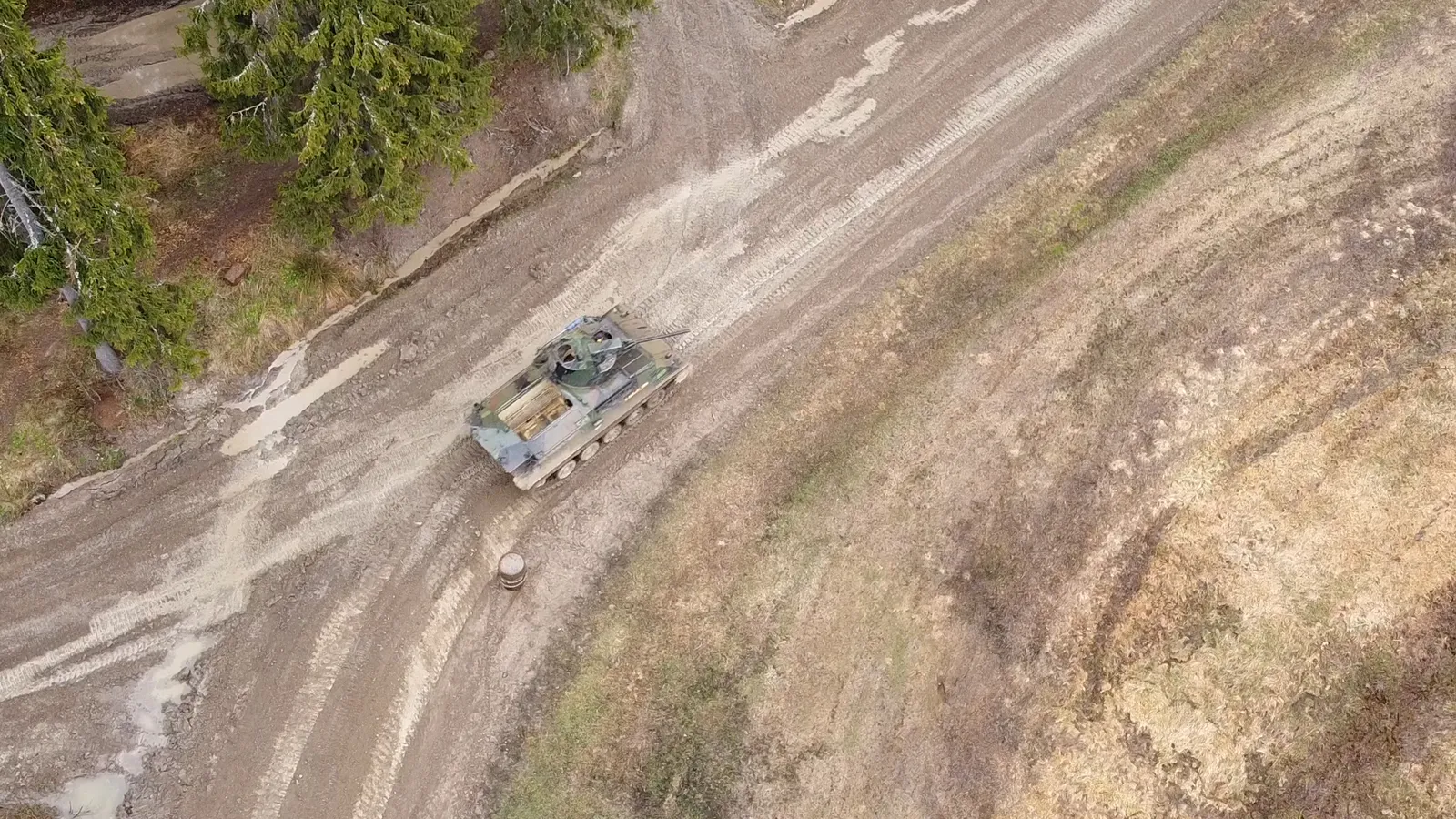

ATT Monitor reported Austrian-made Saurer 4K 4FA APCs among armored vehicles in Boko Haram possession that appeared to match Nigerian Army equipment, and Jane's reported that Boko Haram used a captured Steyr Saurer APC to attack Amchide in 2014 before it was destroyed by a Cameroonian Type 07P. HumAngle later reported Nigerian troops recovering a non-operational ex-Army Saurer 4K 4FA in northeast operations.
Armored Vehicles
Saurer 4K 4FA armored personnel carrier
Also known as
- Saurer 4K 4FA
- Saurer 4K4FA
- 4K 4FA
- 4K4FA
- Schutzenpanzer Saurer 4K 4FA
- Schuetzenpanzer Saurer 4K 4FA
- Osterreichische Saurer-Werke 4K 4FA
- Austrian Saurer APC
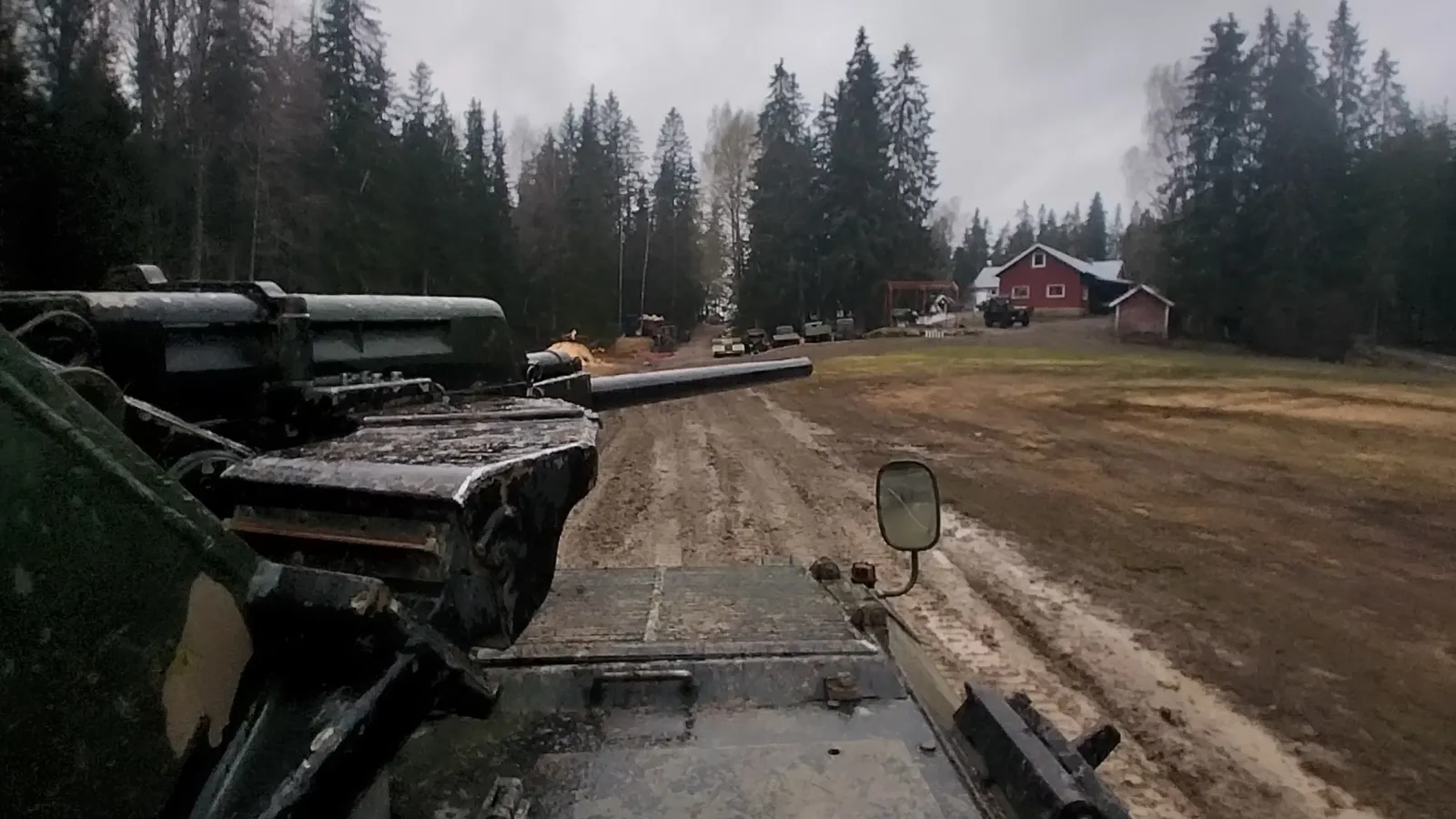
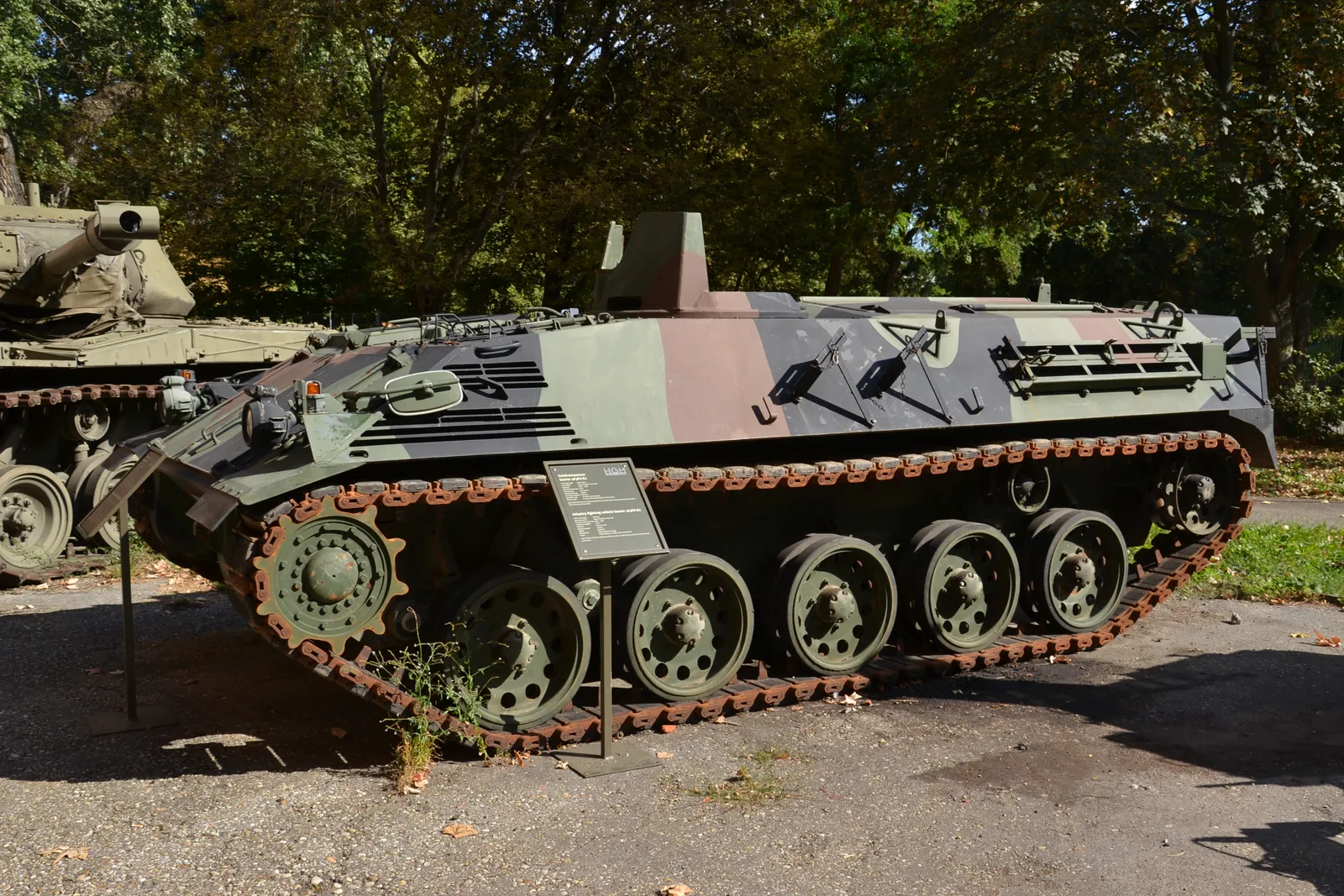
The Saurer 4K 4FA is an Austrian tracked armored personnel carrier built for troop transport with light armor, a two-person crew, and seating for eight infantry. In the 2009 Boko Haram Insurgency it is documented as captured or diverted Nigerian Army-origin equipment in Boko Haram possession, including a Jane's-reported 2014 attack at Amchide and a later recovery of a non-operational ex-Army vehicle.
Role in Conflicts
Profile / Specs
Profile
- Origin
- Austria
- Built by
- Saurer-Werk
- Type
- Tracked armored personnel carrier
- Service note
- Cold War design documented in Nigerian and insurgent inventories during the 2009 Boko Haram Insurgency
- Designer
- Osterreichische Saurer-Werke
- Designed
- 1956-1961 development period
- Produced
- 1961-1969
- Number built
- About 445-450 vehicles in the 4K 4FA family
- Developed into
- Steyr 4K 7FA armored personnel carrier
Specifications
- Crew and passengers
- 2 crew plus 8 infantry
- Armament
- Variant-dependent: 12.7 mm Browning M2 heavy machine gun on G1 or 20 mm Oerlikon Contraves Model 204 GK autocannon on G2
- Weight
- About 12.5 tonnes for G1 and 15 tonnes for G2
- Dimensions
- 5.4 m long, 2.5 m wide, 2.1 m high
- Mobility
- 250 hp Saurer six-cylinder diesel, torsion-bar suspension, about 65 km/h road speed and 370 km range
- Production
- 445 Austrian Army family vehicles delivered across 4K 4F, 4K 3FA, 4K 4FA, and specialist versions; some secondary references round the total to about 450
- Layout
- Driver front left, power pack front right, gunner/commander behind the driver, rear troop compartment with twin rear doors and roof hatches
- Running gear
- Torsion-bar suspension with five dual road wheels per side, front drive sprocket, rear idler, and two return rollers
- Protection
- All-welded steel armor; front arc described by specialist references as protected against 20 mm armor-piercing fire, with side and rear protection against small arms
- Limitations
- No amphibious capability and no standard NBC protection
Design And Battlefield Context
The Saurer 4K 4FA was a compact Cold War tracked carrier rather than a modern mine-protected vehicle. Its front-left driver position, front-right engine, rear troop compartment, and two rear doors followed the troop-carrier layout used by many early postwar APCs.
Primary role
Move an infantry section under armor, with the G1 relying on a heavy machine gun and the G2 adding a 20 mm cannon turret.
Lineage
The later Steyr 4K 7FA is a related successor line and is treated separately from original Saurer 4K 4FA variants.
Conflict relevance
The Boko Haram row combines documented possession, a Jane's-reported 2014 Amchide attack by a captured Steyr Saurer APC, and later recovery of an ex-Nigerian Army vehicle.
Sources: Saurer 4K4FA (1960); Saurer 4K 4FA - Army Guide; GDELS Heritage; Tackling Terror: How the Arms Trade Treaty Could Help Stop the Diversion of Arms and Ammunition in West Africa; New-model African armies; Military Operation In Nigeria's Northeast Intensifies.
Variants
The 4K 4FA family covers Austrian tracked APC, cannon-armed infantry, ambulance, command, mortar-carrier, and limited rocket-launcher configurations built around the same low-profile Saurer hull.
| Variant | Configuration | Designation notes |
|---|---|---|
| 4K 4FA-G1 | Baseline tracked APC | Basic troop-carrier version with a shielded 12.7 mm M2 Browning machine gun and seating for eight infantry. Sources: Saurer 4K4FA (1960), Saurer 4K 4FA Armored Personnel Carrier |
| 4K 4FA-G2 | 20 mm cannon-armed grenadier vehicle | Fitted with a one-person Oerlikon Contraves turret and 20 mm Model 204 GK autocannon, with high elevation suitable for ground and limited air-target engagement. |
| 4K 4FA-San | Armored ambulance | Unarmed medical variant configured for a driver, medical orderly, sitting casualties, and stretcher patients. |
| 4K 4F GrW1 | 81 mm mortar carrier | Mortar-carrier conversion with an 81 mm mortar firing from the rear compartment; a 120 mm GrW2 mortar version remained a prototype. |
 | Successor family | Steyr-Daimler-Puch's later 4K 7FA succeeded the Saurer line and shared the tracked APC role with heavier automotive updates. Sources: Saurer 4K4FA (1960), Saurer 4K 4FA Armored Personnel Carrier |
Timeline
Saurer 4K 4FA armored personnel carrier Key Events
Austrian APC development begins
Osterreichische Saurer-Werke began work on the tracked armored personnel carrier program that led through prototype vehicles to the production 4K 4FA family.
Sources: Saurer 4K4FA (1960), Saurer 4K 4FA - Army Guide
Saurer becomes part of Steyr-Daimler-Puch
GDELS heritage records Steyr-Daimler-Puch acquiring Osterreichische Saurer-Werke while Saurer was equipping the Austrian Army with armored personnel carriers.
Sources: GDELS Heritage
Production family enters service
The final 4K 4F prototype moved into production, with later 4K 3FA and 4K 4FA vehicles delivered in APC, command, ambulance, cannon, and mortar-carrier configurations.
Sources: Saurer 4K4FA (1960), Saurer 4K 4FA - Army Guide, Saurer 4K 4FA Armored Personnel Carrier
Production ends
Open reference sources place the end of 4K 4FA family production in 1969, before the Saurer armored-vehicle line was folded into Steyr-Daimler-Puch.
Sources: Saurer 4K4FA (1960), Saurer 4K 4FA - Army Guide
Saurer fully integrated
GDELS places full integration of Saurer into Steyr-Daimler-Puch by 1970, with the Vienna-Simmering site becoming an armored-vehicle center.
Sources: GDELS Heritage
ASCOD Ulan replacement order
Army Guide says Austria ordered 112 ASCOD Ulan infantry fighting vehicles in 1999, replacing part but not all of the older Saurer 4K 4FA fleet.
Sources: Saurer 4K 4FA - Army Guide
ATT Monitor diversion case study
ATT Monitor listed Austrian-made Saurer 4K 4FA APCs among armored vehicles apparently in Boko Haram possession and matching Nigerian Army equipment.
Sources: Tackling Terror: How the Arms Trade Treaty Could Help Stop the Diversion of Arms and Ammunition in West Africa
HumAngle reports recovery
HumAngle reported Nigerian troops recovering a non-operational ex-Army Saurer 4K 4FA APC during northeast Nigeria operations against Boko Haram and ISWAP activity.
Sources: Military Operation In Nigeria's Northeast Intensifies
Media
Saurer 4K 4FA armored personnel carrier Videos
Saurer 4K 4FA armored personnel carrier Images
Related Weapon Systems


Sources
Saurer 4K 4FA Armored Personnel CarrierPublisher: Military Factory | Note: Supports manufacturer, Austrian origin, Nigerian operator context, system background, variants, and key specifications. | Accessed: 2026-07-03Saurer 4K4FA (1960)Publisher: Tank-AFV | Note: Supports production history, vehicle layout, variants, armament, mobility, dimensions, armor, and passenger capacity. | Accessed: 2026-07-03Saurer 4K 4FA - Army GuidePublisher: Army Guide | Note: Supports Saurer 4K 4FA family layout, G1/G2/ambulance/mortar-carrier variant distinctions, armament, mobility, dimensions, armor, and equipment limitations. | Accessed: 2026-07-03GDELS HeritagePublisher: General Dynamics European Land Systems | Note: Official successor heritage page supporting Saurer's acquisition by Steyr-Daimler-Puch in 1959, full integration by 1970, and the Vienna-Simmering armored-vehicle lineage. | Accessed: 2026-07-03Tackling Terror: How the Arms Trade Treaty Could Help Stop the Diversion of Arms and Ammunition in West AfricaPublisher: ATT Monitor | Note: Supports 2009 Boko Haram Insurgency conflict-use context: Austrian-made Saurer 4K 4FA APCs appeared in Boko Haram possession and appeared to match Nigerian Army equipment. | Accessed: 2026-07-03New-model African armiesPublisher: Jane's / IHS | Note: Supports 2009 Boko Haram Insurgency conflict-use context: Boko Haram used a captured Steyr Saurer armored personnel carrier to attack Amchide in 2014 before it was destroyed by a Cameroonian Type 07P. | Accessed: 2026-07-03Military Operation In Nigeria's Northeast IntensifiesPublisher: HumAngle | Note: Supports 2009 Boko Haram Insurgency conflict-use context: Nigerian troops recovered a non-operational ex-Army Saurer 4K 4FA APC during operations against Boko Haram and ISWAP activity in northeast Nigeria. | Accessed: 2026-07-03Saurer 4K 4FA in Pornainen.jpgPublisher: Wikimedia Commons | Note: Image provenance and CC0 licensing page for a Saurer 4K 4FA in Finland. | Accessed: 2026-07-03Saurer 4K 4FA driving.jpgPublisher: Wikimedia Commons | Note: Image provenance and CC0 licensing page for a Saurer 4K 4FA driving view. | Accessed: 2026-07-03Heeresgeschichtliches Museum - Saurer 4K 4FA.jpgPublisher: Wikimedia Commons | Note: Image provenance and CC BY-SA 4.0 licensing page for a museum Saurer 4K 4FA. | Accessed: 2026-07-03