- Side
- Israel

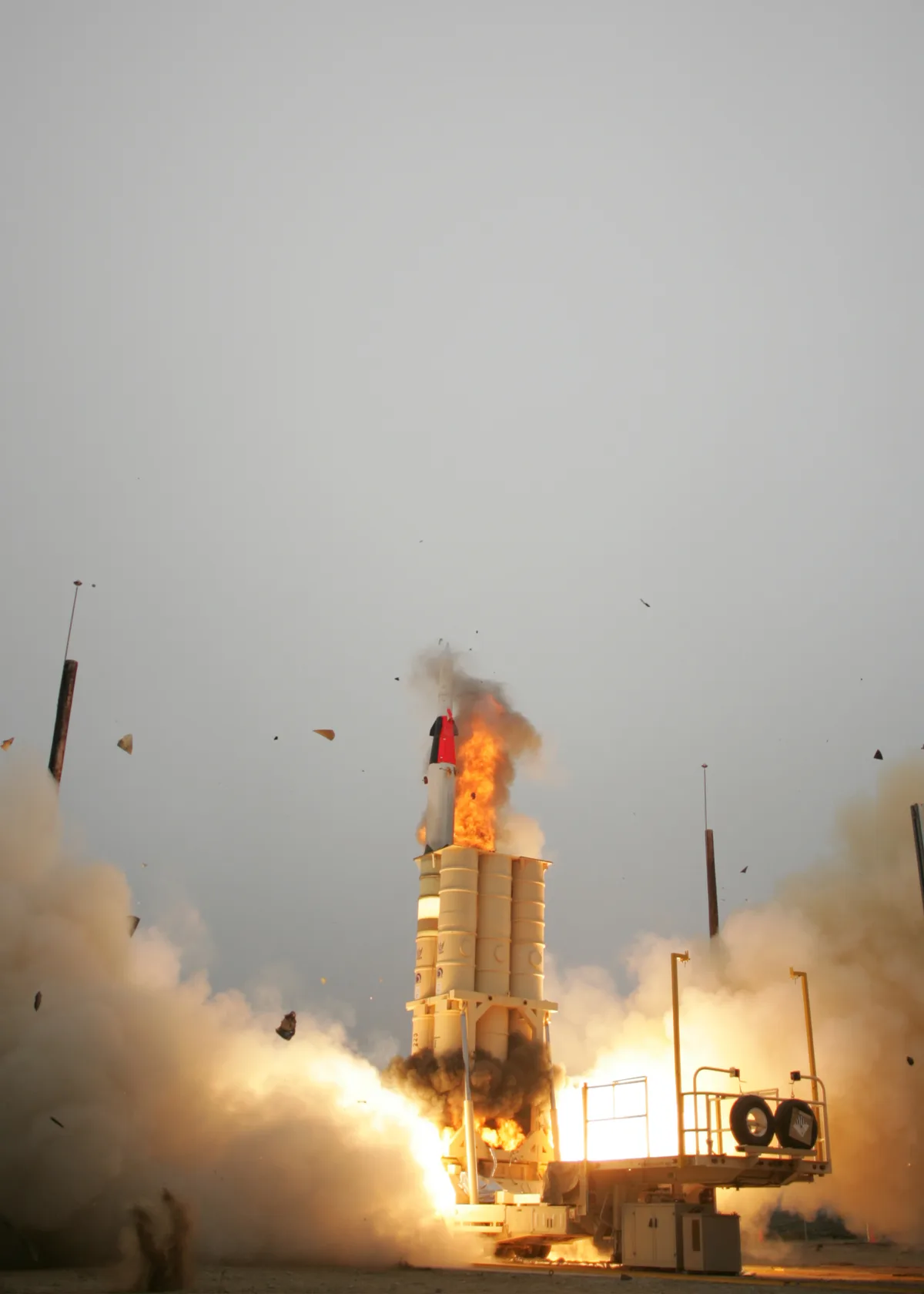
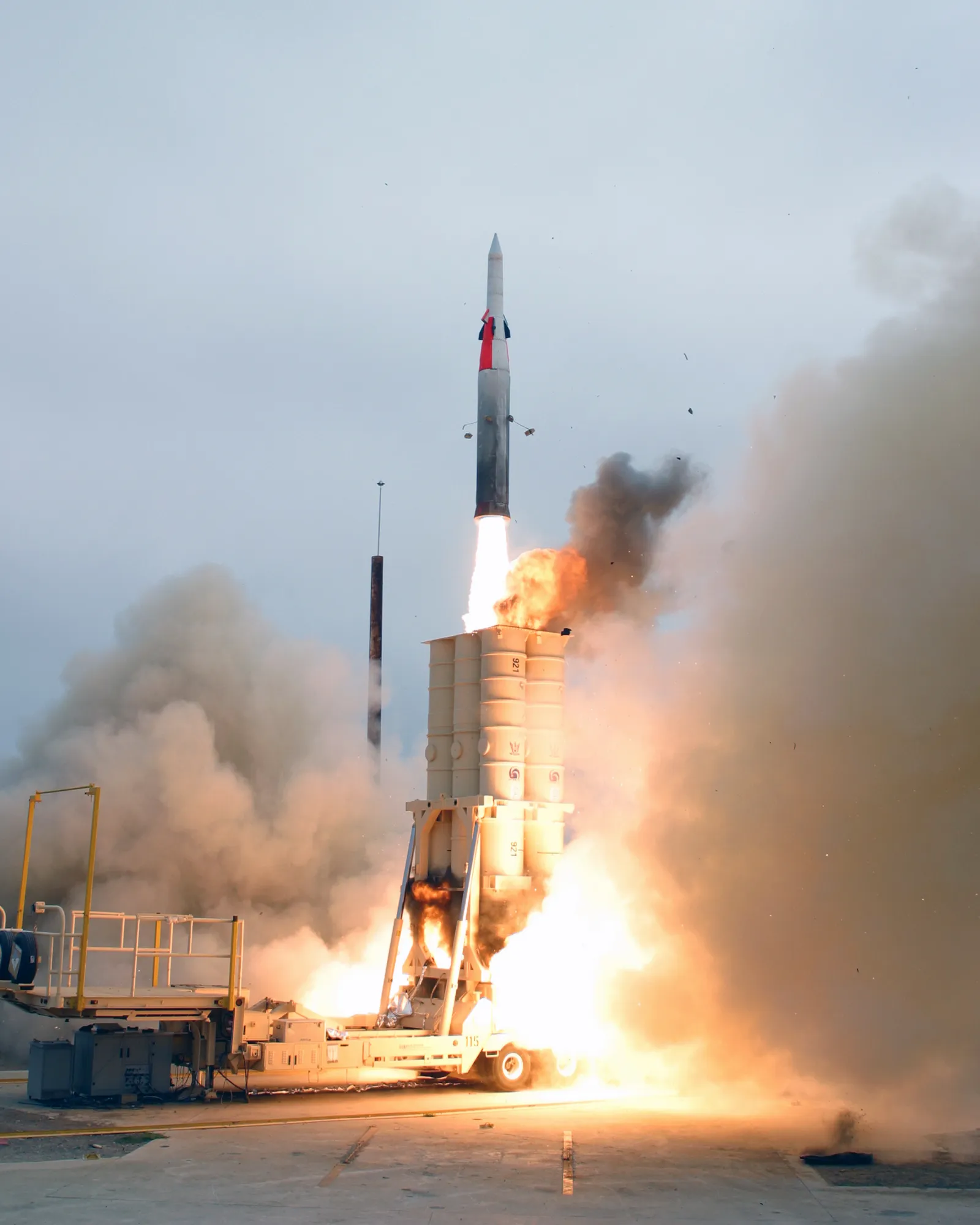
Israel used Arrow 2 on October 31, 2023 to intercept a ballistic missile fired toward Israel from the Red Sea/Yemen direction before it reached Israeli territory.
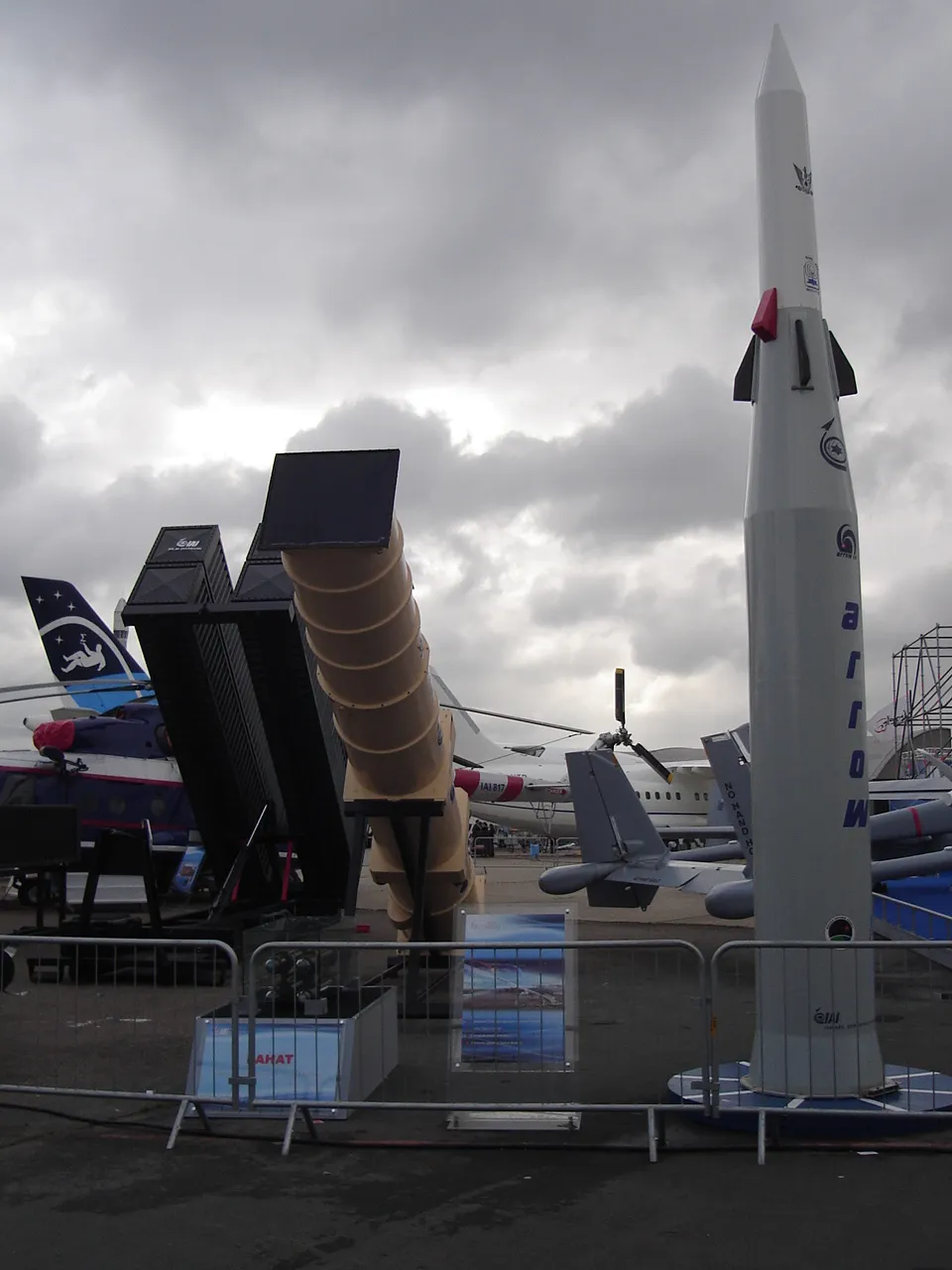
Role detailsThe Arrow 2 interceptor is the first operational missile layer in Israel's Arrow Weapon System, developed with U.S. support for upper-atmosphere ballistic-missile defense. It combines a two-stage solid-propellant body, focused fragmentation kill mechanism, and Green Pine radar cueing, with documented Israeli use against a Syrian SA-5 in 2017 and a Red Sea-area ballistic missile in 2023.
Israel used Arrow 2 on October 31, 2023 to intercept a ballistic missile fired toward Israel from the Red Sea/Yemen direction before it reached Israeli territory.
Role detailsIsrael used Arrow 2 on March 17, 2017 to intercept a Syrian SA-5/S-200 missile after Israeli aircraft struck targets in Syria.
Role detailsArrow 2 sits between the Arrow 1 technology-demonstrator work and later Arrow upper-tier interceptors. Open sources describe block upgrades and co-produced enhanced Arrow 2 interceptors rather than a single frozen configuration.
| Variant | Configuration | Designation notes |
|---|---|---|
| Arrow 1 | Technology demonstrator | CSIS describes Arrow 1 as the first missile in the series, flight-tested from 1990 through 1994 before the lighter ACES demonstrator became the basis for Arrow 2. Sources: Arrow 2 (Israel) | Missile Threat |
| Arrow 2 Block 2 | Early upgraded Arrow 2 configuration | CSIS associates Block 2-era testing with January and December 2003 system tests and later U.S.-Israeli tests against Scud-class targets. Sources: Arrow 2 (Israel) | Missile Threat |
| Co-produced / enhanced Arrow 2 | U.S.-Israeli production configuration | Boeing says IAI delivered the first co-produced Arrow 2 interceptor in spring 2005, with Boeing component production in the United States and final assembly in Israel. Sources: Arrow Weapon System Backgrounder, IAI and Boeing Sign Arrow Component Agreement |
| Arrow 2 Block 4 | Upgrade tested for improved discrimination and tracking | CSIS lists a February 10, 2012 tracking-only test that verified the Arrow Block 4 upgrade. Sources: Arrow 2 (Israel) | Missile Threat |
 | Adjacent Arrow family upper-tier interceptor | IAI says Arrow 3 complements current and future Arrow 2 blocks and provides an exo-atmospheric layer for longer-range threats. |
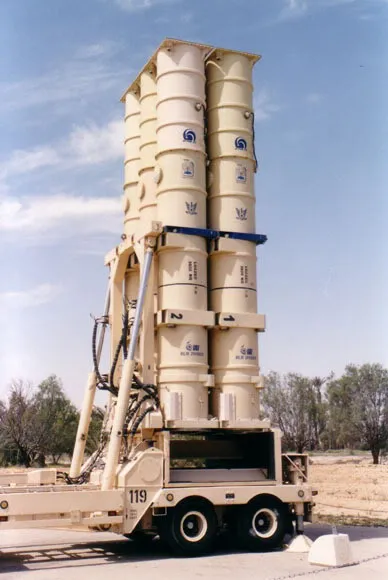
Arrow 2 is an interceptor inside the broader Arrow Weapon System rather than a standalone launch platform.
| Launcher | Launcher type | Launch evidence |
|---|---|---|
 | Upper-tier missile-defense system | IAI identifies Arrow 2 as part of the Arrow Weapon System, and CSIS describes Arrow 2 as the interceptor used by that system for upper-atmosphere ballistic-missile defense. Sources: Arrow 2 - Advanced ATBM Missile Protection, Arrow 2 (Israel) | Missile Threat |
Arrow 2 depends on the Arrow Weapon System's sensors, launch-control, and battle-management architecture. CSIS describes the complete system as including the Arrow missile and launcher, the EL/M-2080 Green Pine radar, Hazelnut Tree launch control center, and Citron Tree battle-management center.
| Element | Catalog link | Context |
|---|---|---|
| Parent system | | Provides the operational architecture that employs Arrow 2 and Arrow 3 interceptors. |
| Related interceptor | | CSIS describes Arrow 2 and Arrow 3 as the two interceptors compatible with the Arrow system, with Arrow 2 intended for lower-altitude targets than Arrow 3. |
| Radar | Not linked | IAI and CSIS identify the EL/M-2080 Green Pine radar as the sensor that detects, locates, and identifies threats for Arrow 2. |
| Launch and battle management | Not linked | CSIS names the launcher, Hazelnut Tree launch-control center, and Citron Tree battle-management center as system elements, but no matching catalog IDs were found. |
CSIS dates Arrow system development to June 1988 as a jointly funded U.S.-Israeli effort.
CSIS describes Arrow 1 as the technology demonstrator that began flight testing in 1990 and completed its final flight in 1994.
CSIS says Israel conducted Arrow Continuation Experiment demonstrator flights from 1995 to 1996, and that the lighter ACES missile became the basis for Arrow 2.
CSIS reports that Israel first flight-tested Arrow 2 in March 1997 and successfully intercepted a ballistic target.
Arms Control Association reported that the Israeli Air Force took operational command of the first planned Arrow 2 battery on March 14, 2000.
Boeing announced an agreement to establish U.S. production infrastructure for Arrow missile components, with IAI retaining integration and final assembly in Israel.
Defense News reported that an Israeli Air Force officer confirmed Arrow 2 scored its first operational intercept against a Syrian SA-5 after Israeli aircraft struck targets in Syria.
CSIS lists AST-18a as a successful Arrow 2 intercept of a medium-range ballistic missile target.
Breaking Defense and Arms Control Association reporting identified the October 31, 2023 Red Sea-area engagement as an Arrow 2 interception of a ballistic missile fired toward Israel.