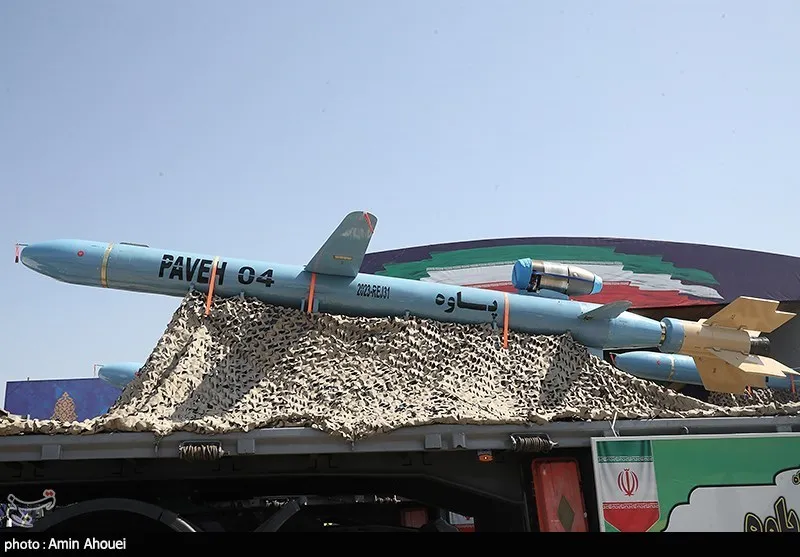

2014 Yemen Civil War: fielded by Houthi-aligned forces as the radar-seeker anti-ship member of the Paveh/Project 351 or Quds cruise-missile line, after its public display in Sanaa during the 2023 Houthi parade.
Role detailsMunitions
Sayyad anti-ship cruise missile
Also known as
- Sayyad
- Sayyad naval cruise missile
- Sayyad ASCM
- Paveh-based Sayyad
- Project 351 anti-ship cruise missile
- Quds-family Sayyad
The Sayyad is a Houthi anti-ship cruise missile tied by IISS to the Iranian Paveh/Project 351 or Quds cruise-missile family. It is described in open sources as the radar-seeker counterpart to the EO/IR-guided Quds-Z-0, giving Houthi-aligned forces a long-range maritime-strike option during the Yemen war and the later Red Sea anti-shipping campaign.
Role in Conflicts
- Side
- Houthi movement
2023 Red Sea Crisis: IISS lists Sayyad and Quds-Z-0 among Paveh/Quds-based anti-ship cruise missiles known to have been used in the Houthi anti-shipping campaign, and assesses that a Paveh-type missile likely failed during the late-April 2024 MSC Orion attack sequence.
Role detailsProfile / Specs
Profile
- Origin
- Yemen / Iran
- Type
- Anti-ship cruise missile
- Service note
- First publicly displayed in 2023
- Designer
- Iranian Paveh / Project 351 cruise-missile lineage adapted by Houthi forces
- Designed
- 2023
- Produced
- 2023-present
Specifications
- Range
- At least 800 km claimed; IISS assesses Paveh-based anti-ship cruise missiles in roughly the 900-2,000 km class depending on baseline
- Length
- 6.8 m reported by Houthi-aligned media
- Diameter
- 0.5 m reported by Houthi-aligned media
- Payload
- 200-300 kg conventional explosive payload reported by Houthi-aligned media
- Propulsion
- Solid-fuel booster with turbojet cruise engine
- Guidance
- Reported satellite/inertial midcourse navigation with radar-homing anti-ship terminal seeker
- Launch platform
- Mobile ground-based launcher
- Family
- Paveh / Project 351 / Quds-series anti-ship derivative
Identification And Evidence Limits
Sayyad is documented mostly through Houthi display material and external open-source assessment. The strongest public sources identify the family connection and seeker split, while keeping individual strike attribution cautious.
| Evidence point | What it supports | Limit to preserve |
|---|---|---|
| Family lineage | IISS and DIA-linked material connect Houthi Quds/Paveh cruise missiles to the Iranian Project 351 line and note design features shared across engines, rear fins, and boosters. | The record describes lineage and technology support rather than claiming a complete public manufacturing chain. |
| Seeker distinction | IISS identifies Sayyad as the radar-seeker anti-ship version and Quds-Z-0 as the EO/IR-seeker version. | Public sources do not provide a full seeker model, targeting chain, or test record. |
| Red Sea use | IISS lists Paveh/Quds-based anti-ship cruise missiles, including Sayyad and Quds-Z-0, among systems known to have been used in the Houthi anti-shipping campaign. | The MSC Orion episode is best treated as a likely failed Paveh-type missile attempt, not a confirmed hit by Sayyad alone. |
Sources: The Houthis' Campaign in the Red Sea and the Gulf of Aden; Iran: Enabling Houthi Attacks Across the Middle East; The Anti-Ship Missile Arsenal Houthis Are Firing Into The Red Sea.
Variants
Public sources treat Sayyad as a radar-homing anti-ship member of the wider Quds/Paveh cruise-missile family, with Quds-Z-0 representing the EO/IR anti-ship branch and Quds-1 representing an earlier land-attack branch.
| Variant | Configuration | Designation notes |
|---|---|---|
 | Earlier land-attack Quds family member | The Sayyad shares the Iranian Project 351/Paveh or Quds lineage associated with earlier Houthi land-attack cruise missiles, but is adapted for anti-ship targeting. Sources: The Houthis' Campaign in the Red Sea and the Gulf of Aden, Iran: Enabling Houthi Attacks Across the Middle East |
 | EO/IR anti-ship counterpart | IISS separates the two Paveh anti-ship versions by terminal seeker, identifying Quds-Z-0 with an EO/IR seeker and Sayyad with a radar seeker. Sources: The Houthis' Campaign in the Red Sea and the Gulf of Aden, The Anti-Ship Missile Arsenal Houthis Are Firing Into The Red Sea |
| Radar-homing Sayyad | Current record configuration | The distinguishing public feature of Sayyad is the reported radar seeker used for the anti-ship mission. Sources: The Houthis' Campaign in the Red Sea and the Gulf of Aden |
Timeline
Sayyad anti-ship cruise missile Key Events
Displayed in Sanaa
Houthi-aligned forces displayed Sayyad during the September 2023 Sanaa parade as one of two anti-ship Paveh/Quds-family cruise-missile versions.
Sources: The Houthis' Campaign in the Red Sea and the Gulf of Aden, Explainer: How Yemen's Sayyad missile bolsters its naval deterrence against adversaries
IISS seeker split reaches wider reporting
TWZ summarized IISS's assessment that Sayyad was the radar-homing Paveh/Quds-family anti-ship version, paired with the EO/IR-guided Quds-Z-0.
Sources: The Anti-Ship Missile Arsenal Houthis Are Firing Into The Red Sea
Paveh-type missile linked to MSC Orion attempt
IISS later assessed that a Paveh-type missile wreck found in northern Somalia was likely launched in a failed attempt connected to the Houthis' late-April 2024 claim against MSC Orion.
Sources: The Houthis' Campaign in the Red Sea and the Gulf of Aden
Houthi-aligned media reports active service
Press TV reported a Yemeni Navy statement that Sayyad had entered active service and repeated Houthi claims about its 800 km range and mobile ground-launch configuration.
Sources: Explainer: How Yemen's Sayyad missile bolsters its naval deterrence against adversaries
Media
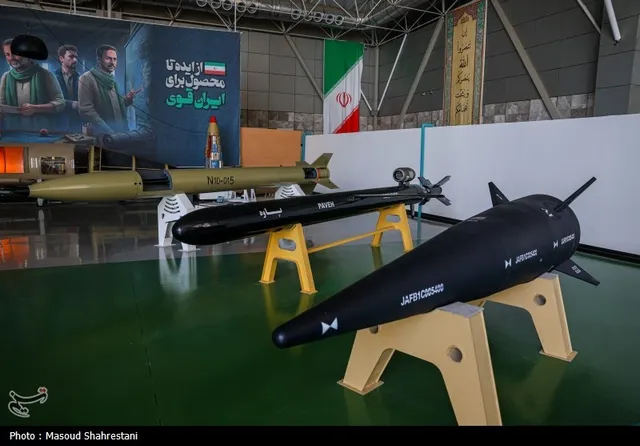
Sayyad anti-ship cruise missile Images
Related Weapon Systems


Sources
The Houthis' Campaign in the Red Sea and the Gulf of AdenPublisher: International Institute for Strategic Studies | Note: Supports 2014 Yemen Civil War fielding context and 2023 Red Sea Crisis direct conflict-use: IISS identifies Sayyad as the radar-seeker Paveh/Quds-based anti-ship version unveiled by the Houthis in 2023, lists Quds-Z-0 and Sayyad among Paveh/Quds-based anti-ship cruise missiles known to have been used in the Houthi anti-shipping campaign, and assesses a failed late-April 2024 Paveh-type missile attempt connected to MSC Orion. | Accessed: 2026-07-01Iran: Enabling Houthi Attacks Across the Middle EastPublisher: Defense Intelligence Agency via Iran Watch | Note: Supports background and manufacturer context: DIA material compares Houthi Quds-4 land-attack cruise missiles with Iranian Project 351/Paveh systems, notes shared design features, and states that Iran supplied components to the Houthis for Quds-4 production. | Accessed: 2026-07-01The Anti-Ship Missile Arsenal Houthis Are Firing Into The Red SeaPublisher: The War Zone | Note: Supports background on the Houthi anti-ship missile inventory, including IISS-sourced discussion of Sayyad and Quds-Z-0 as Quds-family anti-ship cruise missiles, Sayyad's radar-homing seeker, and an at-least-800 km range estimate from Houthi claims and Quds baseline data. | Accessed: 2026-07-01Explainer: How Yemen's Sayyad missile bolsters its naval deterrence against adversariesPublisher: Press TV | Note: Houthi-aligned media source used for attributed Sayyad-specific claims: reported Yemeni Navy active-service statement, September 2023 display, 800 km range claim, 6.8 m length, 0.5 m diameter, 200-300 kg payload, booster/turbojet propulsion, and mobile ground-launch context. | Accessed: 2026-07-01Houthi ArsenalPublisher: Wilson Center | Note: Supports background on Houthi anti-ship cruise missile inventories, including a Sayyad anti-ship cruise missile listing and reported range and payload context. | Accessed: 2026-07-01Under Fire in the Bab al-MandabPublisher: The Washington Institute for Near East Policy | Note: Supports background on the Houthi maritime threat set, including Sayyad among anti-ship cruise missiles available for Bab al-Mandab and Red Sea operations. | Accessed: 2026-07-01Sacred Defence Week parade, 2023, in Tehran (107).jpgPublisher: Wikimedia Commons | Note: Supports image provenance and CC BY 4.0 licensing for a clear-license representative Paveh-family missile image used because exact Sayyad parade imagery found during this pass did not show suitable reuse terms. | Accessed: 2026-07-01August 2024 National Aerospace Park tour for journalists (10).jpgPublisher: Wikimedia Commons | Note: Supports image provenance and license for a second clear-license representative Paveh-family missile image. | Accessed: 2026-07-01