Naval Systems

OPV 270

Also known as
  • OCEA OPV 270
  • OPV-270
  • OPV 270 Mk II
  • Gabriela Silang
  • BRP Gabriela Silang
  • OPV-8301
  • Gabriela Silang-class offshore patrol vessel

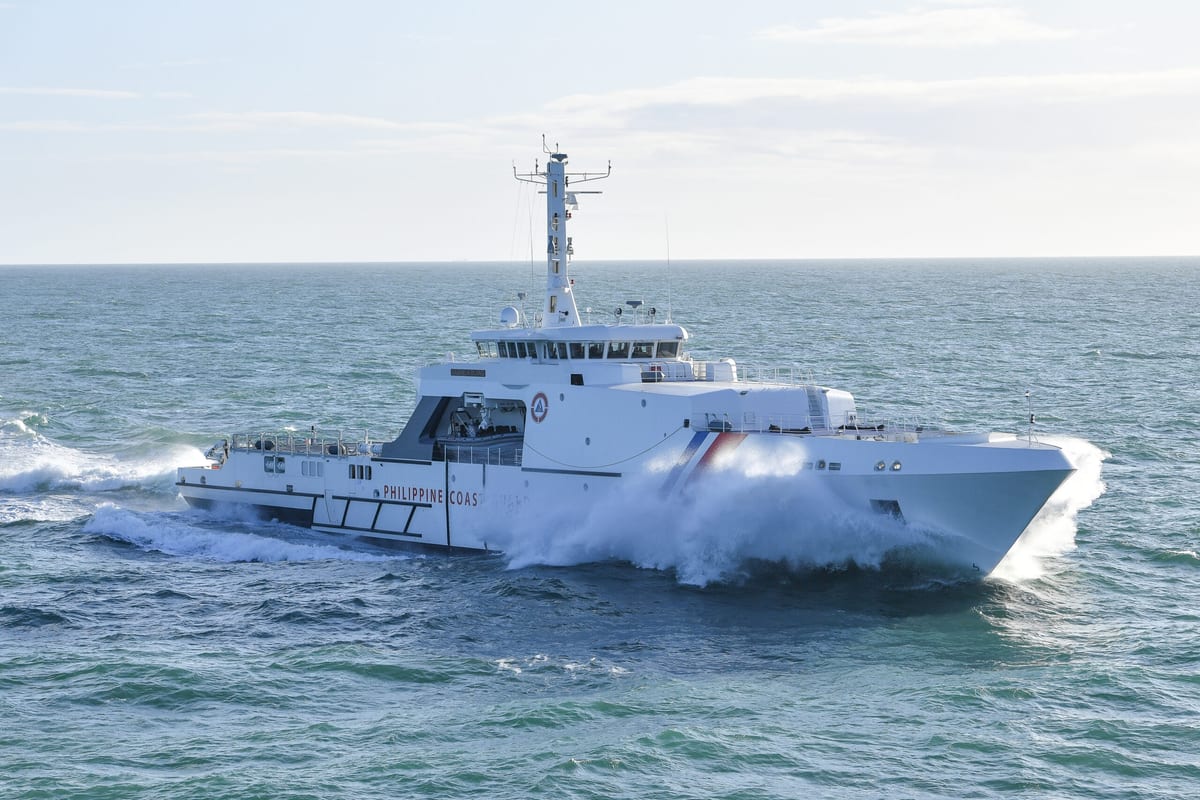
The OPV 270 is OCEA's large aluminum offshore patrol vessel design for exclusive-economic-zone surveillance, maritime law enforcement, search and rescue, pollution response, helicopter operations, and long-range coast-guard presence. The known Philippine Coast Guard example, BRP Gabriela Silang (OPV-8301), was delivered by OCEA in December 2019, reached Manila in April 2020 after an overseas repatriation tasking, and later appeared in joint maritime training and RIMPAC preparation rather than documented combat use.

Profile / Specs

Profile

Origin
France
Built by
OCEA
Type
Offshore patrol vessel
Service note
Contemporary offshore patrol vessel
Designer
OCEA
Designed
2010s OPV 270 design family
Produced
Built by OCEA for the Philippine Coast Guard by 2019-2020
Number built
At least one OPV 270, BRP Gabriela Silang, built for the Philippine Coast Guard

Specifications

Length
83.60 m official OCEA OPV 270 range listing; service reporting rounds Gabriela Silang to 84 m
Beam and draft
About 16 m beam and 3.5 m draft reported for BRP Gabriela Silang
Hull construction
Aluminum offshore patrol vessel hull
Crew and operations complement
OCEA lists 72 crew plus 35 operations personnel for the OPV 270 range; Gabriela Silang reporting lists 40-44 sailors plus additional passenger, VIP, or survivor accommodation
Propulsion
Hybrid diesel-electric arrangement reported for Gabriela Silang, including MTU 16V4000 M73 diesels and Leroy-Somer electric motors
Speed
20 to 25 knots in OCEA range data; 22 knots reported for Gabriela Silang
Range
4,500 to 8,000 nautical miles at 15 knots in OCEA range data; Gabriela Silang service reporting cites 8,000 nautical miles
Endurance
22 days in OCEA range data; Gabriela Silang reporting cites up to five weeks and Baird Maritime cites up to 45 days before refueling and resupply
Small craft
Two 9 to 9.5 m RHIBs for search and rescue, interception, and boarding tasks
Aviation facilities
Helicopter deck and hangar for Philippine Coast Guard H145-class operations
Mission systems
Command-and-control room with Nexeya LYNCEA; reported radar, AIS, sonar, and other sensor integration
Missions
EEZ surveillance, smuggling and illegal-immigration control, anti-piracy, vessel control, search and rescue, pollution response, sovereignty patrol, diving support, disaster relief, and helicopter operations
Onboard Mission Fit

Open reporting describes the OPV 270 as a coast-guard platform built around endurance, aviation support, small-boat operations, survivor handling, and pollution-response equipment rather than a front-line naval weapons fit.

Aviation

Gabriela Silang has a helicopter deck and hangar sized for Philippine Coast Guard H145 operations.

Intervention craft

The vessel carries two Sillinger RHIBs for rescue, law-enforcement boardings, and interception tasks.

Command and care spaces

Sources describe a command-and-control room with Nexeya LYNCEA, a sick bay, diver support spaces, holding areas, and survivor accommodation.

Public-service missions

Reported missions include EEZ patrol, anti-smuggling patrol, search and rescue, pollution response, COVID-19 logistics, typhoon relief, and multinational maritime training.

Timeline

OPV 270 Key Events

  1. Philippine Coast Guard procurement selected OCEA

    OCEA was selected to supply four 24 m FPB 72 Mk II fast patrol boats and one 84 m OPV 270 for the Philippine Coast Guard.

    Sources: Naval News Gabriela Silang handover

  2. OPV 270 launched in France

    OCEA launched the Philippine Coast Guard OPV 270 at Les Sables d'Olonne and described it as the largest aluminum OPV built at the time.

    Sources: Naval News OPV 270 launch

  3. BRP Gabriela Silang handed over in France

    The Philippine Coast Guard took possession of Gabriela Silang from OCEA during a change-of-flag ceremony in Saint-Nazaire.

    Sources: Naval News Gabriela Silang handover

  4. Arrival in Manila after first overseas tasking

    Naval News reported the OPV arrived in Manila after several weeks of convoying and an initial mission connected to Filipino nationals in the Mediterranean.

    Sources: Naval News Gabriela Silang arrival

  5. Emergency-response role profiled

    Baird Maritime described Gabriela Silang's use ferrying medical personnel and supplies during the COVID-19 response and supporting relief after Typhoons Goni and Vamco.

    Sources: Baird Maritime Gabriela Silang vessel review

  6. Multilateral maritime activity in the Philippine Sea

    U.S. Navy imagery placed BRP Gabriela Silang in formation with Philippine, U.S., and Japanese forces during a maritime cooperative activity.

    Sources: U.S. Navy February 2026 maritime cooperative activity

  7. RIMPAC 2026 preparation in Guam

    The U.S. Coast Guard reported BRP Gabriela Silang arrived at Apra Harbor for pre-exercise engagements before its first RIMPAC participation.

    Sources: U.S. Coast Guard Guam RIMPAC engagement

  8. RIMPAC sea phase departure

    DVIDS published a U.S. 3rd Fleet image record showing BRP Gabriela Silang departing Joint Base Pearl Harbor-Hickam for the RIMPAC 2026 sea phase.

    Sources: DVIDS BRP Gabriela Silang RIMPAC sea phase

Media
Related Weapon Systems
Félix Éboué class patrol vessel, Offshore patrol vessel, Naval SystemsNaval SystemsFélix Éboué class patrol vesselOffshore patrol vesselThe Félix Éboué class patrol vessel, also known as the Patrouilleur Outre-Mer (POM), is France's six-ship overseas offshore patrol vessel program for sovereignty, maritime surveillance, law-enforcement, environmental-protection, and rescue missions in distant EEZs. Built by Socarenam with CNN MCO support and designed by MAURIC, the class is distributed across Nouméa, Papeete, and La Réunion and combines diesel-electric propulsion, a 5,500 nm range, a 24-knot top speed, UAV integration, and a 20 mm Narwhal remote weapon station for extended Indo-Pacific and Indian Ocean patrol work.
PCG-NG class, Next-generation coastal patrol vessel class, Naval SystemsNaval SystemsPCG-NG classNext-generation coastal patrol vessel classThe PCG-NG class is a French next-generation coastal patrol vessel programme designed by Mauric and built by Socarenam for state-action-at-sea missions. The 46-metre vessels combine a stern ramp, fast RHIB launch-and-recovery, seven-day endurance, and light machine-gun armament for maritime policing, border control, fisheries enforcement, surveillance, search and rescue, and patrol support around metropolitan and overseas French waters.
River-class offshore patrol vessel, Offshore patrol vessel, Naval SystemsNaval SystemsRiver-class offshore patrol vesselOffshore patrol vesselThe River-class offshore patrol vessel is the Royal Navy's British-built patrol-ship family for territorial-water security, maritime security, law-enforcement support, and sustained overseas presence. BAE Systems and Royal Navy sources distinguish the early Batch 1 ships from the larger Batch 2 vessels, whose 90 metre hull, 30 mm gun, Merlin-capable flight deck, and rotating forward-deployed crews make them useful for Caribbean, South Atlantic, Mediterranean, West African, and Indo-Pacific tasks. HMS Trent gives the class a specific documented crisis role through its 2023-2024 deployment to Guyana during the Guyana-Venezuela Essequibo crisis.
Flamant-class patrol vessel, Patrouilleur de service public / OPV54 patrol vessel, Naval SystemsNaval SystemsFlamant-class patrol vesselPatrouilleur de service public / OPV54 patrol vesselThe Flamant class is a three-ship French Navy OPV54 public-service patrol-vessel class used for Action de l'Etat en mer tasks in the Channel and North Sea, including maritime traffic surveillance, fisheries policing, anti-trafficking patrols, pollution response, and sea rescue. The Cherbourg-based ships entered service in 1997, carry two 12.7 mm machine guns, and remain active while the French Navy extends their service into the mid-2030s.

Sources