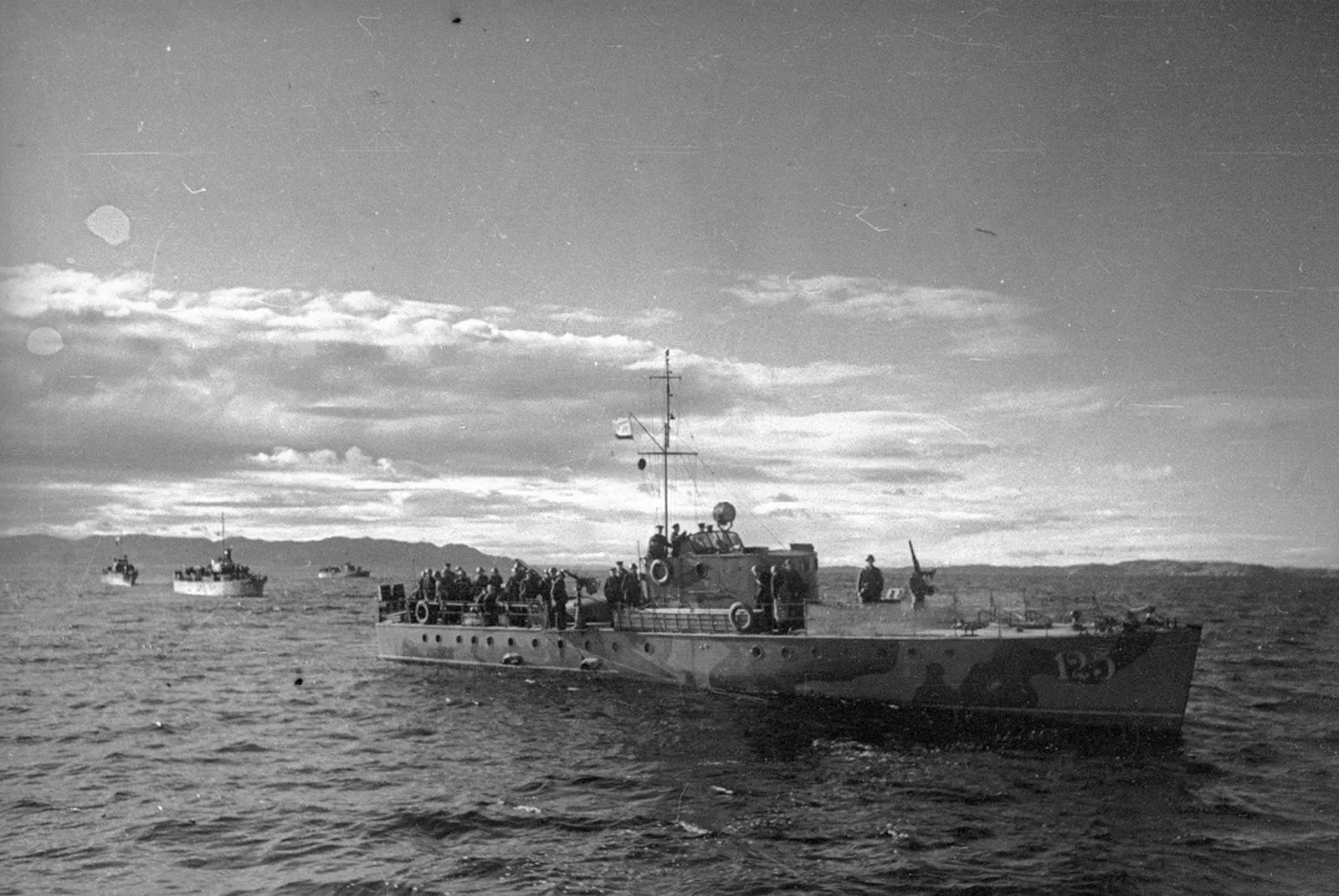
Soviet MO and MO-4 boats were fielded during the Second World War for coastal anti-submarine work, convoy and submarine escort, patrol, landing support, mine-related duties, and small-boat actions; MO-103's July 1944 sinking of U-250 is a documented Baltic example.
Naval Systems
Morskoy Okhotnik (MO-type) submarine chaser
Also known as
- MO-type submarine chaser
- MO-4 small hunter
- MO-class small guard ship
- Maly Okhotnik
- Morskoy Okhotnik
- Small Hunter
- Malyj Okhotnik
- MO-IV
Morskoy Okhotnik was a Soviet small submarine-chaser and patrol-boat family built for coastal anti-submarine warfare but used more broadly during the Second World War for convoy escort, patrol, landing support, mine-related work, and small-boat combat. The wooden-hulled MO-4 was the main wartime type, built at several yards including Astrakhan, and individual boats such as MO-103 were documented in Baltic anti-submarine actions.
Role in Conflicts
Wartime Service Roles
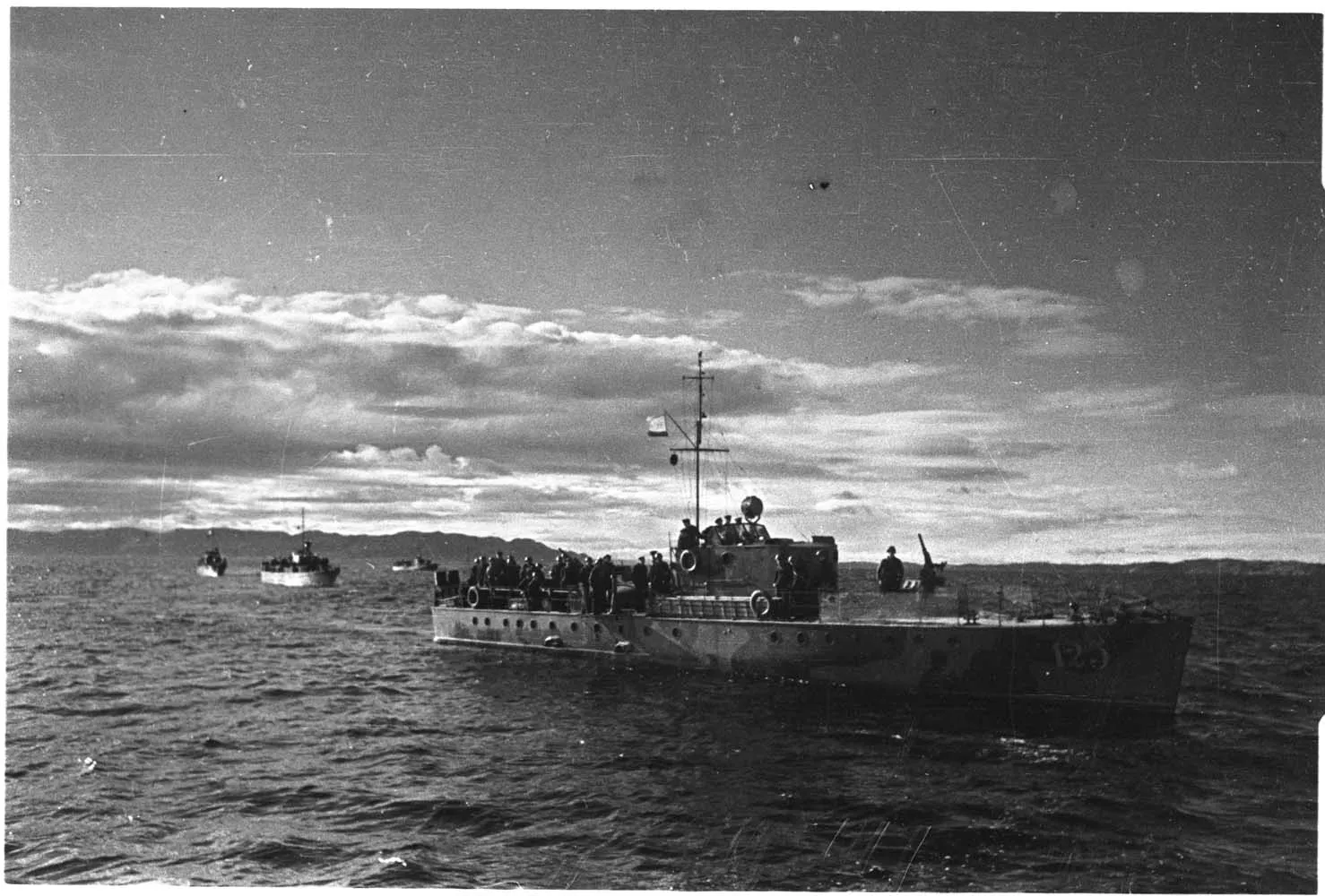
The MO family was built around coastal anti-submarine work, but wartime evidence shows a wider Soviet small-combatant role set. Sources describe MO-4 boats escorting convoys and submarines, guarding fairways, supporting landings, laying or clearing mines, and fighting enemy small craft and aircraft.
Anti-submarine work
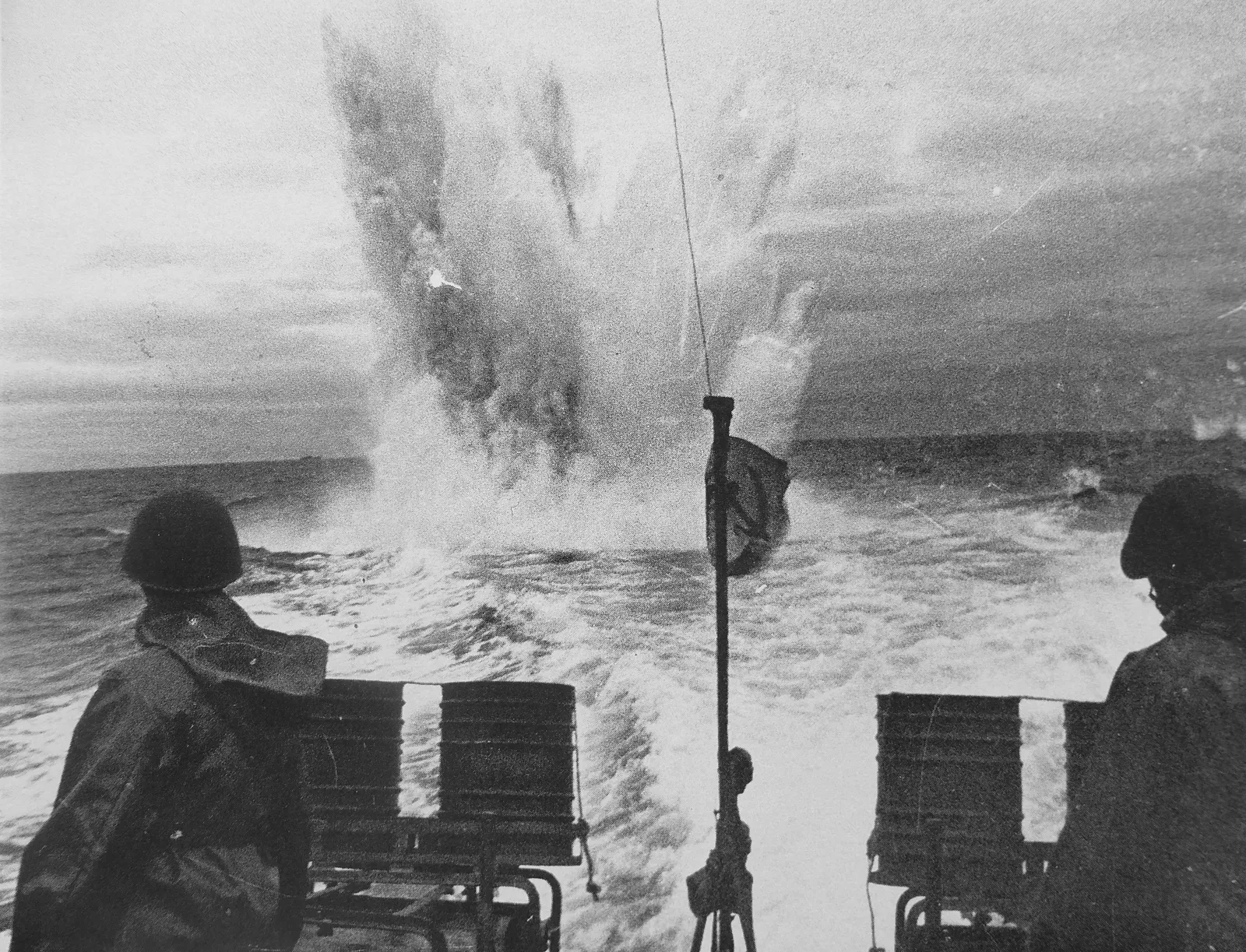
Depth-charge armament and coastal operations made submarine hunting the defining mission; MO-103's U-250 action is the clearest dated example in the sources used here.
Escort and patrol
MO-4 boats are described escorting convoys and submarines, patrolling bases and fairways, and protecting traffic in constrained coastal waters; the Central Naval Museum specifically describes convoy-guard duties on Lake Ladoga.
Landing and mine tasks
Sources also describe troop and reconnaissance landings, landing-support actions, mining enemy coasts, and mine-clearing or mine-destruction duties.
Sources: The Small Chaser pavilion - Central Naval Museum; MO-4 - Engines of the Red Army; Soviet sub-chasers - Naval Encyclopedia; U-250 - uboat.net.
Profile / Specs
Profile
- Origin
- Soviet Union
- Type
- Small submarine chaser / patrol boat
- Service note
- 1930s-Second World War
- Designer
- NKVD Maritime Border Guard Shipyard design bureau in Leningrad for the MO-4 type
- Designed
- 1930s
- Produced
- 1937-1943 for the MO-4 production span cited by technical references
- Number built
- Approximately 250 MO-4 boats reported by technical references; broader MO-family totals vary by source and variant boundary
Specifications
- Displacement
- About 56 tons for the MO-4 type
- Dimensions
- 26.9 m length, 4.02 m beam, 1.48 m draft for MO-4
- Hull
- Wooden, unarmored hull with nine isolated sections described in technical references
- Propulsion
- Three GAM-34BS gasoline engines, 850 hp each, three shafts
- Speed
- Approximately 22-25.5 knots depending on source and condition
- Armament
- Two 45 mm 21-K guns, two 12.7 mm DShK machine guns, and depth-charge equipment
- Crew
- About 21-22
Designation And Design Evolution
MO abbreviates the Soviet small-hunter designation commonly rendered as Malyj or Maly Okhotnik. The page covers the family because public sources often group the early small hunters, the MO-4 production boat, and the armored BMO follow-on together; the sourced conflict-use claims here are strongest for MO-4 and named MO boats rather than every subtype equally.
Family label
MO identifies the small submarine-hunter boat family, not a single hull number.
Main wartime type
MO-4 is the best-documented wartime production type in the sources used here, with approximately 250 reported boats.
Follow-on
BMO / Project 194 was a steel armored development introduced after wartime experience exposed the MO-4's lack of protection.
Sources: MO-4 - Engines of the Red Army; Soviet sub-chasers - Naval Encyclopedia.
Variants
Open sources use MO as the Malyj/Maly Okhotnik or small-hunter family label, with early MO-1, MO-2, and MO-3 boats preceding MO-4, the principal improved wartime wooden-hulled production type; BMO was an armored steel follow-on.
| Variant | Configuration | Designation notes |
|---|---|---|
| MO-1 / MO-2 / MO-3 | Early small-hunter designations | Naval Encyclopedia treats the early MO designations as the developmental path before the improved MO-4 wartime production boat. |
| MO-4 | Main wartime small submarine chaser and patrol boat | Technical references describe MO-4 as the most produced MO type, a wooden-hulled small hunter with depth charges, 45 mm guns, DShK machine guns, compartmentalized construction, and production at several shipyards including Astrakhan. Sources: MO-4 - Engines of the Red Army, Soviet sub-chasers - Naval Encyclopedia |
| BMO | Armored steel development | Naval Encyclopedia describes BMO as a Leningrad-designed 1943 development intended to address the MO-4's lack of armor, with a steel hull and revised anti-aircraft fit. |
Timeline
Morskoy Okhotnik (MO-type) submarine chaser Key Events
MO-4 construction begins
Technical references place MO-4 construction from 1937 to 1943 at several Soviet yards, including Astrakhan.
Sources: MO-4 - Engines of the Red Army, Soviet sub-chasers - Naval Encyclopedia
Northern Fleet anti-submarine service photographed
A 1941 Yevgeny Khaldei photograph on Wikimedia Commons identifies a Soviet Northern Fleet MO-class boat attacking an enemy submarine with depth charges.
Sources: MO class in ASW image - Wikimedia Commons
MO boats serve on Lake Ladoga
The Central Naval Museum describes MO patrol boats serving on Ladoga during the siege of Leningrad, guarding convoys, landing troops, firing on shore and ship targets, and conducting tactical reconnaissance.
Sources: The Small Chaser pavilion - Central Naval Museum
MO-103 sinks U-250
Uboat.net records German submarine U-250 sunk in the Gulf of Finland by depth charges from Soviet submarine chaser MO-103 after U-250 had sunk MO-105 earlier that day.
Sources: U-250 - uboat.net
MO-4 boats in late Baltic action
Naval Encyclopedia describes MO-121, MO-122, MO-131, and MO-204 among Soviet boats intercepting a German convoy on 9 May 1945.
Sources: Soviet sub-chasers - Naval Encyclopedia
MO-4 Design Notes
The MO-4 type paired small size with a wooden, compartmentalized hull and gasoline-engine propulsion. Open technical references emphasize that the boats carried anti-submarine depth-charge gear while retaining gun and machine-gun armament for patrol, escort, and close coastal fighting.
Hull construction
Wooden structure with nine isolated sections, described as helping damaged boats remain afloat despite the absence of armor.
Powerplant
Three GAM-34BS gasoline engines driving three shafts; published top-speed figures vary from roughly 22 to 25.5 knots.
Weapons fit
Typical MO-4 armament centered on two 45 mm 21-K guns, DShK heavy machine guns, and depth-charge equipment.
Sources: MO-4 - Engines of the Red Army; Soviet sub-chasers - Naval Encyclopedia.
Media
Morskoy Okhotnik (MO-type) submarine chaser Videos
Morskoy Okhotnik (MO-type) submarine chaser Images
Related Weapon Systems


Sources
Astrakhan 24 wartime Kirov shipyard articlePublisher: Astrakhan 24 | Note: Supports the Shipyard named after Kirov in Astrakhan building Morskoy Okhotnik-type boats during the Second World War, along with other wartime production. | Accessed: 2026-07-13MO-4 - Engines of the Red ArmyPublisher: Engines of the Red Army in WW2 | Note: Supports MO-4 background, construction at several shipyards including Astrakhan, wooden compartmentalized hull construction, propulsion, armament, speed, displacement, and direct Second World War mission set including submarine chasing, convoy escort, patrol, landing, and mine-related duties. | Accessed: 2026-07-13The Small Chaser pavilion - Central Naval MuseumPublisher: Central Naval Museum | Note: Supports official museum context for a preserved MO-4 patrol boat/submarine chaser used by Soviet forces in the Second World War, including Lake Ladoga service during the siege of Leningrad, convoy guard, landing, fire-support, tactical reconnaissance, speed, weapons, crew, and 1941-1944 combat operations. | Accessed: 2026-07-13Soviet sub-chasers - Naval EncyclopediaPublisher: Naval Encyclopedia | Note: Supports MO-4 specifications, design and variant context, wartime Soviet sub-chaser background, and direct Second World War examples including Baltic U-boat actions and late-war small-boat operations. | Accessed: 2026-07-13U-250 - uboat.netPublisher: uboat.net | Note: Supports the July 30, 1944 Second World War action in which Soviet submarine chaser MO-103 sank German submarine U-250 with depth charges in the Gulf of Finland after U-250 had sunk MO-105 earlier that day. | Accessed: 2026-07-13MO-125 subchaser image - Wikimedia CommonsPublisher: Wikimedia Commons | Note: Supports rights-clear image provenance for a Soviet MO-4-type submarine chaser photograph used as the primary image. | Accessed: 2026-07-13MO-125 landing force image - Wikimedia CommonsPublisher: Wikimedia Commons | Note: Supports rights-clear gallery image provenance for a 1942 Yevgeny Khaldei photograph identified as Soviet Northern Fleet MO-4-type boats carrying a landing force. | Accessed: 2026-07-13MO class in ASW image - Wikimedia CommonsPublisher: Wikimedia Commons | Note: Supports direct Second World War use by identifying a 1941 Yevgeny Khaldei photograph of a Soviet Northern Fleet MO-class subchaser attacking an enemy submarine with depth charges. | Accessed: 2026-07-13