Munitions

Fire Point FP-7.X

Also known as
  • FP-7.X
  • Fire Point FP-7x
  • FREYJA interceptor missile
  • Freyja interceptor
  • Freya missile defense interceptor

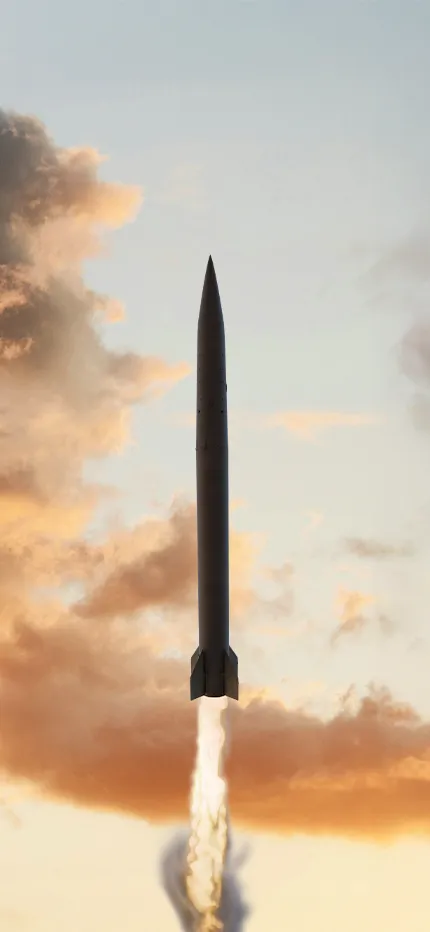
Fire Point FP-7.X is a Ukrainian anti-ballistic interceptor missile being developed as the missile component of the Freyja/FREYJA air-defense project. Public reporting describes it as a composite missile derived from Fire Point's FP-7 ballistic-missile work, intended to engage ballistic missiles and drones with European radar, seeker, and command-system integration; as of July 2026, public evidence supports flight tests and planned production rather than documented combat intercepts.

Profile / Specs

Profile

Origin
Ukraine
Built by
Fire Point
Type
Anti-ballistic surface-to-air interceptor missile
Service note
2026 Ukrainian Freyja missile-defense development program
Designer
Fire Point
Designed
Publicly disclosed as an FP-7.X interceptor development in 2026
Unit cost
About US$700,000 per shot reported as Fire Point's target cost in June 2026 reporting
Produced
Mass production discussed for August 2026 if partner seeker deliveries move quickly; not independently confirmed as active production in public sources
Number built
Not publicly confirmed

Specifications

Role
Anti-ballistic surface-to-air interceptor for the Freyja/FREYJA missile-defense project
Reported speed
1,500-2,000 m/s
Length
7.25 m
Outer diameter
1.15 m
Fuselage diameter
0.53 m
Reported combat load
150 kg
Maximum flight duration
250 seconds
Launch method
Ground-launched missile
Reported test altitude
25 km in June 2026 reporting
Guidance concept
Expected radar guidance with an infrared seeker in the terminal phase, per NV's summary of Financial Times reporting
Production dependency
August 2026 production target publicly tied to rapid Western partner movement and seeker availability
Construction
Composite-material missile body reported by Ukrainian defense media
System integration
Freyja architecture planned around FP-7.x interceptors, launchers, command systems, and partner radar/sensor components
Coalition status
July 2026 Paris declaration set a roadmap toward first operational capabilities; Ukraine described its missile contribution as still being finalized
Freyja System Context

FP-7.X is publicly described as an interceptor inside the Freyja missile-defense architecture rather than as a complete stand-alone air-defense battery. Fire Point's June 2026 announcement says the company is responsible for FP-7.x interceptor missiles, launchers, command systems, and system integration, while Hensoldt is tied to radar support for the project.

Missile role

Composite anti-ballistic interceptor for the Freyja/FREYJA project.

Supported by Ukrainska Pravda, Militarnyi, and Fire Point's Hensoldt announcement.

Guidance path

Reporting attributed to Shtilerman describes radar guidance with a planned infrared seeker in the terminal phase.

NV summarized the Financial Times report and described the seeker as a production dependency.

Integration status

Public reports describe successful tests and planned integration, not a completed operational battery.

Gwara Media reported that system integration and additional tests remained after the latest testing phase.

Evidence limit

No direct public source found for a combat intercept or deployed operational use as of 2026-07-13.

The record therefore keeps conflict-use rows empty.

Variants

Public sources treat FP-7.X as an interceptor development related to, but distinct from, Fire Point's FP-7 tactical ballistic missile and adjacent FP-series ballistic-missile work.

VariantConfigurationDesignation notes
FP-7Tactical ballistic missile baseline

Fire Point's official FP-7 page describes a ground-launched ballistic missile with a 150 kg payload, 200 km range, 14 m accuracy, 1,500 m/s maximum speed, 65 km flight altitude, and 250 second maximum flight time; the same page says the architecture can scale into air and missile defense systems.

Sources: Fire Point FP-7 product page

Fire Point FP-9, Ground-launched short-range ballistic missile, MunitionsFire Point FP-9Adjacent FP-series ballistic-missile development

Fire Point's public FP family places FP-7/FP-7.X missile work beside the larger FP-9 ballistic missile; FP-9 is cataloged separately because its public record covers a different range, payload, and testing lane.

Sources: Fire Point official homepage, Defense News Fire Point missile defense

Launch System

Public sources describe FP-7.X as the interceptor missile inside the larger FREYJA ballistic-missile-defense architecture.

LauncherLauncher typeLaunch evidence
FREYJA, Ballistic missile defense system, Air DefenseFREYJABallistic missile defense system

Fire Point says the FREYJA project combines FP-7.x interceptor missiles with launchers, control systems, radar support, and system integration work led by Fire Point with HENSOLDT cooperation.

Sources: HENSOLDT FREYJA MoU, Fire Point HENSOLDT Agreement, Ukrainska Pravda Freya Concept

Timeline

Fire Point FP-7.X Key Events

  1. Freyja concept enters public reporting

    Militarnyi reported Fire Point's Freya anti-ballistic concept, describing FP-7.x as a composite interceptor missile and placing it in a system intended to counter ballistic threats.

    Sources: Militarnyi Freya missile details

  2. Fully guided maneuvering flight reported

    Ukrainska Pravda reported Fire Point CTO Iryna Terekh's statement that FP-7.X had completed a fully guided maneuvering flight for the future Freyja interceptor.

    Sources: Ukrainska Pravda FP-7.X test

  3. Production dependency and seeker plan reported

    The New Voice of Ukraine, summarizing Financial Times reporting, said August 2026 production depended on rapid Western partner movement and on obtaining an infrared seeker, with missiles potentially stored until seekers are attached.

    Sources: NV FP-7.X production report

  4. Ready-for-production claim reported

    Gwara Media, citing Denys Shtilerman's comments to Militarnyi, reported that the FP-7.x missile was ready for production after the latest testing phase, while noting that system integration and additional tests remained.

    Sources: Gwara FP-7.x production report

  5. Hensoldt radar cooperation announced

    Fire Point announced a memorandum with Hensoldt for Freyja radar-system cooperation, saying Fire Point would develop, produce, and integrate FP-7.x interceptor missiles, command systems, launchers, and overall system architecture.

    Sources: Fire Point HENSOLDT Agreement

  6. Foreign-partner system architecture detailed

    Defense News reported Fire Point's plan to wrap the FP-7.X interceptor in radar, tracking, and command systems from European partners and cited company claims of a roughly US$700,000 shot cost and planned August 2026 production ramp.

    Sources: Defense News Fire Point missile defense

  7. Anti-ballistic coalition announced in Paris

    Ukraine's Presidential Office said FREYJA was presented in Paris and that coalition members signed a declaration toward shared anti-ballistic capabilities; Zelenskyy described Ukraine's anti-ballistic missile contribution as still being finalized.

    Sources: Ukraine Presidential Office Freyja meeting, Ukraine Presidential Office anti-ballistic coalition declaration

Media

Fire Point FP-7.X Images

Related Weapon Systems
Fire Point FP-9, Ground-launched short-range ballistic missile, MunitionsMunitionsFire Point FP-9Ground-launched short-range ballistic missileThe Fire Point FP-9 is a Ukrainian ground-launched ballistic missile in development for operational-strategic strike roles, with official claims of an 800 kg payload, up to 855 km range, 20 m accuracy, and a 2,200 m/s maximum speed. Public reporting through early July 2026 described engine validation and flight testing as the remaining gates, so this record stays relationship-only until direct evidence documents fielding or combat use in a named conflict.
Lockheed Martin QuadStar (NGSRI), Developmental short-range air-defense interceptor, Air DefenseAir DefenseLockheed Martin QuadStar (NGSRI)Developmental short-range air-defense interceptorLockheed Martin's QuadStar is a U.S. Army Next-Generation Short-Range Interceptor candidate for M-SHORAD Increment 3, the program intended to replace the FIM-92 Stinger with a soldier-portable fire-and-forget short-range air-defense missile. Public sources place the missile in competitive development and flight testing, with Army budget documents and production-planning reporting tying NGSRI to SGT STOUT compatibility, dismounted air-defense use, and future procurement planning rather than confirmed combat fielding.
MIM-104 Patriot, Long-range surface-to-air and ballistic missile defense system, Air DefenseAir DefenseMIM-104 PatriotLong-range surface-to-air and ballistic missile defense systemThe MIM-104 Patriot is a U.S.-origin, truck-mobile air and missile defense system built around phased-array radar, command-and-control vehicles, launchers, power generation, antenna masts, support vehicles, and PAC-2 or PAC-3 interceptor families. Developed from the 1960s SAM-D program, it evolved from aircraft defense into a high-value air and missile defense layer used in Desert Storm, Operation Iraqi Freedom, Yemen, Ukraine, Gulf base defense, and reported 2026 Iran-war drone defense over Bahrain.
3M22 Tsirkon, Hypersonic anti-ship and land-attack missile, MunitionsMunitions3M22 TsirkonHypersonic anti-ship and land-attack missileThe 3M22 Tsirkon, also rendered Zircon, is a Russian hypersonic missile associated with the 3K22 shipborne missile complex and NATO reporting name SS-N-33. Open sources attribute design and production to Reutov-based NPO Mashinostroyenia within Tactical Missiles Corporation, with documented Project 22350 and Yasen-family launch reporting, broader 3S-14/UKSK compatibility claims, and thinner public reporting on Bastion coastal-launcher integration. Russia used the missile in strikes on Kyiv during the 2014 Russia-Ukraine War, with reporting expanding from fragment-based 2024 evidence to larger 2026 salvos, while its advertised speed, range, warhead, guidance, and even flight-profile details remain shaped by Russian claims, fragment analysis, and secondary estimates rather than fully transparent public test data.

Sources