Support Equipment

F-35 Electro Optical Targeting System (EOTS)

Also known as
  • EOTS
  • F-35 EOTS
  • F-35 Lightning II EOTS
  • Electro-Optical Targeting System
  • AN/AAQ-40
  • AN/AAQ-40 EOTS

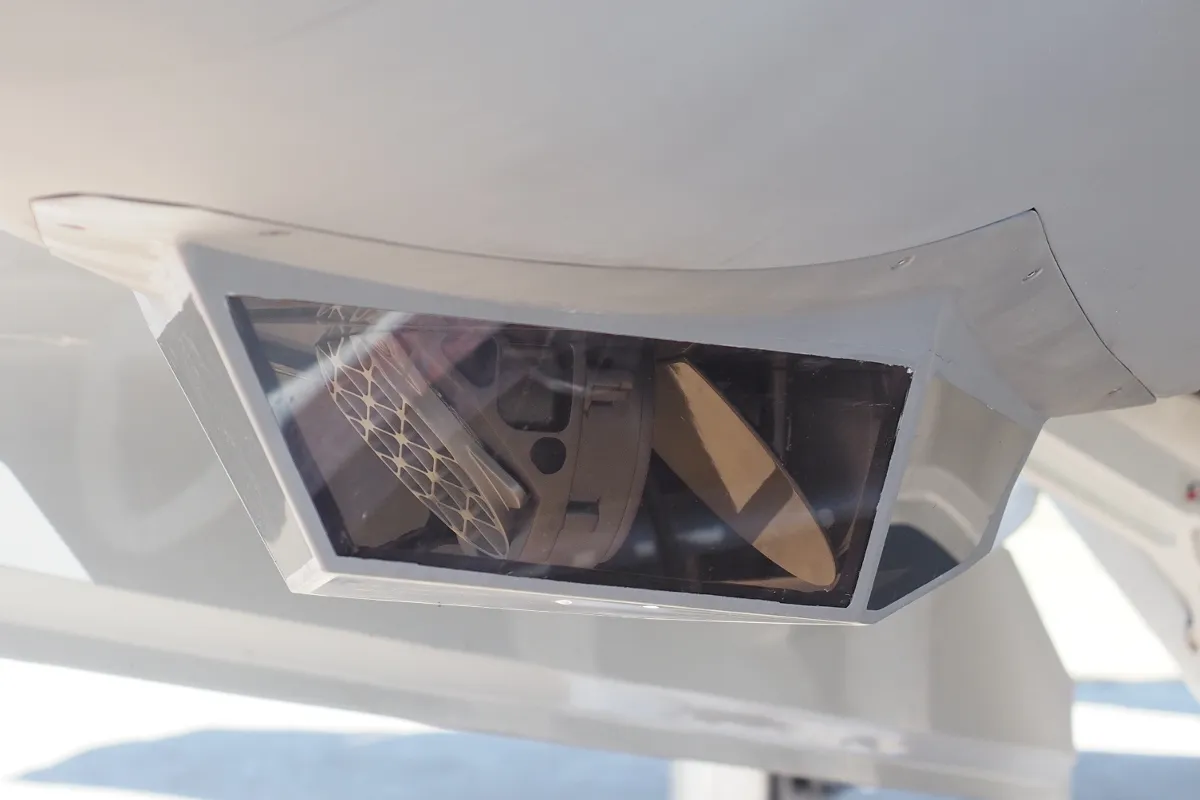
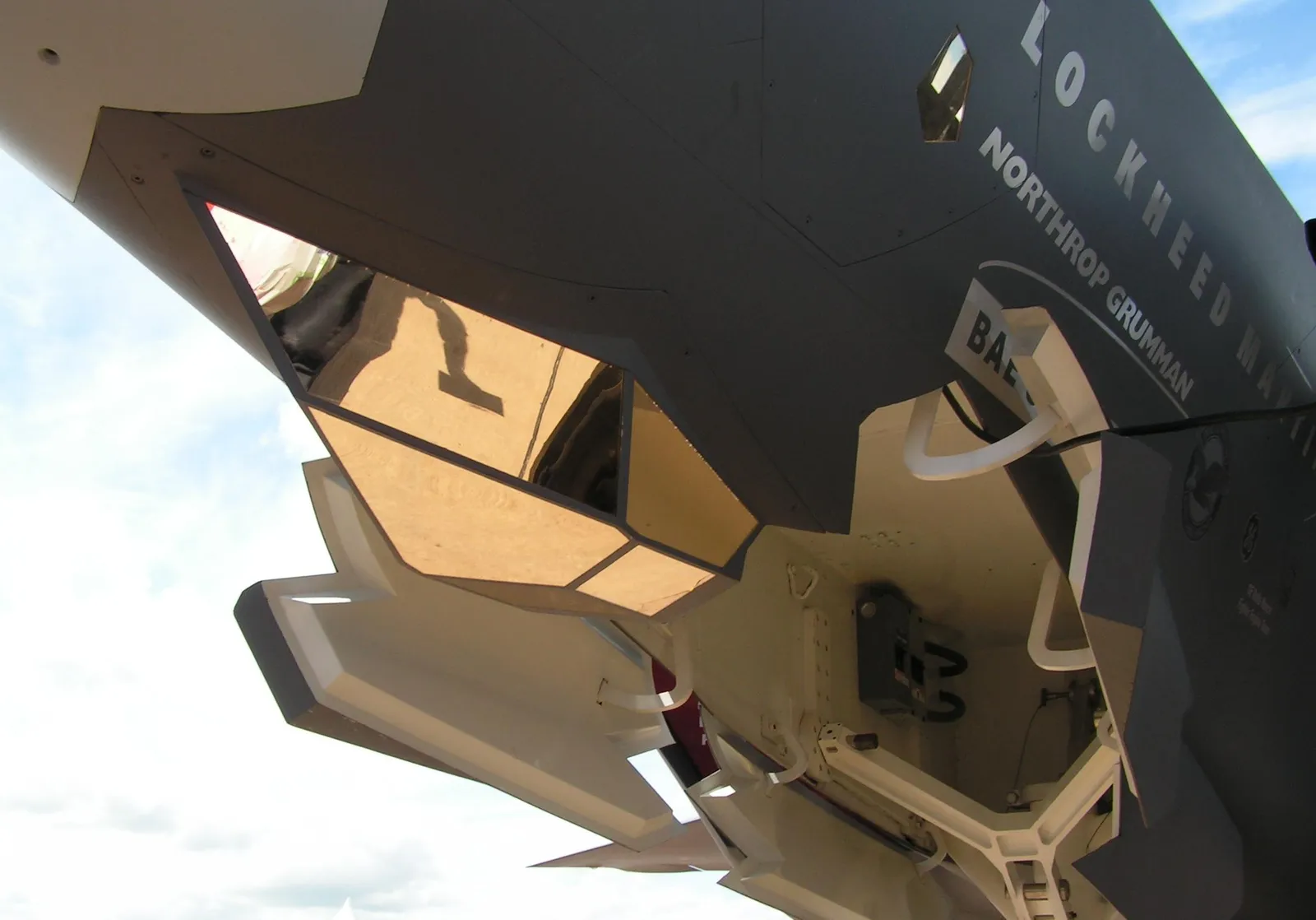
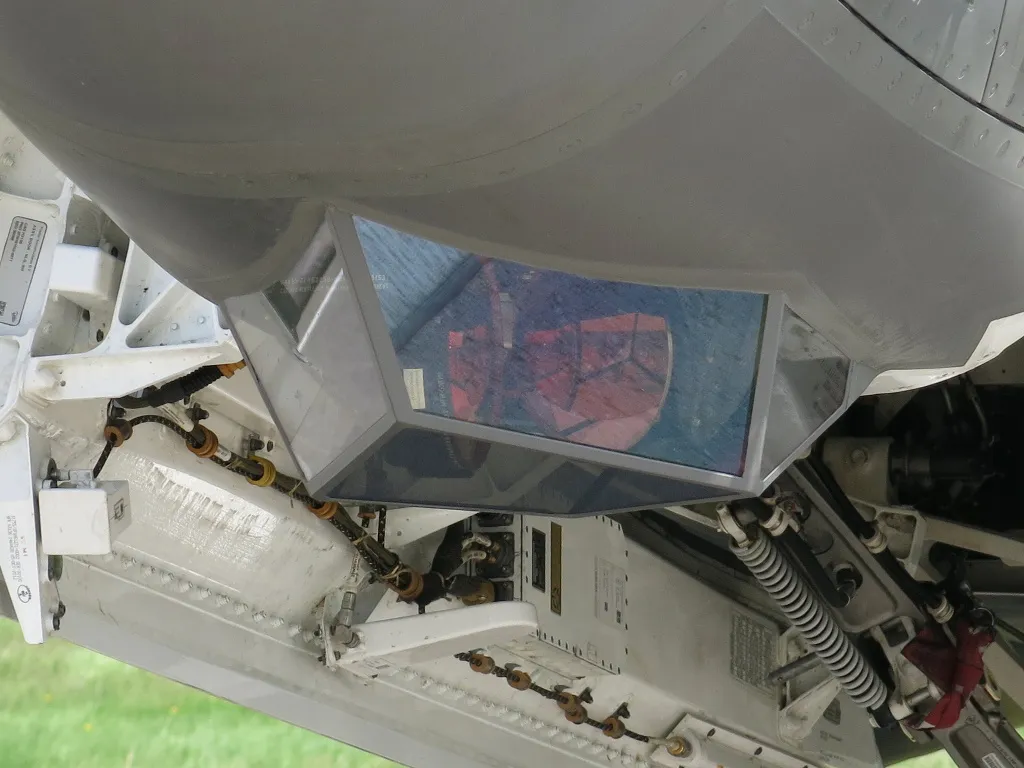
The F-35 Electro Optical Targeting System (EOTS) is the AN/AAQ-40 sensor installation built into the F-35 Lightning II for precision air-to-air and air-to-surface targeting. Lockheed Martin describes it as a low-observable, internally mounted system that combines forward-looking infrared and infrared-search-and-track functions, and Janes reported F-35I EOTS footage from an Israeli cruise-missile interception during the 2023 Israel-Hamas War.

Role in Conflicts

Subsystem Context

Most public combat reporting identifies the F-35 aircraft rather than the EOTS installation separately, but the November 2023 Israeli cruise-missile interception is a direct public example where reporting identified F-35I EOTS footage from the engagement.

Installed platform

F-35 Lightning II aircraft carry the internally mounted EOTS as part of the aircraft's sensor suite.

Low-observable fit

Lockheed Martin describes the sensor as embedded behind a faceted sapphire window, avoiding an external targeting pod installation.

Upgrade path

Advanced EOTS keeps the same general installation envelope while adding multi-spectral and image-quality improvements for potential Block 4 modernization.

Profile / Specs

Profile

Origin
United States
Type
Internally mounted electro-optical targeting sensor subsystem
Service note
2009-present
Designer
Lockheed Martin Missiles and Fire Control
Designed
2000s
Produced
2000s-present
Number built
At least 850 completed by September 2021
Developed into
Advanced EOTS

Specifications

Integration
Built into the F-35 fuselage with a sapphire window and fiber-optic interface
Sensor combination
Forward-looking infrared and infrared search-and-track functions
Targeting role
Precision air-to-air and air-to-surface targeting
Passive functions
High-resolution imagery, automatic target tracking, laser designation and range finding, and laser spot tracking
Reconnaissance
Allows aircrews to identify areas of interest and perform reconnaissance
Upgrade path
Advanced EOTS is offered for F-35 Block 4 development with short-wave infrared, high-definition television, and improved detector resolution
Variants

Public sources distinguish the baseline F-35 EOTS from the Advanced EOTS follow-on proposed for F-35 Block 4 modernization.

VariantConfigurationDesignation notes
AN/AAQ-40Baseline F-35 EOTS installation

The baseline sensor is the F-35's internally mounted electro-optical targeting system, combining FLIR and infrared-search-and-track functions for air-to-air and air-to-ground targeting.

Sources: F-35 Electro Optical Targeting System (EOTS), F-35A Lightning II Fact Sheet

Advanced EOTSBlock 4 upgrade candidate

Lockheed Martin introduced Advanced EOTS as an evolutionary replacement for the baseline EOTS, adding short-wave infrared, high-definition television, infrared-marker, and detector-resolution improvements while fitting the existing F-35 interface.

Sources: Advanced EOTS Offer

Carrier Aircraft

The EOTS is an F-35 subsystem, so the platform relationship is central to understanding the sensor and its conflict-use evidence.

CarrierCarrier typeCarriage evidence
F-35 Lightning II, Fifth-generation stealth multirole fighter, Aircraft & UAVsF-35 Lightning IIInternally mounted electro-optical targeting sensor

Lockheed Martin says the F-35 EOTS is embedded in the aircraft fuselage; the Air Force F-35A fact sheet separately identifies EOTS as an internally mounted targeting system on the F-35.

Sources: F-35 Electro Optical Targeting System (EOTS), F-35A Lightning II Fact Sheet

Timeline

F-35 Electro Optical Targeting System (EOTS) Key Events

  1. First production EOTS delivered

    Lockheed Martin announced the first production F-35 EOTS units for integration at Fort Worth, moving the sensor from development into low-rate production.

    Sources: First Production F-35 EOTS

  2. CATBird flight-test integration

    Lockheed Martin reported the first EOTS flight on the Cooperative Avionics Test Bed, using the modified 737 test aircraft to evaluate how the sensor integrated with the F-35 fused-sensor architecture.

    Sources: F-35 EOTS CATBird First Flight

  3. Advanced EOTS introduced

    Lockheed Martin introduced Advanced EOTS for F-35 Block 4 development, positioning it as an evolutionary replacement that could fit behind the same low-drag window.

    Sources: Advanced EOTS Offer

  4. 850th EOTS completed

    The F-35 Sensors team reported completion of the 850th EOTS alongside Lot 13 final deliveries, with recent integration stick rates above 96 percent.

    Sources: 850th EOTS Completed

Media

F-35 Electro Optical Targeting System (EOTS) Videos

Related Weapon Systems
F-35I Adir, Israeli F-35A-derived stealth multirole fighter, Aircraft & UAVsAircraft & UAVsF-35I AdirIsraeli F-35A-derived stealth multirole fighterThe F-35I Adir is Israel's locally designated F-35 Lightning II variant, a single-seat stealth multirole fighter operated from Nevatim Air Base and adapted for Israeli Air Force command, sustainment, and weapons-integration needs. Israeli F-35I aircraft have directly documented combat use in Syria, Gaza-war air defense, Lebanon-related Hezbollah operations, and the Israel-Iran conflict, including an official 2026 IDF account of an Adir shooting down an Iranian Yak-130 over Tehran.
EO/IR Pod, Electro-optical/infrared airborne sensor pod, Support EquipmentSupport EquipmentEO/IR PodElectro-optical/infrared airborne sensor podEO/IR Pod is a support-equipment entry for airborne electro-optical and infrared sensor pods used to find, track, and designate targets from aircraft and UAVs. The page centers on source-backed examples: Canadian WESCAM sensors assessed on Turkish UAVs in Nagorno-Karabakh, Libya, and Syria; Aero's L-39 Skyfox mission fit showing an EO/IR pod; and the U.S. Coast Guard HC-130J's nose-mounted EO/IR pod. Because carrier publications often name the function rather than a specific model, the relationship notes separate identified WESCAM MX-series evidence from generic EO/IR-pod references.
F-35A Lightning II, Conventional takeoff and landing stealth multirole fighter, Aircraft & UAVsAircraft & UAVsF-35A Lightning IIConventional takeoff and landing stealth multirole fighterThe F-35A Lightning II is the conventional takeoff and landing branch of the Joint Strike Fighter family, built for land-based air forces that need stealth strike, air-to-air, sensor-fusion, and suppression-of-enemy-air-defense missions. U.S. Air Force F-35As have directly documented combat use in Iraq against ISIS, in U.S. strikes on Houthi targets in Yemen, and in the June 2025 Operation Midnight Hammer strike package against Iranian nuclear sites.
LITENING Advanced Targeting Pod (AN/AAQ-28), Electro-optical targeting pod, Support EquipmentSupport EquipmentLITENING Advanced Targeting Pod (AN/AAQ-28)Electro-optical targeting podThe LITENING Advanced Targeting Pod (AN/AAQ-28) is a Rafael-designed, Northrop Grumman-supported electro-optical/infrared targeting pod family for precision targeting, surveillance, reconnaissance, and laser-guided weapon support. Manufacturer material describes a modular multispectral pod integrated across many aircraft types, while RAND's Libya air-war study documents LITENING pods supporting NATO strike and imagery workflows in the 2011 First Libyan Civil War.
EC-130H Compass Call, Airborne electronic attack aircraft, Aircraft & UAVsAircraft & UAVsEC-130H Compass CallAirborne electronic attack aircraftThe EC-130H Compass Call is the U.S. Air Force's legacy airborne electronic-attack aircraft, a heavily modified C-130H that denies, degrades, and disrupts adversary command-and-control communications, radars, and navigation systems. Its mission crew operates permanently installed electronic-attack equipment for U.S. and coalition air, surface, maritime, and special-operations support, while the EC-130H fleet transitions to the EA-37B Compass Call successor.
IRST21 Sensor System, Passive long-wave infrared search-and-track sensor system, Support EquipmentSupport EquipmentIRST21 Sensor SystemPassive long-wave infrared search-and-track sensor systemIRST21 is Lockheed Martin's passive long-wave infrared search-and-track sensor family for fighter aircraft, packaged either inside the F/A-18E/F Super Hornet centerline tank or in the modular Legion Pod. It gives aircraft a non-emitting air-to-air detection and tracking channel, has supported F-15C missile-cue testing with AIM-9X and AIM-120 shots, and moved into Navy IRST Block II fielding for the Super Hornet in 2025.

Sources